Cosmo Landesman

We should all be tree huggers

Recently, I was in my local park when I noticed a young girl staring at me with a puzzled expression. She then turned to her mother and asked: ‘Why is that man hugging a tree?’ It was a good question. Why was an old, cynical, embittered hack like me hugging a tree? The simple answer is: I’ve become a tree hugger.  There was a time when I laughed at people like me; and many are still laughing. Tree hugger is a term of abuse that everyone seems happy to use. Green politics may have moved closer to the mainstream but we tree huggers have been left out in the cold. We are the friends of the earth who have very few friends. To ‘climate sceptics’ on the right, we’re just lunatics. To left leaning eco-warriors, we are eco-wimps.

Cosmo Landesman, Alex Diggins, Lucy Dunn & Richard Bratby

24 min listen

On this week’s Spectator Out Loud: Cosmo Landesman says life is too short to watch boring shows; Alex Diggins reports back from the Bukhara art biennial; Lucy Dunn provides her notes on BuzzBallz – which featured at the Spectator’s Christmas party; and, Richard Bratby reviews L’amour des trois oranges at the Royal Northern College of Music and Ariodante at the Royal Opera House.  Produced and presented by Patrick Gibbons.

I walked out of my son’s nativity play

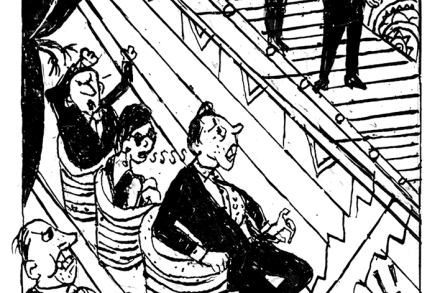
To walk out of a public performance before the end – be it the theatre, a concert or a lecture – is not the done thing. It’s considered an antisocial act that disrupts the performance and thus other people’s pleasure. To walk out provokes tuts of disapproval and scowls of indignation. And yet while it’s something we all disapprove of (at least in theory) it’s also something we all secretly long to do. Who hasn’t sat and squirmed in their seat at some tedious piece of theatre and wondered: how much more of this must I suffer? And who hasn’t been subjected to one of those long, sycophantic interviews with some self-adoring author flogging their latest book and not prayed for the courage to make a run for it?

Polite society is a thing of the past

From our US edition

In 1908, the iconoclast writer Lytton Strachey – the bad boy of the Bloomsbury set – pointed a long finger at a stain on artist Vanessa Bell’s dress and asked, “Semen?” Later, Bell’s sister Virginia Woolf wrote: “With that one word all barriers of reticence and reserve went down… It was, I think, a great advance in civilization.” Americans tend to think that the English are sexually repressed and too refined and cultured for such talk I was recently in a bar in Bloomsbury – one that actually serves a “Virginia Woolf hamburger” – when talk among the young women at my table turned to men they knew who were, how should I put this, well-endowed. Of course, I’ve heard such talk before, but not in a long time and not in such anatomical detail.

talk

Max Jeffery, Cosmo Landesman, Henry Blofeld, David Honigmann and Rachel Johnson

29 min listen

On this week’s Spectator Out Loud: Max Jeffery reports from court as the Spectator and Douglas Murray win the defamation cause brought against them by Mohammed Hijab; Cosmo Landesman defends those who stay silent over political issues; Henry Blofeld celebrates what has been a wonderful year for test cricket; David Honigmann reflects on the powder keg that was 1980s New York, as he reviews Jonathan Mahler’s The Gods of New York; and, following the Oasis reunion, Rachel Johnson reflects on her run ins with the Gallagher brothers.  Produced and presented by Patrick Gibbons.

Dinner party talk won’t help Gaza

I’m one of the Silent People who sit on the sidelines of the great political events and debates of the present. We Silent People don’t sign on-line petitions or go on protests to show solidarity with this group or that one. We don’t tweet our outrage, or blog our bile. We prefer to keep what we think to ourselves. When a verbal punch-up erupts over Gaza or trans rights at a dinner party, I stay silent and wonder what’s for pudding. The thing we Silent People are most silent about is our silence. It’s easy to see why: the silent are suspect The thing we Silent People are most silent about is our silence. It’s easy to see why: these days the silent are suspect.

Paul Wood, Katy Balls, Olivia Potts, Benedict Allen, Cosmo Landesman and Aidan Hartley

40 min listen

On this week’s Spectator Out Loud: Would Trump really bomb Iran, asks Paul Wood (1:38); Katy Balls interviews Health Secretary Wes Streeting on NHS reform, Blairism and Game of Thrones (8:38); Olivia Potts examines the history – and decline – of the Easter staple, roast lamb (18:25); the explorer Benedict Allen says Erling Kagge and Neil Shubin were both dicing with death, as he reviews both their books on exploration to earth’s poles (22:13); Cosmo Landesman reflects on what turning 70 has meant for his sex life (28:46); and, Aidan Hartley takes us on an anthropomorphic journey across Africa (33:55).  Produced and presented by Patrick Gibbons.

Easter special: assisted dying, ‘bunny ebola’ & how do you eat your creme egg?

34 min listen

This week: should the assisted dying bill be killed off?Six months after Kim Leadbeater MP launched the Terminally Ill Adults (End of Life) Bill, a group of Labour MPs have pronounced it ‘irredeemably flawed and not fit to become law’. They say the most basic aspects of the bill – having gone through its committee stage – do not hold up to scrutiny. Dan Hitchens agrees, writing in the magazine this week that ‘it’s hard to summarise the committee’s proceedings except with a kind of Homeric catalogue of rejected amendments’ accompanied by a ‘series of disconcerting public statements’.  With a third reading vote approaching, what could it tell us about the country we live in?

Is there sex after 70? 

When I turned 70 in September, I had a panic attack. I was certain that my romantic life was over. I’d finally crossed over from middle-age into old age and had joined that sad tribe of the unshaggable. My time as a fun-loving lothario was at an end. Goodbye hot wild monkey sex – hello hot cocoa. These days, thanks to my chronic arthritis of the knee, I can’t raise my leg, much less get it over Concerned female friends told me I was guilty – once again – of premature self-pity. They assured me that there was sex – and plenty of it – after 70. And just as smokers and boozers love to tell the story of the aunt or uncle who smoked and drank all the time and still lived till 100, so friends told me the story of some aunt or uncle who was still having affairs at 85.

My day talking about penis size on the TfL cable car

For me, one of the great pleasures of public transport is getting into a conversation with a stranger. But in our age of smart-phones and headphones, where everyone is plugged into their own private space, it’s a pleasure that’s becoming increasingly rare. So when I heard of a new scheme by Transport for London (TfL) to encourage people to chat to each other, I was eager to sign-up. I admit that I’m not keen on most of TfL’s schemes to affect public behaviour. Has the public ever been subjected to a slogan more irritating – and relentless – than TfL’s demand that we be on our guard and, ‘See it, Say it, Sort it’? And if we’re not looking out for terrorists we’re told to watch out for pervs ‘staring’ at women.

Why I won’t date younger women

From our US edition

I recently got some good news I’d like to share: I’m thirty-six years old. Yes, I know I’m chronologically seventy — but a blood and urine test I had reveals that I’m biologically thirty-six. (Your chronological age is the number of years you’ve lived; your biological age is how old your cells are.) Dr. Alka Patel, a brilliant British longevity expert tells me that she has never seen such a big gap between chronological and biological age as mine. So, what does this mean? It means I will probably live to a ripe old age, free of any related diseases. But to me it means that while, on the outside, I might look like an old white guy with a wobbly chin, sad eyes and the scar tissue of one too many failed romances — inside, I’m a vigorous and virile thirty-six-year-old man.

younger

Toby Young: love him or loathe him?

From our US edition

London Everyone has at least one friend that none of their other friends can stand, someone you love but everyone else loathes. Mine is called Toby Young. For around thirty years people have asked me: are you still friends with that awful Toby Young? And with a bit of hesitation I say, well... yes. And they shake their heads or roll their eyes in disbelief and disapproval. They don’t like his politics — he’s a right-wing conservative and founder of the Free Speech Union, which defends victims of woke ideology. And they don’t like Toby the person because of a series of sophomoric and “sexist” tweets that came to public light in 2018. It was national news and it cost Toby his career in public life.

Toby

A tale of two parties

From our US edition

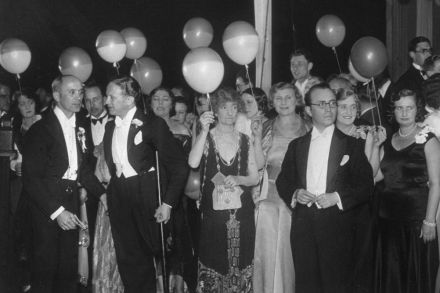
This is a tale of two London parties. They say something about London society, status, power, fame and fun — but I’m not sure what exactly. Party one was what I call a Power Party. It was full of famous faces from the upper echelons of British politics and media. I spotted chancellor of the Exchequer Rachel Reeves talking to the former Tory chancellor George Osborne and the former foreign secretary David Miliband. Party two was what I call a Pulchritude Party — a dazzling array of beautiful women and handsome men. There was a mix of young writers, journalists, lawyers, filmmakers and artists. It did not have the high social wattage of name recognition that the Power Party had — but it had beauty and youth on its side.

parties

Fanboys are ruining the arts

I’ve been to a talk by two very clever and talented men: the American novelist and critic Jonathan Lethem and the English documentary filmmaker Adam Curtis. They were talking about Lethem’s book about his art collection, Cellophane Bricks: A Life in Visual Culture. Never have I left a talk with such a warm glow of schadenfreude. Here were two gifted men who had nothing interesting to say about their chosen subject. It was an evening full of ArtSpeak and hot air, a facsimile of intelligent ‘cultural discourse’, as they say in the art world. The interesting Lethem and the brilliant Curtis had done the unthinkable: they’d become boring. Oh, what a joy it was to witness!

Is it better to be posh or cool?

From our US edition

What in twenty-first-century Britain is it better to be: posh or cool? Of course the correct answer is: it’s best to be posh and cool. But posh people, on the whole, tend not to be cool and really cool people aren’t usually posh. But the tribes have a lot in common. They share a certain insouciance, which is a posh word for total indifference to the feelings and thoughts of other people. They are both anti-democratic and anti-meritocratic in spirit and practice. No matter how hard you try and how much money you have, you can’t join the posh or be cool. Like sex appeal, you’ve either got or you ain’t. Defining either group is not easy, but you know when you see it — or in the case of the posh, hear it.

posh

How to know when to let friends go

From our US edition

London When an old friend says to you, “we must meet up for lunch sometime,” you can be sure of one thing: you will never meet for lunch. Why? Because your friendship is over. The clue is in the word “sometime.” It’s a rain check that never gets cashed. It’s what friends say to each other when they feel obliged to see a friend they don’t really want to see — but they don’t want to dump either. We all have friends like these: I call them the Undead friends, when the friendship is neither fully alive nor totally dead. You don’t delete them from your contact list — just your social life. This will lead to the odd spasm of guilt but don’t worry; we all do it. And it gets done to us too. There are people you think of as your great friends.

friends

Should I grow old gracefully – or disgracefully?

Now that I’m about to turn 70, I’m wondering: shall I grow old gracefully, or disgracefully? Everyone I know, young and old, tells me that I must go disgracefully (and that’s how they plan to go, or so they say). It seems that growing old gracefully has gone out of style – especially for women – but maybe it’s time for a revival? After a life of doing right and responsible things, you can now let your hair down – if you have any left What’s the difference between the two? Growing older gracefully is about letting go of the pleasures of youth – sex, drugs, rock ’n’ roll or whatever vice you prefer – for the more restrained and dignified delights of maturity. You dress, act and talk in an age-appropriate way. No trainers. No jeans.

The thrill of being recognized

From our US edition

I had just left Tate Britain and was heading toward the Pimlico underground station when I noticed an attractive woman coming toward me. I smiled at her and she smiled at me. And then she stopped and said, “Are you Cosmo Landesman?” There are writers and journalists who get public recognition like this all the time. Alas, I’m not one. But I was married to one of them, and it’s a real drag having a famous partner. You have to stand there at the supermarket checkout line with a big fake smile on your face as your loved one laps up all the love from some adoring fan. Imagine how poor John Gregory Dunne must have felt being married to the very recognizable Joan Didion. Having a famous writer friend is also a bummer. Socially, you will always be in their shadow.

writers

Why I never enjoy going on holiday

From our US edition

This Letter from London is coming from Kardamyli, a small town by the sea in the southeast of Greece. I’m on holiday. Readers who are now rolling their eyes at the thought of yet another account of someone’s “amazing” holiday experience have my sympathy. I feel your pain; there’s nothing worse than the “my amazing holiday” bore. In the 1970s people who subjected friends to long and tedious slideshows of their holiday snapshots appeared in British sitcoms as the bores next door. Now we don’t project our pics onto our living room walls; we post them on social media. And friends feel obliged to post comments like, “Wow! That looks amazing!” and, “I’m so envious!” But what they’re really thinking is: what a terrible show-off you are.

holiday

My Martin Amis FOMO

From our US edition

There’s a form of social anxiety that a lot of people suffer from — FOMO, Fear of Missing Out. “Fear” suggests something imaginary, that isn’t really happening. Not so. I don’t fear missing out, because I know I am. Friends are always asking me: are you appearing at the Hay Literary festival? No! Am I speaking at the Idler festival? No! Am I reading extracts from my book at the Cambridge Literary festival? No! “What?!” they exclaim in mock disbelief — and then ask why I’m not appearing at some small, obscure, local village literary fête, somewhere in the rectum of rural England. I’ve gotten used to the seasonal snub from the lit-festival establishment. And there are literary events all over London that I haven’t been invited to as well. OK, I’ll live.

Amis