Colin Freeman

Colin Freeman is former chief foreign correspondent of the Sunday Telegraph and author of ‘Between the Devil and the Deep Blue Sea: The mission to rescue the hostages the world forgot.’

What lockdown? It’s business as usual for drug traffickers

From our UK edition

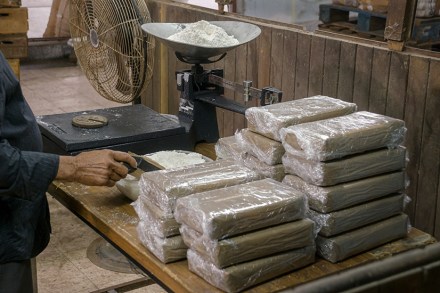
On Tuesday this week border control cops stopped a van with a shipment of face masks coming through the Channel Tunnel. When they checked the masks they found almost £1 million worth of cocaine tucked in among them. It was a similar story a week earlier. A man called Benjamin Evans was pulled over by the Welsh police on the A40 Brecon bypass. Evans claimed he was a key worker but when the cops searched his car, they discovered nearly £60,000 worth of cocaine. ‘Possession of drugs with intent to supply does not qualify as essential work,’ said the arresting officer.

Where did it all go wrong for Tony Blair’s protege in Guinea?

From our UK edition

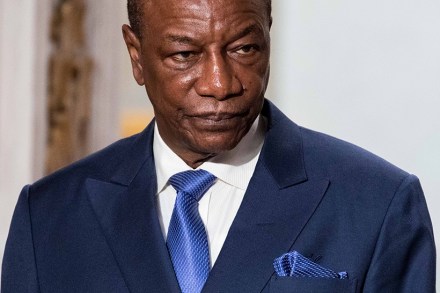
When Alpha Condé ‘Le Professeur’ became president of Guinea in 2010, he was hailed by Tony Blair as an ideal leader — the very model of what an African premier should be. Unlike previous rulers, Condé didn’t shoot his way to the top, but arrived armed with a law degree from the Sorbonne and Guinea’s first ever democratic mandate. Blair chose Le Professeur as a client for his Africa Governance Initiative (AGI), set up to nurture a new generation of ‘good guy’ African leaders, and Condé was introduced to a network of experts — not woolly DfID types, but sharp tacks with Downing Street experience. The idea was to replicate Mr Blair’s successful policy ‘delivery unit’ across Africa.

The Edition: can the UK and EU bridge their Brexit gap?

From our UK edition

41 min listen

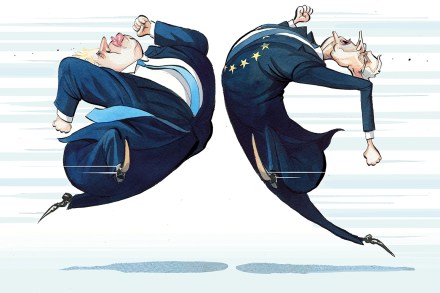
Next week, the trade negotiations between the EU and the UK begin in earnest. But in the days ahead, the positions set out by both sides are so far apart that the negotiations can only be heading towards an almighty row. James Forsyth writes in this week's issue that it's better if they get this over with quickly, in order to move on to the compromise 'landing zone' that is a deal by the end of the year. On the podcast, I speak to him and Peter Foster, Europe editor of the Telegraph. It gets a little fiery as Peter challenges James on exactly why Britain would want to diverge, anyway. I also speak to Colin Freeman, whose piece in the Spectator this week takes a look at Alpha Condé, the Guinean president who is trying to abolish term limits.

The Shia Krays: The whole of Iraq is being held to ransom

From our UK edition

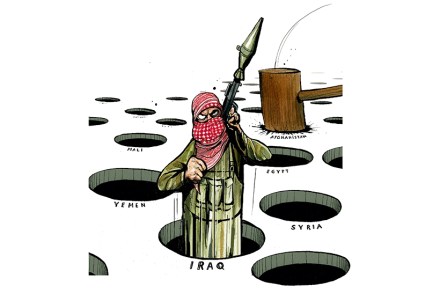
It’s been only six weeks since the death of the Iranian general Qassem Soleimani, but already there are a number of local hardmen vying to take his place. Most notable are his sidekicks, the Kray twins of the Shia world: Qais al-Khazali and his brother Laith. Qais and Laith who? Unless you’ve scanned Washington’s latest list of designated global terrorists, these two names won’t be familiar. Yet when I mentioned the brothers in a Baghdad teahouse a few weeks ago, folk lowered their voices and looked surreptitiously around, as if discussing the Krays in a pub in 1960s Bethnal Green. The Khazalis lead an Iran-backed Shia extremist group called the Asaib Ahl al-Haq, or League of the Righteous.

How did my children become more middle class than me?

From our UK edition

In a café in Norfolk last week, my seven-year-old son uttered words that mortified me. No, he didn’t comment loudly on someone’s weight, or ask why the lady next to us had a moustache. It was worse than that. Asked by a kindly man at the next table if he was enjoying his bacon sandwich, he declared to the café at large: ‘Yes, but I prefer them with rocket!’ Judging by the gentleman’s slightly blank smile, I’m not sure if he even knew what rocket was, let alone that in the London suburb where I live, it’s now as much a part of breakfast as smashed avocado on toast. Inwardly, though, I cringed — just as Peter Mandelson presumably did when, according to legend, he mistook mushy peas for guacamole in a Hartlepool chippy.

Alms for arms

From our UK edition

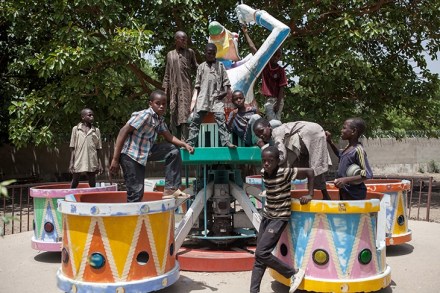
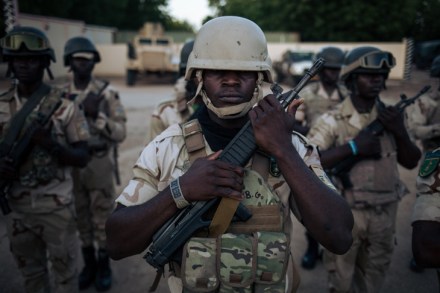
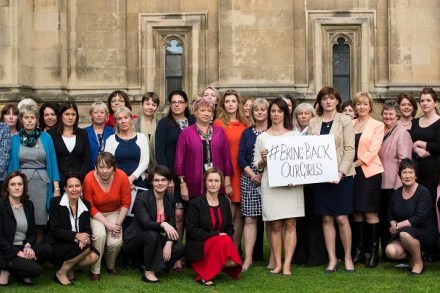
In the rush to declare Isis dead now that its caliphate has been routed from Iraq and Syria, it’s easy to forget that its Nigerian fellow traveller, Boko Haram, is still going strong. April’s five-year anniversary of the Chibok schoolgirls’ kidnapping, for example, passed with barely a celebrity tweet to mark it, despite the fact that 112 of the girls are still missing. Nor is much fuss likely to be made next month, when an insurgency that has killed nearly 30,000 will enter its second decade as violent as ever. Out of sight and out of mind, Boko Haram’s power is growing. And to find out why, all you have to do is follow the children who beg on the streets of Nigeria’s northern cities.

Pirates of the Caribbean

From our UK edition

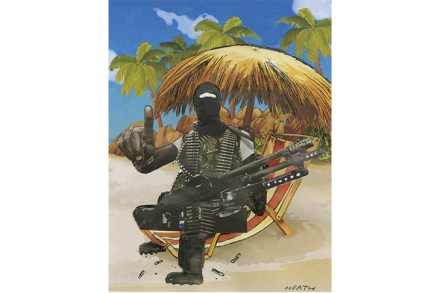
Brian Austin, a fisherman from the small village of Cedros in Trinidad, is struggling to describe the men who robbed him out at sea last year. ‘They had guns, they wore T-shirts and hoods.’ Then he brightens: ‘Have you ever seen Somali pirates? They looked just like that.’ I have indeed seen Somali pirates, as it happens, and rather closer up than I’d have liked. Ten years ago, a bunch of them kidnapped me for six weeks while I was out reporting. That was in Somalia, though, a failed state where anything goes. I never expected to be writing about a plague of pirates here in the Caribbean. The last lot of Caribbean Blackbeards were hunted down by the Royal Navy about 300 years ago, bringing to a close the so-called ‘golden era’ of piracy.

Courage and conviction

From our UK edition

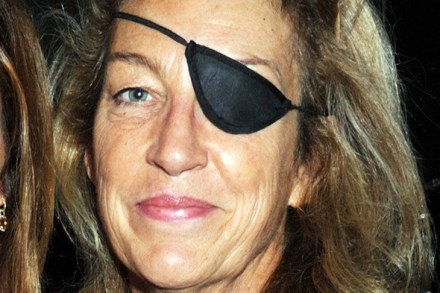
When Britain finally lowered the flag in the Iraqi city of Basra in 2007, the army’s top brass valiantly claimed that they were leaving it to ‘self-rule’ rather than all-out anarchy. Despite the militiamen in the streets and the mortars in the skies, this was what success looked like in Iraq they told the invited press pack. Nobody really believed them, of course; but only Marie Colvin of the Sunday Times could actually prove them wrong. Ignoring the ceremony invites, she donned an abaya and went into Basra to report unembedded, the first western correspondent to dare to do so in nearly two years.

Homage to Ambazonia

From our UK edition

 Calabar, Nigeria Simon Ngwa is a gentle and polite man, and he apologised to me first for what he was about to say. ‘I’m sorry if this upsets you, but we in Cameroon are very bitter towards Britain,’ he said. ‘As a child, I was taught to look up to the British Crown as a symbol of fair play and the Queen as a guarantor of moral values. But Britain is doing nothing to stop this genocide.’ Mr Ngwa and I had our conversation in a shabby refugee centre in the Nigerian town of Calabar, on Cameroon’s western frontier. Despite his impeccable manners, Mr Ngwa is a wanted man back home in Cameroon. His crime?

Unhappy returns

From our UK edition

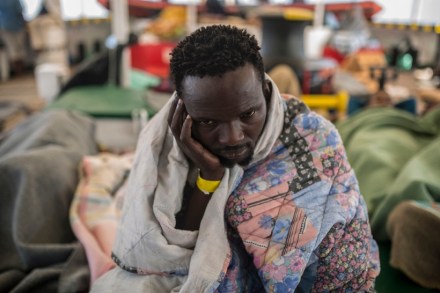
What to do about illegal migration from Africa into Europe? The EU’s repatriation programme seems at first like a great idea. Rather than just watching as desperate people risk their lives in the Med, we persuade them to go back home and help them to remake their lives there. The EU Emergency Trust Fund for Africa has coughed up £125 million for the scheme and about 25,000 migrants have already taken part, most heading home to west and central Africa. The poster boy of the programme is Smart Akawa. Two years ago, Akawa was flown by the EU back to his native Sierra Leone from a detention centre in Libya. With a modest EU grant, he has set up his own street-cleaning business, employing 14 other returnees to give garbage-strewn Freetown a much-needed scrub.

Ransom money has turned Boko Haram into Nigeria’s Cosa Nostra

From our UK edition

Amina Ahmed counts herself as one of the lucky ones, or just about. When Boko Haram staged a mass kidnapping in her home town of Gwoza, northern Nigeria, three years ago, she and other female captives were sorted into two different categories of chattel. The less favoured ones were conscripted as cannon fodder against the Nigerian army, with suicide bombs strapped to their waists. The others became ‘servants to the Emir's soldiers’ – which, Amina discovered, was Islamist-speak for sex slave. During her two years in captivity, she was forced to sleep with at least 10 different men. She'd shudder whenever she heard their motorbikes roaring into camp. Eight months ago, she escaped to an IDP (internally displaced person) camp in the north-eastern city of Maiduguri.

Amazing grace | 18 January 2018

From our UK edition

Last week, Peregbakumo Oyawerikumo, aka ‘The Master’, was finally caught and shot by the Nigerian army. Oyawerikumo and his Egbesu Boys had styled themselves as local Robin Hoods, taking riches from oil companies in the Niger Delta, but they won’t be much missed. In the remote swamp town of Enekorogha, their demise will be celebrated, because this was the scene of their most notorious crime. It was here, last October, that the Egbesu Boys kidnapped Ian Squire, an optician from Surrey who was working at a clinic, and three fellow Britons: Cambridgeshire GP David Donovan and his wife Shirley, and optometrist Alanna Carson, from Northern Ireland.

Despot hero

From our UK edition

James Sackie would make a good frontman for a campaign to help ex-child soldiers. At the age of 17, he was press-ganged into one of Charles Taylor’s juvenile militias. Twenty years on, he talks movingly, in his matter-of-fact pidgin English, about the dreadful things he saw, including the day he had to stop his own baby son, JR, being whisked away as lunch for a general called Eat Human Being. But ask Sackie about Taylor himself and he changes. Taylor is a war hero, not a war criminal, James insists. And if he were freed from his jail cell in Britain, where he’s currently serving 50 years for war crimes, James would welcome him back as leader of Liberia. Not the kind of talk that gets donors reaching for their chequebooks.

Exodus from Gambia

From our UK edition

A ticket to paradise comes very cheap in Gambia — as long as you’re headed in the right direction. Thomas Cook charges just £230 for the six-hour flight from Gatwick to West Africa, and in the cheaper hotels along the cream-white palm beaches, a week’s stay costs even less. For the 100,000 Europeans who flock here each year — half of them Brits — it’s a much loved, if slightly tatty, African Benidorm, where donkeys can be found not in the souvenir shops but grazing rubbish on the streets outside. For the equally large numbers of Gambians seeking desperately to go the other way, however, the ticket is far pricier.

How to defeat a caliphate

From our UK edition

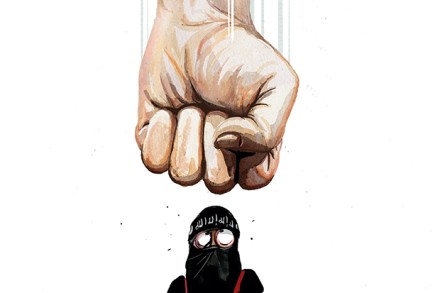
[audioplayer src="http://rss.acast.com/viewfrom22/defeatingisis/media.mp3" title="Andrew Bacevich and Douglas Murray discuss how ISIS can be crushed" startat=39] Listen [/audioplayer]Last Sunday Isis raised their black flag over Palmyra. Below the flag, in the days that followed, the usual carnage began: beheadings, torture, desecration. Syrian state TV has reported that over 400 civilians have been killed already, and the big question globally has become: how could this have happened? What went wrong with the Iraqi and Syrian troops? Isn’t there anything the West can do? Lord Dannatt, the former head of the army, has called on the British government to ‘think the previously unthinkable’ and send troops.