Colin Freeman

Colin Freeman is former chief foreign correspondent of the Sunday Telegraph and author of ‘Between the Devil and the Deep Blue Sea: The mission to rescue the hostages the world forgot.’

The death of the war photographer

Hollywood has been good to war photographers this year. First came the dystopian blockbuster Civil War, with Kirsten Dunst as a veteran photojournalist touring America at war with itself. Now comes Lee, starring Kate Winslet as second world war legend Lee Miller, who captured the liberation of Paris and the horrors of Dachau. Both demonstrate the screen appeal of war correspondents, whose hell-raising, bullet-dodging image is tailor-made for the movies. Yet in an era with nearly as many frontlines as in Miller’s time – Ukraine, Gaza, and Sudan to name a few – ask yourself this question: can you name a single war photographer who’s doing the job today? My guess is probably not. And if you’re wondering why, try this test.

What happened to the Evening Standard?

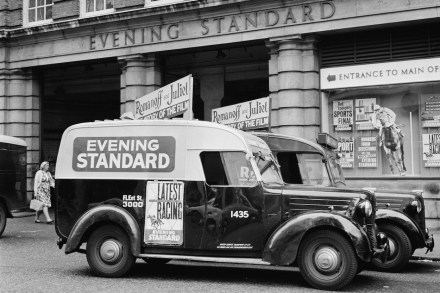
Like any bunch of ageing ex-hacks, those of us in the ‘Former Evening Standard Employees’ Facebook group are fond of reminiscing about the past. Occasionally, it’s at boozy reunions, when we recreate afternoon epics in the Elephant pub near the old Kensington office. More often, it’s when posting online RIPs to old colleagues who’ve passed to that great newsroom in the sky – sometimes, sadly, well ahead of deadline. The last few days, though, a Facebook page often dedicated to mourning bygone scribes and sub-editors has suffered a rather wider bereavement. Last week, it was announced that the Standard would cease its daily newspaper altogether, ending two centuries of print-runs in the capital.

How snooker snookered itself

Anyone who flicks through their television channels this Bank Holiday weekend will almost certainly glimpse the final of the World Snooker Championship. Played over Sunday and Monday at Sheffield’s Crucible, the 35-frame marathon is snooker’s answer to Test Cricket. And as one of the few sporting events the Beeb still has the rights to, it still gets blanket coverage – if only on graveyard slots on BBC2. A glimpse, though, is about as much as many people bother with these days. Snooker is a long way from its mid-1980s heyday, when 18 million Brits tuned in to watch Dennis Taylor beat Steve Davis in the 1985 Crucible showdown. I am indeed one of those sad middle-aged men you see in live snooker audiences Indeed, those battling it out this weekend are hardly household names.

Could Europe send troops to Ukraine?

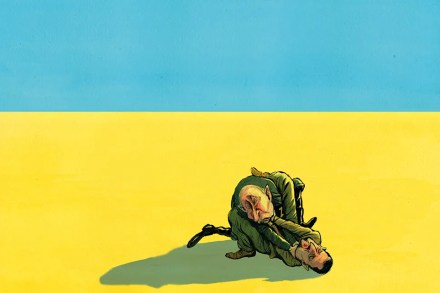
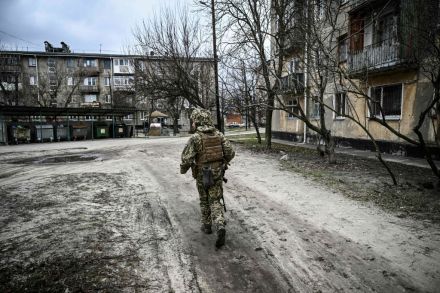
It is 2026, and in a downbeat speech at the Kremlin, Vladimir Putin finally announces a withdrawal from Ukraine. Russian troops have done their best – or worst – but a fresh influx of well-trained Ukrainians have finally prevailed. The Donbas is now in Kyiv's grip, Crimea’s fall only days away.  What has turned the tide, though, is not just the long-awaited F16s, or Washington switching the funding back on. Instead, it is the presence of thousands of European troops across Ukraine's western half, protecting cities, ports and borders, making Ukraine feel reassured and Russia unnerved. As Kyiv celebrates, Europe quietly pats itself on the back too: after 80 years clutching America's coat-tails, it finally stepped up to win a war in its own backyard.

Has the West forgotten about Ukraine?

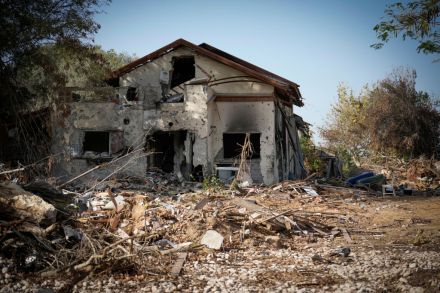
When Hamas murdered 1,200 people on October 7, I was in eastern Ukraine, researching a long piece for the Telegraph on how the summer's counter-offensive had gone. The death toll in Israel's 9/11 was equivalent to just a week or two's heavy fighting in the Donbas. Yet immediately it was clear that the massacre 3,000 miles away would mark a new phase in Ukraine's conflict: no longer would it be the sole international crisis in western leaders' in-trays.Until now, one of things that has buoyed morale here is the sense that the world is cheering Ukraine on, and that despite the privations and bloodshed, a glorious Victory Day awaits. Since October 7, the narrative has changed.

The families of Israel’s hostages are living in hell

Yair Mozes, whose mother and father are among the 240 hostages kidnapped by Hamas, is trying to describe what it feels like. ‘It is hell,’ he says. ’You don't go to sleep properly, then the minute you wake up, you're bolt upright. I'm just about managing at present... then every now and then I fall apart and sleep for ten hours straight, as my body can't handle it anymore.’ I suspect even those words don't really do it justice. But they sound familiar. My own relatives suffered that same ghost-like half-life when I was kidnapped for six weeks by Somali pirates while working for the Telegraph back in 2008. Sleepless nights, visits to the GP for tranquillisers, and terrible paranoia.

The Kremlin is sanctioning me – but why can’t they get my name right?

Journalists love being put on blacklists. In a profession that prides itself on holding the powerful to account, there’s no better accolade than being banned from a politician’s press conferences, put on some spin doctor’s dossier of ‘unfriendly’ hacks, or better still, declared persona non grata by some tyrant’s regime. It’s the hack’s equivalent of combat spurs, to be gathered alongside Pulitzers and war wounds. So what greater backhanded compliment could there be than to be banned by Vladimir Putin from visiting Russia? This was the honour conferred on me last week, when myself and 14 other British journalists were put on a Kremlin sanction list for our allegedly hostile coverage of the war in Ukraine.

Will mounting casualties change the debate in Ukraine?

At a small army field clinic outside Bakhmut, I watched as the body of a dead soldier was carried in. Two more soldiers followed, this time seriously injured – and this was what troops described as a ‘quiet day’. Ukraine doesn’t talk about its military deaths much and refuses to reveal any figures. There’s little in the way of victim culture here; the emphasis is on how brave its troops are, not how many have perished. Most people know someone who’s died in action, but treat the collective trauma as something to worry about when the war is over. In the meantime, there’s vodka. While Russia has used the conflict to drain its jails, Ukraine is losing its brightest and best Here and there, though, glimpses of the nation’s best-kept secret emerge.

Confessions of a royal paparazzo

I can still remember the shock of watching the news on Sunday, 31 August 1997 and learning that Lady Diana had been in a car crash in Paris. The Beeb’s royal reporter, Nicholas Witchell, had just confirmed that she’d died, and that five French photographers who’d been chasing her had been arrested.My own feelings that day, though, weren’t so much for the Queen of Hearts, or the two young princes she left behind. Instead, I was preoccupied with a nagging guilt – having been part of a Fleet Street army that had hounded her round London that very summer. Or, as Prince Harry later put it, the ‘pack of dogs’ that drove his mum to an early grave, and who were back to their old tricks this week, chasing him and Megan around New York.

‘Iraq does not compare to this’: the British soldier on Ukraine’s front line

Christopher Perryman, a former British soldier, did not enjoy life as a security guard protecting the HS2 line from eco-protestors. They called him a child molester and a bigot. So when Vladimir Putin invaded Ukraine last year, he decided to go there instead. ‘I hated HS2 – we were getting things thrown at us, and getting called every name you can think of. They called us the foot soldiers of fascism,’ says Perryman, who served in Iraq with the Royal Regiment of Fusiliers. ‘Then a mate told me that Ukraine’s President was asking for foreign military veterans to help. I’ve never liked bullies and Putin is a bully, so off I went.

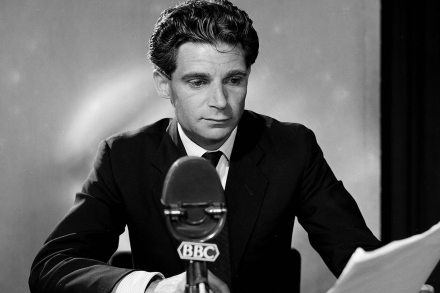
Why ‘From Our Own Correspondent’ is still the best of the BBC

Radio Four recently broadcast a ‘Best of’ edition of From Our Own Correspondent, marking 100 years since the birth of one of its most distinguished contributors, the late Charles Wheeler. Listening to the likes of Allan Little reporting on the fall of Mobutu, and Brian Barron in Vietnam, one is reminded that however tedious Thought for the Day and You and Yours may have become, some segments of R4 still shine.Indeed, for many listeners, From Our Own Correspondent is the essence of the Beeb’s nation speaking unto nation remit – a weekly mailbag to Auntie from staff worldwide, sometimes grim, sometimes quirky.

Inside the court of King Zelensky

The first hint that my audience with Volodymyr Zelensky might not be what I’d hoped for came with the emailed invite. A few days before I’d been told I’d made the shortlist for a select presidential news conference marking the anniversary of the war. Not quite an exclusive interview, granted, but given current Zelenskymania, a decent second best. Images of a cosy roundtable in the secret presidential bunker beckoned.Alas, when the email from his office finally arrived, it was notably bereft of the cloak and dagger one might expect. No orders to leave my phone at home. No secret rendezvous with a blacked-out van. Just an order to report at 3.

Where will Kherson’s freedom fighters go next?

When Vladimir Putin’s troops first invaded Kherson, they marched into Eugene Chykysh’s hipster coffee shop. ‘They all asked for cappuccinos with four sugars,’ Eugene told me. Later, another Kherson resident says that the soldiers who raided his house took ten kilos of sugar from him. Eugene is one of the few Ukrainians in Kherson who even talked to the Russians. Most people I speak to say they simply avoided them, staying indoors as much as they could, and venturing out only to buy groceries from the few shops still open. It was like lockdown on steroids, they say, and with no Netflix to pass the time because the Russians switched off the internet.

Meet the British soldiers fighting in Ukraine

At his base near the frontlines outside of Kherson, an ex-British soldier named JK shows me a video of what looks like a scene from the world war one film 1917. It shows him and two other volunteer fighters walking through a burning, smoking treeline, having spent two hours pinned down by artillery and sniper fire that killed three Ukrainian comrades. It was a grim, exhausting day – and, as soldiering experiences go, far more rewarding than life in the British army.  ‘When I first signed up for the British army, there was drill and discipline, and if you were punished, your instructor would make you do press ups – that keeps you fit and toughens you up,’ said JK, whose own great-great grandfather won the Victoria Cross in world war one.

The West has left Armenia to fend for itself

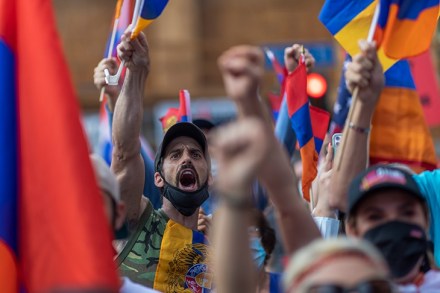
Bomb shelters have come a long way since the Blitz. As missiles from Azerbaijan rained down on Nagorno-Karabakh a few weeks ago, Hayk Harutyunyan and his family took refuge in a basement with wifi, an ensuite toilet and a makeshift mini-bar. There were 12 people crammed in there every night, he told me, ‘but we Armenians are very close as family, so we get on well’. Indeed, sipping brandy with them in their shelter, I was reminded of that other Armenian clan, the Kardashians, who spend their time sitting around and chatting. Keeping up with the Harutyunyans, however, makes for more challenging viewing. Armenia, a Christian democracy in a neighbourhood dominated by Islamists and strongmen, has been left to fend for itself by the West.

Will guns from Ukraine end up on the streets of Britain?

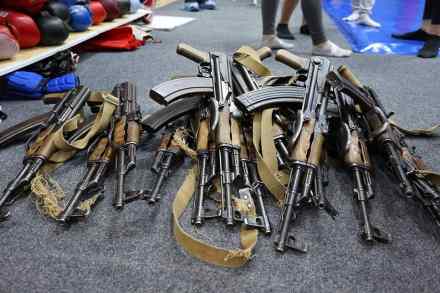
While visiting a Ukrainian militia this summer, I nearly trod on an anti-tank mine which was being used as a doorstop at the entrance to their HQ. ‘Don’t worry, it’s a broken Russian one that we found,’ said my breezy host, Eduard Leonov. ‘We’re trying to fix it so we can use it.’ Eduard’s militia isn’t exactly the SAS of Ukraine’s forces. It’s a volunteer army and he himself is a folk-singer-turned-fighter in his fifties. Eduard’s dozen-odd comrades are Dad’s Army age, yet even so they still have a formidable arsenal – everything from grenade launchers to Kalashnikovs.

How Russian drones are being used to spy on Kyiv

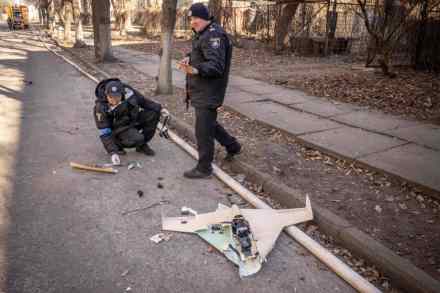
'That used to be my neighbour's Skoda,' says Alexei Marchenko, as he points to a twisted lump of metal in the wreckage of a row of garages. We're standing in the courtyards of his housing estate in Kyiv, where a Russian missile landed overnight. One person has been killed and another dozen injured, although it's a miracle it wasn't many more. As well as demolishing several flats, and shattering every window in a half-mile radius, the blast has destroyed the garages-cum-mansheds where Mr Marchenko and his neighbours used to potter. Anyone who'd been there when the missile landed would have been caught up in a cloud of manshed-shrapnel: fragments of Skoda, nuts and bolts, power tools and beer bottles. Luckily, the missile landed overnight when most folk were still asleep.

The reality of being ‘under siege’ in Kyiv

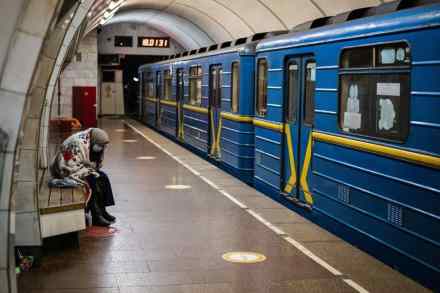
Kyiv, Ukraine I've never commuted into a warzone by train before, but I can now recommend it. The express train to Kyiv from Lviv near Ukraine’s Polish border has several advantages over coming in by car. Firstly, it avoids a 14-hour motorway drive, where fuel is short and traffic jams are long. Plus, the online booking app still works far better than any in Britain. Despite the risk of Russians-on-the-line, the train has been kept running to help Ukrainians flee Kyiv for the Polish border. But it returns to Kyiv largely empty, save for a few Ukrainians on mercy dashes to pick up relatives. We trundle through the night, the lights dimmed. Vodka is shared round. The only problem is that we arrive into Kyiv central station at 5am, three hours before curfew ends.

Why the US assassination of Iran’s top general didn’t spark a war

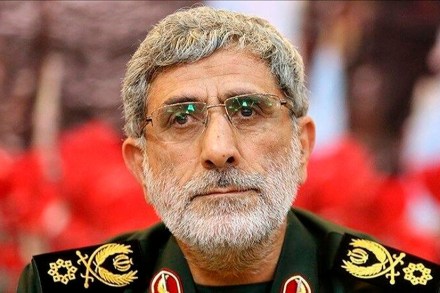
Iran’s new meddler-in-chief in Iraq is a bespectacled general called Esmail Ghaani. Brought in to replace Qassem Soleimani after his death in a US airstrike in January, he has the same green uniform as his predecessor, the same grey beard, and the same orders to make Iraq’s Shia militias do Tehran’s bidding. That, though, is where the similarities end. Soleimani was a legend among his followers in Iraq — he spent years building contacts with local commanders and joined them on the battlefield against Isis in Mosul. Ghaani, by contrast, is an owlish, uncharismatic figure who looks like he might be happier behind a desk. Unlike Soleimani, he doesn’t speak Arabic and has to rely on a translator during his visits to Baghdad.

Macer Gifford: My fight against Isis

In mid 2015, Macer Gifford, the City trader who went to Syria to fight Isis, got an unexpected phone call. He was in London for a break and busy doing media interviews as the unofficial spokesman for the Kurdish YPG militia. The caller, though, wasn’t just another hack after a quote. Instead, it was a lawyer whose client was on the ‘other side’. Tasnime Akunjee said he was working for the family of Shamima Begum, the teenager from Bethnal Green who had run away to join Isis. ‘He said they were looking at trying to get her out of Raqqa,’ remembers Gifford. ‘He asked if there was any way the YPG could pick her up, so that she could then be brought back to the UK.’ Was she keen to return, asked Gifford?