Cindy Yu

Cindy Yu

Cindy Yu is a Times columnist, and formerly both an assistant editor of The Spectator and presenter of our Chinese Whispers podcast.

Our lost towns: is investment the answer to the town-city divide?

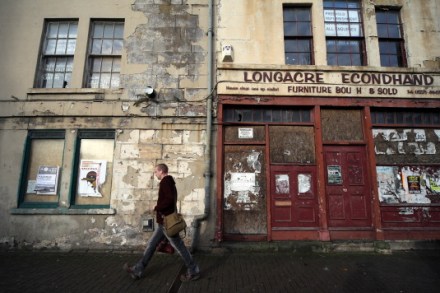
Why is politics everywhere in such a mess? Here’s one answer. The rules of the game have changed, but no one has told the players. They’re thinking left vs right or, at a push, libertarian vs authoritarian. And yes, the crash did raise concerns about inequality – but there have been other forces at play; new ones that politicians have not yet recognised - like cities vs regions. Writing in The Spectator recently, William Galston, a former Clinton aide, put it thus: “Most cities are now thriving but most smaller towns are not. Once, the fortunes of large cities and their hinterlands were linked. Now, cities are like black holes, absorbing skilled labour and resources — but failing to emit either wealth or opportunities to surrounding areas.
China’s obsession with Taiwan is nothing to do with money

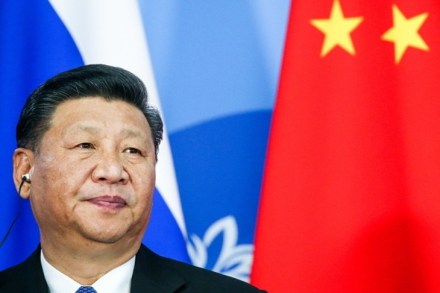
Does President Xi's first address of the new year spell trouble for Taiwan? In a 30 minute speech on Taiwan, Xi used much fiercer language than his predecessors on Taiwan’s reunification. Journalists have reported it as 'chest-beating' and 'threatening'. Phrases like ‘the reunification of Taiwan…is the inevitable requirement of the rejuvenation of the Chinese nation’ and ‘we do not promise to renounce the use of force’ certainly don't bode well. But the speech is actually interesting for a different reason: it reveals why the Chinese are so obsessed with Taiwan. Many outside China don't understand why a country of 1.7 billion people with the world’s second largest economy is so obsessed with a tiny island of 23 million people.

The Spectator Podcast: time to make your own mind up about a no-deal Brexit

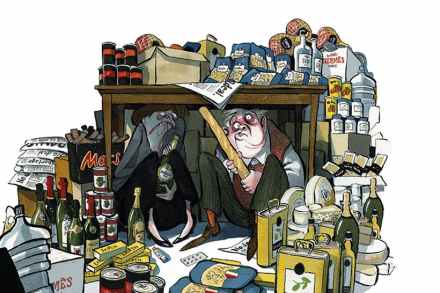
Lorries backing up in Kent, a Mars bar shortage, and no more Rome city breaks – these are just some of the things that we have been warned about when it comes to a no deal Brexit. But what will really happen? In this week's cover piece, Ross Clark weighs up the pros and the cons. It's fairly neutral, but on the podcast, we hear from two people who are anything but. Lord Peter Lilley, Tory MP, has said that a no-deal Brexit would be better than the status quo; he's joined by Ian Dunt, editor of politics.co.uk, who thinks that it would be an 'unmitigated disaster'. It was a pretty fiery exchange from the two Brexit experts - the debate ranged from nuclear isotopes to Chinese kettles. Tune in to make your own mind up about no deal.

‘Are you blind?’ – Chinese tabloid takes a swipe at the New York Times

This week, humanity made first contact with the dark side of the moon, thanks to China. A Chinese unmanned spacecraft, Chang’e-4, has been able to send back visuals of just what it looks like: Chinese media exploded in a burst of pride. Given this is the first time any human contact has been made with the back of the moon and the achievement had been lauded as ‘impressive’ by Nasa, you might expect the state newspapers to have been a little smug or superior. But coverage has been surprisingly gracious and lauded the moment as significant for mankind. The People’s Daily newspaper writes a technical front-page story, with the headline - ‘First time! Chang’e-4 realises human contact with the dark side of the moon. First picture!

The Spectator Podcast: the two elections that will shape 2019

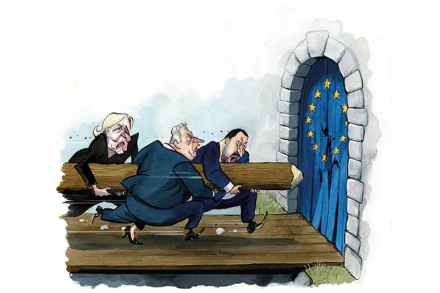
As we move into 2019, two big elections could shake up the rest of the year. In May, the European elections could see an unprecedented eurosceptic populist surge. Across the continent, politicians like Marine Le Pen and parties like Germany’s AfD are receiving more support. Fredrik Erixon also writes in this week's cover that, notably, the populists are maturing to play the political game. So is the EU about to be fundamentally changed by the political outsiders? Fredrik talks to us on the podcast, joined by Charles Grant, the Director of the Centre for European Reform, who says that, in response, the pan-European moderates will become more cohesive: 'The moderate parties in the European parliament - the centre right and the centre left...

The Spectator Podcast: the Christmas Edition

We were all a little bit more innocent at the beginning of 2018, weren't we? Barely anyone knew - or cared - about the Brexit backstop, Trump and China weren't at (trade) war, and Labour's anti-Semitism problem hadn't been so painfully put on display. In this last episode of the Spectator Podcast for the year, join Lara Prendergast as she talks to a star-studded cast of commentators and experts on the biggest political and cultural events this year. She talks to James Forsyth, Stephen Bush, and Rory Stewart MP on just how badly Brexit is going and has a frank but funny discussion with Jess Phillips MP, Paul Mason, and Katy Balls on the things that went wrong (and right) for Labour this year.

The Spectator Podcast: are politicians ready for what comes after the meaningful vote?

Why did Sam Gyimah quit his government job? A moderate remainer, a pragmatic politician, and a driven minister - that is, until last Friday. He decided that he couldn't stomach the Prime Minister's Brexit deal anymore, even though - he tells us - he has never tried to make his career about Brexit. How many other Tory rebels are like him, and is the Prime Minister really listening to their concerns? On the other hand, do rebels like Sam Gyimah know what they are unleashing if they vote down Theresa May's Brexit deal next Tuesday? James Forsyth writes in this week's cover piece that voting it down is sailing the country into entirely uncharted territories. James and Sam both join Lara Prendergast on this week's Spectator Podcast.

The Spectator Podcast: is Corbyn to blame for a British cash exodus?

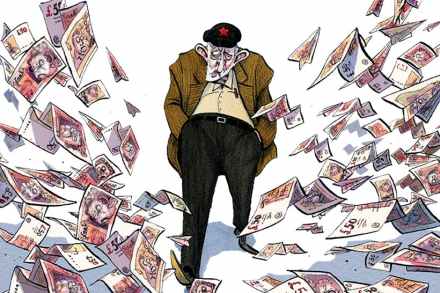
In the last two years, $20 billion have left the UK as investors withdraw their money from British equity funds. Conventional wisdom might say that this is because of Brexit uncertainty, but talk to many in the City and they will tell you that the political event that their clients and partners are most afraid of is, in fact, a Corbyn-government. With policies like a 10% expropriation of equity from British companies to, supposedly, the worker (though, read the small print and you'll see that much of it goes towards the State), it's not hard to see why.

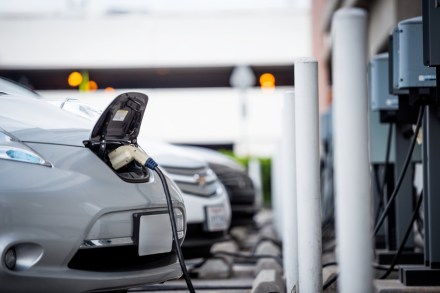
What does the future of low-carbon motoring look like?

What will transport look like in the year 3000? Busted thought we would live underwater, but perhaps we’ll have even figured out zero carbon travelling. Recently, the government made its own prediction in the form of the ‘Road to Zero’ strategy - new petrol and diesel cars are to be banned by 2040. This is the latest in a series of downright inconsistent advice from the government on pollution. In the late 80s and 90s, diesel was explicitly encouraged and diesel cars subsidised. More recently, the goal posts have changed and diesel is the latest enemy.

The Spectator Podcast: China’s new social scoring and the Brexit civil war

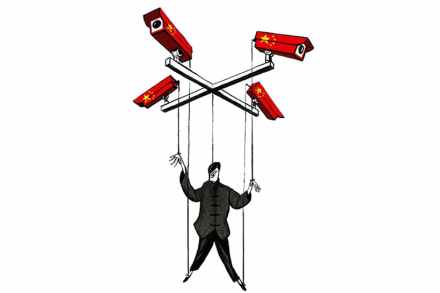
This podcast was recorded from the midst of the Brexit omni-shambles. Katy Balls talks to Tim Montgomerie, Sienna Rodgers, and James Forsyth on the latest. But first, something just as monumental is happening on the other side of the world. Watch this: [embed]https://twitter.com/psythor/status/1056811593177227264?lang=en[/embed] That was the announcement that technology journalist James O’Malley heard when he travelling on a high-speed rail train from Beijing to Shanghai earlier this year. It is just the tip of a social credit ice berg, James writes in this week’s cover piece. The Chinese government is working to create a system of scoring its citizens on their behaviours. James joins the podcast, together with me, Cindy Yu, in my capacity as a China commentator.

The Spectator Podcast: why May’s Brexit deal is hard to stomach, but the alternative is worse

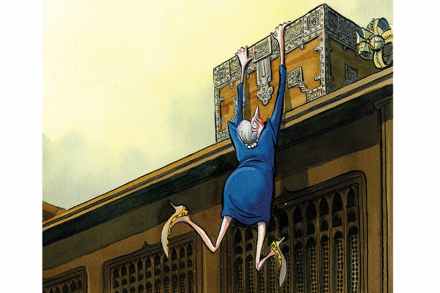
As Theresa May prepares to unveil her Brexit deal, we ask: just how bad is it, and what happened to ‘no deal is better than a bad deal’? In the American midterms, the Blue Wave didn't happen, but Democrats did take control of the House of Representatives – what next for Trump’s presidency? And last, as we approach Remembrance Sunday, who are the lives we are remembering, and is it time to move on? First, Theresa May is serving up two unpalatable options on Brexit – her deal or no deal. If we take her deal, Britain risks being tied to the EU forever through the customs union; but if there is no deal, the country will face a period of instability and disruption that we are simply not prepared for.

The Spectator Podcast: will the EU project crumble after Merkel leaves?

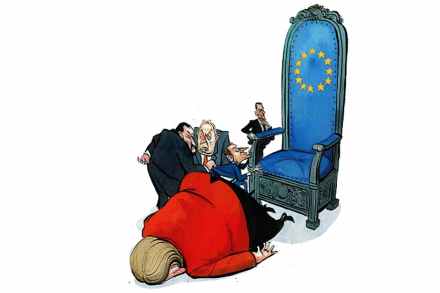
Angela Merkel is stepping down but what is her legacy and can the EU project survive without her? On this week's Spectator podcast, we also take a look at whether WhatsApp has made it harder for MPs to plot; and ask: should Brits be allowed to forage for wild mushrooms? Merkel has been Germany’s Chancellor and Europe’s de facto leader for 13 years. In this week's cover piece, Douglas Murray argues that her departure is the end of the federalist EU project. On the podcast, Douglas is joined by Sophie Pedder, the Economist’s Paris bureau chief and Emmanuel Macron’s biographer.

Can Brits ever deliver infrastructure on time and on budget?

Britain is a world leader in many things - but not many people would say that infrastructure is one of them. When abroad, Brits marvel at the state of airports and railways, even swimming pools. When we seek to catch up - with HS2 or a new runway for London - the result is years of wrangling. Is there a British curse? The Spectator gathered a group of industry leaders, policymakers and politicians in its boardroom to discuss. The lunch was sponsored by Aecom. Fraser Nelson started by laying out the problem. The OECD recently found that the UK has underspent ‘over the past three decades' and added that quality of infrastructure is the worst in the G7.

What next for the over-60s? Social care and beyond

It’s a great thing that we’re all living longer, happier, and healthier lives. But this also presents a policy conundrum – what happens when we get old? Should we get social care funded by the state? And how would that be paid for – through a tax hike which would see the young pay for the care of the old, or making old taxpayers fork from their own pockets? We’ve heard talk of intergenerational tension between the young and the old, and politicians all agree that something needs to be done about accommodation, social care, and the NHS burdern in general. The problem is – nobody quite knows what to do.

The Spectator Podcast: has Brett Kavanagh cost Democrats their midterm victory?

Somehow it has already been two years into a Trump presidency, and America is facing midterm elections. Will Democrats win in a landslide? We also delve a little deeper at the political faultlines behind the Jamal Khashoggi story – is Turkey taking advantage of his death? And last, is the use of wild animals in circuses really the great injustice that campaigners say it is? America is going to the polls again. This November, the House of Representatives and a third of the Senate are facing re-election in the mid-terms. Some predict that the Democrats will win in a landslide and retake control of the currently Republican Congress. But Freddy Gray, editor of Spectator USA, writes in this week’s cover that the Democrats aren’t in for such an easy ride.

Khashoggi is a wake up call – Saudi Arabia is following the Chinese interpretation of reform

When Mohammed bin Salman was first made Crown Prince of Saudi Arabia, the West rejoiced. It looked as if, finally, a young reformer with 21st century values was taking the reins of the state. After he allowed women to finally drive, the West hoped the Saudis would free jailed journalists, meaningfully engage with Europe and America like Israel does, and maybe even end their involvement in the Yemen war. In short, it was hoped that Saudi Arabia was beginning its journey into liberal society. From Jared Kushner and Boris Johnson to Middle East think tanks and commentators, many bought in to the optimism. As Nick Robinson said on the Today programme this week - ‘A lot of people in the West have put an awful lot of store by MBS.

Chinese vaccine giant gets a taste of its own medicine

A few months ago I wrote about the damning revelations surrounding one of China’s most trusted vaccines providers. Changsheng Biotech had been profiteering from the creation and distribution of useless vaccines for children. First, they mixed old vaccines with new ones when selling jabs meant to immunise against diphtheria, whooping cough, and tetanus (all three diseases are potentially fatal to infants); then, a year later, they faked the production dates and batch numbers of rabies vaccines. The punishment for the first drugs transgression was a mere 3.4 million yuan – less than £400,000, and only 0.0003 per cent of the company’s annual turnover. It was no more than a slap on the wrist.

The Spectator Podcast: Brexit, Bellingcat, and bondage with ethics

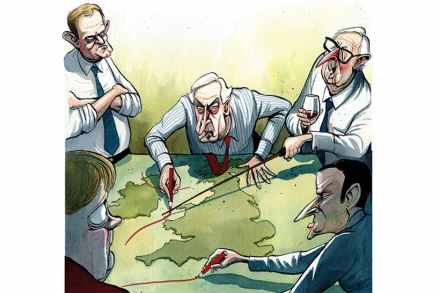
This week, Brexit negotiations grind to a halt again as Brussels and the UK draw mutually exclusive red lines on the Irish border problem. We talk to James Forsyth and Dan Hannan on what next for Brexit. We also look a little deeper into the methods and mission of Bellingcat, the investigators that unveiled the true identities of the Salisbury suspects. And last, we investigate a sex industry that is trying to become more ethical. Brexit negotiations have hit a brick wall again, and this time, no deal looks closer than ever before. The latest snag over the Irish border seems impossible to solve. But all this is a EU strategy to divide and conquer, argues James Forsyth in this week’s cover piece – Brussels has used Ireland to carve up the UK and back it into a corner.

The Spectator Podcast: John McDonnell vs the clueless Tories

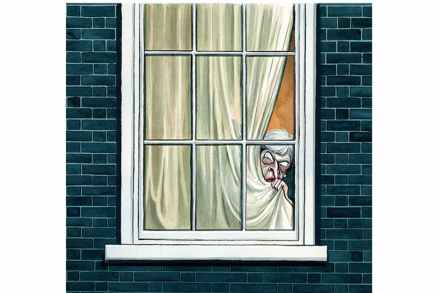
As we head into Conservative Party Conference, Theresa May has never looked more alone. We talk to Iain Duncan Smith and James Forsyth about a Prime Minister abandoned. And while chaos reigns in the Conservative Party, Labour is gearing up, led by a pragmatic but radical Shadow Chancellor. Just who is John McDonnell? And last, why is Tesco’s new discount retailer so Brexity? First, the Prime Minister may be celebrating her 62nd birthday at Conservative Party Conference with thousands of party members, but Theresa May has never seemed more alone. At home, neither Brexiteers or Remainers have any sympathy for her while they try to push their vision of Brexit; and on the continent, she is humiliated by leaders and negotiatiors.

Introducing ‘Spectator Radio’: a new podcast, every day

Six years ago, the Spectator began podcasting. Why? For fun, really. Our writers were always being invited to comment on national broadcast shows, and so we thought, why not create our own? It's been a big success. We started with ‘The Spectator Podcast’, which now has over 30,000 listens each week. We launched Coffee House shots, our political podcast, in 2016 - and then made it daily when Theresa May announced the snap election last year. People seemed to like it so we just kept going. Last year, Shots was listened to over four million times. We now have podcasts on topics ranging from politics to culture, literature to religion, and that’s not to mention the ones we have in the pipeline. Our podcast range is expanding rapidly, and they all need a home.