Cindy Yu

Cindy Yu

Cindy Yu is a Times columnist, and formerly both an assistant editor of The Spectator and presenter of our Chinese Whispers podcast.

Labour’s downfall begins

From our UK edition

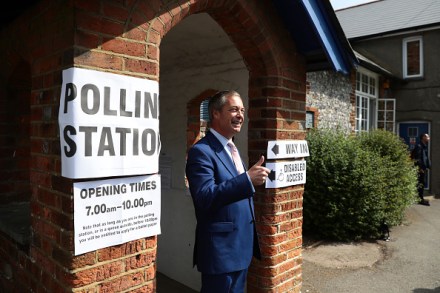
In early results on Sunday evening, the Brexit Party’s dominance in the North East of England, the first region to be counted, could be a sign of things to come. Taking 39 per cent of the vote share, Nigel Farage’s party has secured two MEPs out of the three available in the region, with Labour taking the third. This bodes well for the Brexit party at the beginning of a night of counting, and Labour should be very worried by these early results. Before tonight, Labour had two MEPs in the North East. In tonight’s results, Labour's vote share has fallen by 11 per centage points. As predicted, Conservative vote share has fallen drastically across the UK – they were beaten by the Greens in the West Midlands (where the Brexit Party took three seats).
The Spectator Podcast: Corbyn isn’t working

From our UK edition

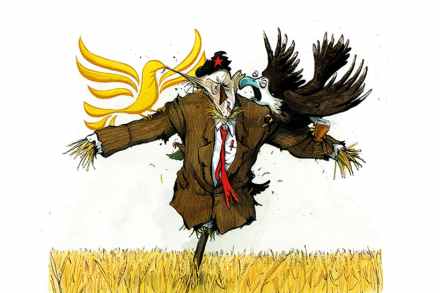
Labour’s constructive ambiguity on Brexit has served it well since the 2017 election. But as the country votes in European elections this week, has the party miscalculated in being too ambiguous? Nick Cohen writes in this week’s cover article that Labour should have positioned itself as the party of Remain, and now it faces being picked off by the Lib Dems on one side, and the Brexit Party on the other. On the podcast, Sienna Rodgers and Nick discuss Labour's fate: And rather unlikely support for Boris Johnson’s leadership campaign comes in this week’s issue. Self-professed Remainiac Matthew Parris says that whoever is the next leader will have to tell the country that Brexit must be paused, and Boris is the best man for the job.

Conservative ministers and MPs react to Theresa May’s resignation

From our UK edition

After a tumultuous premiership, Theresa May has finally announced her resignation. She will step down as leader of the Conservative Party on June 7. Here is how Tory MPs have been reacting: Former Brexit Secretary Dominic Raab, seen as a Brexiteer favourite, tweeted: https://twitter.com/DominicRaab/status/1131855341287804929 Boris Johnson, frontrunner in the leadership race, praised the Prime Minister's 'stoical service': https://twitter.com/BorisJohnson/status/1131857415538925569 Foreign Secretary Jeremy Hunt, a potential leadership contender, tweeted: https://twitter.com/Jeremy_Hunt/status/1131852239650394114 This from Andrea Leadsom, who ran against Theresa May in 2016 for leadership of the party and resigned as Leader of the Commons on Wednesday.

The Spectator Podcast: is Boris the man?

From our UK edition

Cometh the hour, cometh the man. Is that man Boris? And if it is, what still stands in his way? In this week's cover article, James Forsyth writes that Boris is the only one who can save the Tories from Jeremy Corbyn and, more pressingly, Nigel Farage (he's backed up by the latest polling from Friday). But the biggest thing standing in his way is himself. In the aftermath of the 2016 referendum, Boris Johnson found himself unorganised, undisciplined, and crushed by public opinion, unable to recover from the vitriol that went his way following the Leave result, and panicked by Michael Gove's last minute backstabbing. But the 2019 Boris Johnson is different, James argues. He's leaner, has better hair - and looks to have absorbed the lessons from his last go at leadership.

The Spectator Podcast: Train your brain

From our UK edition

Can playing brain-training games slow, or even reverse, the brain’s ageing? In this week's Spectator, Camilla Cavendish suggests that we are far too fatalistic about getting old. She argues that new research suggests it may be possible for our brains to keep developing well into our later years. Linda Blair, a clinical psychologist and contributor to the Daily Telegraph, joins Damian Green MP, chairman of the newly established All Party Parliamentary Group on Longevity, to discuss whether it is possible to train your brain to keep it staying young. Also on the podcast: has grouse hunting decimated the English countryside? Ben Macdonald says that turning over vast swathes of our countryside to grouse farms has been an ecological disaster.

The Spectator Podcast: the Brexit party, drugs, and fake lesbians

From our UK edition

As the two main parties reel from their local election performances today, are we at the beginning of a golden age for smaller parties? James Forsyth evaluates the chances of the Brexit party - Nigel Farage's new electoral outfit - in this week's cover piece. The conclusion isn't pretty for the Conservative party: the Brexit party is slicker than Ukip ever was, and two out of five Tory councillors are considering voting for them in the upcoming European elections. The party has also managed to perform better than Change UK, who seemed to have peaked at their launch a few months ago, demonstrating - James argues - the sheer anger that is out there in the constituencies with the way Brexit is going. On the podcast, Katy Balls talks to James and Matthew Goodwin, an expert on polling and Ukip.

Spectator Radio – a new podcast, every day

From our UK edition

Seven years ago, The Spectator began podcasting. Why? For fun, really. Our writers were always being invited to comment on national broadcast shows, and so we thought, why not create our own? Podcasts gave us a chance to give our own writers their platform – if you don't know what podcasts are, think radio programmes on demand, just like Netflix. It's been a big success. We started with ‘The Spectator Podcast’, which now has over 30,000 listens each week. We launched Coffee House Shots, our political podcast, in 2016 – and then made it daily when Theresa May announced the snap election a year later. People seemed to like it so we just kept going. Last year, Shots was listened to over five million times.

The Spectator Podcast: life after May and the Victorian women who explored

From our UK edition

This week, Theresa May finally promised to leave - but only after her Brexit deal passes. Anticipation of her departure has already triggered a leadership race within the Conservative party - who will take after her, and what does Brexit and the country look like after May leaves? On the podcast, Katy Balls talks to James Forsyth and former cabinet minister Nicky Morgan. Despite Brexit, the government's domestic agenda tries to rumble on. A long-planned and long-delayed plan to use technology to place age restrictions on watching pornography is due to come in imminently.

The EU has just given parliament more time to take control of Brexit

From our UK edition

Last night, the EU27 unanimously rejected Theresa May's request for a June Brexit extension and told her 22 May at the latest - or 12 April if she couldn't pass her deal). This pushes the cliff edge back by just a little, and makes nothing easier for her. If her deal doesn't pass, she would have to choose a no deal, or a long extension and agree to hold European parliament elections. But that's assuming that she will still be in control of the process at that point. Crucially, the extension gives time for MPs to take control of Brexit in the next three weeks. If her deal is rejected (as still looks likely) then parliament will have plenty opportunity to state its terms: for example, the Customs Union that Labour seeks.

The Spectator Podcast: the surrealism of Brexit, three years on

From our UK edition

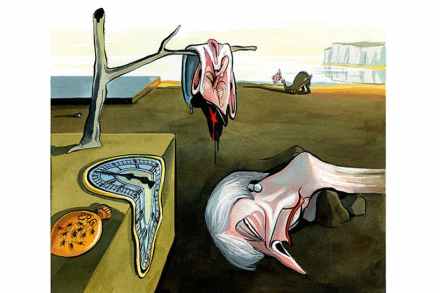
In Salvador Dalí's Persistence of Memory, several clocks are melting away in a surreal desert scene where a distorted horse-like creature fades into the sand, below a ledge where a pocket watch crawls with ants. The bizarre painting is rather reminds one of the surrealism of the Brexit process, especially after this week. The government has gone into full meltdown mode - it lost yet again on May's Brexit deal (though this time by a smaller margin, only by 149 MPs); ended up whipping against itself on a motion rejecting no deal, where 13 government ministers defied the whip; and just about wrested control of Brexit from the Commons on a vote on Thursday night. Meanwhile, we are two weeks away from 29 March.

The Spectator Podcast: woke corporations and an apology from Rod Liddle

From our UK edition

When did corporate giants like KPMG, Proctor and Gamble, and Accenture become extensions of the campus safe space culture? Rainbow lanyards inspired by the LGBT Pride flag, email sign-offs to say that you are an 'ally' of minorities, and so-called unconscious bias training - these are just some of the things that corporations are encouraging their employees to take part in to demonstrate their wokeness. So, is this meaningless virtue-signalling or actually helpful to the minorities these measures profess to protecting?

China’s singles market

From our UK edition

 Shanghai ‘How old are you, young lady?’ A small, curious crowd starts to surround me. ‘How tall are you? What do you work as?’ The parents camping out in Shanghai’s infamous marriage market have no time for small talk. They come here every weekend, rain or shine, seeking a partner for their grown-up son or daughter. Age, wage, height, education — everyone has a wish list, and they also condense their own child into such a list. Today’s special: me. The so-called Matchmakers’ Corner has seen tens of thousands of Chinese parents, including members of my own family, come to investigate what (or who) is out there. A great many parents worry about their child’s stubborn singledom.

Four cost-saving tips for Liam Fox’s £100,000 podcast

From our UK edition

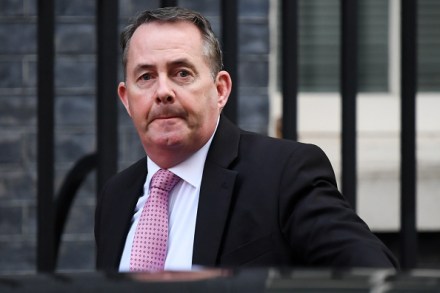
As The Spectator's podcast editor, I'm all for spending more money on podcasts. There are now six million adults in the UK who listen to podcasts, every week. If growth continues on that path, podcast listenership will be on par with total Radio 4 listenership in just another five years. With a trajectory like this, it's no wonder that everyone wants in on the game. Trade secretary Liam Fox is the latest to join the club. But it looks like he's been too enthusiastic. The Department for International Trade podcast series - 'Local to Global' - is funded by the taxpayer and has cost over £100,000 to produce and promote. It has received fewer than 9,000 listens (that's in total, not per episode).

The Spectator Podcast: the pains of Brexit and the joys of gaming

From our UK edition

It was Harold Wilson who said that a week is a long time in politics. How true that is for the times we are living in now. This time last week, The Spectator spoke to Gavin Shuker MP, the ringleader of the newly-formed Independent Group, about the plotting that happened behind the scenes and the ambitions of the independent MPs for their new project (you can listen to it here). A few days after recording, Jeremy Corbyn finally - though reluctantly - embraced a second referendum, to prevent more Labour MPs jumping ship. On the same day, Theresa May was forced into a new Brexit position of her own - to allow MPs a vote on extending Article 50. Knowing parliamentary arithmetic as we do, this is essentially a green light to extend Article 50 if the next meaningful vote does not pass.

The Spectator Podcast: can the Independent Group ‘short-circuit’ first past the post?

From our UK edition

This week has been a relief from the usual Brexit conversations. The long talked about rumours of a centrist party have finally materialised, as eight Labour MPs and three Tory MPs defected from their former loyalties. Already, polls are in claiming that the Independent Group is more popular than the Lib Dems. But just how promising is its future? James Forsyth argues in this week's cover article that even if they don't get electoral success, they can still alter the face of British politics, just like the SDP and Ukip. On the podcast, Katy Balls talks to James and pollster Joe Twyman, Director at Deltapoll, as well as former Labour MP Gavin Shuker - one of this week's splitters - about the group's potential.

The Spectator Podcast: Corbyn’s crack-up, why not to wear a hijab, and royal victimhood

From our UK edition

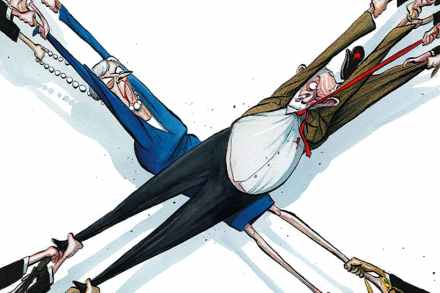
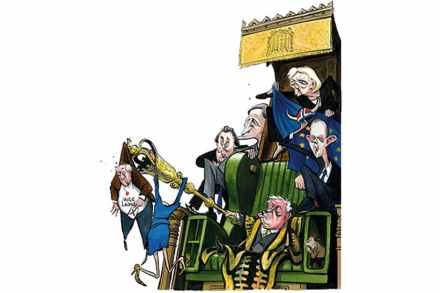
To split or not to split? Moderates in the Labour party have long agonised over the party's hard left direction. But this week, things are coming to a head. The anti-Semitism sore has flared up again - Stephen Bush tells us on the podcast that the witch hunt against Luciana Berger has shocked many moderates in the party. Labour's fudgy Brexit position is also in the limelight as Theresa May continues to fail to bash through the Brussels defence, with MPs who support a second referendum disheartened by Corbyn's ambivalence towards it. In this week's cover article, Nick Cohen writes that a new party may be born very soon - and why not? Given all the political upsets of the last three years, he argues that a shake-up of our two-party system is not outside the realms of possibility.

The Spectator Podcast: food fights, religious splits, and the politics of wood-burning stoves

From our UK edition

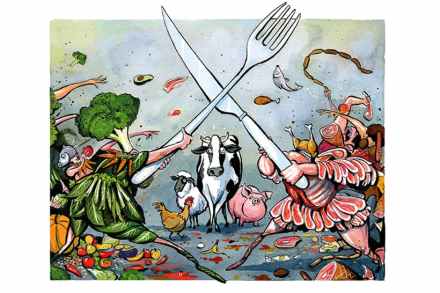
What do you do when a vegan friend comes over for dinner? Panic first, probably. After all, how can you make a meal out of lettuce and carrots? But these days of stress are numbered. Perhaps you've already noticed - more and more people are becoming vegan or vegetarian. Supermarket shelves and even the pasty favourite Greggs are offering more vegetarian and vegan options. The numbers back up the trend too - according to the Vegan Society, demand for meat-free food increased tenfold in 2017. In this week's cover article, Jenny McCartney notes the identity politics that has - perhaps inevitably - piggybacked this dietary change.

The west’s response to the Huawei row is bound to backfire

From our UK edition

The Huawei row is now a full-blown diplomatic incident between China and Canada. Two months ago, on the very same evening that presidents Trump and Xi met to agree a temporary ceasefire in their trade war, Canadian authorities arrested the queen of the Chinese tech world, to be extradited to the US. Meng is the daughter of Chinese telecoms company Huawei's founder, and she herself is the company's chief financial executive. The arrest provoked a furious reaction in China, and in the days following her arrest, two high profile Canadian citizens, Michael Kovrig and Michael Spavor, were arrested on vague 'national security' grounds. Tit for tat arrests? It's hard to see how these were anything but despite Beijing's insistence otherwise.

The Spectator Podcast: does parliament have a plan for Brexit?

From our UK edition

Over the next couple of weeks, parliament gears up for another meaningful vote. But can Theresa May win around enough MPs - 116 - to pass the Withdrawal Agreement the second time around? To do so, she may well have to soften her Brexit vision into something that looks more like Norway. But if that's still not enough, then unless Article 50 is revoked or extended, we are surely left with a no-deal Brexit. None of these options look likely for a variety of reasons, but as James Forsyth writes in this week's cover piece, 'by the evening of 29 March, one of three seemingly impossible things must happen.' So, what next? In this week's podcast, Isabel Hardman strategises the coming weeks with Katy Balls, Henry Newman, and Paul Mason. Plus, what is the purpose of social housing?

Our lost towns: can education resolve the town-city divide?

From our UK edition

When The Spectator brought together Conservative Party MPs and think tank wonks at Conservative Party Conference earlier this year, kindly sponsored by Barclays, the discussion over how to stimulate regional growth had one key conclusion. The old divide of North vs. South is now over; with the success stories of regional cities like Leeds and Manchester, as centres of innovation, business, and academia, the new economic and cultural divide in the UK is now cities vs. towns. So what does this divide look like, and what are the solutions for it? In a roundtable lunch recently, Barclays and The Spectator brought together Labour MPs to see how the problem might be solved from a different political persuasion.