Cindy Yu

Cindy Yu

Cindy Yu is a Times columnist, and formerly both an assistant editor of The Spectator and presenter of our Chinese Whispers podcast.

Semiconductors: the next technological arms race

From our UK edition

44 min listen

Semiconductors are the most important thing that you've never heard of. These little computer chips provide the processing power for everything from cars and iPhones, to unmanned drones and missiles. In Beijing's Made in China 2025 industrial strategy, through which China seeks to move up the value chain to become a high-tech superpower, semiconductor self-sufficiency was one of the targets. Beijing is falling far behind on this target. MIC 2025 stated the aim of meeting 70 per cent of China's demand through domestic production by 2025, but, seven years on, it is only meeting 20 per cent of its domestic needs (by one estimate). The world's leading manufacturer of semiconductors is in fact in Taiwan.

Has Tory sleaze hit a new low?

From our UK edition

15 min listen

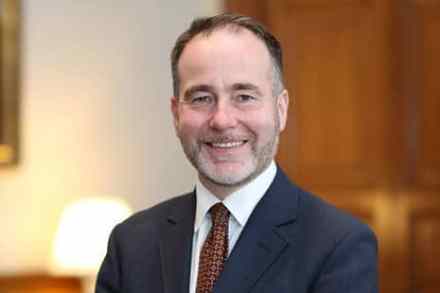
Last night Chris Pincher resigned from his role in the government - after 'drinking far too much' and 'embarrassing himself'. Witnesses reportedly saw the deputy chief whip 'groping' men at the Carlton Club in London. Also on the podcast, today is the 25th anniversary of the handover of Hong Kong to China. Can the government keep its promise to protect Hong Kong?Cindy Yu is joined by Isabel Hardman and James Forsyth. Produced by Natasha Feroze.

Is the privileges committee a kangaroo court?

From our UK edition

11 min listen

After an eight-day world tour, Boris Johnson is back on British soil to face Tory MPs for the first time since the two by-election defeats. Meanwhile, the privileges committee begins with Harriet Harman as its chair. Critics have suggested this inquiry into whether the Prime Minister misled parliament over partygate risks becoming a 'kangaroo court'. Will this allow Downing Street to disregard the outcome of the inquiry?Also on the podcast, food tariffs might be cut in order to curb the cost of living crisis. But what difference will this make?'You'll have to eat an awful lot of olives for this to make a difference' - James Forsyth.Cindy Yu is joined by James Forsyth and Katy Balls.Produced by Natasha Feroze.

The radical age of Chinese cinema

From our UK edition

44 min listen

You probably wouldn’t expect to see the Cultural Revolution in Chinese films, or the Great Leap Forward, or the Tiananmen Square protests. But for a certain generation and a certain corner of the Chinese film industry, these were actually common themes to deal with. Their films weren’t always welcome to the censors, but they weren’t always banned, either. I recently wrote a column for The Spectator on Chinese cinema, and the golden age it experienced just after the end of the Cultural Revolution. You’d be surprised at the amazing political – and social – subversiveness of directors like Chen Kaige and Zhang Yimou.

Can the government prevent a ‘bummer summer’?

From our UK edition

10 min listen

Today, British Airways staff have voted have a strike of their own, adding to the government's woes as rail workers continue to strike throughout this week. On the podcast, James Forsyth adopts a term from the Americans and asks: can the government prevent a 'bummer summer', where nothing quite works? Cindy Yu also talks to Katy Balls, who gives the low down on the risks the Prime Minister is taking on with his eight days foreign trip at a time of two by-elections back home. Produced by Cindy Yu.

Is the Rwanda flight block a problem for No.10?

From our UK edition

11 min listen

The first flight taking asylum seekers to Rwanda was stalled just before takeoff after a late intervention from the European Court of Human Rights (ECtHR). As Priti Patel returned to the Commons to defend the policy, many Tory MPs are furious at the prospect of the courts taking precedent over government legislation. Could this lead to the UK leaving the ECtHR?Also on the podcast, is Keir Starmer too boring? After growing accusations, the Labour leader has urged his shadow cabinet to stop calling him boring and focus on returning to government. Cindy Yu is joined by Katy Balls and James Forsyth.

Mythbusting the social credit system

From our UK edition

55 min listen

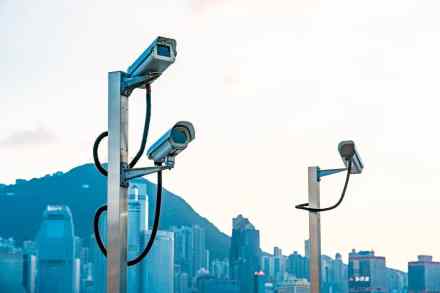
China's social credit system is notorious. This Black Mirror-esque network supposedly gives citizens a score, based on an opaque algorithm that feeds on data from each person's digital and physical lives. With one billion Chinese accessing the Internet and the growing prevalence of facial recognition, it means that their every move can be monitored – from whether they cross the road dangerously, to whether they play too many video games and buy too much junk food. Those with low scores have lower socio-economic status, and may not be able to board planes and trains, or send their children to school. It's all part of a Chinese Communist Party directive to further control and mould its citizens. Except it's not.

Politics and the monarchy: a look back at the Queen’s reign

From our UK edition

17 min listen

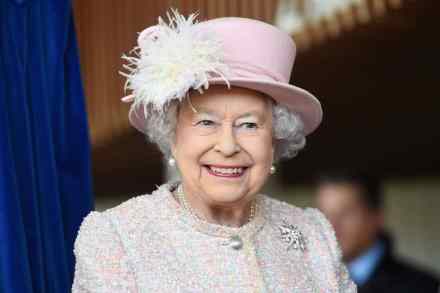
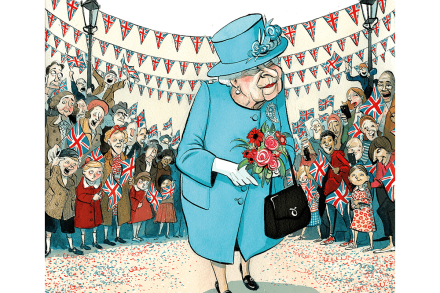
As this week marks the Queen's platinum jubilee, we take a look back at her greatest political achievements in her role as head of state. How important was the relationship between the monarch and the Prime Minister?'I think there's been this restraining act on the behaviour of Prime Ministers, that they will have to explain themselves to the Queen at some point - James Forsyth.Since her reign, she has served 14 Prime Ministers, one of whom was Margaret Thatcher. What was her relationship like with the Iron Lady? Lord Charles Moore, former editor of The Spectator who also wrote a biography on Mrs Thatcher spoke of the mutual respect the Queen and Margaret Thatcher had for one another.

The quiet radicalism of Elizabeth II

From our UK edition

34 min listen

In this week’s episode:Robert Hardman & Angela Levin, two of the UK’s royal specialists, explore the character of the Queen and the impact she has had on the institution of the monarchy. (00:36)Also this week:For now, it seems that Boris Johnson is hanging on after the publishing of the Sue Gray report, but how stable is his position? Could a vote of no confidence be closer than anyone expects? The Spectator’s political editor James Forsyth joins the podcast to discuss. (13:47)And finally:Is Chinese cinema in decline? Cindy Yu writes on this in this week’s Spectator, and she joins the podcast along with Andrew Heskins, the founder of easternkicks.com, a review website specialising in Asian film, and co-founder of the film festival, Focus Hong Kong.

Is the SNP more conservative than the Conservatives?

From our UK edition

16 min listen

There is a lot of news to cover on Coffee House Shots before the celebrations for the Jubilee begin. First in Westminster with Lord Geidt threatening to resign over Boris Johnson's handling of partygate. Then more internationally to the fraying of the alliance to defend Ukraine. And finally, has Scotland found its Margret Thatcher in Kate Forbes? Cindy Yu talks with James Forsyth and Fraser Nelson.

The closing of the Chinese mind

From our UK edition

I was born in Nanjing five years after the Tiananmen Square protests. By then, records of the demonstrations and the Communist party’s brutal suppression had been scrubbed clean. So Tiananmen was not part of the national conversation when I was growing up. I only fully grasped what had happened when I visited Hong Kong in my early twenties (that would be harder now under the city’s new national security law). Tiananmen isn’t just absent from history books; the Chinese authorities keep an eye on literature and film, so anything that’s politically subversive is censored or driven underground and abroad. One film that fell victim to this regime is Lan Yu, which I recently saw for the first time at a screening in Soho.

Why is Boris cutting the civil service?

From our UK edition

16 min listen

The government wants to cut the civil service by over 90,000 people to 2016 levels. Part of the plan is to suspend the Fast Stream recruitment scheme, which hires high-achieving graduates out of university. Why is the government so set on the cut, and is this really the best way to do it? Cindy Yu speaks to Fraser Nelson and James Forsyth.James Forsyth: ‘If these graduates go and work in the private sector instead, frankly the civil service won't be able to afford them in three, five or seven years time.’Subscribe to The Spectator’s Evening Blend, Britain’s most-read politics email, to get an update on the day’s politics every weeknight: https://spectator.com/blendAnd subscribe to The Spectator magazine too.

How the Cultural Revolution shaped China’s leaders today

From our UK edition

54 min listen

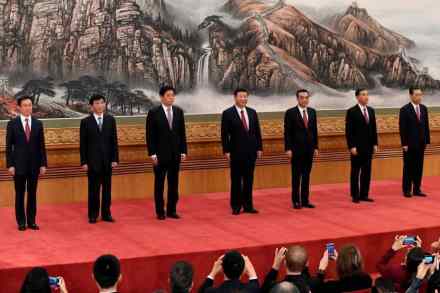
All eyes are on the Communist leadership this year, as the months count down to autumn’s National Party Congress, where Xi Jinping may be crowned for a third term. But how much do we really know about the Party’s leadership? In particular, can we better understand them through looking at the experiences that they've had?Take Xi Jinping, who is what is known as a 'princeling' – his father was the Communist revolutionary Xi Zhongxun, one of the Party's early cadres. Growing up, the younger Xi would have been steeped in Communist lore. Yet his father's downfall, at the hands of a paranoid Mao, as well as the Cultural Revolution must have humbled the young man. He spent seven years doing manual labour in the Chinese countryside as one of the 'sent-down youths'.

Could Boris be toppled by accident?

From our UK edition

11 min listen

The Sue Gray report came in last week, but we haven't seen a coordinated effort to either stand behind the Prime Minister, or kick him out. Instead, there has reportedly been a drip of letters of no confidence letters coming in from individual Tories, rather than an organised group. Could we finally see the 54 letters needed to trigger a vote on Johnson's leadership?Cindy Yu, Fraser Nelson and James Forsyth discuss.

How powerful is the People’s Liberation Army?

From our UK edition

43 min listen

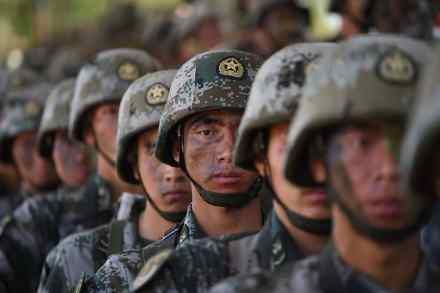
It’s clear now that Vladimir Putin didn’t expect his army to perform quite so badly when invading Ukraine. As much as that is celebrated in much of the world, it will be a cause for concern – or at least a moment for learning – amongst Beijing’s military leaders. Because Russia has always been a heavy influence and source of strategy and equipment for China’s People’s Liberation Army, ever since the days of the Soviet Union. So could the PLA – which hasn’t been in active combat since Vietnam in 1979 – similarly flounder? That's the burning question my guests and I discuss in the latest episode of Chinese Whispers. Timothy R.

What is the future of Nato?

From our UK edition

15 min listen

Finland this week has expressed its wish to join Nato and Sweden is expected to follow suit. But with an America more focused on China, an ever aggressive Russia and Turkey with a membership veto card what does the future of this organisation look like?

What’s the point of a cost of living cabinet?

From our UK edition

11 min listen

Boris Johnson met Conservative MPs in Stoke-on-Trent for a Cabinet away day. Their focus is on how new legislation could level up the UK and protect people from the cost of living crisis as it intensifies. Meanwhile, the GDP figures show the UK economy contracted in March as consumers cut back on spending. Is the UK heading towards a recession?All to be discussed as Cindy Yu speaks to Katy Balls and James Forsyth.

What’s behind the Swedish security pact?

From our UK edition

15 min listen

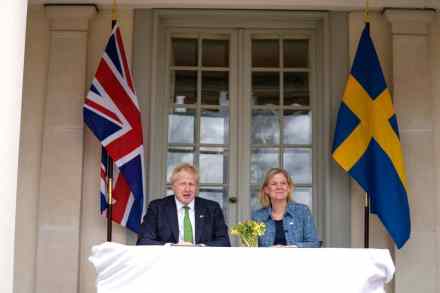
Today Boris Johnson pledged his support to protect Sweden and Finland in a mutual defence pact. As non Nato members, the deal is intended to protect these two countries from unexpected attacks. Will Putin see this as provocative? And how might this deal clash with Macron's view of a European defence bloc?'I think we can see the phrase Global Britain taking some meaningful form now' - Fraser Nelson.All to be discussed as Cindy Yu speaks to Fraser Nelson and James Forsyth.

Even the WHO has turned on China’s zero-Covid strategy

From our UK edition

Covid infections are finally falling in Shanghai. The city reported just over 2,000 cases on Tuesday, down from over 27,000 at its peak a month ago. Yet instead of regaining their freedom, locals have been hit by tighter lockdown restrictions. Even the World Health Organisation, which typically shies away from criticising China, is urging Beijing to rethink its approach. Its director Dr Tedros Adhanom Ghebreyesus, said he does not think China’s Covid policy is 'sustainable considering the behaviour of the virus'. But President Xi Jinping is blocking his ears. Over the weekend, reports emerged of people in Shanghai being taken into quarantine simply for living in the same building as positive cases.

Does China want to change the international rules-based order?

From our UK edition

35 min listen

China is often accused of breaking international rules and norms. Just last week at Mansion House, Foreign Secretary Liz Truss said: 'Countries must play by the rules. And that includes China'. So what are its transgressions, and what are its goals for the international system? My guests and I try to answer this question in this episode through looking at China's attitude to and involvement in international organisations, past and present. Professor Rana Mitter, a historian at the University of Oxford and author of China's Good War, points out that there's a fundamental difference in China's approach compared to, say, Russia. 'Russia perceives itself as, essentially, a country that is really at the end of its tether in terms of the international system.