Christopher Snowdon

Christopher Snowdon is Head of Lifestyle Economics at the Institute of Economic Affairs

The lost boys: the white working class is being left behind

You can argue about the merits of pulling down statues, but it’s hard to make the case that mass protests serve no useful purpose. At the very least, they provoke debate and draw attention to uncomfortable topics that it might otherwise be easier to ignore. The recent protests have forced everyone to have difficult discussions about race, class, poverty and attainment. Any serious examination of the statistics shows that we’re pretty far from equal, but what the figures also show is that it’s wrong-headed and damaging to lump very different groups together. In these discussions politicians often lazily assume that all BAME (Black, Asian and Minority Ethnic) people are the same, and that all white groups are equally privileged.

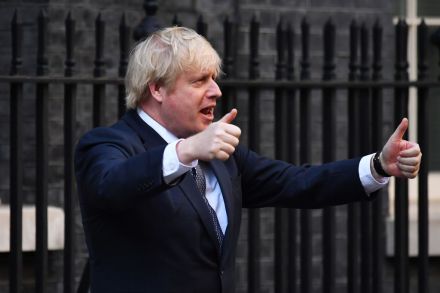
Boris’s war on obesity is a mistake

In less enlightened times, an outbreak of a deadly virus was taken as a sign of God’s displeasure and would be accompanied by the persecution of an unpopular minority. It was less than a coincidence that the scapegoats tended to be those of whom the Church took a dim view: heretics, ‘witches’ (i.e. unmarried women) and, above all, Jews. How neatly it all fitted into an existing narrative. The desire to fit the Covid-19 pandemic into a moral fable of what sinfulness means in a secular society has been palpable. One of the most puzzling features of the virus is the way in which it severely incapacitates certain people while leaving others virtually unscathed. It is unsettling to think that our fate could depend on the roll of a dice.

Are public health cuts to blame for the UK’s pandemic response?

As we begin to learn best practice in the fight against Covid-19, it is notable that the handful of countries that have reduced the number of new cases to zero have used diagnostic testing and contact tracing on a large scale and have recommended the use of face masks. After two frantic months, the UK has just about got a handle on testing, but its embryonic contact tracing app has the hallmarks of every government IT fiasco, and there are barely has enough face masks for health workers, let alone the general public. No country can prepare perfectly for a new viral pandemic, but Britain’s public health system has fallen conspicuously short. Why?

Beware the COVID-19 nannies!

From our US edition

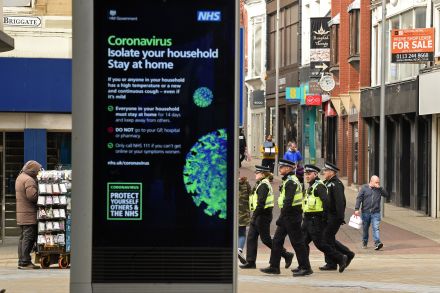
COVID-19 has suddenly made much of the western public health establishment effectively redundant. Unused to dealing with infectious disease, we have a legion of epidemiologists who have never studied an epidemic and a horde of public health professionals who are more comfortable discussing soda taxes than virology.If you’ve spent your career believing that drinking, smoking and obesity are the real epidemics, a potentially fatal virus forcing billions of people into hiding could make you question your priorities. But if the nanny state lobby was disoriented at first, it has quickly learnt to adapt. The public are temporarily willing to sacrifice a bit of liberty for safety and the lifestyle regulators sense fresh opportunities.

jerome adams nannies

Coronavirus shouldn’t be used as an excuse to expand the state

Since this is the nearest most of us have ever got to living under the Blitz, I’ve been re-reading George Orwell’s The Lion and the Unicorn. Written in London in 1940, it begins with the famous line: ‘As I write, highly civilised human beings are flying overhead, trying to kill me.’ The first part of the book, titled ‘England Your England’ contains more quotable lines per page than anything not written by Shakespeare. It is here that Orwell explains why he loves Britain, warts and all. The rest of the book, in which he makes the case for 'democratic socialism’ is maybe less well known, but is characteristically clear and unambiguous.

The truth behind the election’s so-called fact checkers

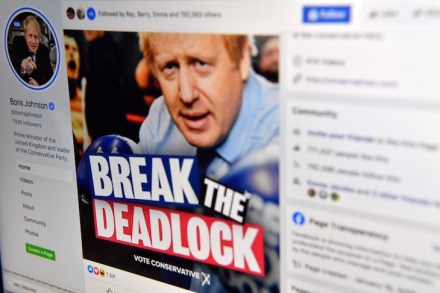
All election campaigns see politicians exaggerate, stretch the truth and make promises they can't keep. But if a report issued in early December is anything to go by, the 2019 general election campaign was a particularly dishonest affair - and one party was particularly guilty. On 10 December, Metro reported: Similarly, the Independent reported: Websites which make no attempt to be impartial were more vociferous. Under the headline, The Tory war on truth – and how to fight back, Open Democracy reported: Independent fact checkers have found that 88% of Tory Facebook adverts contain lies, while 0% of Labour’s do.

Do we need to worry about air quality in Britain?

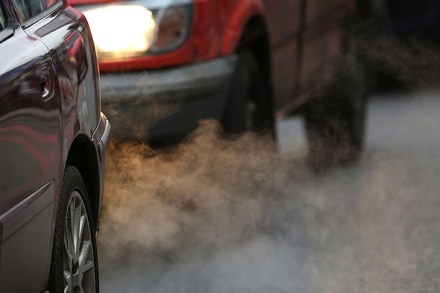
Is polluted air still a problem in Britain? When it comes to smog and pollution, most of us think about rapidly-industrialising city likes Shanghai and Delhi rather than London. Yet the research tells a different story: the Royal College of Physicians estimates that 40,000 deaths a year can be attributed to air pollution, and that the wider health problems resulting from toxic air – which include asthma, cancer, and stroke and heart disease – could cost the UK economy more than £20 billion every year. They’re staggering numbers – so why don’t we hear more about the problem? On 17 June 2019, The Spectator gathered a group of politicians, academics and other experts together for a lunch to discuss this issue and establish what actions need to be taken.

Labour should scrap state schools, not private ones

Shadow education secretary Angela Rayner has promised that if Labour wins the next election it will use its first budget to ‘immediately close the tax loopholes used by elite private schools and use that money to improve the lives of all children.’ This slab of red meat went down well with the class warriors at the party’s conference in Brighton, where there were doubtless plenty of teachers in attendance, but it wasn’t enough. Labour conference not only voted to withdraw charitable status from private schools, but to abolish them altogether. This was described, rather euphemistically, as ‘integrating all private schools into the state sector’ by Holly Rigby of the not remotely euphemistic Abolish Eton campaign.

Dispersing the clouds of the vape panic myth

From our US edition

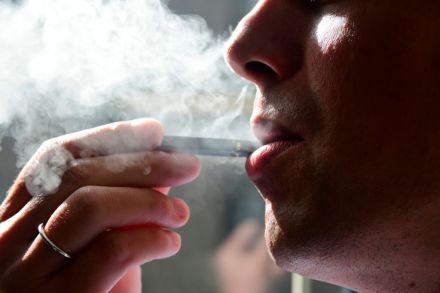
The Great American Vaping Panic is reaching its ghastly conclusion. As I write this, five people have died in hospital and the Food and Drug Administration (FDA) is investigating 450 reports of people going into seizures after vaping. Politicians are demanding a renewed clampdown on an e-cigarette industry that was being blamed for a youth ‘tobacco epidemic’ long before these events unfurled. The market leader, Juul, is under investigation by the FDA, its products are banned in the company’s hometown of San Francisco and it may not be long before they are banned nationwide. Moral panics rarely come out of nowhere and there is a grain of truth in this one. Dozens of people, mainly young men, have been hospitalized after vaping in recent weeks.

vape

Trying to control our waistlines is beyond the government’s power

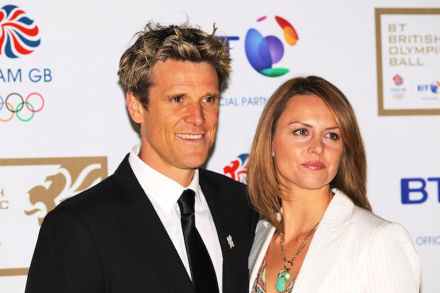
James Cracknell, the athlete turned anti-obesity campaigner, was the subject of sniggering and derision in April when he said that North Korea and Cuba had got a ‘handle on obesity’. With impressive understatement, he attributed this to both countries being ‘quite controlling on behavioural trends’. It was a bad point poorly made, but in a roundabout way he drew attention to the major obstacles faced by those who want to reduce obesity rates in the rest of the world: freedom and affluence. Only Venezuela was missing from his list. Its people lost an average of 19 pounds last year as its basket-case economy unravelled, but this only serves to underline the point.

How Canada failed to smash the cannabis black market

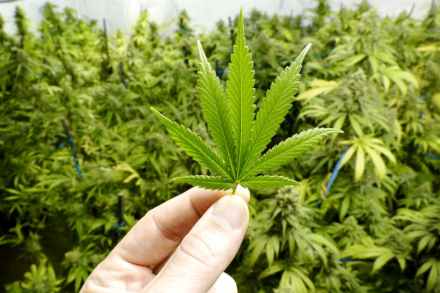
I had forgotten how much I disliked cannabis until I found myself under its influence, in the rain, trying and failing to find Toronto’s Union Train Station so I could get to the airport and go home. The plan had been to enhance my mood for a long journey, floating back to the UK in a higher state of consciousness. In practice, I just got confused, wet and was lucky to make my flight. I had intended to purchase the kind of low-THC, high-CBD weed that disappeared from Britain’s black market when skunk took over in the 1990s. Put simply, THC is the psychoactive component that gets you high but is associated with psychosis, while CBD is the antipsychotic component that gave cannabis its natural balance before it was bred out of the plant by drug dealers.

The state of UK energy: Where do we go from here?

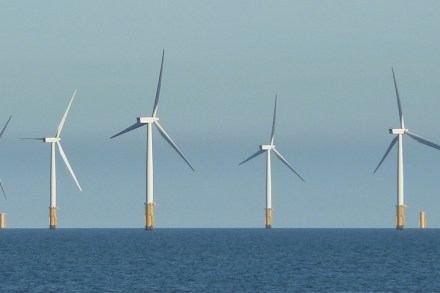
On the evening of Monday 3rd June, The Spectator gathered a group of experts together for a dinner to discuss the challenge of bringing the UK’s carbon emissions to net zero by 2050. The dinner was held the night before the Spectator Energy Summit, with both events being chaired by Andrew Neil. With the permission of the invited guests, what follows is a brief summary of the discussion. David Wright (Director Electricity Transmission and Group Chief Engineer - Electricity, National Grid) began with the observation that they were meeting on the seventeenth consecutive day in which coal had played no part in the UK’s energy supply, a record in the modern era.

The UN’s warning to Syrian smokers is beyond parody

You really can't make this stuff up. With hundreds of thousands of people dead and millions fleeing for their lives, the failed state of Syria is being told by the World Health Organisation to concentrate on... plain packaging. In a statement last week, the UN health agency warned that 'notwithstanding the current crisis in the country,' Syrian officials should collaborate with the UN health agency to control the use of tobacco and water pipes among its people, especially young adults, women and teenagers. This is rather like telling passengers on the Titanic that 'notwithstanding the iceberg' they should collaborate with staff to tidy away the deckchairs. WHO's Syria representative, Dr.

The myth of the ‘middle class drink epidemic’

With alcohol consumption falling every year for over a decade it is becoming increasingly difficult to sustain the myth that Britain is in the grips of a drinking epidemic, but where there’s a will there’s a way. One method is to focus on whichever group is drinking the most. Even though everybody is drinking less, some people are bound to be drinking more than others and that means scary headlines. Inconveniently for the doom-mongerers, the people who are drinking the most happen to be the middle-aged and middle-class. It would be a better story if the heaviest drinkers were the tired, the poor and the huddled masses yearning to breathe free, but the evidence clearly shows that they are in fact the white collar professionals.

Vapers deserve to be angry – they are under attack

There is a perception - on Twitter at least - that vapers are angry and abusive. Ben Goldacre recently described ‘e-cigarette campaigners’ as ‘vile... obsessive, vindictive, abusive, and to an extent that is clearly dubious’. This inevitably led to a string of replies from bewildered vapers that may have confirmed his view, although the vast majority were polite. From what I’ve seen, vapers are no more likely to be offensive than any other punter on social media, which is admittedly a low bar.

The anti-smoking pressure group whose wackiest ideas always become law

Every few years, Action on Smoking and Health draws up a wish list of all the policies it would introduce if it was king for the day. It then spends the next few years lobbying ferociously and watches with a satisfied smirk as every single one of their brainwaves becomes the law of the land. The manifesto of this tiny pressure group is, in effect, the manifesto of whichever party is in power. The only difference is that governments often ignore their own manifesto commitments (such as Labour’s 2005 pledge to exempt private members clubs from the smoking ban) whereas the ASH manifesto is always implemented to the letter.

The BBC swallows more fanatical nonsense from Action on Sugar

Action on Sugar, the bastard offspring of Consensus Action on Salt, has noticed that dried fruit contains sugar. As with every utterance from the pressure group, the BBC thinks this is newsworthy. Based on an unpublished undergraduate research project, Action on Sugar says that 85 per cent of fruit snacks' contain more sugar than 100 grammes of Haribo sweets – 'with some containing over 4 teaspoons of sugar!', as the excitable press release proclaims. In these intellectually stunted times, a teaspoon of sugar is rapidly becoming a unit of harm that requires no further explanation. To be clear, a teaspoon of sugar only contains 16 calories. As an adult male, I am told I need 2,500 calories a day to maintain a healthy weight. A ten year old child requires 2,000 calories.

The new ban on ‘legal highs’ is unworkable. The government doesn’t even know what it’s banning

The man in the pub’s solution to the ongoing panic about legal highs is to ban them. 'Ban ‘em all! S’obvious, innit? I can’t believe politicians haven’t thought of it already. Yeah, go on, I’ll have another...' Here’s the thing. It is obvious and politicians have thought of it already. The reason that it never went from the idea stage to the planning stage is that it isn’t as simple as that. Previous home secretaries such as David Blunkett and Charles Clarke didn’t baulk at the idea because they were lily-livered pussy cats with libertarian tendencies. They rejected it because it’s a bad idea, not just illiberal but also unworkable. The current government thinks it knows better.

A tax on sugar won’t work, as the shipwreck of the Danish ‘fat tax’ shows

Bad ideas die hard in the world of ‘public health’, especially when the government can make money out of them. The shipwreck of Denmark’s notorious ‘fat tax’ should have served as a lighthouse for politicians for a generation. The negative consequences of the Danish experiment could not have been clearer. After levying a tax on all food products which contained more than 2.3 per cent saturated fat, Danes fled over the borders to Germany and Sweden to stock up on their butter and bacon. Those who did not shop abroad switched to cheaper supermarkets and bought budget brands of the same products.

Ten years on, the public health puritans who predicted 24-hour drinking look like idiots

One of the many old temperance beliefs that linger on in the field of ‘public health’ is known as availability theory. Put simply, this theory says that if you make alcohol more available, people will drink more and there will be more alcohol-related problems. As a result, the temperance/public health lobby always wants shorter opening hours and fewer licences. The problem with this theory is that it doesn’t stand up in the real world.