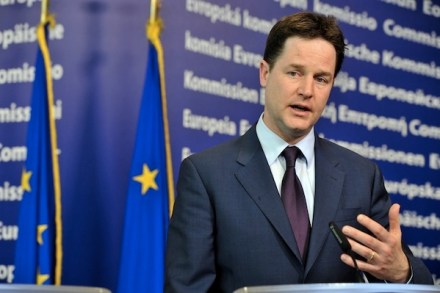
Nick Clegg’s opposition to renegotiation could risk the UK’s EU membership
From our UK edition
Nick Clegg this morning fell into the usual 'all or nothing' fallacy on Europe. He said: 'As soon as we start talking about repatriation, we descend into the in-versus-out debate.' But the Deputy Prime Minister is wrong: the in/out debate is already underway, and rather than seek to defend the unpopular status quo, Nick Clegg should back renegotiation as the best option for those who wish to put the UK’s membership on a stable democratic footing. But instead of attempting to address the causes for the EU’s unpopularity, the inflated budget, democracy deficit and bureaucracy etc. Nick Clegg sought to channel the debate into his own in/out debate where the problems of ‘out’ justify doing nothing about the problems of ‘in’.