Chris Daw KC

Chris Daw KC is a barrister, broadcaster and writer. He was leading counsel for the defence in the Hillsborough trial and has defended football captains of both England and Wales in criminal trials. His book, Justice on Trial, is published by Bloomsbury.

Should we treat rioters like football hooligans?

From our UK edition

Images of thugs causing mayhem on Britain’s streets has brought back painful memories of the football hooligans of the 1970s and 1980s. Back then, ‘firms’ of shaven-headed white men regularly went on the rampage, in and around railway stations, town centres and football grounds. Shops were looted, police officers and their horses were pelted with beer cans, and highly organised gangs did battle. Many of those involved did not even bother to attend the football matches. We’ve seen something similar in the days since the murder of three children at a Taylor Swift dance class in Southport last week.

Chris Daw, Lionel Shriver and Sam Russell

From our UK edition

21 min listen

On this episode: Chris Daw QC on the blame game that surrounds the Hillsborough disaster and why it's time to move on (01:00); Lionel Shriver suggests we should just give Scottish nationalists what they want and watch the chaos unfold (07:40); and Sam Russell, the Spectator's new broadcast producer, talks about how book lovers are turning TikTok into a book club (16:25).

There was no Hillsborough ‘cover-up’

From our UK edition

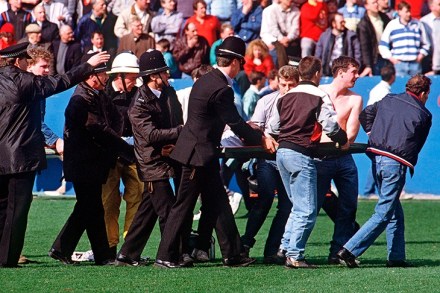
Eight years ago, I was instructed as leading counsel for two South Yorkshire Police officers who had overseen the force’s evidence-gathering in response to the Hillsborough stadium disaster. They were accused of trying to minimise the blame placed on the police by amending witness statements. It has been the longest and most challenging assignment of my 27-year career, with the weight of public and media opinion pitted heavily against us. Finally, last week, the only one of my two clients to be criminally charged, 83-year-old retired chief superintendent Donald Denton, was cleared, alongside a 74-year-old retired detective chief inspector and the former police solicitor. It was a just outcome that demonstrated judicial integrity and independence at its best.

It’s about time we had cameras in court

From our UK edition

I stood up this week and made a speech. I have made speeches like this many times in my 26 years as a criminal barrister. For me, and others like me, this is the ultimate demonstration of our craft as lawyers – a closing speech to the jury in a criminal trial. The importance of a jury speech cannot be overstated. As defence counsel, I have the last word in court, just before the judge sums up the law and the facts and finally sends the jury out to deliberate. The verdict returned will dictate whether the defendant – my client – will leave the court building by the front door, returning to his life, or in a prison van, heading for a very different world.

The terror of the witches of modern India

From our UK edition

When I landed in Delhi at the height of the monsoon, the excitement in the city was palpable. The Indian Space Research Organisation was planning the launch of Vikram, the country’s first rocket mission to the Moon. Media coverage was ubiquitous and each report was imbued with a gushing sense of national pride. This great nation was about to take another giant leap into the future. But in modern India, there is also a great paradox. My trip was not about rockets but the much older human activity of dispensing justice to wrongdoers. Having travelled around Britain earlier this year for a BBC series on our criminal justice system, I wanted to see how Indians deal with those who offend against the law in the worst possible ways.

Corbyn’s cynical Brexit scheme will end in tears for Labour

From our UK edition

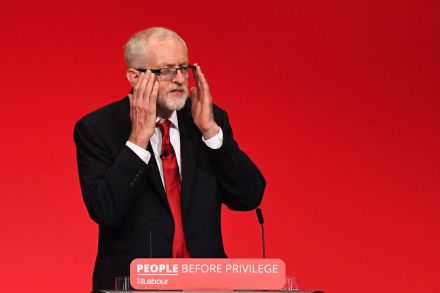
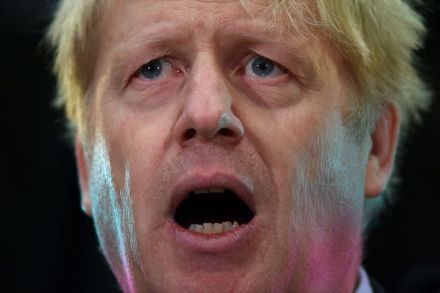
My piece for Coffee House last week likened Boris Johnson to the naked emperor, puffed up with self-importance but devoid of real power. As the Tory party conference has got underway, I have become even more confident that Boris's cabinet will soon be shown to be as denuded of power as their leader. But it isn't just the Tories that are in a mess. Jeremy Corbyn's Brexit position is as untenable and, if anything, even more bizarre than Boris's. Has there ever been a major party leader entering conference season and an election campaign, in short succession, while explicitly refusing to take a position on the most important issue of our times?

The Supreme Court exposed Boris Johnson as the naked emperor

From our UK edition

Almost every word of criticism of the judgment of the Supreme Court this week has been, frankly, barmy. Headline after headline has cast doubt on the legitimacy of the court, as it stepped in to reverse the prorogation of parliament for a record-breaking five weeks. Most of the adverse comment has come from those with no legal training at all, let alone years of practice in the courts of England and Wales. I have no problem at all with that – everyone, as the cliché goes, is entitled to her opinion. But opinion about the operation of the law is rather less valuable when emanating from the mouths and keyboards of those with no real understanding of how our legal system works.

Watch out

From our UK edition

I was recently treated to a small taste of the real China. It was in the incongruous setting of a vast conference centre in east London, directly under the flight path of City airport. On assignment for the BBC, I found myself wandering the stalls of Europe’s largest international security technology exhibition, filming for a new series on criminal justice. As soon as I arrived in the main exhibition hall with the production team, we were greeted by roving cameras, high-definition displays, drones and every variety of audio and video surveillance kit. All bar a handful of stands were manned by Chinese representatives, smiling politely, if somewhat stiffly, as we approached them.

A bitter pill

From our UK edition

I have been a defence lawyer for more than 25 years. I have defended clients charged with almost every crime there is. I have argued against convictions for robbery, rape, sexual assault, murder, manslaughter, copyright theft, perverting the course of justice, perjury, serious fraud, international illegal fishing, money laundering, causing death by dangerous driving, grievous bodily harm, blackmail… and the list goes on. Of all the crimes and misdemeanours I have seen, all the improbable tales and shocking lies in the witness box, what sticks with me most about the criminal justice system is the utter simplicity of the one thing that lies behind almost all of it. People want to take drugs and nothing will stop them.

Blurred lines | 4 April 2019

From our UK edition

It is late, on a wet Tuesday evening in November, and I am driving home, listening to endless talk of Brexit on the radio. The phone rings in the car and cuts off the news. It’s an unknown mobile number; I press the answer button on the steering wheel. A moment’s hesitation and a woman’s voice comes over the speakers; middle-aged, well-spoken. She’s almost in tears and struggles to get her words out. ‘You don’t know me, and I’m so sorry to ring you this late. I got your number from my lawyer friend Stuart, and he told me you are the person I need to call. It’s about my son. He’s in a police station now. He’s been arrested for rape.’ I have been a criminal barrister for more than 25 years and a QC since 2013.