Chloë Ashby

Chloë Ashby is the author of Wet Paint and Second Self

The mother of a mystery: Audition, by Katie Kitamura, reviewed

From our UK edition

It is remarkable the web Katie Kitamura can spin around a scene as simple as a woman joining a man for lunch. His name is Xavier. We don’t know her name, but we do know she’s a successful actress. He’s beautiful, almost half her age, and she’s aware of how that must look to the other diners, the waiter hovering at her elbow, and her husband, who inexplicably enters after their food arrives before exiting in a hurry. She and Xavier had met two weeks earlier when he appeared at the theatre where she was rehearsing for a play and said he had something ‘complicated but important’ to tell her: he had good reason to believe she might be his biological mother. This is the piece of information around which Kitamura’s confounding and quietly intense fifth novel shapeshifts.


The road trip from hell: Elegy, Southwest, by Madeleine Watts, reviewed

From our UK edition

Throughout her quietly compelling second novel, Elegy, Southwest, Madeleine Watts conjures a sense of trundling steadily towards disaster. The narrator, a young Australian woman called Eloise, is recounting a road trip that she and her husband Lewis took through the American Southwest in 2018 – while a deadly fire was sweeping through northern California. The trip was bookended by disasters you could describe as closer to home: before it, Lewis’s mother died; after it, Lewis disappeared. By combing through their time in and out of the ‘climate-controlled interior of the car’, Eloise tries to figure out what happened. The journey is part business, part pleasure. Eloise is researching her dissertation on the Colorado River.

Deep mysteries: Twist, by Colum McCann, reviewed

From our UK edition

On the first page of Colum McCann’s compelling novel Twist we meet the two leads: John A. Conway, who has disappeared, and Anthony Fennell, who’s trying to tell his story. They first met when Fennell, an Irish journalist, struggling novelist and occasional playwright, was commissioned by an online magazine to write about the fragile fibre-optic cables that carry information around the world on the ocean floor. Conway, also Irish, an engineer and intrepid freediver, was in joint command of the Georges Lecointe, a ship that spends months at sea repairing the cables when they break. In January 2019 this happened in three places. Fennell hitched a lift with Conway when the ship set sail –and Conway never came back.

The splatter of green and yellow that caused uproar in the Victorian art world

From our UK edition

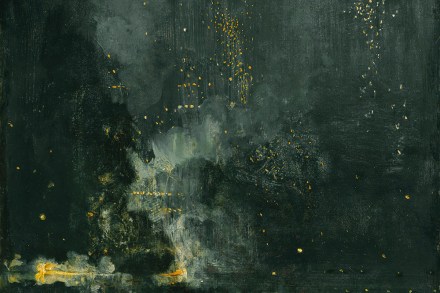
London, June 1877. Beneath a cloudy sky, the celebrated art critic John Ruskin strode along Bond Street towards the newly opened Grosvenor Gallery. Inside, he viewed a smash-hit show of beautiful and progressive art. At least that was the popular opinion. With a few exceptions, Ruskin dismissed the works on display as eccentric, impertinent and indulgent. Worst of all? James Abbott McNeill Whistler’s ‘Nocturne in Black and Gold – The Falling Rocket’, a deliciously wispy painting that captures sparks fizzing and flaring in a dark night sky. Ruskin fired the first shot; then Whistler sued him for libel, firing straight back At least that’s how I would describe it.

Second life: Playboy, by Constance Debré, reviewed

From our UK edition

Playboy is part one of a trilogy that draws on the life of its author, Constance Debré. Part two, Love Me Tender, was published in Britain last year. The trilogy was inspired by Debré’s experience of leaving her husband, abandoning her career as a lawyer, and then losing custody of her child when she re-emerged as a lesbian (and a writer). In Love Me Tender we met a womaniser who referred to girls by numbers rather than their names; in Playboy, via her first female lovers, we witness her transformation into a queer Casanova. The novel is bold and brash and at the same time quietly controlled. Take this line: ‘We’re all selfish, parents, kids, he, I, it’s no big deal, that’s life, it’ll all be fine.

Learning the art lingo: the people, periods and -isms

From our UK edition

When she first starts working as a security guard at the Guggenheim Museum in New York, Bianca Bosker is so bored that she prays someone will touch the art. ‘Do it, I urged silently from my spot by the wall. Do it so I can tell you not to.’ She’s to stand for hours on end, staring into space, reporting anything that could pose a threat. On the first day she radios her supervisors to alert them to a stray leaf: ‘Not exactly a suspicious package, but I needed something to interrupt the tedium.’ Wheedling your way into a self-contained world about which you know next to nothing is no mean feat The job is one of several Bosker picks up in her quest to understand why art matters.

Women on a wind-swept island: Hagstone, by Sinéad Gleeson, reviewed

From our UK edition

This absorbing and wild debut feels at once muzzily folkloric and sharply contemporary. It follows Nell, an artist who lives on a wind-whipped island without ties or commitments – until, that is, a group of women living an even quieter life commission her to make an artwork that will tell their story. The Inions, as they’re known, have come from all over the world to Rathglas, a crumbling old convent overlooking the sea. Naturally, rumours abound about them being a cult or a coven, but really they’re ‘ordinary women wanting a different kind of life’, who have rejected hatred and inequality in favour of seclusion and simplicity.

She’s leaving home: Breakdown, by Cathy Sweeney, reviewed

From our UK edition

The narrator of Cathy Sweeney’s first novel has finally cracked. I say ‘finally’ because there have been signs: drinking alone; disliking her daughter, or at least her type; having an affair with her friend’s son; opening a separate bank account in her maiden name when her mother died. But in the beginning we don’t know any of this. We don’t know what she’s doing, and neither does she. It’s an ordinary Tuesday in November when she leaves her comfortable home in the suburbs of Dublin, which she shares with her husband and their two almost-adult children: ‘I grab my handbag and keys, let the front door shut behind me. I have no idea that I will never come back.’ What follows is a taut tale of the protagonist’s journey by car, train, bus and ferry.

A satire on the American art world: One Woman Show, by Christine Coulson, reviewed

From our UK edition

Christine Coulson worked for more than 25 years at the Metropolitan Museum of Art in New York, where she wrote hundreds of wall labels. In One Woman Show, her second novel, she tells the tragicomic life story of a Wasp-ish porcelain girl called Kitty Whitaker almost entirely in the same 75-word format as if she were an artwork. The 20th-century tale is presented as an exhibition, made possible, we’re told on the opening page, by ‘gin, taffeta and stock dividends’. It’s a wonderfully clever concept, and a book that lends itself to being read in a single sitting, during which you’ll feel the corners of your lips curl upwards again and again.

Everyday life in the Eternal City: Roman Stories, by Jhumpa Lahiri, reviewed

From our UK edition

The middle story in this compassionate collection follows disparate folk loosely linked by a set of steps. Among them, there’s the mother who climbs them first thing in the morning, the girl who descends them at two in the afternoon and the screenwriter who lives at the foot of them, and who stays home nearly all day. Together, these men, women and children represent a cross section of society. One comes from ‘a faraway tropical city’; another compares the grubby sight of graffiti to hearing ‘foreigners talking on the street’. Yet, here they are, existing side by side in a Roman neighbourhood, going about their ordinary daily routines. Which is what the Pulitzer Prize-winning Jhumpa Lahiri does so well: pays attention to the everyday.

The shock of the new in feminist art

From our UK edition

Lauren Elkin begins her book about bodily art with a charming ode to the punctuation mark that she in American English calls a ‘slash’ and we in British English call a ‘stroke’. She likes the way it expresses ‘division yet relation’. Brings disparate things together. Makes space for ambiguity. Blends and blurs. And/or. She writes: The slash is the first person tipped over: the first person joining me to the person beside me, or me to you. Across the slash we can find each other. Across the slash I think we can do some work. That work begins in Art Monsters with a lively and vibrant account of feminist art that articulates the everyday experience of having a body.

The haunting power of 17th-century Dutch art

From our UK edition

Laura Cumming writes about art with a painter’s precision. She’s been the chief art critic for the Observer since 1999. Her fourth work of non-fiction, Thunderclap, is a beautifully illustrated memoir that intertwines biography, visual analysis and personal reflection. An eloquent homage to her artist father, James Cumming, and to the artists of the Dutch golden age, it explores the power of pictures in life and in death. Dutch art is less about things and the way they look, and more about feeling, mood, charisma Dutch art is a culture like no other, writes Cumming. ‘Which other nation wanted to portray all of itself in this way, its food and drink and physical conditions, its lovers, its doctors, housewives and drunks?

Should we judge a work by the character of its creator?

From our UK edition

‘Most of my heroes are monsters, unfortunately,’ Joni Mitchell once said, ‘and they are men.’ The singer-songwriter was able to detach the maker from the made. Should we do the same? Is it ethical? Even possible? These are the questions Claire Dederer deftly considers in Monsters, which puzzles through the problem of what we ought to do about great art by bad men. Ideally, nothing. Early on in her quest, Dederer longs for someone to invent an online calculator: The user would enter the name of an artist, whereupon the calculator would assess the heinousness of the crime versus the greatness of the art and spit out a verdict: you could or could not consume the work of this artist. Alas, said calculator has yet to be programmed, so it’s down to her to do the maths.

A fierce defiance: Love Me Tender, by Constance Debré, reviewed

From our UK edition

‘I don’t see why the love between a mother and son should be any different from other kinds of love. Why shouldn’t we be allowed to stop loving each other? Why shouldn’t we be allowed to break up?’ So begins Love Me Tender, the simply told but deeply felt new novel from Constance Debré, a story inspired by the French writer’s experience of leaving her husband and losing custody of her child. A story that’s quietly heartbreaking and fiercely defiant. When we meet our narrator, Constance, she has been separated from Laurent for three years, though definitions are fuzzy: ‘I call him my ex, he still calls me his wife.

Jenny McCartney, Chloë Ashby and Ysenda Maxtone Graham

From our UK edition

18 min listen

This week: Jenny McCartney says don't expect a united Ireland any time soon (00:57), Chloë Ashby reads her review of Con/Artist the memoir of notorious art forger Tony Tetro (07:57), and Ysenda Maxtone Graham tells us the etiquette of canapés (14:55).  Produced and presented by Oscar Edmondson.

War of the Windsors

From our UK edition

46 min listen

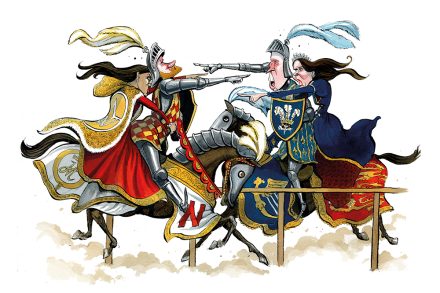
This week: For his cover piece in The Spectator Freddy Gray asks who will win in the battle between the Waleses and the Sussexes. He is joined by historian Amanda Foreman to discuss the fallout Harry and Meghan's new Netflix documentary (01:00). Also this week: Should the House of Lords be reformed or even abolished? This is the question James Heale considers in the magazine. He is joined by Baroness Fox of Buckley to unpack Gordon Brown's recommendation to do away with the second chamber of Parliament (13:14).  And finally: In the books section of The Spectator Chloë Ashby reviews Con/Artist, the memoir of notorious art forger Tony Tetro. She is joined by Tony and investigative journalist Giampiero Ambrossi, who co-authored to book (31:53).

The secrets of a master art forger

From our UK edition

Tony Tetro’s memoir starts with a bang – or, rather, a bust. On 18 April 1989, 25 policemen spilled into his condo in Claremont, California, confiscated the $8,000 he had just been paid in cash and proceeded to search the place, slicing through wallpaper, pulling up carpets and emptying drawers. The scene is pacy, thrilling, a bit silly. It reads like a Hollywood film script; which, if I’m being cynical, is probably the point. The pièce de résistance: If you pressed #* on the cordless phone, a full-length mirror would pop open and reveal my secret stash of special papers, pigments, collector stamps, light tables, vintage typewriters, certificates of authenticity, notebooks with signatures – everything a professional art forger might need.

Meditations on the sea by ten British artists

From our UK edition

It is our ability to see a single thing in various ways that Lily Le Brun celebrates in Looking to Sea: Britain Through the Eyes of its Artists. Over the course of ten chapters dedicated to individual artworks, one for each decade of the past century, she explores our shifting relationship with the shoreline through a carefully considered and enjoy-able mix of biography, art criticism and personal reflection. Up first is ‘Studland Beach’ (c. 1912) by Vanessa Bell, a melancholy painting that paved the way for modernism: ‘It is her attempt to distil an experience of sitting on the beach, looking out to sea, down to its visual essentials.

A complicated bond: The Best of Friends, by Kamila Shamsie, reviewed

From our UK edition

When I think of Kamila Shamsie’s Home Fire, I picture a pot boiling on a hob, the water level rising until it spills over the lip and onto the stove. In Best of Friends, the author’s seventh novel, the tension is still there, but the bubbles are contained. It’s more of a simmer, gentle but insistent – not unlike the ‘shared subtexts’ that pass between the protagonists. We first meet Maryam and Zahra as 14-year-olds. It’s the summer of 1988 in Karachi and the two girls are preoccupied with standard teenage stuff (budding bodies, boys) and the kind of concerns that sadly become standard when living under a ‘repellent dictator’ (censored television, bomb and riot alarms, everyday violence).

Women artists have been ignored for far too long

From our UK edition

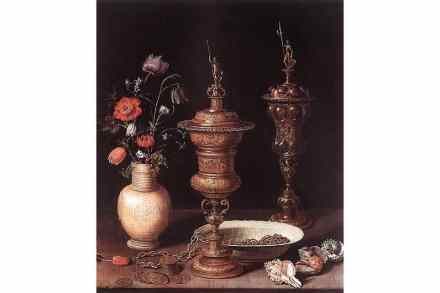
At first glance, Clara Peeters’s ‘Still Life with a Vase of Flowers, Goblets and Shells’ (1612) appears to be just that. Carefully arranged on a wooden tabletop, the collected objects are in conversation, the nubby curves of the shells echoing the ribbed neck of the stone vase, their dusky and rosy hues matching the open and squeezed shut buds. But look closer at the gleaming gilt goblet on the right and you’ll notice that the Flemish artist has smuggled tiny self-portraits into the polished roundels – a clever bid to avoid the misattribution of her painting to a man, perhaps, and a form of self-assertion in the male-dominated art world.