Chas Newkey-Burden

Chas Newkey-Burden is co-author, with Julie Burchill, of Not In My Name: A Compendium of Modern Hypocrisy. He also wrote Running: Cheaper Than Therapy and is the host of Jesus Christ They’ve Done It – the Threads podcast

Strava is ruining running

From our UK edition

When I first started running 25 years ago, it was the simplicity that captured my heart. There were no complicated techniques to master, no ghastly membership fees or extortionate equipment to shell out on. You just needed to buy a pair of shoes, get out there in the fresh air and put one foot in front of another, more swiftly than usual. Strava is basically a cult In return for this modest outlay and effort, you were treated to an avalanche of physical and emotional health benefits. As you ran, you could truly live in the moment, bask in the solitude and enjoy the connection with nature. It felt like such a beautiful and simple trade. I even wrote a book about it, called Running: Cheaper Than Therapy.

Why you shouldn’t travel with your pets

From our UK edition

Transport for London is refusing to take down a social media video which encourages owners to take their cats on the tube network. The unhinged Instagram video shows two owners taking their cats on an escalator, in a lift and on a train, with the slogan: ‘This is your sign to start travelling with your pet around London.’ It’s true that most dogs emerge from flights unscathed but what sort of owner wants to even risk it? The charity Cats Protection asked TfL to take down the video, complaining that it’s ‘apparently normalising’ taking cats on the underground. ‘Busy stations and crowded Underground platforms with loud and sudden noises’ should be ‘off limits for cats’, a spokesperson said.

What’s wrong with ‘angry, middle-aged white men’, Gary Neville?

From our UK edition

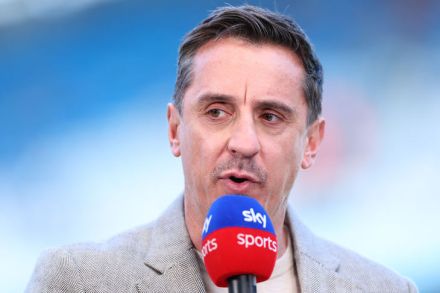
Just when you thought we could all stop talking about flags, Gary Neville has arrived with his size ten boots to keep the ball in play. The ex-Man Utd footballer, turned property developer, said he removed a union flag from one of his Manchester sites because it was being 'used in a negative fashion'. He also complained in a video message posted on social media that we’re being divided by 'angry, middle-aged white men who know exactly what they’re doing'. I’m surprised it took Neville so long to wade in on flags because he’s always seemed up for a scrap. As a player, he wore his heart on his sleeve, goading opposition fans and refusing to shake Peter Schmeichel's hand after the Danish goalkeeper moved to rivals Manchester City.

The thought of Lucy Letby’s innocence is too appalling to bear

From our UK edition

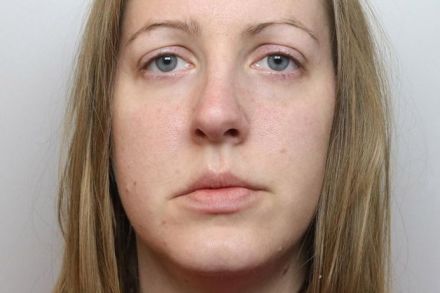
Lucy Letby’s barrister says she has 'new hope', as he prepares to submit 1,000 pages of fresh evidence that he believes will 'clear her name'. In an ideal justice system, evidence that proves an inmate’s innocence would of course lead to their release, but we don’t have an ideal justice system, as I learned as a student. During my late teens and early twenties, I spent a lot of time in maximum security prisons – thankfully, only as a visitor. My secondary school was run by a secretive cult which made me feel sad and trapped. Months before I left, I read Error of Judgement, Chris Mullin’s book about the case of the Birmingham Six, who were framed for the 1974 Birmingham pub bombings.

In defence of voice notes

From our UK edition

From emails to ‘breaking news’ alerts to texts, our phones come under a bombardment of notifications these days. But there’s one kind that always brightens my day – the one that tells me that a friend has sent me a voice note. This, however, seems to make me unusual. ‘I don't want to hear your mini-podcast,’ complains Emma Brockes in the Guardian; voice notes are ‘self-indulgent’, sniffs Anniki Sommerville in the i Paper; and the Independent's Lucie Tobin denounces them as ‘rude’ and ‘invasive’. In the latest issue of The Spectator, Mary Killen advises a correspondent who’s had enough of them to update their WhatsApp profile ‘to clarify their tastes… “please do not leave voice notes”’.

London needs more – not fewer – ‘headphone dodgers’

From our UK edition

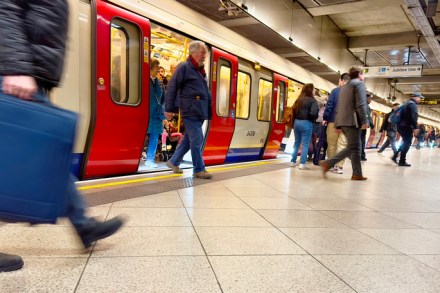
When you’re travelling abroad, a good way of getting the measure of any city is the culture of its public transport. I visited Australia several times as a child and I was surprised by how chatty strangers were on trains and buses. People sat down and struck up a conversation with whoever was sitting next to them. I’ve noticed that natural connection between passengers in many other countries. It’s different in London, where passengers generally sit in tense silence, avoiding any interaction with each other and not even acknowledging that anyone had the temerity to travel at the same time as them.

The tide is turning against firework displays

From our UK edition

News headlines about a Labour council banning fireworks to avoid upsetting baby pandas are certainly eye-catching. It’s true that Edinburgh city council has banned fireworks in nine neighbourhoods between Halloween and November 9, after the death of a baby red panda and its mother in Edinburgh Zoo last year were linked to the din of fireworks. The Edinburgh bans are an overdue acknowledgement of the long-term consequences of short-term thrills But it’s also true that Edinburgh originally banned fireworks in four areas in August last year, months before the pandas met their maker. The council has now voted to extend the bans in those areas and introduce a set of bans in five new areas, including where the zoo is based.

Can Taylor Swift save us from the Oasis bore-off?

From our UK edition

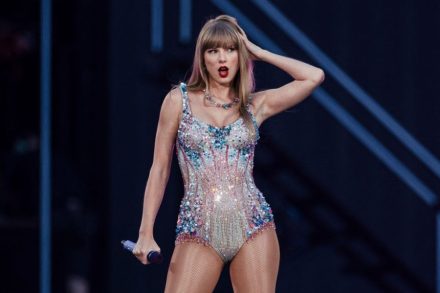
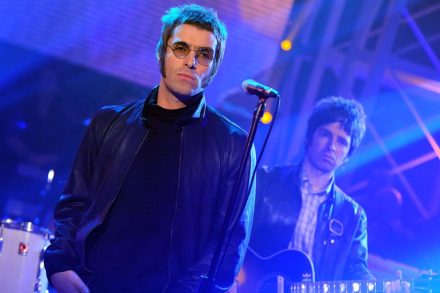
The news that Taylor Swift is releasing her 12th album in October will thrill her fans but perhaps we should all be grateful because this might mean we can move on from the endless chatter about the Oasis reunion tour. From the moment the Gallaghers announced their lucrative concerts it was clear that a lot of people were going to absolutely lose their minds. News of the shows and ticket sales hit the front pages and stayed there for months. Would the brothers fall out before a note was sung? The suspense could have killed us.

There’s nothing extreme about veganism

From our UK edition

At a time when Britain feels increasingly unstitched – with families queuing at food banks and sewage drifting from rivers to seas – it’s almost impressive that anyone has the emotional energy to be annoyed by vegans. Yet we continue to provoke strong feelings, and Katie Glass gave strong voice to them in these pages last week. So allow me to be annoying again, and disagree. Katie says veganism is becoming an ‘extremist’ lifestyle. But to be vegan is, quite simply, to opt out. We choose, as consistently as possible, not to hurt, kill or exploit animals – nor to induce others to do it on our behalf. That’s it. What’s truly extreme is the cruelty that vegans refuse to be part of. More than 92 billion land animals are slaughtered for food each year.

The thrill of tracking parcels

From our UK edition

Ordering things online can be a lottery. You can’t touch, smell or taste the product you’re buying, so it’s hard to know whether you’ll actually want it when it arrives. But we keep clicking anyway because it’s more convenient than trudging to the shops and things are often cheaper. For me, another reason to order online is the dash of childlike joy it brings to my to life when I click ‘buy’ and instantly set up a future treat. In fact, it’s even better than childhood because now I can have a parcel to open any day I want, not just on birthdays and Christmas. But most of all, I shop online because I love tracking my parcel. Anytime I like, I can check in and see where my purchase is in the delivery process.

How I made Facebook nice again

From our UK edition

Social media can still be a force for good, as I found out last weekend when we woke up with an unexpected visitor in our garden: a beautiful white, crested chicken. In the old days, reuniting lost animals with their owners could be a tricky task, involving phone calls to the RSPCA and local authorities, checking lampposts for 'lost pet' posters and keeping an eye on the animal. This time, I logged onto our village's Facebook group and found a 'missing' post from the chicken's worried owners. I messaged them and they came round to collect her, bouncing off home full of relief and joy. The whole thing was sorted out in less than five minutes. Thank goodness for Facebook.

Why Oasis is like Reform

From our UK edition

Almost 16 years after they last performed live, Oasis kick off their reunion tour tonight and for every 'mad for it' fan, there's someone else who thinks they're a musical atrocity.   The critics say they rip off other artists. There's not much to debate about this. The intro of 'Don't Look Back In Anger' is John Lennon's 'Imagine', the opening riff on 'Cigarettes and Alcohol' is T Rex's 'Bang a Gong (Get It On)', while 'Step Out's' chorus is Stevie Wonder's 'Uptight', to name just a few examples. There are countless more and Noel Gallagher makes no secret of how he writes songs. He told Q magazine in 1997 that he 'absolutely' rips off other artists and admitted on Desert Islands Discs that he'd 'ripped off' Pink Floyd alone 'at least three times'.

The triumph of Noel Edmonds

From our UK edition

When Deal or No Deal hit our TV screens in 2005, it soon became a national obsession. I remember hotfooting it from the train station to my house, desperate to make sure I didn’t miss it. This was the most infatuated I'd been with a TV show since I was child. Noel Edmonds, the show’s presenter, was a big reason why: his witty banter with contestants and the show’s fictional ‘banker’ had me – and Britain – captivated. Deal or No Deal was basically just people opening boxes. In most presenter's hands it would have been a bit of a yawn. But Edmonds made it appointment viewing.

David Beckham deserves his knighthood

From our UK edition

Leonardo DiCaprio got his Oscar after 23 years. King Charles was crowned after 70 years. And now David Beckham will finally get his knighthood. Good things come to those who wait – and how Beckham has waited. It’s no secret that Goldenballs has been gasping for a knighthood for a long time, nor that the former England captain has worked tirelessly for one, but he’s not lacking in stamina or focus. As a teenager, he stayed behind on his own for hours after training to continue working on his technique. That attitude served him well in his epic quest for a knighthood.  Beckham was first put forward in 2011 after helping to secure the London 2012 Olympics.

What is the point of the RSPCA?

From our UK edition

The secretly-filmed footage is a horror show. Hens are desperately trying to escape as they suffocate in a gas chamber. The birds, which are being killed for supermarket meat because they're past their egg-laying days, gasp for breath. They appear to cry out as they die slowly. The floor of the gas chamber is littered with dead bodies. The RSPCA increasingly feels like a relic that has lost its way Should we phone the RSPCA? Oh, someone already did. The animal welfare charity's response? While it acknowledged that the footage was deeply upsetting, it said that using carbon dioxide to gas chickens was permitted under RSPCA welfare standards: 'This can be incredibly difficult to watch but the birds are actually unconscious when this happens, and are not experiencing pain.

Are vegetarians really hungry for power?

From our UK edition

The secret is out: vegetarians are 'tougher' and more 'power-hungry' than meat eaters, according to a study in the Times this morning. Well, as a vegan I suppose I must be even tougher and more megalomaniacal. I'm surprised, then, to not find myself doing a whole lot of street brawling or holding any subterranean meetings to discuss how I'll overthrow Keir Starmer with my bare hands. I was actually as surprised as anyone by the findings. Not because I subscribe to the caricature of veggies as gentle, pathetic creatures, but because my experience of vegetarians and vegans is that we are a bit less impressed with clout and power than most people.

Why shouldn’t vegans be catered for in an apocalypse?

From our UK edition

You know you've arrived when professors start thinking about how to look after you during a major emergency. As a vegan, I was thrilled to read in the Times this week that Professor Tim Lang, a professor of food policy, has told the government that us meat-dodgers must be catered for in any 'food apocalypse'. Speaking at the Hay Festival, Lang said that if a cyber attack or military strike from Russia destroyed Britain's 'vulnerable' food chain, the contents of ration packs would need to bring comfort to a shaken public. We'd all be 'in psychological shock', he explained, so we'd need to have food that we're 'familiar and comfortable with'. In the face of 'explosions' and 'energy outages' he wouldn't want vegans to 'have to eat meat'.

Arabella Byrne, Sean Thomas, Mathew Lyons, Bryan Appleyard & Chas Newkey-Burden

From our UK edition

28 min listen

On this week’s Spectator Out Loud: Arabella Byrne on the social minefield of private swimming pools (1:13); Sean Thomas says that not knowing where you are is one of the joys of travel (5:34); reviewing Helen Carr’s Sceptred Isle: A New History of the 14th Century, Mathew Lyons looks at the reality of a vivid century (11:34); reviewing Tim Gregory’s Going Nuclear: How the Atom Will Save the World, Bryan Appleyard analyses the three parties debating global warming (16:07); and, Chas Newkey-Burden looks back to the 1980s nuclear drama that paralysed his childhood, Threads (20:42).  Produced and presented by Patrick Gibbons.

Those remaking Threads mustn’t soften the horror

From our UK edition

I was 11 years old when I saw the mushroom cloud go up but this wasn’t Hiroshima or Nagasaki in the 1940s – it was Sheffield in the 1980s. I was one of nearly seven million people who sat down on the evening of 23 September 1984 to watch a BBC drama called Threads, written by Barry Hines. For many viewers, choosing to watch this film about a nuclear attack on Britain turned out to be an epochal decision. Threads begins as a kitchen-sink drama, focused around a young couple in Sheffield. The realism of their lives is deftly blended with a documentary narration, making everything seem as real as any fictional drama ever could.

We need more animal cruelty on TV

From our UK edition

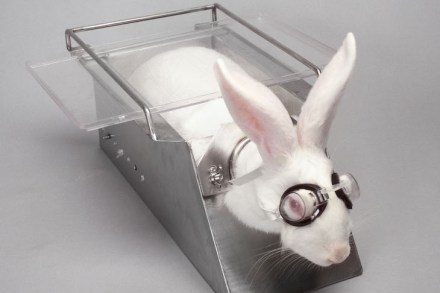
Animal rights campaigners are up in arms because Disney+ is able to use a legal loophole to broadcast a scene of a rat being forcibly immersed in liquid. The RSPCA has slammed Disney for showing a controversial scene from the 1989 thriller The Abyss where a live rat is deliberately submerged in fluorocarbon liquid. The rat is seen struggling during the scene and the charity said the experience was clearly one of ‘terror’ for the poor little rodent, although the filmmakers insist it survived. The scene had previously been cut from all UK screenings by the British Board of Film Classification, which ruled that it breached animal cruelty laws and must be removed from all cinema releases, DVDs and traditional TV broadcasts.