Charles Moore

Charles Moore

Charles Moore is The Spectator’s chairman.

He is a former editor of the magazine, as well as the Sunday Telegraph and the Daily Telegraph. He became a non-affiliated peer in July 2020.

The joys of the wireless

From our UK edition

Obviously, one’s first instinct is to agree that parliament should step in and decree that all the hundreds of sub-postmasters convicted in the Post Office scandal should be exonerated without their appeals needing to be heard. But I suspect that instinct is wrong, for at least two reasons. The first is the precedent. These are individual criminal cases (though with strong common characteristics). If parliament feels it can interfere with such cases, it is usurping the process of law. Once MPs feel they can decide questions of individual guilt, where’s the end to it? Politicians cannot judge evidence to a legal standard. Justice will become politicised. The political proclamation of unproved innocence could be almost as noxious as that of unproved guilt.

Christmas Special 2023

From our UK edition

70 min listen

Welcome to this festive episode of the Edition podcast, where we will be taking you through the pages of The Spectator’s special Christmas triple issue.  Up first: What a year in politics it has been. 2023 has seen scandals, sackings, arrests and the return of some familiar faces. It’s easy to forget that at the start of the year Nicola Sturgeon was still leader of the SNP! To make sense of it all is editor of The Spectator, Fraser Nelson, The Spectator’s political editor Katy Balls, and Quentin Letts, sketch writer for the Daily Mail. (01:06) Next: The story that has dominated the pages of The Spectator in the latter half of this year is of course the conflict in Gaza.

The literary canon of P.G. Wodehouse

From our UK edition

When T.S. Eliot published ‘The Waste Land’ in 1922, it was seen as a masterpiece of modernism. It was, but it was also a work steeped in cultural tradition. This was made apparent in the ‘Notes on The Waste Land’ with which Eliot supplemented his poem. In them, he glossed its literary echoes – the Upanishads, Dante, Chaucer, Mallory, Shakespeare, etc. Another master of the modern who came to his greatest flourishing between the world wars was P.G. Wodehouse. Though seven years older than Eliot, Wodehouse first achieved real fame at much the same time, after the publication of The Inimitable Jeeves in 1923. Like Eliot’s, his work’s modernity, making such innovative use of the main literary traditions of the West, would have been unimaginable in the 19th century.

Ivy League universities must be depoliticised

From our UK edition

In writing about the RedBird IMI bid for the Telegraph Group and The Spectator, its opponents – your columnist very much included – emphasise the danger that the real buyers, the ruling family of Abu Dhabi, could use their purchase to put political or commercial pressure on the British government. But there is also a danger the other way round. If Abu Dhabi owned the titles, I would not put it past any British government (of any party) to put pressure on the Arabs. ‘Look here,’ I can imagine some prime minister saying: ‘Of course, we’d like to sell you a stake in our power stations/electric vehicles/5G networks [or whatever], but it’s very difficult for us to help while you let your titles criticise us so unfairly.

Who really controls The Spectator?

From our UK edition

Now that the government has triggered a public-interest intervention (PIIN), who will end up owning the Telegraph group, and this paper, after deliberations finish in late January? If it dismisses objections to the sale to the ruling family of Abu Dhabi, that family’s vehicle, RedBird IMI, takes control. A leading national newspaper and our most venerable British magazine are thus nationalised by an authoritarian Arab state. If the government rejects the Redbird IMI bid, in law the titles stay with the Barclay family (as they do right now, since the Barclays’ debt to Lloyds bank has been discharged, though under a ‘hold separate’ order which deprives the Barclays of executive power for the course of the investigation) with the consequent right to sell them.

The importance of remembering the Holodomor

From our UK edition

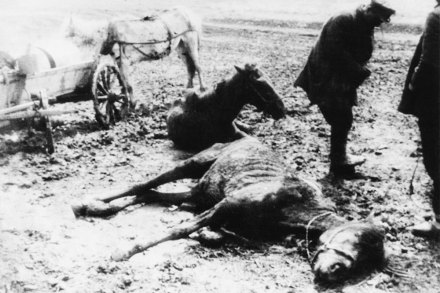
At the end of last week, the Holodomor was commemorated in Britain. There was a service at Westminster Abbey. But the chief point to notice is that no important British government or opposition representatives appeared. Nor, with the honourable exception of Stephen Fry, did any of the celebrities who infest causes such as ‘Free Palestine’. Almost everyone knows, thank goodness, what the Holocaust was. But even now, although Vladimir Putin is trying a small-scale repeat, have most people heard of the Holodomor? (If you haven’t, read Anne Applebaum’s astonishing Red Famine.) It was the largely deliberate starvation of about four million Ukrainians by Stalin in 1932-33, bringing death at a rate rivalling even that of the Final Solution.

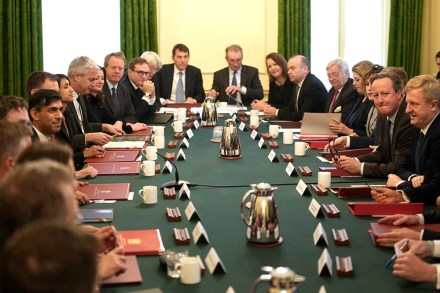
Rishi Sunak’s reshuffle weakens his government

From our UK edition

Rishi Sunak thinks David Cameron will be a round peg in a round hole in the Foreign Office. I think (as I have written elsewhere) that he is right. If foreign secretaries could be bought at Harrods, Mr Cameron is the model discerning customers would prefer. But the underlying problem, which provoked this reshuffle, is at the Home Office. This was a personal one, because Suella Braverman, though she did not breach government policy, had defied the wishes of the Prime Minister about what her article in the Times should say. It is also, which matters much more, a national and political problem, because anti-Semitism, Islamism, immigration policy and confidence in the police are all in contention.

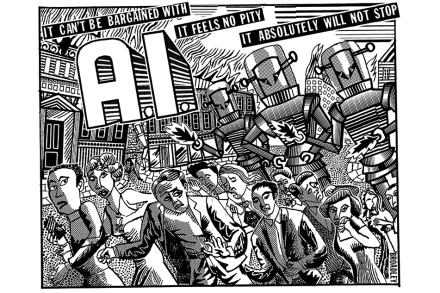
Will Artificial Intelligence create Artificial Stupidity?

From our UK edition

At a time when almost everything gets worse, it is nice to recount that this State Opening of Parliament was better than the last one. Last year, there was a wintry sense of fin de régime, as the Prince of Wales stood in for his ailing mother. Now that Prince is King. Everyone wanted it to go well for him, so it did. There was a feeling of excitement, and perhaps relief that the chilly hand of rationalisation has not used the new reign to tighten its grip. The ceremony was, in a way, grander than under Elizabeth II, because we now have both a King and a Queen. For the first time since 1950 (King George VI was too ill to deliver the speech in 1951) two trains were required and so – to avoid a train-crash – more pages.

Cambridge’s China complicity

From our UK edition

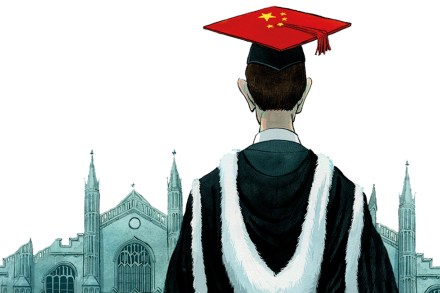
UK-China Transparency (UKCT) was formally launched this week (see Notes, 16 September). Its aim is in its name. There is sadly little transparency about UK-China dealings, especially in our universities. I first reported this problem early in 2020 when I investigated the behaviour of Jesus College, Cambridge, and its China Centre, run by the CCP apologist Professor Peter Nolan. It is probably not a coincidence that the three founders of UKCT – Sir Bernard Silverman, Martin Village and the young freelance reporter Sam Dunning – are all Jesus alumni. The more they looked, the more uncomfortable they became about their college’s advancement of CCP networking and propaganda and its role as the ramp for the courting of the Chinese regime by the whole of Cambridge University.

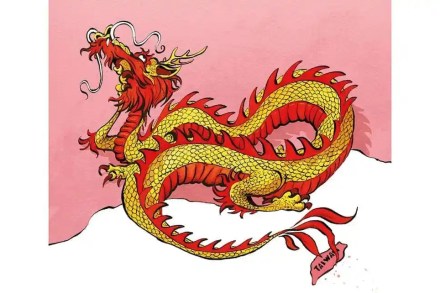
My dinner with a glamorous Taiwanese MP

From our UK edition

Taipei I arrive here shortly after Taiwan National Day, which is 10 October. The day might seem strangely chosen, because the date commemorates the Wuhan Uprising in 1911, the spark for the revolution which overthrew China’s last imperial dynasty and created the Republic of China. At that time, the island of Taiwan did not benefit. It had been ruled since 1895 by Japan and continued thus until Japan’s surrender in 1945. The reason 10 October is the National Day is because the ‘nation’ referred to is the whole of China, not Taiwan. When Chiang Kai-Shek, the Kuo Min Tang (KMT) generalissimo, was defeated by the communist revolution in 1949, he fled to Taiwan.

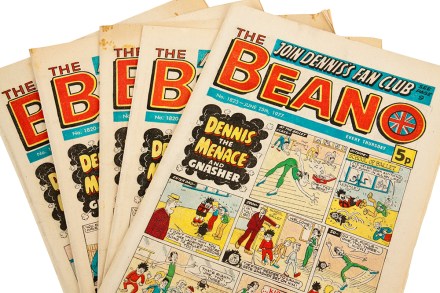
The timeless sophistication of the Beano

From our UK edition

The pattern of Israeli/Palestinian conflicts is always forced by coverage into what people call a ‘narrative arc’. The attacks are usually started by Palestinians. They are briefly condemned across the world, but in terms which allow the Israeli response later to be characterised as ‘overreaction’. Thus a sighing Lyse Doucet, for the BBC, edging away from the utter barbarity of the Hamas attacks, said on Tuesday that ‘the rules [of war] are being broken [by Israel in Gaza] in ways they have never seen before’. Is there any other country which, when its civilians – many old or very young – had been massacred or kidnapped in their hundreds at home, would not respond as fiercely as it could? Not to see this is not ‘neutrality’, but moral blindness.

The National Theatre underestimates its patrons

From our UK edition

It was a story that Rishi Sunak was not saying what he would decide about the future of HS2. But was it the story? The BBC thought so. On Tuesday, Today’s reporting of the Conservative party conference consisted chiefly of Nick Robinson and Chris Mason gleefully commenting on how the Prime Minister was avoiding their HS2 questions. The explanation, which they chose not to recognise, was that he would have been idiotic to pre-empt his own conference speech on Wednesday. There he did announce his big HS2 change. The only other thing that interested Today, especially Robinson, who specialises in this theme, was that ‘the Tory right’ were being supported at the conference by GB News, partly in the form of its presenter Nigel Farage.

In praise of Rupert Murdoch

From our UK edition

In March last year, when the bosses of Jesus College, Cambridge, lost their legal battle for a ‘faculty’ to take down the 17th-century memorial of the college’s benefactor, Tobias Rustat, because of slavery connections, from their college chapel, they did not appeal against the verdict of the ecclesiastical court. They knew they would not have won. But, as I mentioned at the time (26 March 2022), the Church of England high-ups, angry at their own heritage law, are not giving up. The latest biannual report of the Archbishops’ Commission for Racial Justice backs attempts to change the church’s faculty jurisdiction rules and promotes the 47 recommendations of From Lament to Action, by the commission’s anti-racism taskforce.

Why wasn’t Russell Brand cancelled in his prime?

From our UK edition

In 2014, Rolf Harris was convicted of sexual offences against girls. I wrote in this space that this would have represented more of a cultural change in the treatment of celebrities if he had been unmasked at the height of his fame. Current stars, I suggested, are much more rarely denounced: ‘I would not dream of suggesting that Russell Brand is a sex criminal, but we know, from his own account, that he has slept with a great many women.’ He had even, on his infamous Radio 2 show, boasted of sleeping with Andrew Sachs’s grand-daughter, yet ‘the BBC broadcast this as comedy’. ‘If the celebrity wheel of fortune ever went against Brand,’ I went on, ‘would it be surprising if some of the women decided to accuse him of “inappropriate” acts?

Bring back the dog licence

From our UK edition

China is so obviously a ‘potential risk to UK safety or interests’ that if there is an ‘enhanced’ tier under our Foreign Influence Registration Scheme, China should be on it. We keep re-learning, but then forgetting, that China is always using covert means to extend its power over western countries, thereby undermining trust. Our government still cannot find the right words to express the problem because it is itself conflicted. This week, following the announcement of a possible infiltration of parliament, ministers tied themselves in knots over the difference between a ‘threat’ and a ‘challenge’. The truth is that China is both, and this should be officially said. Why, for example, does the government not tell us how Beijing’s United Front Work Department operates?

My prediction for the next general election

From our UK edition

My long-standing theory of British general election results is that they are all deserved. This is true not just of big victories e.g. Labour in 1945 and 1997, the Conservatives in 1979 and 2019, but also of no-score draws, such as the two elections of 1974. In our system (though first-past-the-past sometimes exaggerates) the voters are, collectively, always right. Dare I turn this retrospective rule into a prediction? If I did, I would say that the Tories now deserve to lose, but that Labour does not deserve to win. Logic therefore demands a Labour lead but no overall majority. Small British charities and voluntary groups are doing such good work in Ukraine, but being discouraged, and sometimes refused charitable status, by the Charity Commission.

How do you solve a problem like Rod Liddle?

From our UK edition

‘We must never hide anything,’ declared the director of the British Museum, Hartwig Fischer, three years ago, when criticised for disrespecting its greatest founding genius, Sir Hans Sloane, because, through marriage, he had profited from slave labour. Sloane’s Rysbrack bust was now to be presented, he said, ‘in the exploitative context of the British Empire’. So it would take a heart of stone not to laugh now that Dr Fischer has been forced to resign for failing to raise the alarm – even with his chairman, George Osborne – that hundreds of objects have disappeared from the museum’s collections through a long-standing inside job. He disparaged the exterior expert who had warned him of the thefts.

Will the Online Safety Bill target moths?

From our UK edition

As is now well-known, Ulez (the ultra-low emission zone) will expand from 29 August, taking in suburban parts of Kent, Surrey, Essex, Herts. This fact gave Richard Lofthouse, an editor and motoring journalist, an idea. He has done much to help car4Ukraine.com, a volunteer group within Ukraine which seeks gifts of 4x4 pickups abroad and repurposes them to help the war effort. Some are armour-plated, for instance, and fitted with a gun turret at the back. Others can be turned into field ambulances, and so on. There is an endless need for wheels in Ukraine, the life of each pick-up ‘in theatre’ being a matter of weeks. As I write, nearly 300 such vehicles have been contributed, well over half from British donors.

Will Keir Starmer condemn Greenpeace?

From our UK edition

Sir Keir Starmer’s piece in the Times on Monday was presumably constructed round the front-page headline Labour wanted – ‘Just Stop Oil tactics are contemptible, says Starmer’. Behind the headline, and therefore unnoticed, was his argument that the Tories are wrong to allow new drilling for oil and gas in the North Sea, and Labour is right to allow only old drilling. This wedge between the two main parties is relatively trivial, since both are still committed to getting rid of all new petrol and diesel cars by 2030 and therefore on course to create what Sir Keir, speaking of Just Stop Oil, calls ‘chaos for working people’.  Will Sir Keir also condemn Greenpeace’s invasion of Rishi Sunak’s house in Yorkshire last week?

In praise of Barbie

From our UK edition

For the last time, on Saturday, I stuck the head of the late Queen, without a barcode, on an envelope and posted it. I have kept the two remaining stamps of my sheet as souvenirs. Stamps survive, of course, under the new King, but they are gradually becoming like cash – marginal and out of date. The letter is no longer a primary means of communication, just as notes and coin are no longer the primary means of purchase. I wonder how these changes will affect our view of monarchy. The head of the monarch, unnamed, has been the daily sight of virtually every citizen since the Penny Black arrived in 1840. The head of a monarch on coins, similarly visible to all, is more than two millennia old.