Charles Moore

Charles Moore

Charles Moore is The Spectator’s chairman.

He is a former editor of the magazine, as well as the Sunday Telegraph and the Daily Telegraph. He became a non-affiliated peer in July 2020.

Margaret Thatcher and the missing votes

From our UK edition

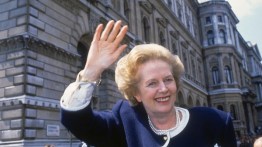
There was a startling late entry for the first volume of my biography of Margaret Thatcher. On the day after she died, I received an email from Haden Blatch. Mr Blatch’s father, Bertie, was the chairman of the Finchley Conservative Association when it selected her in 1958. I had asked Haden for information before, but he had not got round to it. Now he revealed that his father had come home from the Finchley selection meeting and explained that Mrs Thatcher had not really won the vote. Her rival, Thomas Langton, had just pipped her. Blatch senior, however, was very keen on Mrs Thatcher, and thought that Langton, who ‘was born with a silver spoon in his mouth’, would easily get in somewhere else, whereas she, being a woman with young children, would not.

The Spectator’s Notes | 18 April 2013

From our UK edition

When Winston Churchill died, Lady Violet Bonham Carter made her maiden speech in the House of Lords. ‘It is hard for us to realise,’ she said, ‘that that indomitable heart to which we all owe our freedom … has fought its last long battle and is still.’ Her words have application to Margaret Thatcher. But something else about them strikes me. Lady Violet was the daughter of a prime minister (Asquith). Before Churchill married, nearly 60 years earlier, she had been, more or less, his girlfriend. It is a reminder that Churchill was, from the first, in the circles of power and privilege. This does not lessen his achievement, but it points up what Mrs Thatcher had to fight for that he did not.

The Spectator’s Notes | 11 April 2013

From our UK edition

It is strange how we are never ready for events which are, in principle, certain. The media have prepared for Margaret Thatcher’s death for years, and yet there was a rushed, improvised quality to much of the coverage when she actually did die. We have a curious habit of all saying the same thing, and feeling comforted by that, when really it is our job to say as many different things as possible. The BBC, which Mrs Thatcher, and even more Denis, detested, has been straining itself to be fair, but fairly bursting with frustration in the attempt. The way for it to express its subliminal opposition to her is by using the word ‘divisive’ all the time. By day two, this had become its dominant theme.

The ‘Thatcher should quit’ splash that never was

From our UK edition

When Prime Minister, Mrs Thatcher did not have a great deal to do with The Spectator. She was not hostile, but slightly suspicious and perplexed. ‘This is Charles Moore,’ I remember her saying edgily as she introduced me to the Turkish prime minister at a reception. ‘He supports us some of the time.’ After the sinking of theBelgrano in May 1982, Ferdinand Mount, then the political editor, wrote a column deploring the incident and calling for a ceasefire. The then editor Alexander Chancellor, who had incited the piece when Ferdy had really wanted to fall silent altogether, put it all over the cover.

After the Brighton bomb

From our UK edition

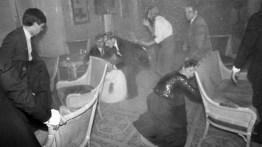
It is worth pointing out yet again that Mrs Thatcher really was very brave last Friday. It would have been no disgrace to her if, once she had realised how narrow had been her escape, she had felt weak and — as did a few of the Tory wives in the Grand Hotel — had sat down and cried. There would have been nothing cowardly in cancelling what remained of the Conference in honour of the dead and injured. But the fact that she did neither of these things and the way that she conducted herself that day confirms that she has an extraordinary amount of that particular kind of courage which rises to an occasion, appearing more magnificent the greater the challenge.

Mrs Thatcher goes to Brussels

From our UK edition

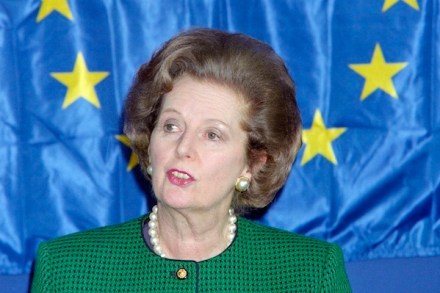
‘Délégation Royaume Uni. Salle 4’ announces a scruffy piece of paper projected onto the black and white television screens of the Centre Charlemagne. The journalists hurry upstairs for the latest from Mr Bernard Ingham, Mrs Thatcher’s press secretary. Mr Ingham is not conspicuously communautaire. He tells us who spoke in the session — Mr Lubbers, Herr Kohl, Mrs Thatcher and ‘Mr Papandreou — I always call him Mr Papadopoulos’. A nodding acquaintance with recent Greek history would have made Mr Ingham realise that such a slip, though easier on the tongue, is as politically uncomfortable as calling M. Mitterrand ‘Marshal Pétain’. But then Mr Ingham is not paid to spread sweetness and light.

‘An -ism has been named after her’: Charles Moore on Baroness Thatcher

From our UK edition

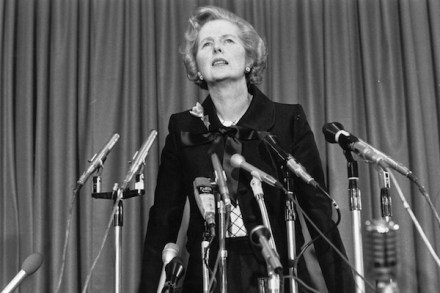
Margaret Thatcher was always the candidate from the outside, both because of her background and because of her sex, and so it was an extraordinary event in the middle of the 1970s that what was considered the stuffiest of the political parties chose her and once that had happened, of course it was transformative. It was transformative, not only for the Conservative party but much more importantly for the country. Her approach to industrial relations was very controversial.

The Spectator’s Notes | 4 April 2013

From our UK edition

The press is now to be regulated under the supervision of a body created by Royal Charter. On the website of the Privy Council Office, it explains that a Royal Charter is ‘a way of incorporating a body … turning it from a collection of individuals into a single legal entity’. New grants of charters are reserved for ‘eminent professional bodies or charities which have a solid record of achievement’. A body with a Royal Charter ‘submits significant aspects of the control of its internal affairs to the Privy Council’ (which is currently presided over by Nick Clegg): ‘This effectively means a significant degree of government regulation.’ Such a body should normally have more than 5,000 members.

Do changes to the Grand National fences really make the race safer?

From our UK edition

The strange story that jockeys have been asked to ride more slowly in the Grand National on Saturday has not been explained. The demand to make the fences safer has made them more dangerous. If fences are lower, horses can run at them faster. Since their riders want to win, they will urge their horses on; so the authorities are trying, probably vainly, to discourage them. Similarly, the decision to remove the hard timber may well mean that gaps will be knocked out of jumps on the first circuit. Then the horses on the second circuit will tend to bunch for those gaps, creating a greater risk than would otherwise have been the case. In the whole of the first half of the 20th century, only 11 horses died in the National.

The Spectator’s Notes | 28 March 2013

From our UK edition

‘And just to round off the week,’ said the chirpy Radio 3 announcer, ‘the St Mark Passion on Friday.’ Just to round off the week, eh? Did Jesus say, ‘It is finished’, just to round off the week? His death, alone, did not round off anything. Wait till Sunday to find out why! With Eddie Mair’s interview and Michael Cockerell’s documentary, we have been invited once again to look at Boris Johnson’s life. We have been reminded — how could we forget? — that it has its rackety aspects. And once again, it is suggested that Boris could not be prime minister because he is not ‘serious’. But who in public life is serious, as opposed to not funny?

Should the United Kingdom become an independent country?

From our UK edition

Last week, Alex Salmond announced the date for the referendum in Scotland, 18 September 2014. The question is phrased to his advantage. 'Should Scotland become an independent country?' it asks. This invites a romantic Yes. In sober, practical terms, the question really is 'Should Scotland leave the United Kingdom?' But perhaps we should welcome the wording for other reasons. If we ever get our promised referendum on the EU, the question should be 'Should the United Kingdom become an independent country?' This is extracted from Charles Moore's 'Notes', in the forthcoming Spectator. The rest will be published tomorrow here, with the rest of his columns.

The Spectator’s Notes | 21 March 2013

From our UK edition

There is supposed to be a Leveson Part II, although everyone has forgotten about it. As well as telling him to look into everything bad about newspapers (‘Please could you clean the Augean stables by Friday, Hercules’), David Cameron also asked Lord Justice Leveson to investigate who did what when over phone-hacking. This was postponed because of the forthcoming criminal trials, but I mention it because it is a reminder that things are back to front. Normally when you have an inquiry, you first work out what happened and then you work out what to do about it. Leveson is the opposite, hence the resulting chaos. The problem is particularly acute if you put a judge in charge. Judges like laws, so they propose new ones.

The Spectator’s Notes: Mark Carney’s salary and Justin Welby’s Catholic taste

From our UK edition

In Washington last week, I encountered amazement that the Bank of England is about to be run by a foreigner. This was not because of any contempt for Mark Carney, the Governor of the Bank of Canada, who will soon succeed Sir Mervyn King, but because Americans could not imagine how a job so pivotal in the national psyche could be bestowed on someone with a different allegiance. The Fed, though far from popular in a country constitutionally suspicious of central power, does have a mythic, incorruptible status. As a result, the chairman, Ben Bernanke, has a tiny (by banking standards) salary. Last year, he was paid $199,700.

The problem with Mark Carney

From our UK edition

In Washington last week, I encountered amazement that the Bank of England is about to be run by a foreigner. This was not because of any contempt for Mark Carney, the Governor of the Bank of Canada, who will soon succeed Sir Mervyn King, but because Americans could not imagine how a job so pivotal in the national psyche could be bestowed on someone with a different allegiance. The Fed, though far from popular in a country constitutionally suspicious of central power, does have a mythic, incorruptible status. As a result, the chairman, Ben Bernanke, has a tiny (by banking standards) salary. Last year, he was paid $199,700.

The Spectator’s Notes | 28 February 2013

From our UK edition

On the BBC television news on Monday night, the first three items concerned alleged misbehaviour by the famous — Cardinal Keith O’Brien, Lord Rennard and Vicky Pryce, the ex-wife of the ex-Cabinet minister, Chris Huhne. I begin to wonder if an accidental revolution is in progress. There is no revolutionary political doctrine, just a wish to believe that anyone in any position of power or fame is corrupt and should be exposed. Sexual misbehaviour is probably the most fun way of doing this, but stuff about money or lying works too. In theory, we should welcome this. The accusations often turn out to be true. Power corrupts. But actually there is something vile about it. It is to do with the righteousness of those doing the exposing.

The Spectator’s Notes | 21 February 2013

From our UK edition

People are quite often pilloried for saying the opposite of what they actually said. I have read Hilary Mantel’s London Review of Books lecture, and she is quite clearly not attacking the Duchess of Cambridge, but criticising what it is that people try to turn royal women into. When she speaks of the Duchess as ‘a jointed doll on which certain rags were hung’, or ‘the spindles of her limbs’ being ‘hand-turned and gloss-varnished’, she is talking about what the media and public opinion want of her. She discusses appearance, and offers no opinion about the young woman’s reality. She is sympathising with a female predicament, and she does the same about Diana, Princess of Wales, the present Queen, Anne Boleyn and Marie Antoinette.

Hilary Mantel’s misinterpreted Royal Bodies lecture was still unpleasant

From our UK edition

People are quite often pilloried for saying the opposite of what they actually said. I have read Hilary Mantel’s London Review of Books lecture, and she is quite clearly not attacking the Duchess of Cambridge, but criticising what it is that people try to turn royal women into. When she speaks of the Duchess as ‘a jointed doll on which certain rags were hung’, or ‘the spindles of her limbs’ being ‘hand-turned and gloss-varnished’, she is talking about what the media and public opinion want of her. She discusses appearance, and offers no opinion about the young woman’s reality. She is sympathising with a female predicament, and she does the same about Diana, Princess of Wales, the present Queen, Anne Boleyn and Marie Antoinette.

There will soon be a popular revolt over NHS standards

From our UK edition

Can anyone think of a bigger scandal in any British public service than that revealed at Stafford Hospital? It is worse than Aberfan, or Bloody Sunday, or the King’s Cross fire, or Jimmy Savile, or even the abolition of grammar schools. Up to 1,200 people died unnecessarily, not because of one error, or a particular set of errors, but because of the way an entire hospital was run for several years. There is plenty of evidence now emerging that comparable disasters have taken place at other hospitals, for similar reasons. Yet I searched last Saturday’s Guardian in vain for a single mention. Politicians are desperately closing the subject down. They have persuaded themselves that everyone loves the NHS, especially its nurses.

The Spectator’s Notes | 14 February 2013

From our UK edition

Pope Benedict is stepping down for conscientious reasons about which he will have thought deeply. But I still fear that his decision is a mistake. First, its manner was unfortunate. An institution like the Catholic Church should avoid unnecessary shocks. It seems that the main people involved were told only on Sunday, and presented with a fait accompli. The news was announced the following day. Obviously, secrecy was important, but in a monarchical system, such a change is momentous and its consequences need to be thought through by the closest counsellors. The orthodoxy has grown up that the long physical decline of Pope John Paul II was a disaster which should not be repeated. This is not so (though it certainly created difficulties).

The Spectator’s Notes | 7 February 2013

From our UK edition

It was rude and impolitic of David Cameron not to sit in on the parliamentary debate on the Marriage (Same Sex Couples) Bill. The whole thing was his idea and would not have come to Parliament without his insistence. Of all his measures so far, it is the one that has caused greatest grief to his backbenchers. Yet he did not come to hear their views. His absence has a symbolic significance. It embodies the fact that social conservatism is felt by somewhere between 30 and 70 per cent of the population on most subjects, and yet has no representatives among the leaderships of any of the three main parties. I don’t think this has ever happened before in our history (unless it be in the Heath/Wilson era). It is a momentous disfranchisement.