Charles Moore

Charles Moore

Charles Moore is The Spectator’s chairman.

He is a former editor of the magazine, as well as the Sunday Telegraph and the Daily Telegraph. He became a non-affiliated peer in July 2020.

The Spectator’s Notes | 2 November 2017

From our UK edition

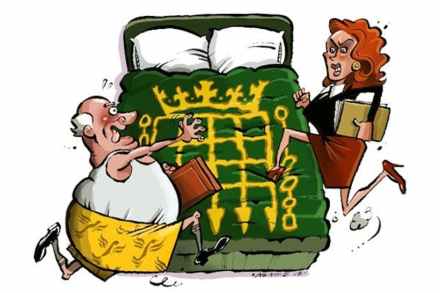
Poor Gordon Brown. He embodies the problem traditionally associated with being male, which is that our sex finds it difficult to understand human feelings. Mr Brown recognises, he says in his forthcoming autobiography, that he was not suited to a touchy-feely age. Perhaps it was just as well, because once men, particularly Members of Parliament, start touching and feeling they get into even more trouble, and discover — often too late — that not everyone they touch and feel welcomes it. They are, you might say, groping in the dark. Once upon a time, a high percentage of women understood this defect and usually forgave the opposite sex. But now the quality of mercy is strained by the age of equality. This trend is understandable, but also sad.

May is repeating Cameron’s mistakes in dealing with the EU

From our UK edition

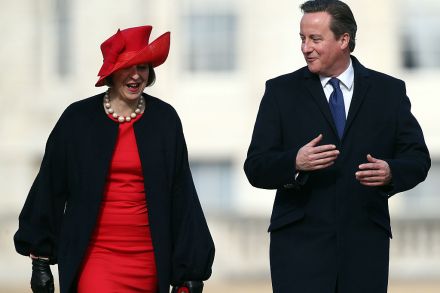
Theresa May’s style of negotiating with the European Union is coming spookily to resemble David Cameron’s. She is in the mindset where the important thing is to get a deal, rather than working out what sort of a deal is worth getting. The EU understands this, and therefore delays, making Cameron/May more desperate to settle, even on bad terms. Eventually, there is an inadequate deal which the British government then has to sell to a doubting electorate. Mr Cameron was punished for this at the referendum he had called. Mrs May is inviting punishment at a general election.

Moderate politics is struggling to get a proper hearing

From our UK edition

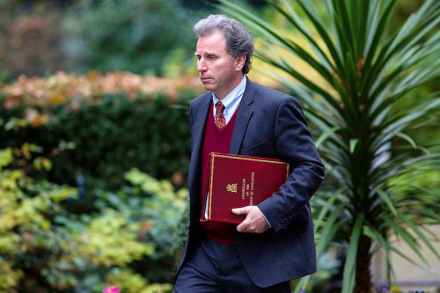
It is interesting how moderate politics cannot get a hearing just now. I do not mean that it is banned — after all, the moderate establishment is still, just, in control — rather that few seem to want to listen. This must explain why Oliver Letwin’s new book Hearts and Minds has so far been pretty much drowned out by endless discussion about whether Mrs May must go. Is it too reasonable in tone for people to want to discuss it? A pity if so, since it is excellent. The book is mercifully short, very clear, and an engaging mixture of memoir and argument.

The Spectator’s notes | 26 October 2017

From our UK edition

Theresa May’s style of negotiating with the European Union is coming spookily to resemble David Cameron’s. She is in the mindset where the important thing is to get a deal, rather than working out what sort of a deal is worth getting. The EU understands this, and therefore delays, making Cameron/May more desperate to settle, even on bad terms. Eventually, there is an inadequate deal which the British government then has to sell to a doubting electorate. Mr Cameron was punished for this at the referendum he had called. Mrs May is inviting punishment at a general election. It is interesting how moderate politics cannot get a hearing just now.

The Spectator’s Notes | 19 October 2017

From our UK edition

‘Persecuted and Forgotten?’ is the name of the latest report by Aid to the Church in Need. Unfortunately, there is no need for that question mark in the title. Both the persecution and the oblivion are facts. Christians have been victims of the genocide in Isis-controlled parts of Iraq and Syria. In 2011, there were 150,000 Christians in Aleppo and now there are 35,000. Persecution rises in other Muslim countries such as Pakistan, Sudan and Iran. In Nigeria, 1.8 million people have been displaced by Boko Haram. In India, there is much more harassment of Christians since Narendra Modi came to power in 2015. In China, there are now thought to be 127 million Christians.

From China to Europe, the world is becoming more dangerous for Christians

From our UK edition

‘Persecuted and Forgotten?’ is the name of the latest report by Aid to the Church in Need. Unfortunately, there is no need for that question mark in the title. Both the persecution and the oblivion are facts. Christians have been victims of the genocide in Isis-controlled parts of Iraq and Syria. In 2011, there were 150,000 Christians in Aleppo and now there are 35,000. Persecution rises in other Muslim countries such as Pakistan, Sudan and Iran. In Nigeria, 1.8 million people have been displaced by Boko Haram. In India, there is much more harassment of Christians since Narendra Modi came to power in 2015. In China, there are now thought to be 127 million Christians.

Nick Clegg’s ingenious solution to the Brexit problem

From our UK edition

Nick Clegg has an ingenious solution to the Brexit problem. He wants Parliament to throw out Brexit and then get the Netherlands Prime Minister, Mark Rutte, and Sir John Major to negotiate how the United Kingdom can be recaptured and bound inside the ‘concentric circles’ which he sees as the future of the EU. I call this the Royal Dutch Shell solution to our national destiny. Certainly, if, as Mr Clegg implies, we are not fit to rule ourselves, it would be preferable to be, like Shell, headquartered in The Hague rather than in Brussels. The idea appeals to Mr Clegg because, with a mother who carries the magnificent name of Hermance Eulalie van den Wall Bake, he is half-Dutch. Perhaps he sees himself as Nick of Orange, leading our Glorious Revolution.

Catalonia’s referendum was a coup shrouded in a cloak of democracy

From our UK edition

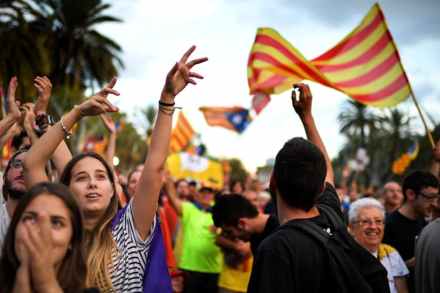
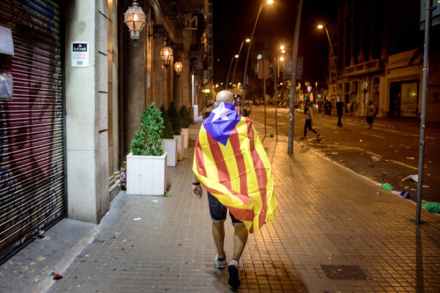
The Catalan nationalists surely chose this October deliberately for their attempt, now faltering, at UDI. It is the centenary of the Bolshevik Revolution in Russia, and the separatist vanguard is the hard-left party, the CUP. Even more vivid in their minds will be Barcelona’s own ‘October Revolution’ of 1934. The then Catalan Nationalist leader, Luis Companys, announced that ‘The monarchical and Fascist powers which have been for some time attempting to betray the Republic have attained their object’ (by the entry of the Catholic party CEDA into the Spanish government). He accordingly proclaimed ‘the Catalan State of the federal Republic of Spain’ and called for a provisional government of all Spain in Barcelona. This revolt failed.

The Spectator’s notes | 12 October 2017

From our UK edition

The Catalan nationalists surely chose this October deliberately for their attempt, now faltering, at UDI. It is the centenary of the Bolshevik Revolution in Russia, and the separatist vanguard is the hard-left party, the CUP. Even more vivid in their minds will be Barcelona’s own ‘October Revolution’ of 1934. The then Catalan Nationalist leader, Luis Companys, announced that ‘The monarchical and Fascist powers which have been for some time attempting to betray the Republic have attained their object’ (by the entry of the Catholic party CEDA into the Spanish government). He accordingly proclaimed ‘the Catalan State of the federal Republic of Spain’ and called for a provisional government of all Spain in Barcelona. This revolt failed.

Politically correct pedestrian crossings are a step too far

From our UK edition

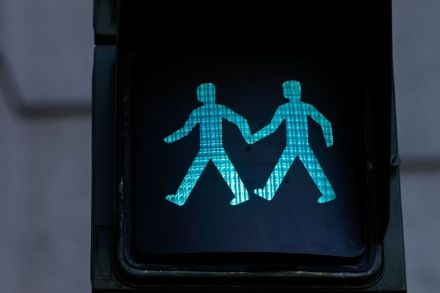
If you cross the roads round Trafalgar Square, the pedestrian lights no longer show red or green men. Currently, they display same-sex gender symbols interlocked, or the transgender sign, instead. On other occasions, I have been told, they depict two women holding hands, or two men standing together. They were introduced temporarily for the Gay Pride march last year, but seem to have popped up again. Technically, this jeu d’esprit must be capable of wide variation — one could have crucifix traffic lights when the Passion is enacted in the square on Good Friday, or a pack of red/green hounds when the next Countryside March tramps by. But on the whole, it would be better if these lights had only one, unambiguous message.

The media is paying too much homage to Catalonia

From our UK edition

However much we try — and lots of us don’t — we fall for the power of the photo-image. So the news, as reported in Britain, was simple: Spanish police brutal; Catalan democracy assailed. I am not in a position to know the real facts about the violence, so I simply note that the estimates for those injured in Catalonia on Sunday vary from 844 to two in hospital. But so much was left out by the dominant account. First, the referendum was illegal under the constitutional law of Spain (reinforced by the Catalan Supreme Court). Serious votes normally need legal form, for good reason. Otherwise, they are more open to manipulation by those calling them, and therefore their results are untrustworthy.

Is Jeremy Corbyn following the Ian Paisley playbook?

From our UK edition

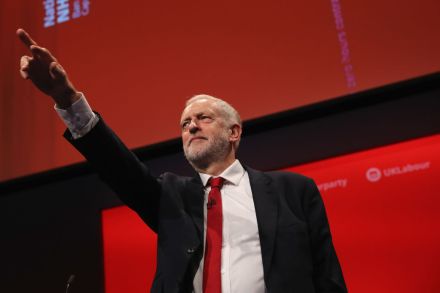
By the simple expedients of being cheerful and attacking Jeremy Corbyn, Boris Johnson scored a deserved hit at the Tory conference on Tuesday. It is right not to be shy about questioning Mr Corbyn’s record. But while it is true that Mr Corbyn has never wavered, over 40 years, in his extreme socialist views, it is also worth noting that he has recently changed his tone a lot. It reminds me of how Ian Paisley, without ever recanting his anti-Popery, dropped his noisy and lurid 1970s expressions of it, and adopted a more modern political voice. In his speech in Brighton last week, Mr Corbyn almost completely left out one of his deepest convictions — the need for a return of trade union power.

The Spectator’s Notes | 5 October 2017

From our UK edition

However much we try — and lots of us don’t — we fall for the power of the photo-image. So the news, as reported in Britain, was simple: Spanish police brutal; Catalan democracy assailed. I am not in a position to know the real facts about the violence, so I simply note that the estimates for those injured in Catalonia on Sunday vary from 844 to two in hospital. But so much was left out by the dominant account. First, the referendum was illegal under the constitutional law of Spain (reinforced by the Catalan Supreme Court). Serious votes normally need legal form, for good reason. Otherwise, they are more open to manipulation by those calling them, and therefore their results are untrustworthy.

Juncker’s EU vision won’t end well

From our UK edition

You can see why Theresa May said in Florence that the British wished the European Union well in its plans for greater integration, while choosing a different path ourselves. There is no point in causing antagonism over what we cannot prevent. But in fact greater European integration will do great harm to all Europeans, including us. The rise of AfD in the German elections was caused almost entirely by Mrs Merkel’s extraordinary decision to admit a million Middle Eastern migrants in a year. The spread of the Schengen area — proposed by Jean-Claude Juncker — combined with recrudescent migrant pressure can only confirm freedom of movement as the impossible issue of our time.

The Spectator’s Notes | 28 September 2017

From our UK edition

You can see why Theresa May said in Florence that the British wished the European Union well in its plans for greater integration, while choosing a different path ourselves. There is no point in causing antagonism over what we cannot prevent. But in fact greater European integration will do great harm to all Europeans, including us. The rise of AfD in the German elections was caused almost entirely by Mrs Merkel’s extraordinary decision to admit a million Middle Eastern migrants in a year. The spread of the Schengen area — proposed by Jean-Claude Juncker — combined with recrudescent migrant pressure can only confirm freedom of movement as the impossible issue of our time.

Is my euroscepticism partly down to a delayed teenage rebellion?

From our UK edition

On Tuesday, for the first — and undoubtedly last — time in my life, I found myself mounting the platform at the Liberal Democrat conference. This was because my father, Richard Moore, was receiving a richly deserved award there. He is 85, so I was assisting him up the steps in Bournemouth. Part of his distinguished service to his party consists in the fact — surely unique in human history — that he has attended every Liberal annual conference since 1953: these shows have taken up a year of his life. He told me that he spoke at the first one he attended, in Llandudno, in favour of what was then referred to as the Schuman Plan, the embryo of what is now the European Union. It is sad for him that Britain will leave the EU more than 65 years later.

The Spectator’s notes | 21 September 2017

From our UK edition

Sir David Norgrove, the chairman of the UK Statistics Authority (UKSA), is an honourable man. When he publicly rebuked Boris Johnson for his use of the famous £350 million figure about our weekly EU contribution, I am sure he was statistically, not party-politically motivated. But two points occur. The first is that Sir David was, arguably, mistaken. He thinks Boris said that, after Brexit, Britain would have £350 million a week more to spend. He didn’t. He said ‘we will take back control of roughly £350 million a week’. This is correct. So long as we are in the EU, that £350 million a week is out of our control, because even our rebate, which forms part of that figure, is EU-dependent. When we leave, it will all be under our control.

The political nature of statistics

From our UK edition

Sir David Norgrove, the chairman of the UK Statistics Authority (UKSA), is an honourable man. When he publicly rebuked Boris Johnson for his use of the famous £350 million figure about our weekly EU contribution, I am sure he was statistically, not party-politically motivated. But two points occur. The first is that Sir David was, arguably, mistaken. He thinks Boris said that, after Brexit, Britain would have £350 million a week more to spend. He didn’t. He said ‘we will take back control of roughly £350 million a week’. This is correct. So long as we are in the EU, that £350 million a week is out of our control, because even our rebate, which forms part of that figure, is EU-dependent. When we leave, it will all be under our control.

The Spectator’s notes | 14 September 2017

From our UK edition

Apologies for my absence from this column. My editors kindly let me get on with the final volume of my Thatcher biography. In my one week of actual holiday — in northern England and in Scotland — I had cause to reflect on what makes a good conversation. The problem with so many social conversations (lunch, dinner, parties) is that talk is compulsory. This can be a helpful thing, but it penalises those who are interesting but shy against those who are more assertive than interesting. Conversations among people engaged in an outdoor pursuit are quite different. They can start, stop and resume without any embarrassment, and they rest on the reassuring basis of a common interest. I imagine this must be true of sailing or fishing. It certainly is of hunting with hounds.

How the economics of cow-milking can help explain Brexit | 1 August 2017

From our UK edition

Writing about judicial appointments, I incautiously compared a silly interview question asking a judge to cite an example of when he had acted with integrity, to asking a farmer, ‘How many times a day do you milk your cows?’ Jamie Blackett, a farmer, writes to say that, in the 21st century, it is a question to which the answer reveals much. He explains. Farmer One milks his 50 cows only once a day. He follows the Norwegian system and makes a marketable green virtue of leaving the calf on the cow. He lives near rich people and sells them his artisan cheese and yoghurt. He voted Remain. Farmer Two milks 120 cows twice a day in the time-honoured way. Even when the price is good he earns less than the minimum wage. He scrapes extra money as a delivery driver.