Charles Moore

Charles Moore

Charles Moore is The Spectator’s chairman.

He is a former editor of the magazine, as well as the Sunday Telegraph and the Daily Telegraph. He became a non-affiliated peer in July 2020.

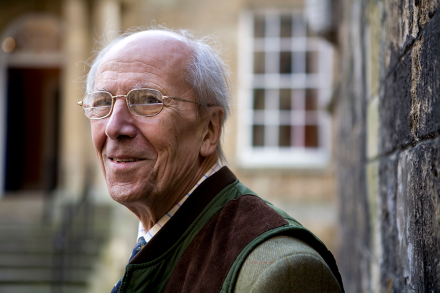
What I’ll miss about Norman Tebbit

From our UK edition

This column comes to you from Auckland Castle, former palace and hunting lodge of the Prince Bishops of Durham. We, the Rectory Society, are here by kind permission of its saviour, Jonathan Ruffer, celebrating our 20th anniversary. Jonathan rescued the castle not from the heathen but from the Church of England. The last Anglican bishop to inhabit it was Justin Welby, in his brief year at Durham before being translated to Canterbury, but it had been run down for many years before that. Bishop Auckland is in one of the poorest parts of England but it did not occur to the Church authorities to use the heritage of this astonishing place to minister to the poor.
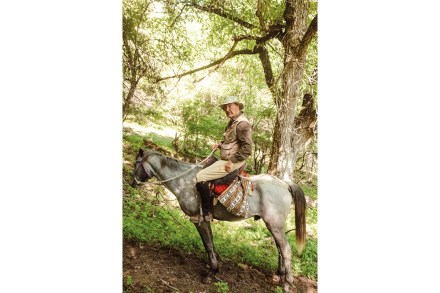
An epic journey on horseback through Kyrgyzstan’s mountains

If you tell friends you are going to Kyrgyzstan, they look blank, or think you are talking about Kurdistan, although the two are 2,000 miles apart. If you get the choice, choose Kyrgyzstan. Like so many, I first learned of the place because of Alexandra Tolstoy: writer, adventurer, horsewoman and cousin of the author of War and Peace. She discovered the romance and beauty of the place for herself when she rode 5,000 miles of the Silk Road by horse and camel in 1999. Since then, she has ridden in Kyrgyzstan most years, taking parties of 12 or so into the lower slopes of the vast Tian Shan mountains, the highest range west of the Himalayas. Blonde, fearless and always elegantly turned out, she leads. We follow.

Kyrgyzstan

Keir’s peer purge, how to pick an archbishop & is AI ruining sport?

From our UK edition

44 min listen

This week: Peerless – the purge of the hereditary peers For this week’s cover, Charles Moore declares that the hereditary principle in Parliament is dead. Even though he lacks ‘a New Model Army’ to enforce the chamber’s full abolition, Keir Starmer is removing the hereditary peers. In doing so, he creates more room, reduces the Conservatives’ numerical advantage, and improves ‘the sex and ethnic balance’. But 86 hard-working and dutiful peers ‘lacking worldly ambition or partisan passions’ will be lost. Also in the magazine, Sophia Falkner, researcher at The Spectator, sets out exactly what we stand to lose by profiling some of the most capable hereditary peers in the House. She warns that Labour’s purge is ripping the heart out of the Lords.

Peerless: the purge of the hereditaries

From our UK edition

The House of Lords is very old, but not quite continuous. In 1649, shortly after the execution of King Charles I, the Cromwellian House of Commons passed an act which said: The Commons of England assembled in parliament, finding by too long experience, that the House of Lords is useless and dangerous to the People of England… have thought fit to Ordain and Enact… That from henceforth the House of Lords in parliament, shall be and is hereby wholly abolished and taken away. This measure was nullified, however, by the Restoration in 1660. The parliaments of King Charles II, and all parliaments since, have included the House of Lords. The hereditaries served their country loyally: 59 were killed in the two world wars, as were 316 of their sons.

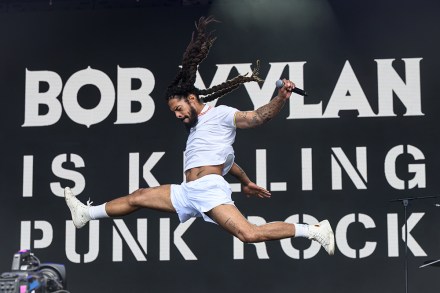
Tim Davie shouldn’t quit over Glastonbury

From our UK edition

There probably never has been a time when a governing party much liked its MPs. If you are on a mission, as governments imagine they are, you are always impatient when your own side raises objections. But it is only recently that governments have seemed positively affronted by the idea that their MPs should have a say. This was encapsulated by Sir Keir Starmer when he dismissed Labour’s backbench revolt over welfare cuts as ‘noises off’. Off what, exactly? Legislators have the sole right to legislate and that includes the right to refuse legislation. Those, like Rachael Maskell, who parade their consciences may be tiresome, but there is no way of governing this country except through parliament (though people like Lord Hermer are striving mightily to alter this).

Is the Met finally getting tough on pro-Palestine protests?

From our UK edition

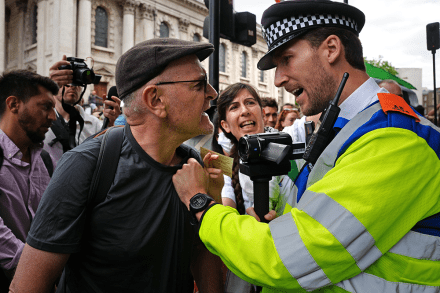
It was airily pleasant to walk round Parliament Square on Monday morning. I had come up to London to go to parliament and to interview Kemi Badenoch at a Policy Exchange event across the square. Palestine Action had announced a protest march against Donald Trump’s and Israel’s ‘genocide’ for that time. Although the Met had banned it from the area, I had recently witnessed so many ill-contained and threatening protests there – almost all for Palestinian causes – that I fully expected delay, disruption and occasional harassment. This time, however, it turned out that the Met meant business. The protest was well-contained in the designated streets round Trafalgar Square. May this mark the permanent change many of us have long been calling for.

The tangled bureaucracy of appointing an Archbishop

From our UK edition

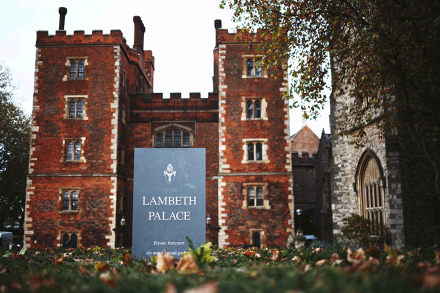
Cardinals elected the new Pope within a fortnight but it will take almost a year to choose our next Archbishop of Canterbury. The beloved Anglican interregnum is intended to ‘take soundings’. These are unproductive if held in an echo chamber. The chairman of the Crown Nominations Commission for the successor to Justin Welby, Lord Evans of Weardale, is an efficient and discreet public servant. But most of the large group of voting members, including both its C of E bishops (York, Norwich), come from the fastest-declining part of the Church, its liberal wing. Thanks to Welby’s reforms, the commission now has no fewer than five members from the wider Anglican communion, only one of whom is from the burgeoning, usually traditionalist African churches (total membership c. 43 million).

The BBC’s Israel problem

From our UK edition

Intrepidly, the BBC dared recently to visit Dover, Delaware – source, it implied, of starvation in Gaza. I listened carefully as its State Department correspondent, Tom Bateman, hunted down the Gaza Humanitarian Foundation in the state which, he explained, is ‘a corporate haven for those who like privacy’. Brave Tom did not find much, but that only proved to him that ‘The main ingredients of this aid are its politics’. The foundation’s chairman says he is a Christian Zionist which, for the BBC, is almost as bad as saying you are a neo-Nazi. The portentousness aside, it is reasonable to ask tricky questions of the American/Israeli organisation which claims it can solve aid in Gaza.

The EU can’t resist empire-building

From our UK edition

A wearisome aspect of modern political polarisation is feeling forced to take sides. Until recently, I felt I could contemplate last Sunday’s Polish presidential election with friendly neutrality. Both sides, after all, strongly resist Vladimir Putin’s aggression in Ukraine. In my one visit of any length to Poland, I was most kindly looked after by my publisher, all of whose friends supported the Civic Platform and mostly came out of Solidarity and related anti-communist dissident movements of the 1980s. On the other hand, I liked the way the Law and Justice party (in office at that time) opposed the extension of EU power and appeared to stick up for peasants and lower-paid workers against the Brussels satrap, Donald Tusk, who is now the Polish prime minister.

Are beards a political statement?

From our UK edition

Yes, it was right of the police to announce quickly that they did not think terrorism was the motive in Monday’s Liverpool horror, thus heading off potential riots. The police also said the person arrested was a white man. If he had been a black man, would they have said that? If not, why not? Watching film of the incident, I felt uneasily reminded of the scene in Belfast in 1988 when two British soldiers in civvies drove out of a side road and found themselves in the middle of a Republican funeral cortege. The suspicious crowd began to threaten the car. The soldiers lost their nerve, one drawing his pistol, and the two men were dragged out and foully murdered.

My VE Day in Kyrgyzstan

From our UK edition

In travelling to Bishkek, I was heading for the hills. I had not expected to be marking the 80th anniversary of victory in Europe there. But thanks to our leader, Alexandra Tolstoy, who has high standing with the authorities in Kyrgyzstan, we found ourselves in honoured places beside the presidential podium for the parade. Being a former Soviet republic, Kyrgyzstan speaks not of the second world war but of the Great Patriotic one. The Russian link remains so strong that the president had advanced the date of the parade so he could join President Putin for his great march past in Moscow on 9 May. Standing near us were bemedalled Kyrgyz veterans, wearing their tall, four-cornered Ak-kalpak hats.

Mark Carney owes his victory to Trump

From our UK edition

Congratulations to Donald Trump. It is almost solely thanks to his exertions that Mark Carney, the incarnation of Davos man, is now victorious in Canada’s general election. The Euro fanatic now wins on a ‘sovereignty’ ticket. If Trump had not intervened to lay claim to Canada, almost as if America were Russia and Canada were Ukraine, it would have gone Conservative. The President may be only hazily aware that the King, of whom, he says, he has the ‘honour to be a friend’, is also King of Canada. If, as seems likely, the King follows his mother’s twice-used precedent and opens the new Canadian parliament in person, Trump may come to see that his next-door neighbour is part of a long-standing, legitimate order which Canadian voters are happy to endorse. P.S.

After Francis, who?

From our UK edition

After Francis, what, or rather, who? The coverage so far, rightly admiring of the Pope’s unvarnished, rather un-papal Christianity, has played down how much turmoil he leaves. His openness to all human beings – the poorer, the better – clashed with his old-fashioned, authoritarian, even angry will. Benedict XVI was more traditionalist but much more pacific. There is therefore a case for a conciliatory, transitional candidate. The Church, however, like so many secular institutions nowadays, may be too polarised for that. The liberals, mostly appointed by Francis, dominate the voting cardinals, but lack wide appeal. Liberalism in religion tends towards its own dissolution. The young Catholics starting to swell church numbers once again tend to be conservative.

Who’d be a bishop today?

From our UK edition

In his recent interview with our American edition, The Spectator World, Donald Trump is reported to be faced by a picture of Franklin D. Roosevelt whenever he sits at his Oval Office desk. ‘A lot of people say, why do you have FDR?’ Trump says. His answer is: ‘Well, he was a serious president, whether you agree with him or not.’ He does not state what he particularly likes about FDR, though one might guess that his capacity to be elected president four times is an attraction. Surprisingly, perhaps, FDR is not anathema to all Republicans. He even appeals to their isolationist strand, because of Yalta. At that fateful conference, it was Roosevelt who gave Stalin what he wanted, despite Churchill’s protests, thus sealing the fate of Poland and much of eastern Europe.

Trump is giving us a taste of our own medicine

From our UK edition

It seems the US State Department sees an impediment to free speech as an impediment to free trade with Britain. It cites the recent incident in which a woman, Livia Tossici-Bolt, was arrested for holding up a sign as she prayed alone and silently near a Bournemouth abortion clinic. It says it is ‘monitoring’ the case. Many here will dismiss this intrusion as a typically loopy product of the Trump era. In a sense, it is. It is also a spurious justification for American tariffs which are happening anyway. But it should teach us something about how others see us. It is commonplace for British governments of both parties to object to the policies of other countries, notably in the Middle East and Africa, in relation to LGBT+ rights.

Has the Assisted Dying Bill been killed off?

From our UK edition

The reported decision to postpone the implementation of the Assisted Dying Bill until 2029 might, one must pray, turn out to be a form of legislative euthanasia. MPs, looking at the process, began to resemble a patient who, having first of all declared his wish to end it all, then begins to worry that it will not be as simple or painless as he had been led to expect. It is one thing to express a fervent wish to release people from unbearable suffering and quite another to frame safe procedures which involve the state, the judiciary and the medical profession in helping people kill themselves. It was a bad mistake, too, for Labour, under Keir Starmer’s leadership, to indicate that although MPs would have a free vote, assisted suicide was a modern, cool, Labour idea.

Putin is outwitting Trump

From our UK edition

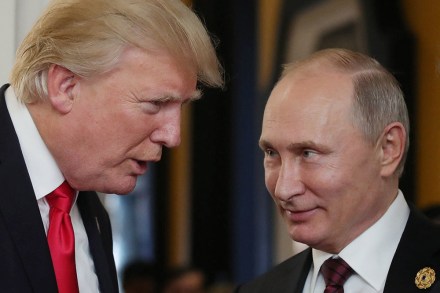
In the incessant conflicts of life and politics, people who know what they want tend to win. That is why Stalin won at Yalta and why, despite the extreme disadvantages of his country’s polity and economy compared with those of the United States, Vladimir Putin is outwitting Donald Trump. He wants Ukraine (and has related revanchist imperial ambitions), and has spent many years working out how to get it. His probing has taught him just how much both the United States and Europe, in their different ways, do not know what they want. The only real mistake Putin made was to think that Ukraine itself did not know what it wanted. It turned out that Ukraine most definitely does not want him. What about Trump?

Trump has breathed new life into Davos Man

From our UK edition

So bad was the debut of this Labour government that many think it has already failed. But now, I suggest, there is at least a chance it will succeed. If it leads industrial recovery based on defence and security, tackles the flawed basis of large areas of welfare spending and sweeps away planning restrictions to build more, it will have confronted problems which the Tories evaded for years. Labour can do this, of course, only if it abjures the beliefs that Sir Keir Starmer has espoused throughout his political career, but that seems to be exactly what his managers, led by Morgan McSweeney, are now (rightly) forcing upon him. Rupert Lowe is not the first Lowe to split Reform.

The bully-boy tactics of Trump and J.D. Vance

From our UK edition

Just before Russia invaded Ukraine three years ago, Vladimir Putin and Xi Jinping announced a ‘friendship without limits’. The phrase seems to apply equally well to Vladimir Putin and Donald Trump. Has Trump ever breathed a word of serious criticism of Putin, questioned his democratic mandate, challenged his right to invade an independent country, condemned his kidnapping of children? Before his inauguration, Trump stepped in on behalf of ‘the hostages who are being held so violently, inhumanely and against their will in the Middle East’. He warned Hamas that there ‘would be ALL HELL to PAY’ for the perpetrators and that they must ‘RELEASE THE HOSTAGES NOW!’.

What will Zelensky’s fate be?

From our UK edition

Kyiv We resemble pilgrims. Because of the war, no one can fly to Ukraine, and so we travel, romantically, by night train. ‘We’ means assorted European dignitaries, a thin sprinkling of Americans, and the media. I find myself sharing a cabin with a former president of the European parliament. The holy day is Monday, the third anniversary of the Russian invasion. We emerge, yawning and crumpled, into the sub-zero dawn. The collective object is to show our devotion to Ukraine’s struggle. This year, our numbers are swollen because of Donald Trump. (In a Polish service station near the border I noticed a magazine cover in which his face is superimposed on that of Neville Chamberlain at Heston aerodrome.) It is alleged that all 27 European Commissioners are in town.