Charles Moore

Charles Moore

Charles Moore is The Spectator’s chairman.

He is a former editor of the magazine, as well as the Sunday Telegraph and the Daily Telegraph. He became a non-affiliated peer in July 2020.

Why the crackdown on cash makes me uneasy

From our UK edition

Banks are trying to change our ways. Our own recently wrote to tell us that it will no longer send us cheque books unless we positively demand them. And now a battle is beginning to close down cash machines. It is reported that there are none at all in Stoke; and when I accosted an ATM in St James’s this week, it flashed up a message saying it would close in three days’ time. I suppose this is because having cash is becoming like smoking — a slightly furtive and discreditable minority occupation. We tap, so far fewer machines are needed. It makes me uneasy.

Why the Today programme hasn’t been dumbed down

From our UK edition

The sad announcement of John Humphrys’s departure from Today has provoked once again the suggestion that the programme has dumbed down. There is supposed to be too much showbiz. The implication is that news people who, in their own phrase, ‘know their onions’ (almost always, perhaps not coincidentally, men) are being pushed aside by others (usually, perhaps not coincidentally, women), who are fluffier. Despite my own lack of interest in showbiz, I think this criticism is wrong. Today is a news magazine programme in an age in which public debate is less about pure politics and more cultural / philosophical / religious / technological / environmental / economic / sexual/ social etc.

The Spectator’s Notes | 14 February 2019

From our UK edition

On Tuesday, Le Monde published a piece it had commissioned from me to explain why, from a British point of view, Brexit is not mad. (I was told that all the paper’s readers think it is.) I enjoyed doing this for two reasons. The first was seeing how my English came out in French. Le Monde sent me its translation. I was delighted to sound so much brainier and statelier, though French feels less flexible than English. The second was that writing for an intelligent audience which knows little of the background is an interesting exercise. It forces one to distil. I no longer had to analyse, say, the intricacies of the Northern Ireland backstop or the merits of the Malthouse compromise. I had to work out what this is all about.

Salman Rushdie and the origins of ‘Islamophobia’

From our UK edition

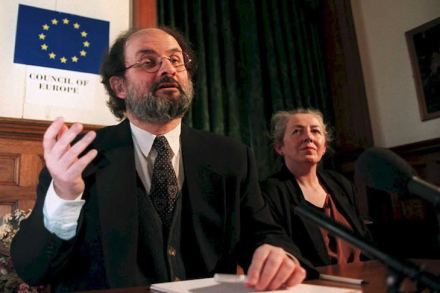
It is 30 years since the fatwa against Salman Rushdie for The Satanic Verses, and 40 since the triumph of the Iranian Revolution. The two are related, since the Ayatollah Khomeini, driven to rage by illness and military failure, wanted to mark the tenth anniversary of his glory days by doing something nasty. I have reminded myself of how The Spectator covered the Rushdie story at the time. We captured two contradictory feelings. One was straightforward disgust that a foreign power could order the death of one of our citizens on our soil and try to get his book banned. The other was the dark farce of the situation — Rushdie, the salon leftie, used to attacking whitey with impunity, suddenly seeking whitey’s help.

Brexit reveals which people really care about representative government

From our UK edition

I am in a small minority in turning off the news when it is not about Brexit. The slow, agonising process fascinatingly brings out what people in public life really think. Do they care about representative government, or not? My estimate is that 60 per cent of the House of Commons do — while differing about exactly how to apply the principles — and about 40 per cent are perfectly indifferent, seeking their own personal or ideological advantage. By the standards of most legislatures in history, this is a more impressive proportion than people recognise. This article is an extract from Charles Moore's Spectator notes, available in this week's magazine.

It’s not just Brexiteers who are calling for civil unrest

From our UK edition

Matthew Parris (2 February) attacks those who warn that failing to leave the EU would cause civil unrest: ‘…there is something deeply unConservative about this tack. A proper Conservative does not pray in aid of his argument by citing criminal elements that may otherwise be unleashed.’ Broadly, that sounds right, although frustrating a major democratic mandate is always a serious provocation. So what does Matthew think of the following? ‘I will tell you what I think playing with fire is: blundering into the politics of Northern Ireland with a policy which is sometimes clueless and sometimes delinquent with a can of petrol in one hand and a box of matches in the other. That is playing with fire. That is what we are in danger of doing.

Why I’m a fan of Titania McGrath

From our UK edition

Private Eye recently featured a tweet by Titania McGrath in Pseuds’ Corner. She was advertising her new book Woke: a Guide to Social Justice: ‘I have written the most important book of 2019. Do not buy it for my sake, but for the sake of humanity.’ The magazine was fooled. Titania is a spoof, and her book, out next month, is categorised on Wikipedia as ‘Genre: Humour’. She tweets every day. On Monday: ‘Dear Hollywood, please reshoot every scene that Liam Neeson has ever acted in and replace him with Christopher Plummer. Do this NOW’ and, ‘If you don’t think exactly the same way as me, you have clearly got a lot to learn about diversity.

The Spectator’s Notes | 7 February 2019

From our UK edition

I am in a small minority in turning off the news when it is not about Brexit. The slow, agonising process fascinatingly brings out what people in public life really think. Do they care about representative government, or not? My estimate is that 60 per cent of the House of Commons do — while differing about exactly how to apply the principles — and about 40 per cent are perfectly indifferent, seeking their own personal or ideological advantage. By the standards of most legislatures in history, this is a more impressive proportion than people recognise. Matthew Parris (2 February) attacks those who warn that failing to leave the EU would cause civil unrest: ‘…there is something deeply unConservative about this tack.

MPs know if parliament is ever to command respect again, Brexit must happen

From our UK edition

The House of Commons does work better than it seems to, I promise you. When a big subject comes up, it spends weeks, months, even years, posturing and sparring, but it has a way of working out when a choice is truly important. Brexit has taken years, and is truly important. We saw the first signs of this realisation dawning on Parliament when it rejected Mrs May’s original deal so decisively. We saw the second signs on Tuesday night. As that series of covert Remain amendments — most notably Cooper-Boles — fell, a pattern became apparent. Enough MPs now understand that if the institution of parliament is ever to command respect again, Brexit must happen, and the minimally acceptable way in which it must happen is that the permanent Irish backstop goes.

Why I’m not worried about no-deal fruit and veg shortages

From our UK edition

What to do about the coming shortage of green groceries of which several supermarkets warned yet again this week if there is a no-deal Brexit on 29 March? I am just old enough to remember when fresh fruit and veg were in short supply at this time of year. People used to know how to store things to mitigate the problem: apples would be carefully laid out on straw-strewn shelves. We ate lots of root vegetables and not much greenery. If ever you saw a strawberry out of season it came, for some reason, from Israel. Perhaps it is time for a Brexit recipe book, like those comforting wartime rationing ones full of bright ideas for dull things. In our part of the south coast we have racier ideas.

Is it time for a Brexit recipe book?

From our UK edition

What to do about the coming shortage of green groceries of which several supermarkets warned yet again this week if there is a no-deal Brexit on 29 March? I am just old enough to remember when fresh fruit and veg were in short supply at this time of year. People used to know how to store things to mitigate the problem: apples would be carefully laid out on straw-strewn shelves. We ate lots of root vegetables and not much greenery. If ever you saw a strawberry out of season it came, for some reason, from Israel. Perhaps it is time for a Brexit recipe book, like those comforting wartime rationing ones full of bright ideas for dull things. In our part of the south coast we have racier ideas.

The Spectator’s Notes | 31 January 2019

From our UK edition

The House of Commons does work better than it seems to, I promise you. When a big subject comes up, it spends weeks, months, even years, posturing and sparring, but it has a way of working out when a choice is truly important. Brexit has taken years, and is truly important. We saw the first signs of this realisation dawning on Parliament when it rejected Mrs May’s original deal so decisively. We saw the second signs on Tuesday night. As that series of covert Remain amendments — most notably Cooper-Boles — fell, a pattern became apparent. Enough MPs now understand that if the institution of parliament is ever to command respect again, Brexit must happen, and the minimally acceptable way in which it must happen is that the permanent Irish backstop goes.

The Spectator’s Notes | 24 January 2019

From our UK edition

This column has laughed before at the BBC’s satirical wit in having a slot called ‘Reality Check’ on Brexit. If ‘Reality Check’ were serious, it would ask every MP each time one appeared: ‘How do you intend to carry out parliament’s promise, both before and after the referendum, to implement its result?’ Orders from Davos on the Today programme on Tuesday: Roland Rudd, a PR man, tells MPs to ‘put country before party’. He does not say which country he has in mind. He particularly gives this instruction to Conservative MPs, despite being an active member of the Labour party and having Lord Mandelson as godfather to one of his children.

The Spectator’s Notes | 17 January 2019

From our UK edition

The scale of the government’s defeat on Mrs May’s deal is, as everyone keeps saying, amazing — yet also not. Mrs May had been told again and again by Tory MPs who were not natural rebels that they could not accept her plan, partly because of the money, but chiefly because of the backstop trap. She just did not seem to take it in. When 117 of her party voted no confidence in her a month ago, she still did not pick up the message, but instead turned to trade union leaders, Labour MPs and potential Remainer rebels to make conciliatory noises on the other side of the argument. So 118 Tories quite logically voted against her solution in parliament on Tuesday night.

Is there no-one in the universities sector who can do arithmetic?

From our UK edition

This week, Universities UK and the Russell Group, seemingly speaking on behalf of the whole sector, produced an Open Letter from distinguished vice-chancellors. ‘It is no exaggeration to suggest,’ said the letter, ‘that this [leaving the EU without a deal] would be an academic, cultural and scientific setback from which it would take decades to recover.’ Actually, it would be as exaggerated as a Donald Trump tweet. The detail of this is brilliantly demonstrated by Noel Malcolm in an analysis for Briefings for Brexit. The bit that made me burst out laughing was Sir Noel’s comparison of a similar Open Letter, from 103 university vice-chancellors, just before the referendum vote in 2016, with this week’s effort.

When it comes to Brexit, UK universities’ sums don’t quite add up

From our UK edition

This week, Universities UK and the Russell Group, seemingly speaking on behalf of the whole sector, produced an Open Letter from distinguished vice-chancellors. ‘It is no exaggeration to suggest,’ said the letter, ‘that this [leaving the EU without a deal] would be an academic, cultural and scientific setback from which it would take decades to recover.’ Actually, it would be as exaggerated as a Donald Trump tweet. The detail of this is brilliantly demonstrated by Noel Malcolm in an analysis for Briefings for Brexit. The bit that made me burst out laughing was Sir Noel’s comparison of a similar Open Letter, from 103 university vice-chancellors, just before the referendum vote in 2016, with this week’s effort.

The Spectator’s Notes | 10 January 2019

From our UK edition

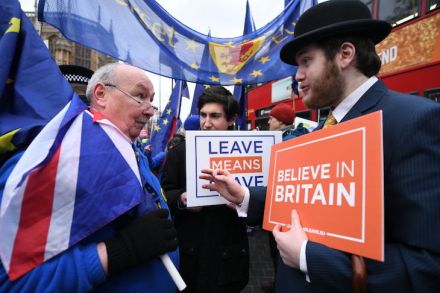
Behind the incident of Anna Soubry being called a Nazi by a small group of Leave yobs beside College Green lies a classic Brexit sequence of events. For many months now, Remain protestors have infested that area. Their numbers are small, but they are well trained to insert themselves and their banners into relevant live television interviews, and have been praised by the Guardian for doing so. Never have I seen the BBC trying to exclude them from its shots, even when the protestors’ interventions have made it quite difficult for those being interviewed. Sometimes BBC interviewers have gestured on air towards the protestors as evidence of strong pro-Remain public feeling. Often BBC cameras have used cutaways of them to punctuate news items, to make the same point.

Will the Boxing Day hunts become a one-horse race?

From our UK edition

Earlier this month, the Quorn and Cottesmore hunts took separate votes on merging. The Quorn voted for, the Cottesmore against. So the merger will not take place. The fact that the Quorn wants a merger is, given its history, astonishing. For a century and a half, it was the epitome of fast, grand hunting — with too much ‘leaping’ for hunting purists, but any amount of swagger. Melton Mowbray was to hunting what St Moritz is to skiing. The place was full of louche, rich, grand persons, chancers, hucksters, poules de luxe, all so well satirised by Surtees. There the future Edward VIII met Mrs Simpson. People would take a ‘box’ nearby for the season or come up from London by train. More than 80 per cent of the subscribers were non-residential.

The Spectator’s notes | 13 December 2018

From our UK edition

Earlier this month, the Quorn and Cottesmore hunts took separate votes on merging. The Quorn voted for, the Cottesmore against. So the merger will not take place. The fact that the Quorn wants a merger is, given its history, astonishing. For a century and a half, it was the epitome of fast, grand hunting — with too much ‘leaping’ for hunting purists, but any amount of swagger. Melton Mowbray was to hunting what St Moritz is to skiing. The place was full of louche, rich, grand persons, chancers, hucksters, poules de luxe, all so well satirised by Surtees. There the future Edward VIII met Mrs Simpson. People would take a ‘box’ nearby for the season or come up from London by train. More than 80 per cent of the subscribers were non-residential.

Four points for Tory MPs to consider before voting tonight

From our UK edition

If I were a Tory MP, I would be worried by the timing of this vote, but, given that it is happening, I would think the following: 1. She's trying to bounce me by making me vote tonight. 2. This is the last chance for a year, because Theresa May is rule-bound and not one to take hints. 3. I do not, in fact, have confidence in her, and so, since I'm being asked, I should say so. 4. Although I do think she is sincere in wishing to deliver what people voted for, we have learnt that she doesn't know how to do this. We urgently need a Prime Minister who does. I am conscious that there is no guarantee that my vote would bring what I want, but I would reluctantly prefer the uncertainty of a contest to the certainty of Mrs May in Downing Street.