Charles Moore

Charles Moore

Charles Moore is The Spectator’s chairman.

He is a former editor of the magazine, as well as the Sunday Telegraph and the Daily Telegraph. He became a non-affiliated peer in July 2020.

Churches are more Covid-secure than trains or takeaways

From our UK edition

Monday night’s murderous gunman in Vienna is officially described as ‘Islamist’. Brahim Aioussaoi, the man accused of murdering worshippers in a Nice cathedral last week, arrived (reported the BBC) with ‘three knives, two phones and one Quran’. These would seem to be the basic toolkit required. A friend who lives in southern France tells me that although the latest lockdown measures prevent church services being held, so serious is the terrorist threat to churches that many are guarded by police. So it seems natural that President Macron of France warns of the danger to French Catholics and speaks of ‘Islamist terrorist folly’. Each of his three chosen words rings true, and the link between them cannot be avoided.

Did Panorama use tabloid methods to lure Diana?

From our UK edition

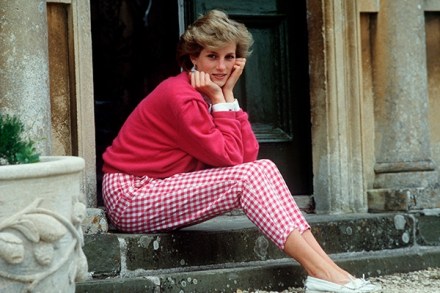
As time passes, there is — blessedly — ever less need to pay attention to ‘untold’ stories about Diana, Princess of Wales; but the Channel 4 documentary Diana: The Truth behind the Interview did make me sit up a bit. It revealed, and the BBC does not deny, that Martin Bashir and Panorama colleagues caused fake invoices to be created purporting to show that a rogue employee of Charles Spencer, the Princess’s brother, had sold stories about her to newspapers. It seems this forgery — and Panorama’s assurances about Bashir’s good character — persuaded Lord Spencer to meet Bashir and to urge his sister to do the same.

The National Trust’s state of historical confusion

From our UK edition

In the National Trust’s recent interim report, ‘Addressing our histories of colonialism and historic slavery’, nothing caused more controversy than its unfavourable mention of Winston Churchill, whose country house, Chartwell, it owns. The entry said that the British government’s response to the Bengal famine when he was prime minister was ‘heavily criticised’. It failed to mention that he was fighting Hitler at the time. It also said that he wrote to his successor, Clement Attlee, in 1947, to oppose the independence of India.

Trump tried to bribe my daughter-in-law

From our UK edition

You have to give it to Donald Trump: he never stops trying. In a letter dated 25 September, he wrote to our daughter-in-law, who is an American citizen living in Britain (‘United Kingdom Englan’, it said on the envelope) to tell her he was giving her $1,700 under the Coronavirus Aid, Relief and Economic Security Act ‘which I proudly signed into law’. It is a pretty impressive bribe, and it pays out, I believe, to every American who earns less than $50,000 a year. In Hannah’s case, however, it might not work for the President at the coming poll.

The BBC can’t resist speculating on the science

From our UK edition

In this column (26 September), I pointed out that the National Trust’s new ‘Gazetteer’ of its 93 properties linked with slavery and ‘colonialism’ was not so much a scholarly documentation as ‘a charge sheet and a hit list’. Once the organisation entrusted with the care of a building denigrates that building’s most famous occupants, logic suggests it will care for the building less well than for that of an occupant it admires. This logic is already starting to work through. The National Trust owns Thomas Carlyle’s house in Chelsea, but now it has closed it ‘until further notice’, whereas all the other small houses of the Trust in London will reopen in March.

The National Trust’s shameful manifesto

From our UK edition

The National Trust has brought out its ‘Interim Report’, with the clumsy title ‘Addressing our histories of colonialism and historic slavery’. Such use of the word ‘histories’, as opposed to ‘history’, is an alert that a woke view is coming your way. Like ‘diversity’ and ‘multiple narratives’ (also deployed in the report), it suggests plurality but imposes uniformity. The aim is to be ‘historically accurate and academically robust’. According to John Orna-Ornstein, the Trust’s director of culture and engagement, ‘We’re not here to pass judgment on the past’.

Peerless: what it’s like to become a Lord

From our UK edition

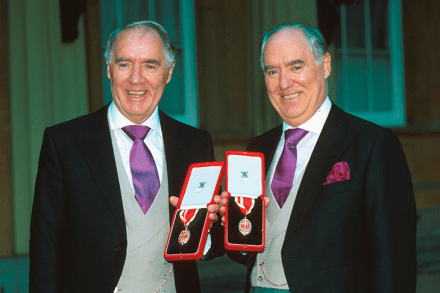
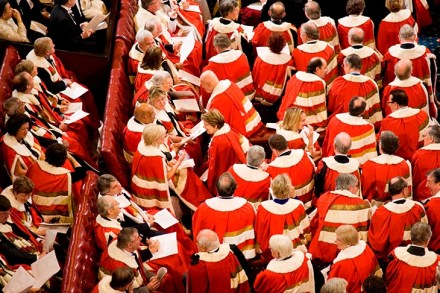
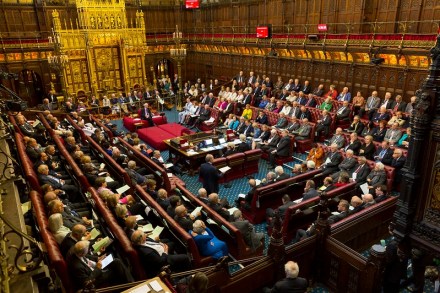
As from this Thursday, I am a peer, although I must wait until next month before I can take my seat in the House of Lords. My letters patent confirm that I am Lord Moore of Etchingham. As do all new boys and girls, I went to see the Garter King of Arms, and he gave helpful advice. Very occasionally, new life peers jettison their surname when taking a title, thus assuming a new identity. The former John Selwyn Gummer, for instance, took the name of his local river and became Lord Deben. This is understandable in his case, because the Green Gummer is almost single-handedly saving the planet. It is also understandable that Michael Lord became Lord Framlingham, to avoid being Lord Lord.

How to beat cancel culture

From our UK edition

One of the most extraordinary features of the ‘cancel culture’ is how well it works. All decent people hate it, but it happens. Why? The key is speed. The bosses of big businesses, universities, quangoes, museums etc. are absurdly frightened by the sudden ambush. Some once-exalted alumnus or benefactor is ‘revealed’ on Twitter as having got money from slavery or worked for the British Empire or used a rude word in 1895. Out comes a petition against him, accompanied by a bit of spray-painting and a shouty demo, and he’s done for. In 99 per cent of the cases, the ‘revelation’ is not new, the alleged evil has been known and publicly discussed for years, sometimes for centuries. Almost every single time, the authorities are not ready, so they give in.

The BBC has given up properly reporting on China

From our UK edition

Totalitarian powers mostly want foreign journalists to go, but sometimes they want them to stay. China recently detained Michael Smith and Bill Birtles, of the Australian Financial Review and ABC respectively. The men were held in the country so they could be questioned about Cheng Lei, an Australian-born anchor for the state broadcaster, CCTV, who is now being investigated by the authorities. Seven police arrived at Smith’s Shanghai flat late on Thursday night last week and interrogated him, pointing a spotlight in his face. Australian consular officials, who had sensed danger even before this, then gave the two men shelter and got them back to Sydney.  There are now no journalists working for Australian media in China, it is said.

Every violent crime is motivated by ‘hate’

From our UK edition

In the early hours of Sunday, a man walked round central Birmingham stabbing people. He killed a 23-year-old man, inflicted critical injuries on two other people and wounded five more. The police were accused of hanging about nervously in cars instead of getting out and tackling the man. Later, Supt Steve Graham gave a press conference. He could not yet say much, he warned, but he could confidently assert that there was ‘absolutely no suggestion at this point that this was in any way, shape or form, motivated by hate’.  The stabbings had not been aimed at gay people, but had been ‘random’. So that’s all right. Supt Graham seemed to be proffering a new category — deliberate, fatal attacks which are not motivated by hate.

Are we seeing the last push against Brexit?

From our UK edition

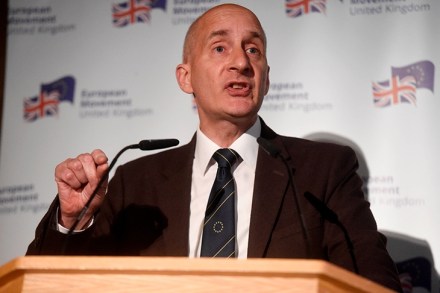
Large parts of the senior civil service regard Brexit as almost illegal. Some of them regard loyalty to the EU as a higher duty than to the elected government they are paid to serve. They feel this most strongly in relation to the Good Friday Agreement in Northern Ireland which they believe — with no textual evidence — is indissolubly linked with the EU. Some of the top mandarins now leaving their jobs prematurely think this way, perhaps none more so than Sir Jonathan Jones, the government’s chief legal adviser. On Tuesday, Lord Adonis, the most Remainery Remainer there is, tweeted: ‘We are going to hear a lot more about Sir Jonathan Jones, the government’s chief legal adviser, who has resigned rather than be a party to breaking international treaties.

Boris needs to do more to fight back in the culture war

From our UK edition

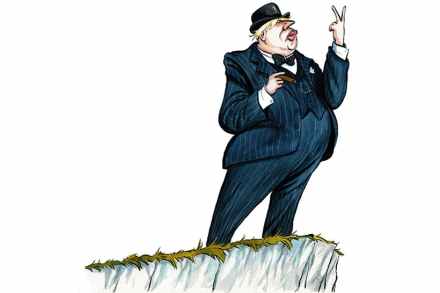
As one battles on, a reluctant volunteer in the culture war which the left is fighting on every front with enviable efficiency, it is frustrating that the millions who hate what is happening are not being properly led. On the whole, government responses are reactive rather than proactive, and late at that.  Boris Johnson said the right things about BLM supporters’ defacing of the statue of Churchill, but almost a week after the event. In the row about ‘Rule, Britannia’ at the last night of the Proms, Sir Keir Starmer actually got in before Boris, backing the traditional last night, in a soft-focus way, as being ‘a staple of the British summer’. Only then did the Prime Minister rather breathlessly enter the fray.

In defence of Hans Sloane

From our UK edition

‘The British Museum stands in solidarity with the British Black community, with the African American community, with the Black community throughout the world. We are aligned with the spirit and soul of Black Lives Matter everywhere.’ So blogged the director of the British Museum, Hartwig Fischer, shortly after the death of George Floyd. Many such messages were rushed out by institutions, colleges and businesses at the time. It was never really clear why. Why did one cruel death, above all the other cruel deaths always happening in the world, require this collective response? What led Dr Fischer to assume that ‘the British Black community’ must be at one with the aims of Black Lives Matter?

Why did Charles Moore get suspended by Twitter?

From our UK edition

The week before last, I started tweeting. Actually, that is not true, but @1CharlesHMoore, bearing my photograph and brief CV, got going, advancing opinions in my name. The first tweets seemed harmless enough. ‘Charles Moore’ commented in support of the Lincoln Project (Never Trump Republicans), for example. But one had the feeling that once the reader had been lulled into a false sense of security, they could only get worse. At first, I did not know this was happening, but an alert colleague noticed and contacted Twitter on my behalf. They acted quickly and ‘my’ account now says ‘Account suspended. Twitter suspends accounts which violate the Twitter Rules’, which makes it sound as if I have done something revolting, such as making a joke.

Without Black Wednesday there would have been no Brexit

From our UK edition

Last Sunday, BBC Radio 4’s The Reunion devoted 40 minutes to ‘Black Wednesday’, as our exit from the ERM was mistakenly called. No one mentioned that the underlying aim behind the ERM was to help create the conditions for a European single currency, and that our falling out ensured that Britain would not join.  Only in the 39th minute of the programme, did anyone — Kenneth Clarke — point out that ‘Europe’ was at the heart of the matter. If Black Wednesday had not exposed in one day’s trading the folly of the euro project for Britain, there would almost certainly have been no Brexit. No one came near to discussing this — a feat comparable to remembering Dunkirk without noting that it was followed by the Battle of Britain.

Should Gavin Williamson resign as a career move?

From our UK edition

Amid all the puzzlement and recrimination about why the government got into this mess about A-level and GCSE results, one factor has been missed — the effect of Covid-19. I do not mean the obvious fact that none of this would have happened without the disease. I mean the less obvious one that our governmental and political system works very badly without the close human contact which Covid forbids. In normal times, MPs meet their constituents. Ministers meet fellow MPs in the Members’ Lobby and hear from them about constituents’ worries, such as their children losing university places. In Whitehall corridors, civil servants bump into one another and notice upcoming problems.

Coronavirus and the BBC’s anti-American bias

From our UK edition

One keeps hearing, particularly on the BBC, that the United States is ‘the worst in the world’ for coronavirus, stated as fact. The next worse, by the same BBC measure, is Brazil. Not coincidentally, the BBC hates the presidents of both those countries. Statistically, this is fiction, although neither Trump nor Bolsanaro has done well. It is true that the US has more known cases than any other country, but comparisons are hard since figures in countries like China and Iran are highly unreliable.  Besides, the key measure is proportion, not overall size. The most telling Covid-19 statistic is deaths per million of population. Currently, the United States stands at 498, Brazil at 485. The United Kingdom, however, comes in at 699. Belgium is the world-beater, at 864.

Is Chris Packham finally facing facts on shooting?

From our UK edition

Chris Packham is widely seen as the most extreme of well-known animal rights activists. His obsessions against hunting and shooting forfeit the impartiality required of a television nature presenter. So it is bold of the excellent new magazine, Fieldsports Journal, to give Mr Packham lots of space in its issue designed for the start of the grouse season this week. Photographed in a butt, Mr Packham not only grants an interview, but also contributes his own article, which begins with his almost lyrical description of holding a rifle (‘I lift the fore-end and feel its weight on the bulb of my left thumb…’). Not strictly relevant, since grouse are dispatched by shotgun, but his tone sounds conciliatory.

Will HSBC protect its pro-democracy staff in Hong Kong?

From our UK edition

Noel Quinn, the chief executive of HSBC, declines to say whether his bank will disown pro-democracy staff who fall foul of China’s draconian new security law for Hong Kong. The bank, he says, follows the law of every country in which it operates: it will treat the issue case by case.  What he may not have digested is that the new security law claims universal jurisdiction. Any Hong Kong person making secessionist, terrorist, seditious etc statements (as defined by China) anywhere in the world commits a crime, just as if he makes similar statements from Victoria Peak, Hong Kong. If I were a pro-democracy Hong Kong citizen working at HSBC’s headquarters in London, I would ask Mr Quinn whether he will protect me when the Chinese authorities drop in to demand my extradition.

Why poetry matters

From our UK edition

Juan Carlos, ex-King of Spain, behaved foolishly in relation to money and sex, and so his decision to leave Spain is sad, but justified. That seems to be the view of most moderate people outside Spain who are not ill-disposed to the monarchy. But it is it right? Certainly Juan Carlos’s foolishness was real, but his imposed exile (it is not really voluntary) to the Dominican Republic is not a punishment for a crime: there has never been any legal process. It is a partisan political act which is bad for the unity of Spain. Juan Carlos’s exile was forced on the current King, his son Felipe VI, by a weak prime minister, the Socialist Pedro Sanchez.