Charles Moore

Charles Moore

Charles Moore is The Spectator’s chairman.

He is a former editor of the magazine, as well as the Sunday Telegraph and the Daily Telegraph. He became a non-affiliated peer in July 2020.

The case against a stripped-back coronation

From our UK edition

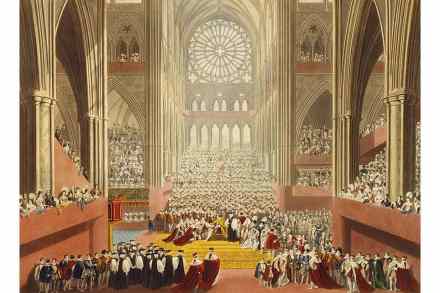
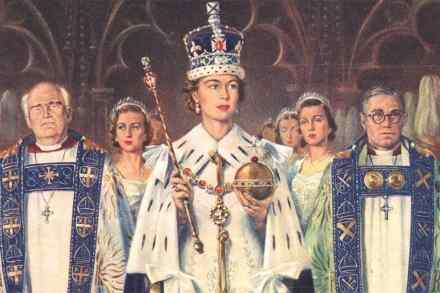
The last King Charles was crowned in 1661. Samuel Pepys attended the ceremony. He was captivated by ‘the sight of all these glorious things… sure never to see the like again in this world’. He later became so merry, he told his diary, that ‘my head began to turne and I to vomitt…Thus did the day end, with joy everywhere’. We live in a more decorous age, but I think Pepys imbibed the right spirit. The coming coronation of King Charles III should be joyful too. The paradox is that joy will not be achieved unless the ceremony is solemn and magnificent. Early signs give slight cause for concern. On Tuesday last week, the coronation was announced for 6 May, half the traditional time gap.

Why should Tom Watson be given a peerage and not Paul Dacre?

From our UK edition

Much of this is not Liz Truss’s fault. The great big adjustment all over the West is that the era of low interest rates is now over. This is causing a crisis because most people, businesses and governments – and, we now discover, most pension funds – planned their finances on the basis that the era would go on for ever. It was bad luck that this hit markets just as Britain got its new prime minister. However, the Trussties undoubtedly overreached. Having been caught out, they are forced to become the sober-sides they previously mocked.

Hacked Off shouldn’t be allowed to scupper Paul Dacre’s peerage

From our UK edition

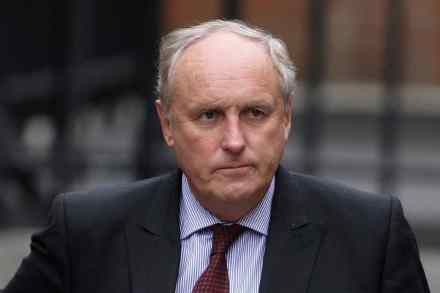
It sounded like an exciting game of Consequences. The Duke of Sussex, Lady Lawrence (mother of Stephen), Sir Elton John, Liz Hurley and Sadie Frost said they will take the Daily Mail to court for alleged phone hacking. The leading lawyers in this case, Hamlins, put out a press release accusing Associated Newspapers, the Mail’s publishers, of grave crimes and wrongs, but no legal papers have been filed.  It makes me wonder whether these accusations are serious, or just examples of the depressing 21st-century passion for ‘lawfare’ This is rather unusual. Why the rush over these historical claims? The answer lies in another press release, issued by Hacked Off, the group backed by the late Max Mosley.

The trouble with Nick Robinson’s Thoughts for the Day

From our UK edition

Thought for the Day appears every morning on BBC Radio 4. This preachy slot is hallowed by longevity, if not because of its content. But when Nick Robinson presents the accompanying Today programme, he often uses the moment after the hourly news and papers to contribute a political Thought for the Day of his own. Before he settles down to attack a government minister with his dentist’s drill, Nick likes to deliver his own wisdom about the foolishness of political leaders. ‘Making promises is easy,’ he told listeners on Tuesday. ‘Explaining how you’ll pay for them is rather harder, as the Chancellor and the Prime Minister are beginning to discover.’ What is the point of such remarks?

The genius of Hilary Mantel

From our UK edition

Yes, but why did the IMF put out its Tuesday night statement? Even if all its criticisms of the government’s new economic policy were correct, why the rush? The IMF’s action is insulting to a G7 country and premature because its thoughts were inevitably composed without full knowledge. It is best seen as part of a pattern, like the early attempts to reverse Brexit, or the US government’s related interventions over the Northern Ireland Protocol. The people who have been running the developed world badly for more than two decades resent those who now challenge them. They pick their moments. The coup de grâce to Boris Johnson earlier this year was delivered by Lord Macdonald, the former head of the Foreign Office.

Should Queen Elizabeth II be made a saint?

From our UK edition

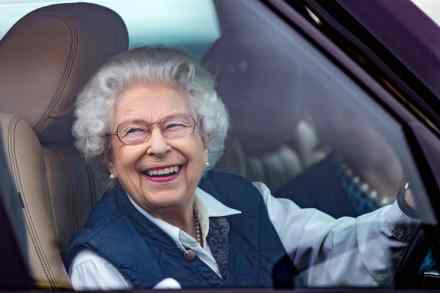
If this were a Catholic country, up would go the cry for canonisation. When Pope John Paul II died, the crowds in St Peter’s Square shouted ‘Santo subito!’ And the Polish Pope was indeed made a saint with unusual speed. What about St Elizabeth, with Windsor as her Compostela? Well, we are not a Catholic country, and if we were, Elizabeth II would never have become our Queen. She clearly did, however, possess the first of the two formal qualifications for sainthood, what the Church calls ‘heroic virtue’. The second is to prove two miracles effected by intercession to the person concerned. This can take time, but the world is already full of people who believe the late Queen cured them of this or that.

The night the Queen refused to read my book

From our UK edition

‘So it is come at last, the distinguished thing!’ exclaimed Henry James on his deathbed. Such a thought is reflected in funerals – always more powerful than a memorial service or ‘celebration’ – because the person’s body is present. When it comes at last to Elizabeth II on Monday, it will be the most distinguished of all the ceremonies. The Household Division is in charge. It is always and only the Grenadier Guards who make up the bearer party. By then, all serving Guards officers will have stood watch over the coffin for the lying-in-state. The Guards are so called because they must guard the Sovereign in life. Their last, distinguished duty is to guard her in death.

The Grenadier Guards’ final duty for Queen Elizabeth

From our UK edition

‘So it is come at last, the distinguished thing!’ exclaimed Henry James on his deathbed. Such a thought is reflected in funerals – always more powerful than a memorial service or ‘celebration’ – because the person’s body is present. When it comes at last to Elizabeth II on Monday, it will be the most distinguished of all the ceremonies. The Household Division is in charge. It is always and only the Grenadier Guards who make up the bearer party. By then, all serving Guards officers will have stood watch over the coffin for the lying-in-state. The Guards are so called because they must guard the Sovereign in life. Their last, distinguished duty is to guard her in death.

Queen Elizabeth II: coronation, reign and succession

From our UK edition

12 min listen

Freddy Gray, The Spectator's deputy editor, is joined by our former editor Charles Moore, and our political editor James Forsyth, to discuss the Queen's death. What was her coronation like? Should unionists be concerned? How important was the Queen's faith to her? What do we miss about the Queen?

Why Liz Truss’s political journey matters

From our UK edition

As is now well known, Liz Truss has travelled politically. Her parents are left-wing, and there is a photograph of her as a child posing with them and their CND banner in Paisley. She herself was active in the Liberal Democrats. Professor Truss is reportedly upset that his daughter became a Conservative. I can identify with this story a little since both my parents were/are (my mother is still alive) ardent Liberals and I fear my own move to the right – though never really a party-political thing – upset them. Parents tend to be more upset by children moving to their right than to their left. This is because non-conservative politics is pseudo-religious. It sees political allegiance as a test of virtue and political programmes as means of salvation.

‘You can’t have your cake and eat it’: Rishi Sunak talks to Charles Moore

From our UK edition

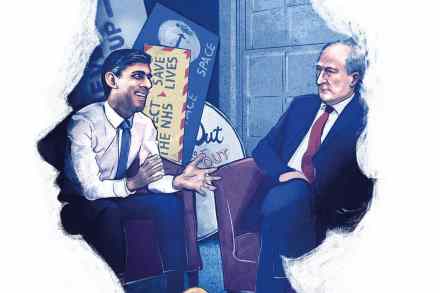
The morning after the first one-on-one Tory leadership debate, Rishi Sunak came to 22 Old Queen Street to speak to Charles Moore for SpectatorTV. This is an edited transcript of their conversation. CHARLES MOORE: Rishi Sunak, welcome to the offices of The Spectator. Just a preliminary – because you mentioned it first in the debate last night [Monday] – David Trimble died and you paid tribute to him. Almost the last thing he intervened on in public life was on the Northern Ireland Protocol. He was worried because he said it threatened the Belfast Agreement. Do you agree? RISHI SUNAK: David Trimble was someone who did an enormous amount to support the Union and bring peace to Northern Ireland, and we’ll miss him dearly for that.

Trimble may prove to be Unionism’s last statesman

From our UK edition

David Trimble, who has just died, has rightly been praised for his courage. History may prove him to have been Unionism’s last statesman. But the well-known people who sincerely eulogised him this week – Tony Blair, Bill Clinton, Jonathan Powell – all helped end his career. There are many good things to be said for the Belfast Agreement, and no one said them better than David, but it achieved at least one big, bad thing: it undermined moderation in Ulster politics. By persuading Trimble to move so far, Blair and co separated him from his political roots. This broke Trimble’s Unionists and empowered the much more sectarian followers of Ian Paisley.

A rather funny story about Ivana Trump

From our UK edition

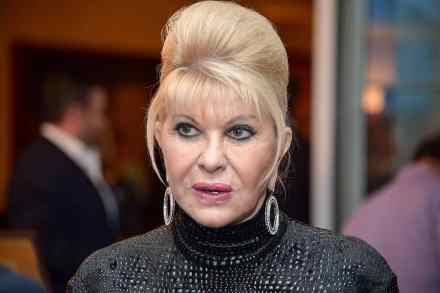
The death of Ivana Trump last week reminded me of a story I had always meant to check. I rang its central figure, Sir Humphry Wakefield, who was forthcoming. In the late 1980s, Ivana, then married to the man she called ‘the Donald’, was doing up the Plaza Hotel in New York, which her husband owned. She decided to name the Plaza’s 12 top suites after great British country houses – Chatsworth, Wilton, Floors etc. So she commissioned Humphry, whose company specialises in the perfect reproduction of important furniture, to install copies of relevant objects from the houses in the appropriate suite. This involved Humphry meeting the couple, although Donald was frequently interrupted to take calls from three angry men in Atlantic City who seemed to be annoying him.

Thatcher’s way with words (1982)

From our UK edition

This piece is taken from The Spectator’s archive 40 years ago this week. At the time, Charles Moore was the magazine's political columnist, aged 25 (he became editor two years later). Here, he writes about the importance of Margaret Thatcher's rhetoric, one year before her 1983 election win. Those who are paid to survey the wicked world of politics make their easiest money from pointing out the disparity between ‘rhetoric’ and ‘reality’. We, whose only reality is rhetoric — if by rhetoric is meant the production of words — note, half-waspishly, half-priggishly, that public figures do not always do what they say. They talk in terms of idealism and altruism when they act out of ambition and vanity.

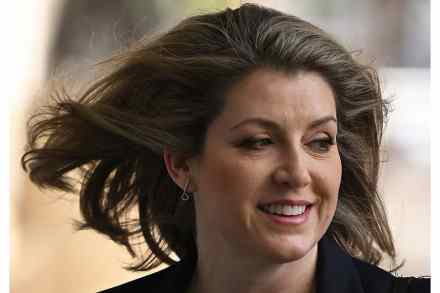
Who can read Penny Mordaunt?

From our UK edition

Whitehall is telling ministers that this is a ‘caretaker’ government and so, by convention, cannot take decisions. This is not correct. A caretaker government is one in which an acting prime minister is in charge following a resignation. But Boris has not resigned: he has merely said that he will resign once his party has chosen a new leader. Until then, he remains Prime Minister. Obviously it would be wrong for him to introduce policy changes which would commit his successor, but officials should not twist convention to prevent ministers from using their usual discretionary powers in individual cases. This bogus invocation of propriety is related, I think, to the anti-Boris rhetoric which implies that his continuation in office is unethical. In fact, it is customary.

The triumph of ethnic-minority Tories

From our UK edition

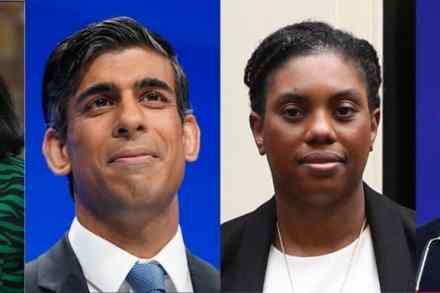
If you had said, even ten years ago, that there was no chance of a white male cabinet minister becoming the next Conservative leader, you would have been greeted with incredulity. Yet it is so today. And it is good, because the change has happened on merit. When the Conservatives began advancing ethnic-minority candidates under David Cameron, I feared it would be tokenistic. One such appointment was making Sayeeda Warsi party co-chairman, only for her to preach about Muslim victimhood; but in general the doors to new talent were opened. I am not sure Cameron got quite what he bargained for, however, because the new entry could loosely be called right-wing.

Thatcher and Boris: the problems of downfall

From our UK edition

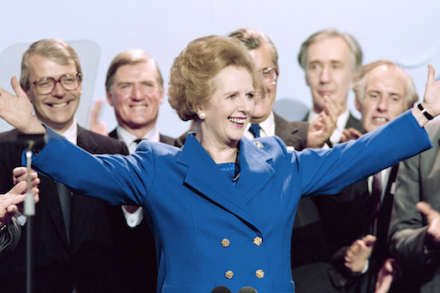
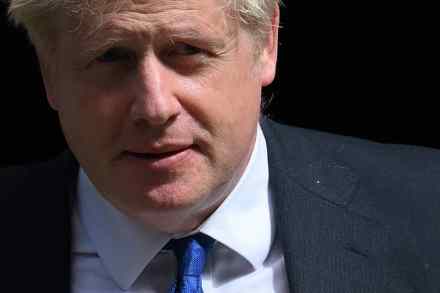
Few leaders could be as different in character as Margaret Thatcher and Boris Johnson, but one can compare their predicaments when colleagues turned on them. Both had large parliamentary majorities and were never defeated in any election they led, yet both faced internal coups. In both cases, there were/are good reasons why colleagues were fed up with their leaders. What was true in Mrs Thatcher’s case, however, and may well apply in Boris’s if he does go, is that her political assassination caused remorse, and immense, lasting division. As John Major understood and Michael Heseltine did not foresee, remorseful MPs tend to turn on the chief assassin and favour, almost paradoxically, the successor candidate who seems loyal to the ousted leader.

Thatcher’s downfall has a lesson for Boris’s enemies

From our UK edition

Few leaders could be as different in character as Margaret Thatcher and Boris Johnson, but one can compare their predicaments when colleagues turned on them.  Both had large parliamentary majorities and were never defeated in any election they led, yet both faced internal coups. In both cases, there were/ are good reasons why colleagues were fed up with their leaders. What was true in Mrs Thatcher’s case, however, and may well apply in Boris’s if he does go, is that her political assassination caused remorse, and immense, lasting division. As John Major understood and Michael Heseltine did not foresee, remorseful MPs tend to turn on the chief assassin and favour, almost paradoxically, the successor candidate who seems loyal to the ousted leader.

Who monitors the moralists?

From our UK edition

If anyone was suitable to be the Prime Minister’s adviser on ministerial interests, it was Lord Geidt. Self-effacing, professional, unself-righteous but thoroughly proper, he could be relied on to do his job without an eye to attracting headlines, gaining Remainer revenge and similar modern temptations to which some officials succumb. Yet last week he resigned. It seems a good moment to ask whether the job is doable. Many will say that it isn’t, and blame Boris Johnson. It is undoubtedly true that any system based on rules comes under strain when confronted with Boris’s work methods. Last week, a horse called Etonian ran at Ascot. A newspaper reported that he was ‘evidently hard to train after his smart juvenile days’. That sums up the Boris problem.

Why neither Andrew Neil nor I can be part of the Establishment

From our UK edition

Even before the ECHR injunction, the bishops had issued their anathema. All 25 of them in the House of Lords told the Times that flying asylum-seekers to accommodation in Rwanda ‘should shame us a nation’. I can see reasonable objections to the policy, but is it really a source of shame? Most countries try to check the flow of refugees and most voters agree. They pay other countries to help them do this. In 2020, Turkey contained about four million refugees from Syria. It is still being paid by the EU to keep most of them out of the EU. The housing Britain is funding in Rwanda looks (though one must lay off for propaganda) like proper permanent buildings, much more pleasant than refugee camps. If we had called it development aid, the bishops might even have praised it.