Charles Lipson

Charles Lipson

Charles Lipson is the Peter B. Ritzma Professor of Political Science Emeritus at the University of Chicago, where he founded the programme on International Politics, Economics, and Security.

Axing the Department of Education will improve education

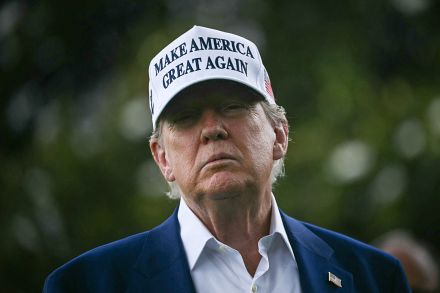
The big education news this week is a court ruling that allows the Trump administration to begin cutting jobs at the Department of Education. A cascade of familiar voices can be heard lamenting that ruling. That’s the angry, unified message from Democrats, the Washington Blob and their Media buddies. Woe betide the students, they wail. Damn this President. They are not just wrong. They are 180 degrees wrong. Why? First, they are wrong for democratic reasons. Donald Trump campaigned on a pledge to demolish the Department of Education. He’s carrying out that pledge, not backpedaling. That’s what citizens should expect from elected leaders in a constitutional democracy. They seldom receive it. Trump is not only right democratically, he’s right educationally.

Donald Trump

What’s the matter with Chicago?

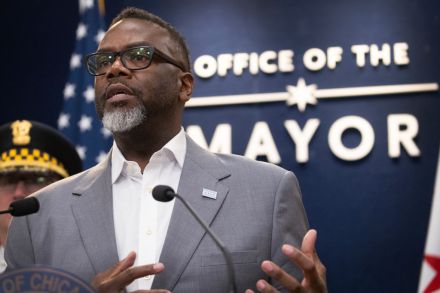
As the song goes: “Chicago, that toddlin’ town.” It was certainly toddlin’ in the 1950s and 1960s, when that song was a hit for Frank Sinatra. The city had bounced back from the Great Depression, begun building skyscrapers again and renewed its status as a vibrant financial and commercial hub. But Chicago has gone from toddlin’ to totterin’, thanks largely to incompetent governance by a succession of local officials – and far better leadership and lower taxes elsewhere in the country, in the places people are moving to. The city’s latest bungler, Mayor Brandon Johnson, was an apparatchik in the Chicago Teachers Union, the most powerful union in the state of Illinois.

Chicago

A trio of scandals

“Who will guard the guardians?” That question, posed two millennia ago by the Roman poet, Juvenal, is just as relevant today. It recurs every time we learn of a new political scandal – or suspect one is being hidden from us.

Scandal

Democrats vexed by Trump’s success in Iran

There are serious, unanswered questions about the impact of America’s bombing of three Iranian nuclear sites. Three stand out. How much was actually destroyed? Where is the highly-enriched uranium that Iran apparently removed from the Fordow site before the bombs fell? And is America threatened by Iranian sleeper cells, perhaps hidden among the more than 700 Iranians whom the Biden administration released into the American interior after they crossed the border illegally? Nor are they the only threat. We have no idea how many terrorists are among the 2 million “got aways” who were seen on surveillance cameras crossing the border but never apprehended.  Those are serious questions about serious threats, and they deserve thoughtful, bipartisan inquiry. They won’t receive it.

Democrats

Fordow in a fortnight?

The decision whether to use American planes and bombs to demolish Iran’s Fordow nuclear facility is the most consequential of Donald Trump’s presidency. Iran’s hardened facility is buried deep inside a mountain, well beyond the striking power of Israeli fighter jets. The question is whether the US will use its B2 bombers to destroy Fordow with the mammoth, deep-penetrating bombs that only US planes are big enough to deliver. Whether to drop those bombs is the decision that now awaits President Trump. Reports are that he has already approved the strike plans but has not authorized their implementation. That’s the final decision that he has said he will make within two weeks. Two weeks, however, is the outside limit.

Why Democrats back the wrong side of 80-20 issues

“80-20” issues have become a catchphrase recently. Most voters on those issues favor one policy by overwhelming margins and oppose the other. The “winning side” may poll anywhere between 60 and 90 percent, depending on the issue, but they are all conveniently grouped under the same label of “80-20.” These lopsided issues have three striking features. First, there seem to be more and more of them, especially on contentious social issues and law enforcement. Second, the same constituency that supports the 20 percent side of one issue frequently supports the 20 percent side of other issues, even those that are substantively quite different. Once an issue is depicted as “progressive,” for example, it generates that support.

What to do about Iran?

China is surely America’s most dangerous threat over the medium term, but Iran is surely the most dangerous right now. The Islamic Republic would be even more dangerous if the Israelis had not decimated the Mullah’s deadly “ring of fire,” the proxy forces across the Middle East funded, armed, trained, and directed by Tehran. But removing these proxies (all except the Houthis in Yemen) does not remove Iran’s nuclear threat. That threat now faces the Trump administration and Netanyahu’s coalition in Israel, leaving only difficult choices. To understand the current problems, we need to grasp a series of fundamental issues surrounding Iran’s nuclear program. • What are Iran’s objectives?

Fordow

Roadblocks prevent Trump from deporting millions of illegal immigrants

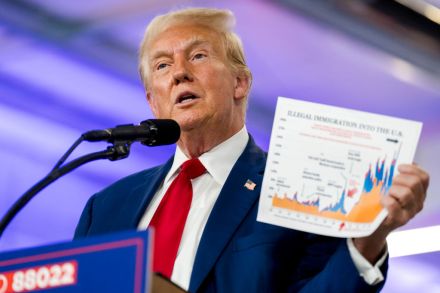
“You don’t have to go home, but you can’t stay here.” So goes the bartenders’ refrain to customers at closing time. The Trump administration is issuing that same call to millions of illegal immigrants, beginning with the most violent (and those caught staying with them). You can’t stay here. It’s a wildly popular stance, but it is running into predictable problems. The first is that rounding up the millions here illegally is costly, time-consuming and sometimes dangerous. That problem was vastly increased by Joe Biden’s deliberate decision to open the southern border, allow millions of people to cross it illegally and then lie to the public and Congress about what his administration was doing.

Immigration

Another spring, another round of anti-Semitism on campus

The weather is growing warm, which means anti-Semitic demonstrations are blooming at elite universities. The hatred of Jews is no longer hidden, as it was in the days when Jewish enrollment was quietly limited by quotas. Now, it is displayed openly by a campus coalition led by hardline American leftists (students, faculty, and administrators) and Muslim students, some from America, some from the Middle East.  Their hatred is screamed at Jewish students and pro-Israeli speakers—and then at anyone who dares support them or simply demands the basic right to speak or be heard. Any support for Israel is damned as “genocide” and then shouted down, shamed, or worse.

campus

Trump takes a hammer to the universities

President Trump has already dropped the first hammer on Harvard. He’s ready to drop the whole tool chest on a whole slew of universities – and it won’t be pretty. Outraged Democrats will call the punishing sanctions authoritarian, even fascist, and well beyond the authority of a constitutional officer. Republicans will back the president, saying universities had plenty of chances to correct their serious problems and did nothing.  Some threatened sanctions are readily defensible, such as demanding better protection for Jewish students and eliminating discrimination in admissions, hiring and promotion. Some are not, such as demanding intrusive federal oversight of course content and departmental hiring. All Trump’s actions will be challenged in court.

British trump universities

How to deal with the student mob

Last week’s violent anti-Semitic protest at Stanford is yet another sign of a pernicious climate on many campuses. The immediate targets are Jews and Israel. The larger targets are many of the values we prize in the West. At Stanford, students broke into the university president’s office using hammers and crowbars. They proceeded to barricade themselves inside, destroy the furnishings, and scrawl noxious graffiti there and on the building outside. Some estimates say they caused $700,000 in damages. Twelve students were arrested by local police. The Santa Clara District attorney announced that the break-in had been carefully organized in advance, caused enormous damage and warranted criminal charges. But, he said, it did not warrant severe punishment.

student

Trump’s ‘on-again, off-again’ presidency

To win elections in a two-party system, the victor needs to erect a big tent. He needs to persuade all kinds of voters in the general election, including many who disagree with each other (but disagree with the other party even more), to vote for him. Experienced politicians call it, “the politics of addition, not subtraction.” The rest of us call it “big tent politics.”  What can poke holes in that tent? What will allow the rain to come pouring in? Those questions loom over Republicans, looking for an umbrella amid tariff disagreement, a volatile market and whispers of a possible recession.  The skies were clear when the big issue was illegal immigration. The party base loved it and so did voters.

again

Trump only harms himself by floating the idea of a third term

Donald Trump this weekend floated the idea of running for a third term. Unless he’s doing it in 1940 when Franklin D. Roosevelt did, it’s unconstitutional. I don’t mean unconstitutional for Judge Boasberg or Judge Chutkin or some zealot in robes in San Francisco or Seattle. I mean unconstitutional in capital letters for any judge, including a 9-0 vote on the Supreme Court. The legal background here is straightforward. When FDR ran for a third term in 1940 and for a fourth in 1944, there was no legal or constitutional prohibition against doing so. There was simply a well-established norm, begun when George Washington returned to Mount Vernon after two terms. That norm was respected by every subsequent president. Until FDR.

PBS and NPR should never have received public funding

Congress has been mulling the future of publicly-funded television and radio. Here’s a spoiler alert: that funding is toast. There is no way a Republican-controlled House and Senate will keep pouring money into networks they believe hate them. They know that hatred is warmly reciprocated. The debate about partisan bias at PBS and NPR is important – the bias itself is obvious – but that’s not the most important point. What matters most is that democratic governments have no business funding or controlling news channels directed at their own citizens. Those channels should be privately owned and operated. Every single one.

npr pbs

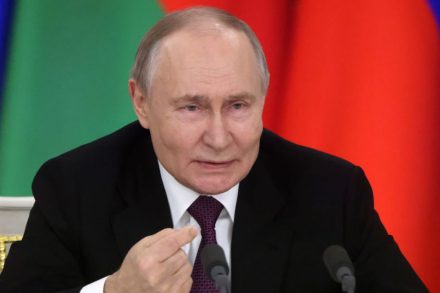
Will Putin give peace a chance?

At a summit meeting in Moscow, Ronald Reagan was asked about his basic approach. He famously answered, “Here’s my strategy on the Cold War: we win, they lose.” Vladimir Putin has the same strategy for Ukraine. That is certainly his first response to President Trump’s offer to mediate an end to the war and bring a reluctant Ukraine to the negotiating table. If “we win, they lose” is Putin’s final response, then the war cannot end without Ukraine’s surrender or Russia’s collapse. Putin’s initial reply, filled with his maximalist demands, indicates he is still committed to the conquest of his neighbor, whose independence and sovereignty he has long rejected.

putin

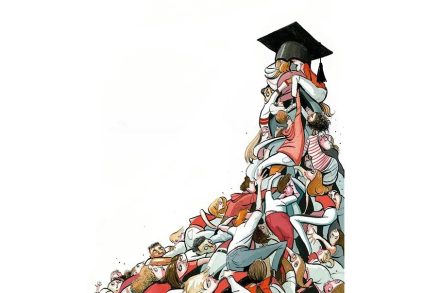
Columbia exemplifies the failure of universities

Yesterday, with growing sadness, I read a wonderful book about teaching and learning, written by one of the great teachers of the past century. Why the sadness? Because the author, Gilbert Highet, was a revered professor at Columbia in the Fifties and Sixties. It is impossible to read his paean to learning, written a half-century ago, without weeping for what his university has become. When Highet wrote of learning, he meant absorbing from history’s greatest minds, from Plato, Aristotle, Thucydides, Virgil, Cicero, Machiavelli, Hobbes and Locke, and teaching their lessons to students who wished to learn from them. Reading Highet’s words a half century later, we realize he was speaking of another time and place — virtually another university.

columbia

It’s morning in Trump’s America

From our UK edition

Donald Trump’s speech to a joint session of Congress on Tuesday night was the most powerful, rousing, and pointed of any presidential address in decades. The first line captured the theme of the night. “America is back...and we are just getting started.” It ended with a peroration that his administration would “take up the righteous cause of American liberty,” and “fight, fight, fight for a country our citizens’ believe in and deserve.” Our country’s “Golden Age,” he said, ”has just begun.” Dozens and dozens of applause lines were planted throughout the speech as Trump laid out his ambitious agenda and his accomplishments so far. It was not the dull laundry list of programs most presidents present to Congress. There was an upbeat coherence to the address.

What’s behind the vicious attacks on Elon Musk?

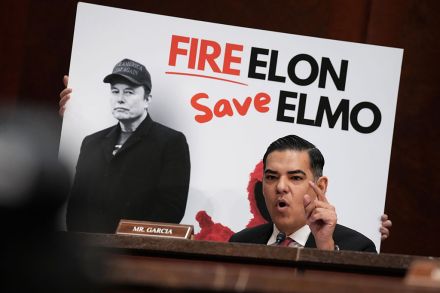
Why are Democrats mounting such a ferocious assault on Elon Musk? Why are mainstream media outlets so eager to go along? The simplest answers are the best. Musk is the most prominent member of the new administration aside from the president himself. He is Donald Trump’s point man for exposing malfeasance in federal bureaucracies, determining where the money is going and cutting the engorged payroll. The more Musk and Trump succeed, the worse for Democrats. They created those agencies; their supporters staff them; and those supporters funnel lots of public money to specially favored institutions and projects. When Musk attacks this partisan nexus, he is attacking a major source of Democratic power and influence. That is what’s really at stake here, beyond cutting the budget.

Trump’s presidency is an ink-blot test for America

Americans are being given a national ink-blot test. Their answers tell us how a divided country sees the political landscape and what they think of President Trump’s bold efforts to reshape it. The scope for differing interpretations is illustrated by a story about one such Rorschach test. The psychiatrist shows his new patient ink blot after ink blot. No response. Finally, the exasperated doctor pleads with him to say something, anything. “Look, doc,” he says, “I didn’t come here for you to show me dirty pictures.” That’s exactly how Democrats see Donald Trump’s presidency. It’s one dirty picture after another. A few moderate Republicans share that perspective, but they are outliers in a party Trump has reshaped in his own image.

The deeper meaning behind Trump’s blizzard of actions 

With Donald Trump moving so rapidly on so many fronts, it is hard to grasp the big picture. What are his overriding goals, politically and electorally? What has he already accomplished?  Here is a summary in case you are keeping score. Trump has done more in a few weeks than any president in history. He took office with a coherent, detailed program and control of Congress (though a very narrow majority in the House). He is acting swiftly before his political capital dissipates.  Trump hopes to sustain his winning electoral coalition beyond his time in office. That’s why he chose a young populist, J.D. Vance, as his vice president and presumptive successor.

actions