Charles Clover

Charles Clover is executive director of the Blue Marine Foundation.

Britain has wronged the Chagossians again

From our UK edition

I could not resist rushing to the High Court to witness the eleventh-hour challenge to the deal to give away the Chagos archipelago to Mauritius, brought by two valiant Chagossian women. Outside, their supporters chanted 'Chagossians British' and waved their passports. Inside, it was a legal massacre, with the government’s lawyers insisting that the Foreign Secretary’s power to make treaties is not reviewable by the courts, that David Lammy had 'broad powers of discretion' to make what deals he liked with Mauritius and that there had been no promise to consult with the Chagossians on its terms, which meant no promise had been broken.

How to stop trawling from trashing the North Sea

From our UK edition

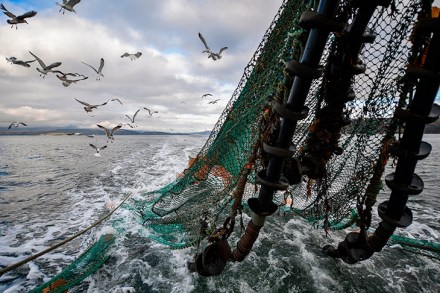
Recently Greenpeace dropped a boatload of granite boulders on to Dogger Bank, a permanent threat to any boat that attempts to drag a trawl net across the sandy sea-bottom. One of the biggest boulders had my name painted on it, because Greenpeace asked and I said yes. And in saying yes, I crossed a line that I have never crossed before in 40 years of writing about the environment. I joined the activists, in I hope a measured way, because it’s so very important to give the North Sea a chance to revive itself. Dogger Bank is the ecological heart of the North Sea and it played a large part in the growth of civilisation in northern Europe.

How China’s fishermen are impoverishing Africa

From our UK edition

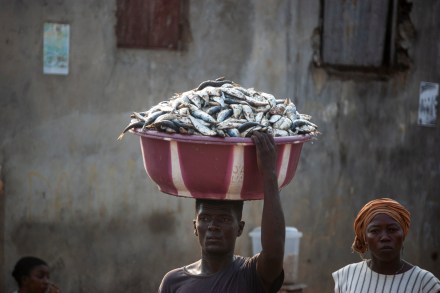
If Donald Trump didn’t have other things on his mind, here is a story that would make even him an environmentalist. The Chinese global fishing fleet, the largest in the world, is much larger than we thought. It is larger than even the Chinese believed and it is four times larger than the Chinese government says it wants it to be. The Chinese distant water fleet numbers at least 12,490 vessels and nearly 17,000 vessels are estimated to have the capacity to fish beyond China’s national waters.  We knew China was the world’s fishing superpower but the new figures compiled by researchers for the London-based Overseas Development Institute (ODI), show that the Chinese fleet is vastly in excess of the 3,432 vessels it was assumed to be in 2014.

Epic toy story

From our UK edition

In January 1992 a container filled with 7,200 yellow ducks and the same number each of blue turtles, red beavers and green frogs, blow-moulded out of plastic for American children at bathtime, broke loose in a storm on the deck of a container ship on its way from China and fell into the Pacific somewhere south of the Aleutian Islands. The container ruptured, the boxes soaked away and 11 months later the Floatees — the name was embossed on each — began to be noticed washing up among the bottle caps and Japanese fishing floats on the shores of the Gulf of Alaska, sparking a flutter of news stories. The stories were still going 11 years later when a single yellow floaty duck made by the same Massachusetts company was sighted on the coast of Maine.

The scramble for the seas

From our UK edition

Almost unnoticed, in May, during the first weeks of the Deepwater Horizon oil spill in the Gulf of Mexico, a new era in man’s exploitation of the oceans began. The Chinese government lodged an application with the United Nations to mine for minerals on a ridge 1,700 metres down in the south-west Indian Ocean, outside any individual nation’s jurisdiction. It is the first application of its kind for mining in international waters, and so has potentially vast implications — for international law, for the price of metals, and for the marine environment. It is likely to be the first of many. Experts have expected that someone would want to mine the sea floor since the 1970s.

Fins ain’t what they used to be

From our UK edition

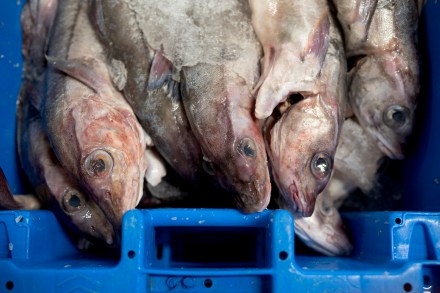
Charles Clover says that there’s only one way to beat the celebrity chefs who are wiping out every endangered fish in the sea: take a trip to McDonald’s In a single human lifetime we have inflicted a crisis on the oceans, comparable to what Stone Age man did to the mammoth and the sabre-toothed tiger, what 19th-century Americans did to the bison and the passenger pigeon, what 20th-century British and Norwegians did to the great whales, and what people in this century are doing to rainforests and bushmeat. This crisis is caused by overfishing. Given that the destruction of once renewable sources of food is a serious problem for the human race, you would imagine it might have troubled the opinion-formers in the culinary establishment.

A granny in the front line against New Labour

From our UK edition

Elizabeth Pascoe, a granny in her sixties with a fondness for pink cardigans, is an unlikely heroine, but she is one to me. For when Liverpool city council and a government agency told her, four years ago, that they wanted to compulsorily purchase and demolish her fine Victorian home in the Edge Lane area for no particularly good reason, Ms Pascoe chose to fight. Sitting in her cardigan, surrounded by piles of paper, Elizabeth fought two public inquiries and two high court actions against compulsory purchase orders (CPOs), which are the battering ram of the Pathfinder regeneration schemes, the 1960s-style urban clearances reinvented by John Prescott. These still, astonishingly, grind on all over the Midlands and the North, consuming billions of public money.