Charles Allen

Spirit of Roedean

From our UK edition

Ursula Graham Bower belonged to the last generation of those well-bred missy-sahibs who came out to India at the start of the cold-weather season in search of genteel adventure and a husband. But unbeknown both to herself and to those about her, the gawky, ‘well-covered’, Roedean-educated Miss Bower was of that stern stuff upon which empires are built. Having arrived at a frontier outpost of Assam in the autumn of 1937 as the 24-year-old guest of a friend housekeeping for her elder brother, she set about carving out her own niche as an anthropologist. Her chosen subject was the Nagas, a lose confederation of tribes much given to raiding and head-hunting. Bower’s timing was spot-on.
To the holiest in the height

From our UK edition

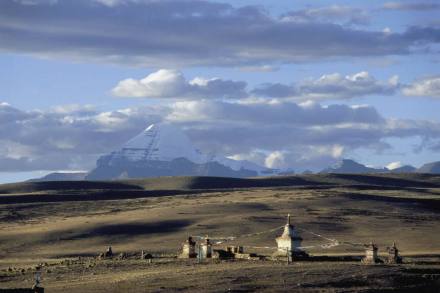
Colin Thubron’s new book will disappoint those of his readers who admire him for his reserve. He is the last and perhaps the best of the gentleman travellers of the old school, his books distinguished by scholarship, rigour and that extraordinary ability that he has made his own: the capacity to immerse himself in someone else’s culture and yet remain utterly detached. Those same readers may also be disappointed by the slimness of the present volume, which occupies days rather than months and encompasses a mere province rather than the usual continent. But they would be wrong to dismiss To a Mountain in Tibet as lightweight.

Holding the East in fee

From our UK edition

Never a great fan of the British Raj, the maverick ex-ICS historian Sir Penderel Moon judged nevertheless that its establishment was ‘an achievement that ought to excite wonder’. At the heart of that achievement was a paradox: how was it that so few were able to subdue so many, of whom large numbers were warriors by caste and profession? This is the question that our foremost and busiest military historian sets out to answer in Sahib: The British Soldier in India 1750-1914. Having extensively chronicled the two world wars, re-evaluated the achievements of some of our leading military heroes (French, Wellington, Churchill) and explored the lives of the humble footsoldier (in Redcoat and Tommy), Richard Holmes now turns the searchlight on the British military man in India.

Wolves in sheep’s clothing

From our UK edition

The word ‘Wahhabi’ entered popular consciousness at the same time as ‘9/11’ and is now about as loaded as the word ‘Nazi’. But whereas ‘Nazi’ is understood by all, ‘Wahhabi’ has crept into the vocabulary of modern global terrorism with little explanation other than that it and ‘Wahhabism’ are considered part of the mindset of men like Osama bin Laden. It goes without saying that the Western world needs to know all there is to know about Wahhabis, so when a book comes along that claims to be the first serious study of the man who gave his name to this particular brand of bigotry we should take it seriously.

The banditry plays on

From our UK edition

Forty years ago V. S. Naipaul enraged Indians by describing India as 'an area of darkness'. He also upset a great many Western liberals who were then discovering in India a land of all-pervading spirituality. Later, he returned to India to write more kindly about 'a wounded civilisation' undergoing a liberation of spirit through 'rage and revolt'. Which leads me to Kevin Rushby's new travel book, subtitled 'Through India in Search of Bandits, the Thug Cult and the British Raj', which takes India's liberation through rage and revolt as its central theme.

A second passage to India

From our UK edition

In September 1946 a 23-year-old Englishwoman sailed for India in one of the first passenger liners to be reconverted from a trooper. She spent the following Cold Weather as the dogsbody with a documentary unit making films about tea gardens in Assam. Fifty-four years on she would describe this excursion into Asia as 'a huge surprise' for which she was totally unprepared: 'I went down the gangplank at Bombay, and India burst upon me with the force of an explosion.' All but overwhelmed, she determined 'to capture the wonder of that experience, to pin it down, so that not a single iota of it could escape me and be forgotten ... and I scribbled, scribbled accordingly.