Caroline McCarthy

The strange tale of the Deep Fried BBQ Stuffed Chicken Pizzadilla

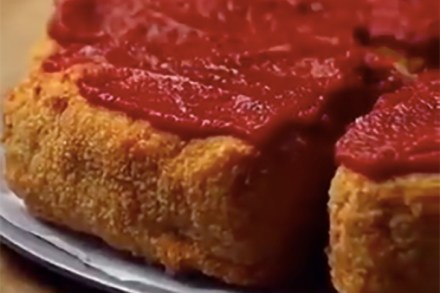
The Greeks had Aesop, whose Fables attempted to teach moral lessons using, for the most part, a cast of animal characters. On the internet, we have a tale of a pizza. But not just any pizza. A deep-fried BBQ chicken quesadilla pizza with a sour cream and mayonnaise dipping sauce. And what unfolded when the video of how to create it went viral this weekend is, when you think about it, the perfect fable for the age we live in. It’s an era where just about everything is fake, and even if it’s fake, it’s profitable. Social media is full of cooking videos – filmed from above, often with time lapses or sped-up video, made popular by the likes of BuzzFeed.
pizzadilla

How Google’s tunnel vision cost us all

As a member of the marketing team for Google’s once-hyped Google+ social network (remember that?) I can recall only one occasion when I encountered concerns about objectionable or controversial content. It was circa 2012, and it involved beer. Craft breweries and homebrew enthusiasts had created a pleasant little home for themselves on Google+, using its Hangouts video technology to run tutorials and virtual tastings, even announcing new collaborations with other breweries around the world. To a product marketer, this was thrilling: actual user engagement!

google

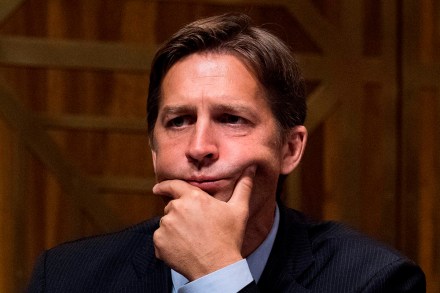
Ben Sasse kind of sucks now

In the summer before an election year, a Midwestern Republican announcing he’s running for reelection to the Senate shouldn’t be particularly newsworthy. But then there’s Nebraska senator Ben Sasse. A sample Twitter reaction to his reelection announcement this week: ‘In the annals of absolute uselessness, whole chapters will be devoted to the political career of Ben Sasse.’ Indeed, the Harvard-educated Sasse had become a sort of folk hero for the Acela corridor. He was the one member of the Senate who wouldn’t just respond to your tweets, he’d clap back. He wrote books that weren’t about politics.

ben sasse

Instagram is ruining tourism. Could fandom save it?

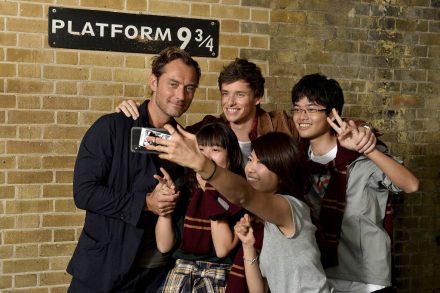
It was shortly after noon on a Sunday in Edinburgh, and I was attempting to remedy my jet lag at the local BrewDog outpost with a pint of sour ale and a large helping of pizza. I’d flown in on the red-eye from New York to attend a conference, hadn’t had much sleep, and initially thought I was hallucinating when I saw that one of the few other patrons in the bar was a notably tipsy woman wearing wizard robes, waving a wand around as she talked to her drinking companions. They were, I noted, red and gold robes: Gryffindor. (Professor Minerva McGonagall, Gryffindor House’s notoriously strict faculty overseer, would be unlikely to approve of such drunken behavior in public.

fandom tourism

Who counts as a journalist, anyway?

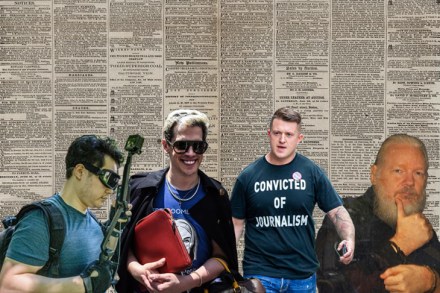
As a young journalist in the mid-2000s, there was the occasional circumstance where I was asked to ‘prove it’: upon showing up to a news event I was covering, whoever ran check-in insisted that I show some press credentials. You know, those badges you see on episodes of Law & Order to denote that someone’s a reporter. (More often than not, the guest star probably holds it up and indignantly yells ‘Press!’ in order to enter a crime scene.) Working for a digital-first outlet – CNET Networks, later acquired by CBS – I never had anything like it except maybe business cards. To me, it seemed like an antiquated request; to the people checking my legitimacy, it was an obvious question.

journalist

The Democratic debates drinking game

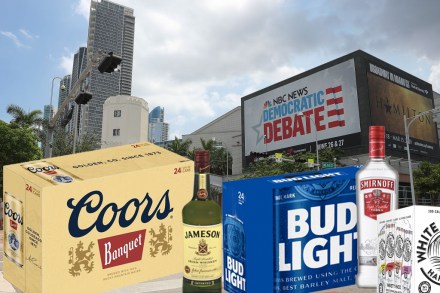
Now that former Pennsylvania congressman Joe Sestak has entered the race, there are now 24 Democratic candidates for the presidency (excluding Mike Gravel, who’s not running to win). That’s right – one candidate for every can of beer in a case. Or every hour in a day. Or both. Mercifully, all 24 won’t be onstage for the party’s first official debates, but there are nevertheless so many contenders who met the criteria for participation that the event has been split up into two nights.The prospect of a two-dozen-candidate field in a primary for an election which ultimately won’t be decided for over a year would make anyone want to grab the nearest adult beverage. So we created a drinking game for you.

democratic debates drinking game

The walk-off songs 2020 Democrats should be using

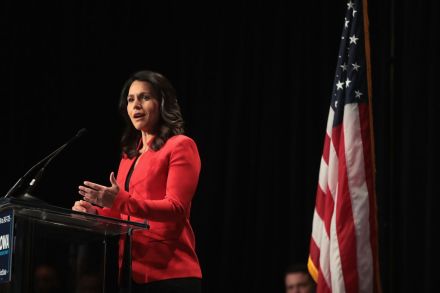
A dizzying array of Democratic presidential candidates — 19 in total — took the stage this weekend at the Iowa Democratic Party’s Hall of Fame, offering a program of five-minute lightning talks that sounds to me like TEDxNinthCircleofHell. And each one had a different walk-off song, the implications of which the political media has been gleefully dissecting in response. But their choices were all wrong. I should assure you that in a world where a Twitter blue checkmark can lend a false sense of expertise to anyone who claims they know anything about a particular topic, I am an actual expert on walk-off songs.

walk-off songs

My evening with the Yang Gang

On Tuesday evening, I left my office suited up in a raincoat and a t-shirt that featured a picture of the nightmarish and internet-famous Philadelphia Flyers mascot, ‘Gritty.’ I was going to Democratic presidential candidate Andrew Yang’s rally in Washington Square Park, where thousands were expected to turn out despite the rainy weather (or, as my friend Cody commented, Blade Runner weather) to see the tech entrepreneur give his pitch for the presidency. I wasn’t quite sure what people would wear to a rally for Yang, a candidate who rose to prominence through memes and podcast appearances and whose supporters have been known to wave around signs that say ‘MATH’ and chant out ‘PowerPoint! PowerPoint!

andrew yang gang

Spare me, Generation X: you’re not that special

A sprawling New York Times feature package this week showcases essays, photos, and snippets of nostalgia that all amount to the declaration ‘This Gen X Mess.’ One of the declarations in one of the essays is that ‘it’s easy to decide that Gen X is culturally irrelevant.’ Who actually thinks that? I was born in the mid-1980s and I’ve been sick of hearing Gen-X talk about itself and its place in history ever since I grew old enough to date men born in the Seventies without it being gross and creepy. To backtrack a bit, the events of my birth toss me squarely into the elder bracket of ‘millennials,’ you know, that overexposed generation of helicopter-parented, selfie-snapping, Adderall-addled ‘digital natives.

generation x

Silicon Valley loves Mayor Pete. He’s finished

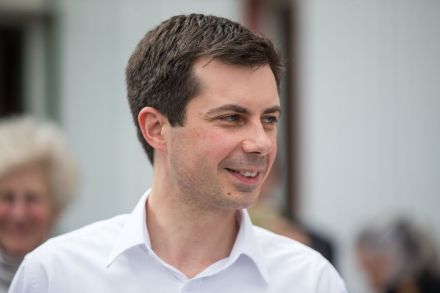
If you spend a lot of time reading technology news and commentary on Twitter, you’ve probably heard about the ‘techlash’ – Silicon Valley’s alleged fall from favor in the public eye. From data breaches and Cambridge Analytica to the specter of job-stealing robots and an endless string of comparisons to Black Mirror, tech news has taken a turn for the dystopian. And public trust in these companies, especially Facebook, is legitimately dropping. But Silicon Valley’s media machine sometimes has a tendency to get caught up in its own hype, or in this case, its anti-hype. How real, and how lasting, is the ‘techlash?’ We may have a new litmus test in South Bend mayor Pete Buttigieg’s campaign for the presidency.

mayor pete silicon valley

Astrology apps are the safest place for venture capitalists to invest

Google co-founder Larry Page popularized the term ‘moonshots.’ But venture capitalists, apparently, are looking to the stars. An app called Co-Star, which provides slick digital versions of horoscopes and astrological birth charts, has raised $5 million in funding. An investor who put money into an ‘Uber for astrological readings’ company expresses excitement about the $2.1 billion market for ‘mystical services.’ Erin Griffith, the author of a recent New York Times feature on the subject, took a lighthearted angle toward the subject while nevertheless acknowledging that there really is business potential. Millennial women, she writes, have ‘traded [astrology’s] psychedelic new-wave stigma for modern Instagrammy witch vibes.

astrology start-ups

Pyle on: the warped logic of online cancel culture

A while back, a friend in the San Francisco Bay Area confessed to me in a hushed tone that she was thinking of buying a gun. The neighborhood was a safe one. But she and her husband, no-nonsense tech executives with reasonably public profiles – the kind that might draw attention from internet crazies – but far from the means to hire private security, had calculated just how long it would take for police to reach their home in the event of an emergency, and they weren’t satisfied with it. With the Bay Area’s real estate market being what it is, giving up their below-market-value lease seemed more outlandish than exercising their Second Amendment rights.

nathan pyle

The face of digital illiteracy may not be as wrinkled as you’d think

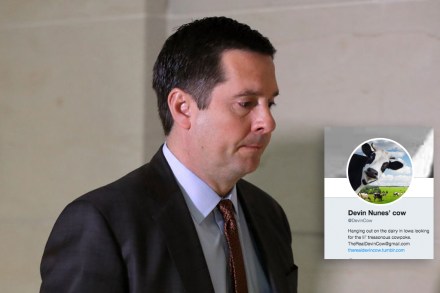
As a teenager in the early 2000s, I used to volunteer at my hometown’s local senior citizens’ center, teaching digital skills. In those days, that involved learning how to set up neon-turquoise iMac desktop computers, subscribing to AOL via CD-ROMs that had arrived in the mail, and not clicking on emails that might install a virus. These days, the equivalent crash-course in basic technology would inevitably involve social media – and, increasingly, how to avoid the extraordinary amount of fake viral content there. A new BuzzFeed feature by Craig Silverman looks at new efforts to expand digital literacy initiatives to seniors, a population that has historically been left out of that conversation.

Rep. Devin Nunes and his cow digital illiteracy

Andrew Yang is the Democrat Ron Paul…except he might actually win

Long-shot Democratic presidential candidate Andrew Yang isn’t afraid to take a position on, well, anything. Browse through his campaign website, and you’ll see not just that he believes in universal basic income – the policy proposal for which he’s best known – but also that he wants to mandate the payment of NCAA athletes, to crack down on spam phone calls, and to secure $6 billion to revitalize dying shopping malls. Many of his policy positions are tied to causes with little prominence in the mainstream but a devoted following on the internet, like his recent stance against childhood circumcision, the domain of an online community that refer to themselves as ‘intactivists.

andrew yang

A marketer’s request: Make SXSW exciting again

This year at the South by Southwest Interactive Festival (SXSW), an impressive lineup of 2020 presidential candidates (and possible candidates) like Amy Klobuchar, Julián Castro, and John Kasich will take the stage for ‘Conversations About America’s Future,’ a series of one-on-one interviews with prominent media figures. Too bad everybody’s talking about Game of Thrones instead. In building its ‘Bleed for the Throne’ setup at the annual digital confab, HBO had to live up to the hype of last year’s SXSW stunt, where they surprised pretty much everybody by building an actual Westworld.

sxsw

The quiet sorrow of the Instagram blogger

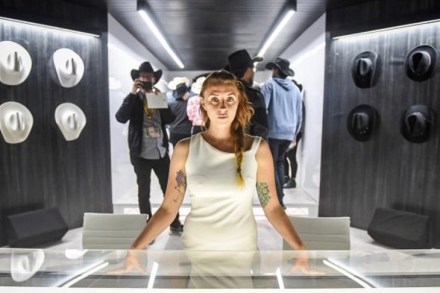
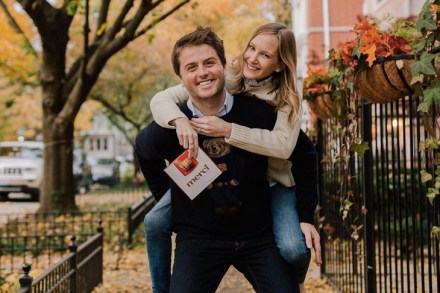
A quick scroll through Chicago-based Kelly Larkin’s Instagram account or lifestyle blog, Kelly in the City, is enough to put anyone in a good mood. It’s a blend of bright patterns, fresh and clean interior spaces, and high-quality photos of Larkin, her husband, their toddler daughter, and Noodle the dachshund. The Larkins are aspirational yet accessible, and Kelly Larkin herself, a former journalist and public school teacher, is funny and quick-witted about life and parenting.

instagram

The digital age hasn’t made society more forgiving

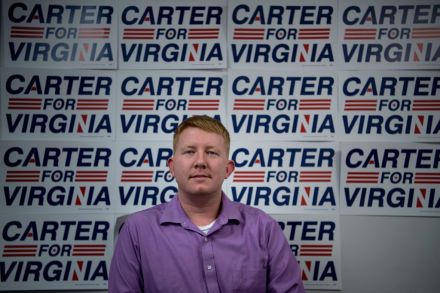
In the fall of 2018, 31-year-old Lee Carter – a member of Virginia’s House of Delegates and a self-described socialist – took to Twitter to expose just about all the proverbial skeletons in his closet. His rationale: he wanted to air it before it showed up in opposition research. Some of it, such as his custody battle over his kid and an arrest for assault at Marine boot camp that was ‘quickly ruled self defense’ was the sort of thing that could have been used against any politician going back for generations. But other admissions were very specific to his having grown up in a world where everything is digitized – possibly permanently.

lee carter forgiving

Deepfakes could be good news

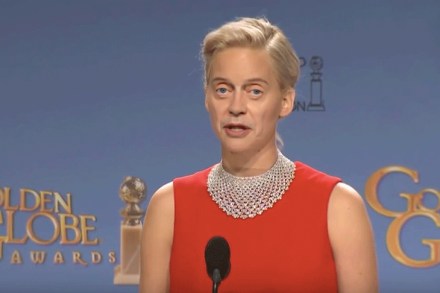
Are you scared of deepfakes? Perhaps you should be. A few years old and continually growing more sophisticated, deepfakes are digital simulacra generated through machine learning that are barely distinguishable from the real thing. They’ve been used to fake celebrity porn videos, make Barack Obama seem to call Donald Trump a ‘dipshit,’ and most recently, superimpose Steve Buscemi’s face on to Jennifer Lawrence’s body in a video that was at once mesmerizing and scary (Buscemi/Lawrence bore a strange resemblance to Tilda Swinton).

deepfakes jennifer buscemi

How digital media killed itself

As a young digital journalist in the late 2000s, my industry peers and I often reminisced about the era we felt we’d just missed: the glamorous, fin-de-siècle age of New York media, the time of seven-figure budgets for magazine launches and outsize editorial personalities that commanded celebrity attention in New York. We were the ones scrambling to keep our jobs afloat in the aftermath of the 2008 recession. As it turns out, we still had it pretty good. The other evening, right after the brutal layoffs at digital publications such as BuzzFeed and HuffPost were announced, I found myself in a dive bar (of course) with a handful of the aforementioned elder millennials of digital media.

buzzfeed digital media

Alexandria Ocasio-Cortez, and the rise and rise of the attention candidate

Love her or hate her, Congresswoman Alexandria Ocasio-Cortez has proven that she can command a news cycle and use it to her advantage. She has an astute understanding of how not just to capture the attention of audiences, but to keep it. But she wasn’t the first candidate to lean on a knack for getting noticed – and she certainly won’t be the last. Being an ‘attention candidate’ isn’t necessarily a good thing, however. Consider Aaron Schock, the former Republican congressman . His story should stand as a cautionary tale for what happens when a candidate or elected official relies too heavily on attention as a political currency.

attention ocasio-cortez