Carola Binney

Carola Binney

Carola Binney is an undergraduate History student at Magdalen College, Oxford. She writes on student life.

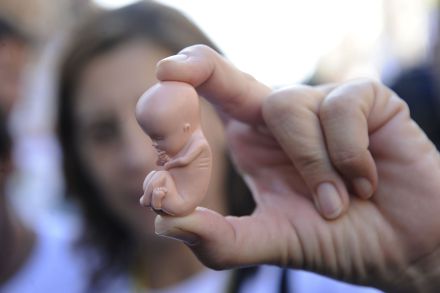
Having an abortion means ending a life. Even pro-choice students should realise that

From our UK edition

Last week, the Tab, an online student tabloid, published an article by an anonymous Cambridge student entitled ‘I shouldn’t have been aggressively reminded of my abortion at Freshers Fair’. The author was complaining that she had been upset by a stand at the fair run by Cambridge Students For Life, an anti-abortion student society. The stall, she argues, had no place at an event that is meant to welcome new freshers, and was offensive to her personal choices. Her article certainly offended me. Her own abortion, she tells us, 'crosses my mind only once in a blue moon, and never tinged with regret'. It is clear that she considers abortion to be a feminist issue, akin to equal-employment rights or women’s suffrage: 'I am a confident woman and assertive feminist. . .

My dyslexia means I can’t spell, but I can be a spy

From our UK edition

Apparently, I’d make a good spy. I may not be discreet or fluent in Russian, but I do have one rare quality that GCHQ prizes: I’m dyslexic. The intelligence agency apparently employs more than 100 dyslexic and dyspraxic spies, who lend ‘neuro-diversity’ to the war against terror. Speaking to The Sunday Times, the head of dyslexic and dyspraxic support at GCHQ praised dyslexics’ ability to analyse complicated information in a 'dispassionate, logical and analytical' way. Dyslexia doesn’t have to be a ‘learning disability’: it merely means that you learn in a different way to the majority. My mild dyslexia made primary school difficult, but I’ve since come to see it as an advantage.

Stop mollycoddling girls and let them compete with each other

From our UK edition

I was pleased to read this week that my old headmistress, Judith Carlisle, has launched a campaign to root out perfectionism in girls’ schools. Her initiative, which she is calling ‘The death of Little Miss Perfect’, is designed to ‘challenge perfectionism because of how it undermines self-esteem and then performance’. After 11 years in selective all-girls education, I’ve experienced the perfectionism Ms Carlisle describes. I was, indeed, a prime example: disappointed with anything less than an A*, I felt relief rather than joy when I found out I’d been offered a place at Oxford. The pressure my classmates and I put on ourselves was immense.

Dieting, Hong Kong style

From our UK edition

Three weeks in to my six week stint as an English teacher in Hong Kong, I’ve been struck by how unusual it is to see a fat Chinese person. While at home I’m used to an array of body shapes even wider than the average British waistband, in Hong Kong nearly everyone is a perfect weight - both bones and bingo wings are a rare sight. According to the stats, my eyes haven’t been deceiving me. The Hong Kong Department of Health classifies 36.6 per cent of the city’s population as overweight, while a Public Health England survey earlier this year found 64 per cent of Brits to be overweight.

The death of student activism

From our UK edition

Oxford students heard this morning that, after a three-day referendum, our student union, OUSU, will be disaffiliating from the National Union of Students. I voted to break with the NUS, and I felt confident doing so: Oxford’s membership currently costs us over £25,000 a year, and, aside from the dubious satisfaction of knowing that Nick Clegg will never be short of misspelt placards to stare at, no one has a clue what we get in return. The most notable thing about the referendum was how little people cared. The turnout was just 15 per cent, despite voting taking place online.

What our parents didn’t know about sex

From our UK edition

My mum and dad never told me that I was found in a cabbage patch, or delivered by a stork. They took a straightforward approach to talking about sex, and always seemed far less embarrassed about it than I did. Once I started at my all-girls secondary school, PSHE lessons re-enforced the emphasis my parents placed on sex as an important part of healthy and committed relationships. The aim was to enable us to make informed decisions, and to feel confident saying no if need be, not to preach abstinence. Sex-ed sessions were good on the practical stuff, too. I’m grateful that, aged 16, my schoolmates and I bid farewell to PSHE with an encyclopaedic knowledge of sexually transmitted infections, and the ability to label genitalia diagrams and put on a condom.

Why do boys outperform girls at university?

From our UK edition

According to the university’s own statistics, Oxford is one of the worst places in the country to be a female student if you’re hoping for a First Class degree. In all three of Oxford’s academic divisions, men were more likely to get a First in 2013 than women: there was a gender gap of 5% in the humanities, 10% in mathematical, physical and life sciences and 8% in medical sciences. As a Historian, I’m 10% less likely to get a First than one of my male counterparts. Nationally, there’s virtually no discrepancy at all - in 2013, 18.3% of women got Firsts compared to 18.5% of men. But it’s odd that there’s any male bias at all, since girls have long been getting more top grades at A-Level. What it is about university that suits boys better?

Don’t blame good results on grade inflation. Blame the teaching

From our UK edition

I was delighted to read that my university is apparently over-generous when it comes to awarding top degree classes. Oxford is among 21 universities accused of grade inflation after a Higher Education Funding Council study found ‘significant unexplained variation’ in students’ likelihood of getting a First or Upper-Second. Alongside fellow culprits including Exeter, Brunel, Warwick and Newcastle, Oxford hands out more good degrees than A-Level grades and the university’s entry standards would lead you to predict. So am I on track to an effort-free First? Sadly not.

Mr Gove, after-school clubs need to learn from family life

From our UK edition

In news to warm Michael Gove’s heart, a new survey carried out by the Association of Teachers and Lecturers has found that children as young a four are now routinely finding themselves stuck at school for ten hours a day. Dropped off for breakfast at 8am and not picked up until 6pm, some primary school children never eat with their family during the week. About three-quarters of the 1,332 teachers who took part in the survey reported that families now spend less time together than they did five years ago. The Education Secretary’s dream of giving English school pupils some of the longest school days in Europe is on track for realisation. It’s goodbye to playing outside, daydreaming and homemade meals; hello homework club, forced collage-making and alphabetti spaghetti.

Want a market in higher education? Here’s how

From our UK edition

Ed Miliband is mooting a tuition fees cut, to a maximum of £6,000 a year according to reports. I graduate in 2016. If Labour wins the next election, I’ll be in one of only 4 cohorts to pay £27,000 for their education. If I’m really unlucky, I might get lumped with a graduate tax too. It’s not my plight, however, that’s got Labour talking about tuition fees again. Instead, it’s the government’s admission that the current policy is likely to be more expensive than planned: official estimates suggest that 45 per cent of students will never pay back their loans. Just 3.6 per cent more and the new system would be more expensive than the old. What’s gone wrong?

How local government is threatening Oxford University’s competitiveness

From our UK edition

The press love a bit of Oxbridge competition, but Oxford is embroiled in a far older and more ruthless rivalry: town vs. gown. It was in a dispute between the university and city of Oxford that Cambridge University has its foundations. In 1209, according to Roger of Wendover’s chronicle, an Oxford liberal arts scholar accidentally killed a woman. The Mayor led a group of townspeople to the killer’s house, only to find that he had fled - instead, they seized the three innocent scholars with whom he rented the house and hanged them. Fearing future tyranny and terrified of their fellow citizens, an exodus of Oxonians left the dreaming spires for a provincial backwater on the river Cam.  History repeated itself in 1355. A pub fight escalated into the two-day Battle of St.

Being a student has made me see Oxford in a new light

From our UK edition

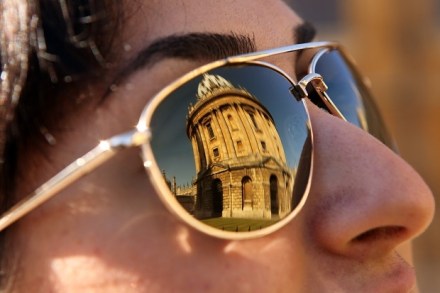
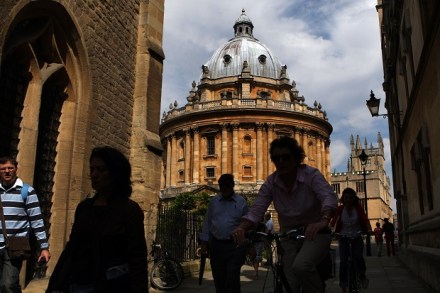
I have a confession to make: I go to my hometown university. The decision to stay in Oxford is one I often feel I have to justify. When people learn that my parents live a 30 minute walk from my college, I get an ‘Oh, cool’. It’s in that tone that I imagine might also be prompted by someone telling you, while wearing flares and flashing trainers, that they maintain a shrine to Peter Andre. I am, evidently, thoroughly lacking in a sense of adventure. Unimaginative and insufficiently independent, I am bound to be missing out on the full ‘university experience’. And I am missing out on some things. There are no surprises at the end of cobbled streets. No getting lost on the way back from clubs in freshers’ week.

What I’d like in the Budget: more support for teachers

From our UK edition

To start on a glamorous note: subsidised bus fares for those in full-time education outside London. I turned 16 in the same year my dad turned 60, and just as I had to pay full (and, in Oxford, whopping) bus fares, he got a free bus pass. At 16 you’re now obliged by law to be in full-time education, so it’s not possible to be earning as much as an adult - why should you pay as much? Public transport is a great thing for young people, enabling them to be independent in an environmentally and traffic-friendly way: let’s make it affordable.

There’s nothing wrong with Prince ‘one-A’ William studying at Cambridge

From our UK edition

Prince William has arrived in Cambridge today to study agricultural management at Cambridge. According to the Guardian  his admission is ‘an insult to every student, whatever their background, who got into Cambridge by getting the required A-level or degree results’. The average Cambridge undergraduate had to get A*AA at A-Level to secure their place, but Prince William got one 'A', a 'B' and a 'C'. What no one mentions is that Prince William’s course isn’t an undergraduate one, and neither are his A-Levels his most relevant qualifications. He’ll be studying a ‘bespoke’ concoction run by the Cambridge Programme for Sustainability Leadership.

Science versus Arts – which degree is harder?

From our UK edition

People get competitive about the difficulty of their degrees. The accepted line at Oxford is that Science is harder than Arts, and everything is harder than PPE - three years of sleeping until 1pm and waffling about Mill’s Utilitarianism, and you still get to tell employers that you have a degree in economics. It’s probably true about the PPEists, but the Arts vs. Science stuff is a myth. Scientists’ claim to the tougher time is based on the fact that they have more contact hours. More contact hours, we are often told, make a more serious degree: it was reported as a scandal in May when Bahram Bekhradnia, director of the Higher Education Policy Institute, said the average British undergraduate gets less than 14 hours a week with academic staff.

Rowing at university is most fun when there’s no rowing

From our UK edition

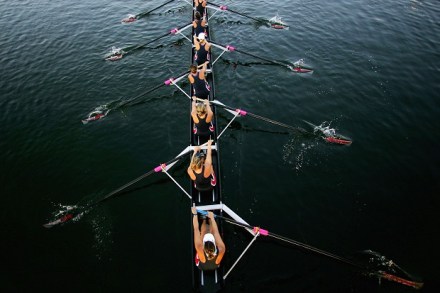
I remember telling my friends that I was going to row at Oxford. I could picture myself in flattering Magdalen College Boat Club lycra, a rosy glow on my cheeks as I enjoyed boat-based camaraderie with my team mates on a crisp spring morning. I didn’t even make it to the river. After a week of leaving grimy gyms with sore muscles and a sense of inadequacy, I jumped ship. My only contact with the sport since has been bumping into the rowers on my corridor on the way to the shower, on the rare occasions when I’m up before 10. Back from their 6am appointments with frostbite on the Thames, reached only after a 30 minute bike ride, my friends appear in a new light: disciplined, fit, driven and organised. It’s disturbing.

I’m ashamed of myself

From our UK edition

On waking up (at noon) on Thursday morning, I found I had a text from one of my fellow History freshers. Sent at 6am and accompanied by a screenshot of a half-finished essay: ‘WHY am I still up?!’ The all-nighter is a notorious Oxford experience, and not one I thought I would ever have to sample. ‘I’ll be fine getting the work done at university,’ I blithely assured those warning me of how unstructured a History student’s life is, ‘I like to keep busy.’ What I failed to appreciate is that it’s impossible not to be busy at university. School without lessons was dire — by Tuesday afternoon of the pre-Christmas week of ‘fun’ I had lost the will to live, let alone make Chemistry-themed paper-chains.

Give me a tutorial over a lecture any day

From our UK edition

I’ve been at university for 17 days, and yesterday had my fifth contact hour: my second tutorial. ‘Tutes’ are what an Oxford education is all about. They’re the reason any self-respecting applicant will give when asked why they’re putting themselves through a three-month ordeal of entrance tests; essay samples; interviews, and an agonising, Christmas-ruining wait. Of course we weren’t swayed by the architecture, the prestige or the challenge: what we really wanted, my sixth-form self often insisted, was the chance to be ‘taught by the people who write the textbooks’. It’s now dawning on me that we’re not really ‘taught’ at all — not in the conventional sense.

Cheated by freshers’ week

From our UK edition

My freshers’ pack (a yo-yo, two balloons, a sachet of instant hot chocolate and a condom) is barely visible beneath English Historical Documents, volume 1. Two nights of dancing knee-deep in foam has taken its toll on my shoes, and I feel slightly tricked - encouraged to partake in a week of university-approved partying, and then, two days in, given a 19-item reading list and an essay due in for next week. School friends’ Facebook pages are torturous: three weeks into term at other universities, yet to hand in their first piece of work and seemingly out every night. At dinner the conversation has morphed from ‘So where are you from?’ to ‘You haven’t started writing yet either, have you?’.

Take it from a teenager: 16-year olds shouldn’t be able to vote

From our UK edition

Like Charles Moore in this week’s Spectator, I am inclined to wonder whether there is 'any conceivable good reason' why 16-year-olds should have the vote. As a teenager interested in politics, I found not being eligible to cast a ballot until this year frustrating but reasonable. The idea that, at 18, I would become an adult, and as an adult I would be able to vote, made perfect sense. Departing from this principle by picking an arbitrary voting age is, as Moore points out, a slippery slope: what about all those politically oppressed 8 year olds? It is never argued that 16-year-olds should have the vote as part of a broader scheme to lower the age of majority - which is what happened to 18-year-olds in 1969 and which would at least be a logical policy suggestion.