Camilla Swift

Camilla Swift

Camilla Swift is the supplements editor of The Spectator.

The nine lives of Freya, the Chancellor's cat

News just in that George Osborne’s cat, Freya, was hit by a car outside Downing Street last night, and is currently at the vet’s. Freya is famous for her love of hunting rodents. Indeed, she was promoted above Larry, the Camerons’ cat, as Downing Street’s ‘chief mouser‘ because Larry preferred lounging around (his master calls it ‘chillaxing’)

2 billion reasons to take shooting seriously

When I told our blogs editor about an independent survey claiming that shooting was worth £2 billion to the rural economy, he didn’t believe me. ‘Are you sure it’s not £2 million, Camilla?’ But no. I duly went and checked for him, and £2 billion is indeed the figure. The amount spent on shooting (£2.5bn), is almost

Liz Truss is no friend of Mr Badger

What some people seem to forget is that Owen Paterson wasn’t (and Liz Truss isn’t) just Environment Secretary. As well as having responsibility for the environment, the role also covers food, fisheries and rural affairs. Paterson was one of the few people in Government that many farmers thought of as being ‘on their side’. As

Sloane Rangers vs Arabs – the battle for Chelsea

Perhaps you’re aware that it’s Ramadan right now, the month in which all good Muslims refrain from eating, drinking, smoking and sex during daylight. What you might not know is that Ramadan also marks the start of an annual turf war in London; a battle between the tribal Sloanes and the young Gulf Arabs to

Seeing London afresh, one bridge at a time

Bridges aren’t necessarily something you think of as being beautiful, particularly if you consider them primarily as the means to cross a river, rather than as works of art. London, however, has always been famous for its bridges, many of which are architectural marvels. From medieval London Bridge, piled high with shops and houses, to

The delicious return of Gin Lane

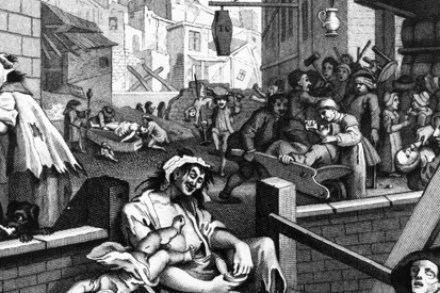
In 1751, William Hogarth was asked to create two prints: one depicting the evils of gin, the other the virtues of beer. Hogarth must have received a pat on the back from the brewers who commissioned him, because ‘Gin Lane’ cast gin as the greatest of all evils. It ruined mothers, and caused starvation, insanity and

The government's plans to embrace technology in the classroom

How can technology help British students to acquire the skills they need to succeed? This is the question that Matthew Hancock, Minister for Skills & Enterprise, addressed this morning at a Spectator forum on the importance of addressing Britain’s skills deficit. On the same day, the Department for Business, Innovation and Skills released their response

Why do so many of our MPs feel the need to write books?

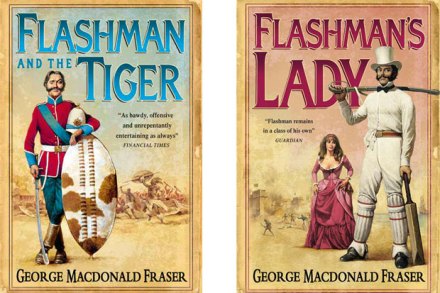
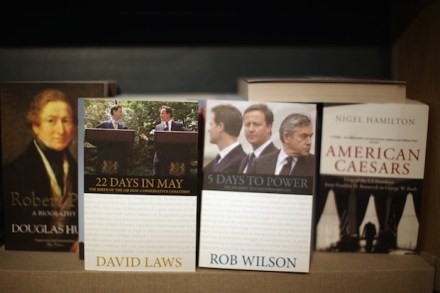
It sometimes feels like there is a never-ending flood of books written by politicians delivered to the Spectator offices. Almost every week a new one – or the invitation to a book launch of a new one – comes through the door. As I type, for example, I can see Fraser’s invitation to the launch

The Middleton double standard

I imagine there are very few people who haven’t heard about the Duchess of Cambridge’s clothing catastrophe in Australia. And, of course, this isn’t the first time that the duchess has had clothing issues. The wind has caused her to come a cropper at a variety of events – and who could forget the furore

Why Charles Moore could be wrong about the changes at Horse and Hound

As Charles Moore has reported in his Spectator’s Notes this week, changes are afoot at equestrians’ favourite publication, Horse and Hound. Speculating on the decision to replace their editor with a new ‘content editor’, Charles worries that the recent upheaval could damage the ‘brand’ rather than strengthen it. But neither H&H nor its departing editor,

Norman Thelwell: much more than a one-trick pony

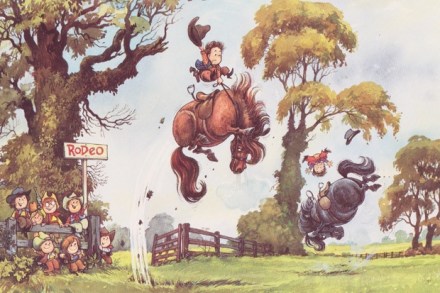
‘The natural aids to horsemanship are the hands, the legs, the body and the voice.’ But a Thelwell pony sometimes required some, er, additional aids. Norman Thelwell’s first pony cartoon was published in Punch magazine in 1953 and struck a nerve with readers; so much so that the editor asked Thelwell for a double-page spread

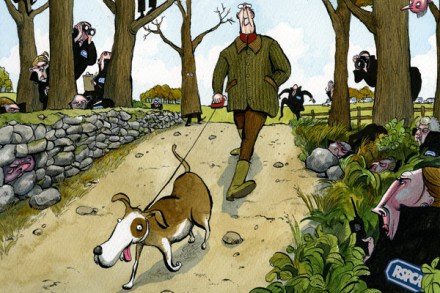
What has prosecuting farmers got to do with animal welfare?

If you were concerned about animal welfare, would you choose to spend money on prosecuting farmers whose welfare is below par? Or would you spend that money on improving animal welfare through regular unannounced farm inspections, and the labeling of meat that has met strict welfare standards? There seems to be a split in the