Bryan Appleyard

Bryan Appleyard is a Sunday Times journalist and award-winning feature writer. He was awarded a CBE for services to journalism in 2019.

A different class of snob

From our UK edition

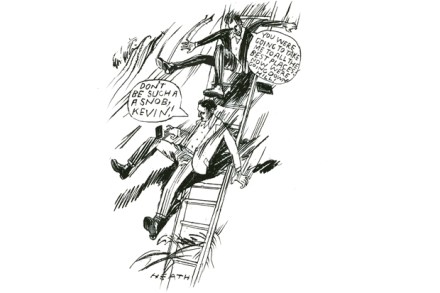
‘Ah, beware of snobbery,’ said Cary Grant, who was surprisingly often the smartest guy in the room. ‘It is the unwelcome recognition of one’s own past failings.’ In Britain, the only place where true toffs abide and, let’s face it, the place where modern snobbery was most successfully codified, it is still a more powerful force than we like to acknowledge. Brexit was a comedy of the thwarted snobbery of the right and left. A referendum was organised by a Remainer toff who assumed he would win because, well, he was a toff. He was, in the event, comprehensively defeated and deposed.

The descent of man

From our UK edition

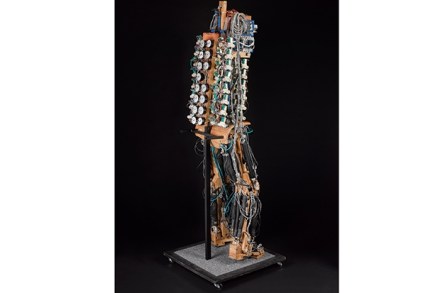
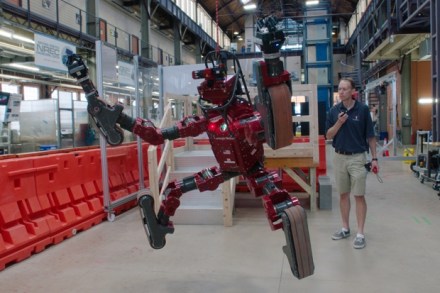
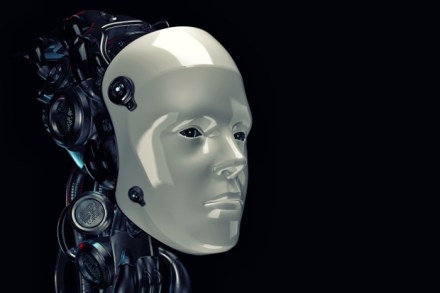
Why do humans want to build robots? It seems, on the face of it, to be a suicidal endeavour, destroying jobs and, ultimately, rendering our species redundant as more intelligent and effective beings take over. Lacking, as we now do, an agreed metaphysical justification for human specialness — for example, the soul — it must only be a matter of time before we submit to the machine ascendancy. So far, it has been a subtle, incremental process that conceals any wider significance. Take satellite navigation. This was first introduced in the 1980s and is now more or less universal. Maps have become quaint. As a result, we walk or drive without a visual model of where we are. This may be a small loss of human agency but it’s a loss nonetheless.

A mystery, even to herself

From our UK edition

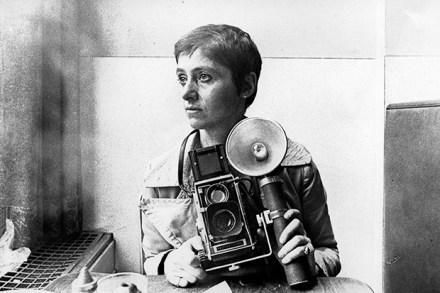
Armed with their tiny Leicas and Nikons, most of the great postwar ‘street’ photographers liked to be unobtrusive; they wanted to capture life unobserved. Garry Winogrand and Henri Cartier-Bresson haunted the city in search of the ‘decisive moment’. Somebody I know was photographed by Robert Doisneau, a very ghostly snapper. Doisneau entered the room and then left. His subject was baffled; he had not seen him take any shots at all. And then along came Diane Arbus. She was small but very noticeable, partly because of her childlike good looks but mainly because of the big flash and brick-heavy and breeze-block-sized Rolleiflex or Mamiya slung round her neck.

Net effect

From our UK edition

As a documentary-maker, Werner Herzog is a master of tone. His widely parodied voiceovers — breathy, raspy, ominous — are cunningly ambivalent. The interviews he conducts are seldom less than strange, often shocking, and the pacing and tenor of his films are subtly modulated. Never more so than here. Lo and Behold is divided into chapters. The first is a fairly conventional documentary about the beginnings of the internet. Herzog talks to the people in California who made the first computer-to-computer connection in 1969, asking them reasonable questions and generally making them seem like comfortable, all-round good guys. This is then subverted by the appearance of Ted Nelson, a cyber-pioneer who believes it has all gone horribly wrong.

The sheer stupidity of artificial intelligence

From our UK edition

The latest US census found that 43 per cent of the population in Santa Clara County, California, were members of a religious institution. This is slightly less than the American national average of 50 per cent, but you’d probably expect that because the area includes Silicon Valley, where geeks are busy designing our online, gadget-laden future. You might assume they would be pretty secular types. You’d be wrong. As a measure of religious observance, that census is useless. Perhaps the geeks don’t all belong to churches, but the reality is that the inhabitants of the Valley are in the grip of a religious mania so bizarre, so exotic, that it makes the Prince Philip-worshipping inhabitants of the island of Pacific Tanna look positively mainstream.

Sex and Society: Design fault

From our UK edition

‘Designer babies’ is headline shorthand for a weird new world of genetic enhancement. Thanks to several generations of science-fiction imagery, it evokes an unnatural and evil world of blond, staring, probably homicidal children, which scares ordinary people. Headlines create a cartoon world that subverts understanding and wisdom, but there is some truth in them. Human ‘enhancement’ is now being pursued in many ways, through life extension, psychoactive drugs like Ritalin and Prozac, information technology and, most obviously, through control of reproduction. The decoding of the human genome in 2000 signalled the start of an era in which we could hope to cure hitherto intractable diseases.