Bruce Anderson

Bruce Anderson is The Spectator's drink critic, and was the magazine's political editor

The wine of the Wild Geese

From our UK edition

The Irish rarely understate their achievements. Yet there is one exception. Over the centuries, the links between Catholic Ireland and the Bordeaux wine trade have been fruitful. O’Brien (Pepys’s Ho Bryan, now Haut Brion), Lynch, Barton and many other names: these are enduring memorials to a fruitful relationship. But the best-known Hibernian exiles were warriors. From the 16th century onwards, Irish soldiers served with distinction in continental armies. Their numbers increased after the Battle of the Boyne. London wanted to break the power of Gaelic, Catholic Ireland for all time, and one way of doing so was to expropriate the native landowners. Many of them decided to repair their fortunes elsewhere. They became known as the Wild Geese.

War, wine and the brilliance of Beychevelle

From our UK edition

If only toasts and good wishes were weapons of war. At every serious repast I have attended since the invasion began, someone has raised a glass to the heroes – and heroines – of Ukraine. The rest of us have responded with a blend of solemnity and moist-eyed emotion. One’s emotions are strange. I can read about the deaths of warriors on the battlefield, now riding with the Valkyries on their way to Valhalla, and merely respond with a dry-eyed salutation.

A toast to the platonic ideal of diplomatic intellect

From our UK edition

My dear friend Richard Stow is a most congenial fellow. A serious financial entrepreneur, he is also a clubman and an oenophile. Over a sound meal and good bottles, he enjoys convening a group of old muckers. They are all well into the respectabilities of middle life. Some of them have already featured in the Honours List. Others are heading in that direction. But Richard still manages to evoke the atmosphere of an undergraduate dining club. Begone, dull care. So when he proposed a dinner with a diplomatic theme and some estimable bottles, I was delighted. These are times when care has ceased to be dull: heart-rending is more accurate. An evening away from the news was attractive. Not that we could evade Ukraine, in the presence of two ambassadors.

The story of Tuscany’s all-female winery

From our UK edition

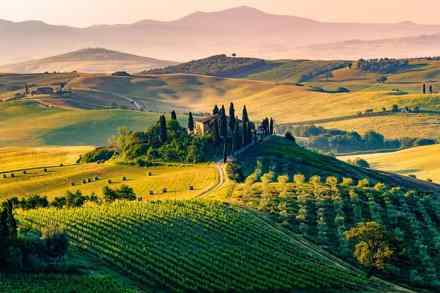
The inhabitants of Tuscany and Umbria can claim to be the most civilised beings on the planet, even exceeding the Afrikaners and the Ulster Prods. In the farms, villages and hill towns, there is an easy understanding of life’s pleasures, naturally including food and drink. One might describe it as prelapsarian, except that Adam and Eve did not drink wine – which surely justifies the Fall. Well done, that serpent. It is easy to imagine the course of events on a typical morning in a typical village. Lorenzo has decided to visit the dottore. His wife has been nagging him about his liver, insisting he cuts back on grappa. What nonsense, as he is sure that the dottore will confirm. But when he arrives at the surgery, the nurse is oddly evasive.

A toast to Victorian Britain

From our UK edition

Across oceans and continents, less favoured nations produce more history than they can consume. In these islands, the English — as opposed to the Scots and the Irish — merely consume a lot of well-written military history. The other evening, stimulated by a few decent bottles, someone raised a hoary question. If we could have been born in an earlier century — pre-20th — which would we have chosen? What epoch was worthy to compare with the Antonines and those Good Emperors, as praised by Gibbon? The consensus was that, assuming a strong constitution and plenty of money, the long 19th century in Britain, from the end of the Napoleonic Wars to 1914, would have been as good as any. Of course, we must restrain the roseate glow of retrospect.

Why Sardinian wine is one to watch

From our UK edition

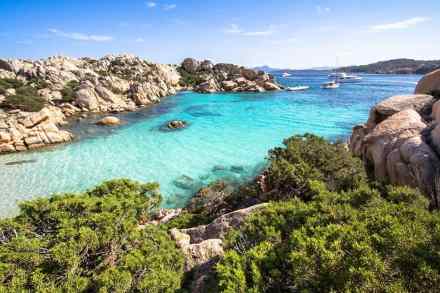
The larger islands of the Mediterranean all have their glories. Fought over for millennia, they now seem to have attained stability as part of the post-1945 political order, but the records of the long epochs of conflict are among the most fascinating aspects of European history. The successive waves of conquest have left material to delight archaeologists and aesthetes. Although western Sicily stands above them all, the intricacies of Sardinia’s history and culture can enthral the scholar, and the visitor. Prehistoric inhabitants left interesting traces as did Phoenicians, who were succeeded by Carthaginians, Romans, Vandals and Byzantium. Then, for more than four centuries, Sardinia was part of the Kingdom of Aragon.

The real reason Boris is unfit to be prime minister

From our UK edition

Three years ago, imagine that you had wanted to write a film script about a prime minister and his travails. By some coincidence, your draft bore a close relationship to Boris Johnson’s character and recent developments. We know the outcome. You would have been laughed out of the producer’s office. ‘Some of this is quite amusing,’ you would have been told. ‘You clearly have a talent for slapstick. But you have none for verisimilitude. You are writing about the head of government of a serious country, at a time of great events and challenges, at home and abroad. And this is how you portray the PM and 10 Downing Street? Donnez-moi un break. How long a break? In the last few hours, Boris may have been granted a stay of execution.

It’s time for Boris Johnson to go

From our UK edition

The partygate farce drags on. Do we have a government, sustained by a dominant political party or do we have an ill-run children's playground? The PM has suffered a humiliating loss of authority, which is surely irreversible. He is no longer the First Lord of the Treasury. He has become the first laughing-stock of state. In one respect, Boris Johnson was always an improbable Prime Minister. From Attlee onwards, all post-war premiers could have claimed to be serious people. History might question whether that was really true of Harold Wilson or Tony Blair but at various stages they both dominated British politics. At least for a season, to use a phrase of Joe Chamberlain's, they made the weather. That was never true of Boris, for one overriding reason.

A magnificent malt worthy of Burns

From our UK edition

The bleak midwinter. Actually, since I wallowed in curmudgeonly complaints about dreich days, everything has improved. Clear blue skies, pleasing sunsets: perfect shooting weather. It is cold, admittedly, but that holds no terrors for those of us well insulated. The rest can wrap up. At least pro tem, we have moved to midwinter spring. In that spirit, over a pre-Burns supper, a few merry gentlemen were discussing humorous verse. Which is the funniest poem in English? A million years ago, when I was slogging through ‘The Knight’s Tale’, a school-fellow alerted the class to ‘The Miller’s Tale’, which follows on (not to be confused with English batsmen). Chaucer obviously felt his readers deserved light relief, and provided it.

A rioja to beat the new year blues

From our UK edition

There was only one flaw in my Christmas this year. I did not spend enough of it with Santa Claus-age children. It is of course easier to delight in the charm if one does not live with the brats all year round. However adorable they may be, there are moments when they are also living instances of the doctrine of Original Sin. Moreover, in a Father Christmas household, it is helpful to have a bedroom some way from the parents. Admonitions will have been issued. The little ones will have been prohibited from invading the parents’ room until, say, 8 a.m. But admonitions do not automatically command obedience. Misrule is — and should be — one of the joys of Christmas Day. There can be pathos as well.

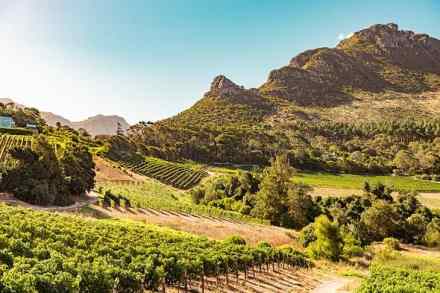
The promise of South Africa

From our UK edition

‘Earth has not anything to show more fair.’ One can admire the view from Westminster Bridge and feel near the epicentre of a great civilisation, but still believe that Wordsworth was exaggerating. His line came to mind when I was thinking about Christmases past, two of which I was fortunate enough to spend in the Cape. That scenery really is hard to rival. In the 1980s, the Cape offered five of life’s greatest pleasures. Landscape, politics, shooting, wine — and about 120 miles from Cape Town, there is an enchanting village called Arniston, or Waenhuiskrans, not far from Cape Agulhas, the southernmost point of Africa. Its inhabitants are Cape Coloured fishermen, living in charming white cottages and speaking only Afrikaans. My companion could translate.

Raising a glass to Grey Gowrie

From our UK edition

A group of us had gathered together to raise a glass, tell stories, to laugh and to mourn. It was a lunch to mark the passing of Grey Gowrie. Although we were an interesting and diverse group (this writer excepted), we could all agree on one point. Over longish lives spent in lively company, Grey stood out, not only for his intellectual firepower but for his originality and his exoticism. His family name was Ruthven, and his ancestors had played a conspicuous and frequently violent part in the chronic disorders of late-medieval Scottish life. Effectively, they were aristocratic brigands. After a couple of hundred years in which they disappeared from history, they made an appropriate return to the high peerage, via warfare.

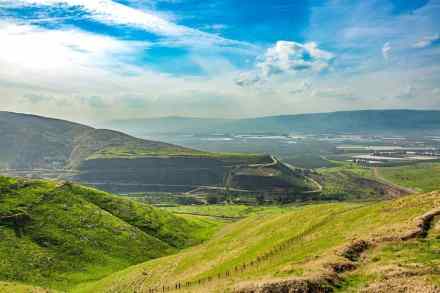
The heady Heights of Israeli wine

From our UK edition

‘Where is this from?’ my friend asked, handing me a wine glass. It was a Cabernet Sauvignon, high in alcohol, bit of oak: could do with more time (turned out to be a 2016) but well made. Not French and, despite the alcohol, I did not think that it was Californian either. South Africa? Possibly, but there was a more obvious explanation. My friend is Jewish and he had recently been in Israel. I claimed the Dr Watson prize: ‘The Golan Heights.’ So it was, from Yarden, one of Israel’s best growers. When I first went to Israel, 40 years ago, the wine tasted like bad Anglican communion wine. Since then, there has been a lot of investment, some of it from Roths-child, enabling the Israelis to make even more of the desert to bloom.

Is it worth gambling on supermarket wine bargains?

From our UK edition

Rich men often look out for bargains. I suppose that is why they are rich. But there can be problems. Occasionally bargains fail to live up to their name. It would not be easy to find a single bottle of le Montrachet for £600, yet a friend of mine once bought a whole case for that sum. He forgot the wise old adage: ‘If something sounds too good to be true, it is probably neither.’ Not one of his 12 bottles turned out to be drinkable. On a lesser scale, my friend Geoffrey fell victim to Waitrose. He and Louise invited me to lunch and the pièce de résistance was boeuf bourguignon. Before that, there was a brief tasting. ‘Try this,’ he said, proffering a glass as I arrived. Judging by his tone, it was not going to be a treat.

Vega Sicilia: the best Spanish wine I have ever tasted

From our UK edition

Four hundred and fifty years ago this month, a great victory helped to safeguard European civilisation. The battle of Lepanto would be more enthusiastically commemorated if our civilisation retained its self-confidence. For decades, the Ottoman empire had been menacing western Europe. Suleiman the Magnificent was the most formidable commander of the age, and Europe was doubly divided, both by the endemic rivalry between Spain and France and by the Reformation. Popes made regular attempts to persuade European monarchs to set aside their differences but these were usually unavailing. Rulers with other preoccupations often anticipated Stalin’s question: how many divisions has the Pope? By the 1570s, Venice was encouraging an anti-Ottoman coalition, for obvious reasons.

Is this Greece’s finest wine since Homer strummed his lyre?

From our UK edition

We were in deepest Dorset, l’Angleterre profonde. The weather was also typically English: inundations followed by counter-attacks from the Indian summer. Despite those, and even under a still blue sky, it was just too nippy to eat outside — or at least, that was what the less well-insulated members of the party insisted. Fear no more the heat of the sun. It has gone south with the swallows. But there was mellow fruitfulness, in this season which offers a delicious choice between grouse and partridge (unless you are Nicholas Soames, and have both). When it came to accompanying bottles, we were eclectic. Our hosts are good friends of Giugi, Marchese di Sesti, who makes superb wines in Montalcino, amid the splendours of Toscana profonda.

The wonder of Lebanese wine

From our UK edition

In the Levant, the grape has been cultivated for millennia, some of it used for wine. The hills of Lebanon were — and are — especially fertile, as the Jesuits discovered. The Society of Jesus was the SAS of the Counter-Reformation. Its alumni were famous for intellectual ability and physical courage: scholars and martyrs. They were also notorious for deviousness. Even Catholic monarchs regarded them with suspicion: the latter-day successors of the Templars. But at least Jesuits were not burnt at the stake, merely expelled from a number of countries, including Spain. The Jesuits believed that in order to convert the world, they had to move effortlessly in sophisticated circles. To that end, they kept a good table, reinforced by a fine cellar.

Spain vs Italy: who would win the wine Test?

From our UK edition

In London, the weather is a gentle sashaying mockery. An Indian summer reminds us of the sullen apology of summer which we have just endured. Soon it will be winter, and ‘A cold coming we had of it’. As always, poetry is a respite. My first resort is usually Yeats. In English, no one except Shakespeare is better at turning language into music. I have probably apologised before now in these columns for using those ravaging Yeatsian lines which have become a cliché because they are so true, so powerful, such an epitome of the post-1914 world and its agonies. ‘The best lack all conviction / The worst are full of passionate intensity.’ Has any historian ever rivalled that lapidary conclusive eloquence?

In turbulent times, there’s sherry

From our UK edition

I sometimes wander through Trafalgar Square in the small hours when the traffic has abated and children are no longer scrambling over Landseer’s lions. Hard by his own Whitehall, there is Charles I, a symbol of the constitutional agonies of that era. To most high Tories, he is Charles, King and martyr, Anglicanism’s only saint. Even Marvell saw the romance. -Others’ -responses blend tribute with exasperation. Raison d’état can require ruthlessness and Charles I was not the first failed monarch to meet a premature death. If only Cromwell had arranged for an accidental discharge, rather than a judicial murder. Moving on and looking up, the eye can feast on unalloyed romance: that most glorious of heroes, Admiral Lord Nelson, on his column.

The wine that made me change my mind about Valpolicella

From our UK edition

There was a marvellous general of yesteryear called George Burns. He had a good war and a splendid peace. He also held senior posts for longer than would be permitted in these diminished times. Colonel of the Coldstream for 32 years, he was Lord-Lieutenant of Hertfordshire for a quarter of a century. Many stories are told about him. Connoisseurs of equestrianism say that he was much the worst rider ever to appear at the Queen’s Birthday Parade, always looking like a magnificently attired and bemedalled sack of potatoes. He also had a set diet: a game bird at every meal. Once, he collapsed, was rushed to hospital and opened up. The medics expected to find terminal stomach cancer. Instead, they encountered what looked like the overflowing harvest from an enormous tin of caviar.