Bruce Anderson

Bruce Anderson is The Spectator's drink critic, and was the magazine's political editor

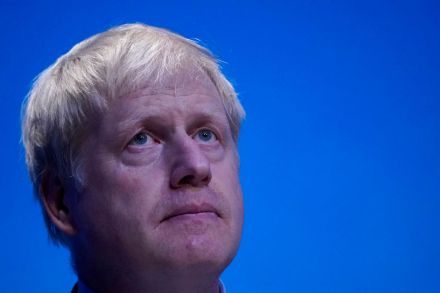
Tory members are deluded about Boris Johnson

From our UK edition

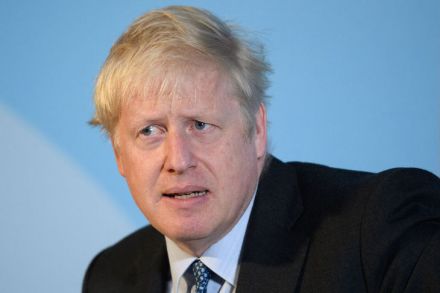
For more than forty years, I have assumed that most Tory party members were the salt of the earth. They may not have banged on about civic virtue or active citizenship, but they practised both. They may not have been interested in political philosophy, but they could tell a good 'un from a wrong 'un. Alas, that era is over. Tens of thousands of them have decided that Boris Johnson ought to be Prime Minister. The salt has lost its savour. Many Tories can no longer tell the difference between it and strychnine. Why has this happened? There are two explanations: May fatigue and Brexit fatigue. Among the poisonous bequests which Theresa May has left the Tories is a discrediting of the whole notion of competence. When she took over, it was expected that she would be dull, but competent.

Norman’s wisdom

From our UK edition

We were in a club, discussing Norman Stone, recently departed, over a meal that he would have enjoyed. Norman divided opinions. This manifested itself in his obituaries. Professor Sir Richard Evans summed up for the prosecution. He cited Norman’s failure to build on his early scholarly promise and his chronic neglect of academic duties. He concluded by quoting an old adversary of Norman’s, who described him as ‘amoral’. This is a difficult verdict to refute. Yet it is only part of the picture. He won the enduring affection of most of his best pupils, despite — or because of — his unorthodox methods. In Norman’s Cambridge days, an earnest young man turned up for his first supervision. No Stone. Next week, ditto.

Boris Johnson will make us long for Theresa May’s return

From our UK edition

He just will not do. Sexual incontinence alone should not disqualify Boris from the premiership, though it is hardly an asset. But the latest incident dramatises the flaws in his character. Indeed, one could say that he is all flaw and no character. There are three major flaws. The first is serial dishonesty. He simply has no concept of truth. As Philip Stephens of the FT once put it, Boris has lied his way through life and politics. He will say whatever is necessary to get himself out of a hole of his own digging. But if anyone quotes Boris back to himself, even a couple of days later, his reaction will be incomprehension and irritation. The second is profound selfishness. For Boris, other people only exist as an instrument of his own gratification.

A perfect match

From our UK edition

Cricket is the most gracious of games. County grounds in the lee of cathedrals, village greens in the perfect setting of trees and a pub, and not far from the parish church: even if the match will not be over in time for evensong, there is more than a hint of Dearly Beloved, a phrase which captures so much of English civilisation. Cricket is an intellectual game. It baffles Americans. Try explaining that a Test can last for five days and then end in a draw — which may well be the right outcome, morally and aesthetically. Think of Gavaskar’s immortal match in 1979. Any other ending would have been much less satisfying. Cricket engenders humour. At his best, Cardus is up there with Wodehouse, MacDonald Fraser (in the McAuslan books) and even Waugh.

Let the wine do the talking

From our UK edition

We had all said everything there was to say about Brexit a hundred times over. So the conversation took different routes. We discussed D-Day, Philip Hammond, clichés and President Trump. D-Day: what an awesome concentration of men and materiel — what a magnificent expression of military, national and moral resolve. A youngster made the sort of point beloved of smartass youngsters down the ages. What about the Eastern Front; what about the Kursk salient? Should all that not put D-Day in a diminished perspective? No, he was told, for two reasons. Without D-Day, the Soviet empire would have extended a lot further west, reaching the Rhine if not indeed the Channel.

Debunking Greek myths

From our UK edition

A book, a bottle, a bower set in an ancient garden: you think that if you walked round the right corner, there would be England, putting manure on the roses. Kipling reminds us that gardening is hard work and that beauty depends on bent backs. True enough, but they also serve who only sit and admire. There was a further contrast between hard work and sedentary admiration, for the book was the first volume of Kenneth Rose’s journals: the easiest of reads, yet the product of hard labour. Kenneth was an exemplar of his craft. There has never been a more meticulous journalist. If only the same were true of those who edited the volume.

The case against Boris Johnson

From our UK edition

In the old days, if the Tory party was in trouble, old hands who had seen it all before would attempt to steady the buffs with a traditional rallying-cry: 'pro bono publico – no bloody panico.' Today, that message is needed as never before, but would the MPs take any notice? In the nineteenth century, an Irish Parliamentarian lamented that: 'Ireland's cup of troubles is overflowing – and it is not yet full.' For Ireland, read the Tory party. It seems quite likely that on Thursday, the Tories will come fifth in the Euro elections, behind the Brexit Party, Labour, the Liberals and the Greens, struggling to get into double figures in percentage terms. That would be the worst result for either of the two leading parties in British political history.

Spare us the new

From our UK edition

There is no new thing under the sun. Over the weekend, I read a book which was alarmingly relevant to our present discontents: The Neophiliacs, by Christopher Booker, written at the end of the 1960s. That decade began well. The country had recovered from the austerities of wartime. It seemed to be an era of social stability. Most couples who married expected to stay married and bring up their children in stable families. Living standards were rising. National service was about to end. The public schools, whose oppressive regimes had created many left-wing dissidents, were liberalising. Politics was also stable. Less than three years after the Suez debacle, Harold Macmillan had won a majority of 100.

Given up hope? Join the club

From our UK edition

During the Middle Ages, some of the monastic halls which evolved into Oxbridge colleges allowed their younger inmates to indulge in jocundus honestus after the evening meal. There is nothing monastic about the clubs around St James’s, least of all at their dining tables. But there is still plenty of jocund. Honestus? That is another matter. The other evening, in a gathering well-equipped with bottles and glasses, someone remarked that we were still in the last lap of Lent and then asked an improbable and unexpected question: ‘So what have you given up, Anderson?’ I was pleased with my reply: ‘Hope.

A toast to independent Dorset

From our UK edition

There was a shrewd old Tory MP called John Stokes. He was not on the left of the party. Indeed, I once told him that he was the right pole. He chuckled at the compliment. Others — including some Conservatives — would not have regarded that as a favourable assessment, and often found his views dismaying. He enjoyed that and, to encourage it, would play the role of caricature reactionary. This rarely failed to get a rise. There is a comparison with that consummate ironist Jacob Rees-Mogg, though Jacob is also a serious Tory philosopher. John’s many friends could not have alleged that of him. He once aroused derision in the House by saying that things had come to a pretty pass: people were talking about politics in the pubs.

Three Tories in search of solace

From our UK edition

Three tribal Tories had gathered for a convivial glass, and also a consolatory one. One quoted Huskisson’s verdict after Goderich’s brief and worthless premiership. ‘Never surely was there a man at the head of affairs so weak, undecided and utterly helpless.’ Well, the female sex has now caught up. I said that at least she had refuted Hopkins. ‘No worst, there is none.’ As long as Theresa May is in charge, there could always be a worst. The terrible premier has out-gloomed the Terrible Sonnets. We were hiding away in a club, hoping not to meet any foreigners. Not that any of us is in the least xenophobic. One chap has a house in France; another regularly takes a place in Italy. Our affection for abroad goes well beyond its food and its bottles.

A perfect Sunday in Lent

From our UK edition

Life is far too important to be taken seriously. At least, that was the conclusion which we meandered towards as a Sunday lunch party eased into a symposium. Chaps had opinions to draft, articles to write, books to review. But no one was minded to defer to conscientiousness — especially as we had all made a solemn pledge not to discuss Brexit. Our host had consulted me about the bill of fare. Should it be lamb and Burgundy or beef and claret? I declared myself ready to settle for either, though both might be inadvisable. Beef it was, and grass-fed Aberdeen Angus at that. As I often remind vegetarians (too damned numerous these days, even if they are cheap to feed), in view of the vegan diet and intelligence level, grass-fed cattle should be regarded as mooing vegetables.

Glyndebourne in the City

From our UK edition

Early last century, an impoverished youth emerged from the East End. Able and hard-working, he discovered — as many had before him — that the City offered an open route to opportunity and riches. By the early 1950s, Rudolph Palumbo decided he could afford a family office. So he commissioned a Queen Anne building on Walbrook. Although it could not compensate for the City’s grievous architectural losses during the war, it was a reassertion of old values: of a long tradition that finance and the fine arts could march together. Forty years on, Rudolph’s son Peter was having lunch with Mark Birley at the Connaught. Mark, son of Oswald, a much underrated painter, had as much taste as any Englishman in the 20th century.

No small beer

From our UK edition

We were discussing beer. It is a cheerful subject so I made an appropriate point. In recent years, the quality of civic life in Britain has steadily deteriorated. Change has become synonymous with decay. But there is one delightful exception. In southern England these days, it is almost impossible to find a bad pint of beer. Matters may be different in other parts of the United Kingdom. From my limited experience, we Scots are not good at beer. It is something that is only drunk to eke out the whisky. North of the Tweed, bitter is known as ‘heavy’, which is a fair description and not an encouraging one. In the north of England, too, beer is often excessively sweet.

Brexit and cru bourgeois

From our UK edition

Acouple of lawyers were disagreeing about a matter which could become increasingly relevant. Could a sitting president pardon himself? But there was a further aspect to this question. A friend of mine who has known Mr Trump for 20 years and who likes him detects a weakening in his mental powers. One of our number was a distinguished neurologist. Pressed to overcome his intellectual scrupulousness about television diagnosis, he thought it not impossible. So are we dealing with dementia, or is the President of the United States just demented? Might it be early stage Alzheimer’s, or merely chronic Trump-heimer’s?

Happiness is a convivial bottle

From our UK edition

January really is the cruellest month. No wonder some fortunate friends have dodged the column of dreary weather and short days, seeking asylum in the Southern Hemisphere, or at least the Southern Mediterranean. Not that the British winter climate is all bad. Brisk clear days promote mental rigour. Barry Smith, a historian from New Zealand and an early evangelist for that nation’s serious wine, once wrote that Prime Minister Lord Salisbury had a mind like a clear blue winter day. That is not indispensable for statecraft; it could never be said of either Churchill or Thatcher. But it helps to promote an unillusioned realpolitik: the wisest approach to human affairs. Some readers might be surprised when I cite another statesman who lived up to the Smith description: Alec Douglas-Home.

Comfort in chaos

From our UK edition

It appeared to be an uneven contest. A few friends were meeting for a festive wine-tasting, to compare and contrast some interesting bottles. The clarets opened with an Angelus ’98, a superb wine from an outstanding year. In response, the Palmer ’04 seemed to be outgunned. But, gaining strength from a bit more time in the decanter, it became increasingly formidable. Words and wine: there is an unceasing struggle to translate wine into language without falling into euphuism or pseudery. This time, I felt drawn to a naval image. In its growing power, the Palmer reminded me of that early scene from Sink the Bismarck!

Either fish or fowl

From our UK edition

It is enough to drive a fellow to the bottle. I am not given to agnosticism. My view is that if the evidence seems to sustain a conclusion, weigh it and arrive at one. On Brexit, I find that impossible. Most of my friends have no problem. From Remoaners to rejoicers, they all deal in certainties. I cannot emulate them. My intellect seems to have turned into a cushion, bearing the imprint of the last person I spoke to. I refuse to believe that the Bank of England has turned into the equivalent of an M.R. James ghost story, a delightful way of giving everyone a good scare on a wintry evening. But friends of mine argue equally forcefully to the contrary. Roger Bootle, David Howell, Nigel Lawson, Peter Lilley, Jacob Rees-Mogg, Matt Ridley: these are serious men, making a cogent case.

Commanding presence

From our UK edition

One of the pleasures of journalism is the opportunity to meet eminent persons: bankers, businessmen, civil servants, diplomats, politicians, vignerons. Although there are occasional exceptions, such as Theresa May and around one-third of the current cabinet, it is usually easy to see why these characters attained their eminence. That is especially true when it comes to the ablest group of them all, the soldiers. There is a good reason for this. It is hard to believe that any large organisation on earth devotes as much effort to training as the British army takes for granted. (I am sure that the same is true of the navy and the RAF, but I do not know them as well). Army officers are rigorously assessed. To rise in the profession of arms, they must prove that they can fight, lead and think.

A tribute to Baroness Trumpington: the funniest woman in the House of Lords

From our UK edition

Baroness Trumpington has died at the age of 96. In February last year, Bruce Anderson paid tribute to her here: To the Western Isles, or at least to its embassy in Belgravia. Boisdale restaurant always claims to be extra-territorial. There was an awards ceremony, and the principal recipient was a remarkable old girl. Ninety-four years into an extraordinarily diverse life, Jean Trumpington is one of the funniest people I have ever met. She is also one of the bravest. She was born in easy circumstances, a child of the affluent upper middle classes, and the first disruption occurred when her mother lost a lot of money in the Great Crash. Her family did not exactly become poor, but she had her first lesson in adversity, and on the unwisdom of taking anything for granted.