Ben Lazarus

Ben Lazarus

Ben Lazarus is an assistant editor of The Spectator

Will councils soon be digging up the dead?

From our UK edition

I’ve been fighting Brent Council over some graves. Paddington Old Cemetery is dilapidated and Victorian and has been classified as a park by Historic England for decades. Only a tiny section of its 24 acres is used for new burials. Without life, cemeteries attract foxes (who mess on graves), and the wrong type of people – drug addicts and drinkers Brent recently launched a rather biased consultation looking at whether off-lead dogs should be banned (my favourite question in the survey: ‘Do you agree with dogs urinating on graves?’). The council claims they have received ‘a growing number of complaints’ from mourners about dogs but won’t say how many complaints.

Will Iran respond to Israel’s assassinations?

From our UK edition

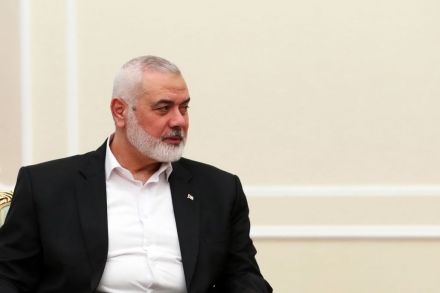
The Israelis were busy last night. First, Fouad Shukur, Hezbollah’s top military commander was, in the words of Israel’s defence minister Yoav Gallant, ‘eliminated’ in Beirut. Shukur was targeted for his role in a rocket attack on the Golan Heights on Saturday which killed 12 Druze children and teenagers playing football. Hours later, Hamas’s political leader Ismail Haniyeh was assassinated in Tehran, where he was visiting for the inauguration of Iran’s new president, Masoud Pezeshkian. For now, Israel and Hezbollah say they both want to avoid total war It’s a huge blow for Hamas and their Iranian paymasters. Haniyeh was the face of Hamas’s international diplomacy, and is the most senior Hamas official to be killed since the war started.

My encounter with ‘the godfather of British blues’

From our UK edition

Few bluesmen have matched the success of John Mayall, ‘the godfather of British blues’, who died on Monday aged 90 at his home in California. In a career spanning more than six decades, he made 50-odd albums with an ever-changing incarnation of his band, the Bluesbreakers. His proselytisation of black American artists like Muddy Waters, John Lee Hooker and Otis Rush, gave these legends a new audience this side of the Atlantic. BB King is said to have remarked that, were it not for Mayall, ‘a lot of us black musicians in America would still be catchin’ the hell that we caught long before.’ Mayall’s Bluesbreakers, founded in the early Sixties, was a carousel for some of the world’s most notable blues and rock musicians, many of whom went on to greatness.

Is a new front about to open up in Israel’s war?

From our UK edition

Two days after the Israel Defence Forces announced that it had dismantled Hamas’s ‘military framework’ in the northern Gaza Strip, a new front in the war could now begin after the IDF took out a senior Hezbollah commander. Wissam al-Tawil, the deputy head of a unit within the group’s elite Radwan force, was killed this morning in an Israeli air strike on his car in southern Lebanon. ‘This is a very painful strike,’ one unnamed security source told Reuters. ‘Things will flare up now,’ another security source added. Since 7 October, more than 130 Hezbollah fighters have been killed in skirmishes between the group and Israel (another 19 died in Syria). Some 15 Israelis have also been killed.

What Harry’s legal win could mean for press regulation

From our UK edition

The phone-hacking saga has just been given a new lease of life after a judge ruled that Prince Harry can take the Daily Mail to court over claims that it used ‘unlawful information gathering’ in stories about him. The newspaper has never been involved in the historic hacking claims, and said evidence to the contrary assembled by the Duke of Sussex and six other high-profile claimants was ropey and that it was brought ‘far too late’ for the trial to take place. The High Court today disagreed: Mr Justice Nicklin said the newspaper group hadn’t delivered a ‘knockout blow’ to the ‘claims of any of these claimants’. This matters. Newspaper sales are declining in Britain and so far more than £1.

Is Keir Starmer in trouble?

From our UK edition

Unless something extraordinary happens, Sir Keir Starmer will be the next prime minister. All the polls show Labour on course to win a large majority in next year’s general election. Yet it’s being widely reported that Starmer faces the gravest test of his leadership, all over a conflict more than 2,000 miles away.  Imran Hussain has become the first member of Starmer’s shadow cabinet to quit over the war in Gaza. In an open-letter published on X last night, the Bradford MP said he wanted to ‘strongly advocate for a ceasefire’ and his views differed ‘substantially’ from Starmer’s. Others could follow the former shadow minister for the New Deal for Working (no, me neither) in stepping down.

‘I disliked him intensely’: Richard Lewis on first meeting Larry David

From our UK edition

Richard Lewis has died at the age of 76. Ben Lazarus interviewed him for the magazine last year: Richard Lewis first met Larry David at a summer sports camp, aged 12. ‘I disliked him intensely. He was cocky, he was arrogant,’ Lewis says. ‘When we played baseball I tried to hit him with the ball: we were arch rivals. I couldn’t wait for the camp to be over just to get away from Larry. I’m sure he felt the same way.’ Eleven years later they met again on the New York stand-up scene – but didn’t recognise each other. One evening, as they drank into the night, it dawned on them. ‘I looked at his face and I said, “There’s something about you, man, that spooks me.” Just saying that spooks everyone!’ It clicked. ‘“You’re Richard Lewis!

How did United handle the Mason Greenwood scandal so badly?  

From our UK edition

It’s hard not to be shocked by the distressing clip shared online, allegedly featuring the Manchester United footballer Mason Greenwood. In the clip a woman can be heard trying to stop a man forcing her into having sex. The audio was uploaded in January last year alongside images of the alleged victim looking bruised and battered, with blood running down from her mouth.   When the clip was released, Manchester United responded by suspending the now 21-year-old Greenwood. But they stopped short of tearing up his contract. This was the first big mistake the club made. They could have saved themselves a huge amount of hassle (and appalling publicity) had they, at the time, accused him of bringing the club into disrepute and parted ways.

Degrees of failure: is university still worth it?

From our UK edition

33 min listen

This week:  The cover of The Spectator magazine looks at whether after years of Covid-based disruption, rising cost and lecturer strikes, university students are getting what they paid for. The Spectator’s data editor Michael Simmons writes a sidebar in which he rails against some of the changes that are happening to university freshers’ week and joins the podcast alongside Emma de Saram, Guild president at the Exeter University Student’s Guild. (01:26)  Also this week: In the magazine we are running an interview by The Spectator's special projects editor Ben Lazarus with professor Jim Skea – the new head of the UN intergovernmental panel on climate change (IPCC) and arguably the most important man in climate science.

Keep calm and carry on having kids: the UN’s climate chief on eco-anxiety

From our UK edition

Jim Skea has just taken on the most important job in climate science. As the new head of the United Nations’ Intergovernmental Panel on Climate Change (IPCC), he is now in charge of the organisation that has done more than any other to build the international consensus that climate change is an existential threat to humanity. ‘I’m very conscious that constant drip-drip anxiety messages could have a paralysing effect on climate action’ In the weeks since his appointment, however, the 69-year-old Scot, a former professor at Imperial and a founding member of the UK’s Committee on Climate Change, has set out to strike a very different tone by casting doubt on the apocalyptic claims of the environmentalist movement.

After Putin: how nervous should we be?

From our UK edition

37 min listen

This week: In the magazine we look at the Wagner Group’s failed coup and its implications for Putin’s reign. The Spectator’s Russia correspondent Owen Matthews examines why the Kremlin permits the existence of private armies such as Prigozhin’s Wagner Group, and joins the podcast alongside Jim Townsend, former deputy secretary of defence for European and NATO policy under the Obama administration. (01:15) Also this week: The Spectator’s special projects editor Ben Lazarus writes this week about the claims made in the recent Mirror Group phone hacking trial, and the man orchestrating many of the accusations, Graham Johnson.

The ‘professional liar’ at the heart of Prince Harry’s hacking claim

From our UK edition

In the summer of 2019, Prince Harry and Meghan Markle were visiting their friends Elton John and David Furnish in the south of France when they were introduced to the barrister David Sherborne. This ‘chance’ meeting would be a massive coup for the man known as the ‘barrister to the stars’ (he represented Coleen Rooney in the Wagatha Christie trial and Johnny Depp against Amber Heard, among many others. Many years ago, he also acted for Harry’s mother, Princess Diana). The encounter led to Prince Harry becoming the star witness against three newspaper groups. ‘It was partially down to Elton and David,’ Harry later wrote in Spare.

The godfather of AI: why I left Google

From our UK edition

Ten minutes before I meet Geoffrey Hinton, the ‘godfather of AI’, the New York Times announces he’s leaving Google. After decades working on artificial intelligence, Hinton now believes it could wipe out humanity. ‘It is like aliens have landed on our planet and we haven’t quite realised it yet because they speak very good English,’ he says. He also tells me that he has been unable to sleep for months. ‘It’s conceivable that the genie is already out of the bottle’ Hinton, 75, revolutionised AI not once but twice: first with his work on neural networks, computer architecture that closely resembles the brain’s structure, and then with so-called ‘deep learning’, which allows AI to refine and extract patterns and concepts on a vast quantity of data.

Bare and spectral: Bob Dylan’s Fragments – Time Out Of Mind Sessions reviewed

From our UK edition

To understand Bob Dylan’s Fragments – Time Out Of Mind Sessions (1996-1997) – due to be released on Friday – you have to go back half a century to the release of the Beatles’s Let It Be. As millions of fans around the world bought the band’s final album, Paul McCartney was horrified. This was not the disc he had conceived: some of the most cherished songs in his oeuvre had been hijacked by superstar producer Phil Spector, who stamped his trademark ‘Wall of Sound’ during the album’s post-production process, filling it with lavish embellishments. Fast-forward to the mid-1990s and another legendary songwriter was at loggerheads with a different superstar producer, then still a dominant force in the era of mega-selling records.

Tenderness and menace: Bob Dylan, at the London Palladium, reviewed

From our UK edition

Bob Dylan has always toyed with audiences. He plays what he wants, how he wants, letting his mood dictate tempo and often key (sometimes switching songs to the minor). On Dylan’s return to London for the first time in five years, he summed it up early. ‘I ain’t no false prophet/ I just know what I know,’ he gruffly sang. Dylan spent the night at the Palladium doing what he knows best, singing songs of love, loss and immortality. Covid temporarily ended his ‘Never-Ending Tour’, which had seen Dylan play more than 3,000 shows since 1988. Now it’s billed as ‘The Rough and Rowdy Ways Tour’, with the strapline: ‘Things aren’t what they were’.

How to blend your own beard oil

From our UK edition

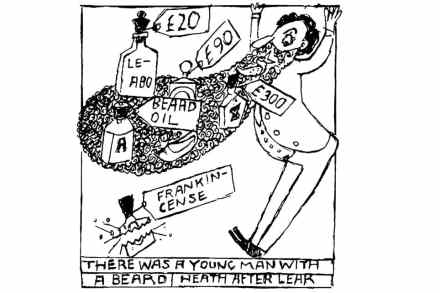
Every few months I take out a box of essential oils and carefully lay them out on my kitchen table, organising them in order from sweet-smelling to musty. On the left will be scents like juniper berry, lime, frankincense and bergamot; in the middle, woodish fragrances such as sandalwood and cedarwood; on the right, the darker stuff of patchouli and pine needle – and occasionally, when I’m feeling brave in my endeavour to make the perfect beard oil, lavender. Next I fill several large vials with a mixture of carrier oils, usually almond, jojoba and argan (and normally with almond making up the bulk as it’s the cheapest). I then begin mixing in various essential oils: a dash here, a dash there.

Harlan Coben on David Foster Wallace, writing the perfect book and becoming a Netflix sensation

From our UK edition

‘There are two kinds of writers,’ Harlan Coben says with a grin. ‘There are those who, one day, hope to see their books on screen, and there are those who are lying to you.’ Coben, a New York Times best-selling crime writer, knows how fortunate he is. You can’t flick through Netflix without seeing trailers for one of his shows with their short and punchy titles: The Woods, The Stranger, Safe. The stories might not win Pulitzers, but the plot twists and murders of Coben’s suburban noir are wildly popular. Netflix has signed him to an unprecedented 14-show deal; ten have already been made for British, American, Polish, French and Spanish audiences. Yet Coben shied away from the movie business until later in his career.

The algorithm myth: why the bots won’t take over

From our UK edition

Google once believed it could use algorithms to track pandemics. People with flu would search for flu-related information, it reasoned, giving the tech giant instant knowledge of the disease’s prevalence. Google Flu Trends (GFT) would merge this information with flu tracking data to create algorithms that could predict the disease’s trajectory weeks before governments’ own estimates. But after running the project for seven years, Google quietly abandoned it in 2015. It had failed spectacularly. In 2013, for instance, it miscalculated the peak of the flu season by 140 per cent. According to the German psychologist Gerd Gigerenzer, this is a good example of the limitations of using algorithms to surveil and study society.

‘Prince Charles is more socialist than the Labour party’: an interview with Nigel Kennedy

From our UK edition

‘If I needed a guide to go up a mountain, I’d choose someone who knew the way,’ says Nigel Kennedy. ‘So if someone is telling me what to do, they’d better know a little bit more than me.’ In September, Kennedy’s Jimi Hendrix tribute at the Royal Albert Hall was cancelled after organisers Classic FM deemed it ‘unsuitable for our audience’. It still rankles: ‘I reckon I know more about my particular art form than some guy sitting behind his desk,’ says Kennedy, ‘and so I can’t quite take it when people start saying what is classical music and what isn’t. To me, Hendrix’s “Little Wing” is a kind of Celtic-sounding melody.

The lost king of the blues

February 15, 1981, the day after Valentine’s Day. At 11 on a Sunday morning, a man’s body was found slumped in the passenger seat of a beige 1971 Mercury on a residential street in the Forest Hills section of San Francisco. All four doors were locked. A Valium bottle was in the pocket of a coat on the back seat. There was no ID: the body went to the morgue as John Doe #15. The dead man was 37-year-old Michael Bloomfield, a pioneering guitarist who brought blues to the mainstream and set Bob Dylan’s music alight. The cause of death was registered as cocaine and methamphetamine poisoning. Questions remain unanswered about how he died; why methamphetamine, which he avoided, was in his system; and why he was in a part of town where he knew no one.

bloomfield