Arabella Byrne

Arabella Byrne

Arabella Byrne is the co-author of In The Blood: On Mothers, Daughters and Addiction.

Embracing the occult, going underground & lost languages

34 min listen

Big Tech is under the spell of the occult, according to Damian Thompson. Artificial intelligence is now so incredible that even educated westerners are falling back on the occult, and Silicon Valley billionaires are becoming obsessed with heaven and hell. An embrace of the occult is not just happening in California but across the world – with ‘WitchTok’, a new trend of middle-class women embracing witchcraft. Is this spooky or just sad? And to what extent are they just following in the tradition of the Victorian charlatan? Host Lara Prendergast is joined by the Spectator’s associate editor – and host of the Holy Smoke podcast – Damian Thompson, alongside writers and Spectator regulators Arabella Byrne and Mark Mason.

Hex appeal: the rise of middle-class witches

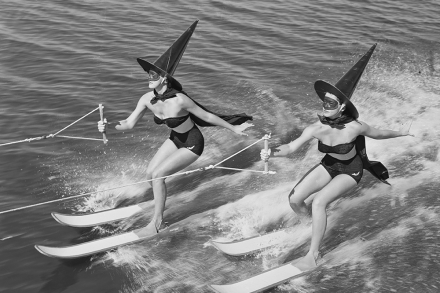
In King James VI of Scotland’s Daemonologie, written in 1597, he vigorously encourages witch-hunting and, in particular, the tossing of witches into the sea. Only the innocent would sink. As a way of identifying witches, it was clear and presumably efficient. These days, we have no such clarity. But witches walk among us. I’m not talking about women in black pointy hats, but something far scarier: the middle-class witch. In the past, she might have been called a depressive, a spinster or a divorcée. Now, she’s probably a middle-aged woman in the Home Counties with a TikTok account, a litany of spells and deep trauma. Modern witchcraft has always invited confusing cliches. Blame L. Frank Baum.

The rise of ridiculous doctorates

To a certain extent, all doctoral theses are a bit ridiculous – and therein lies their genius. I am allowed to say this because I spent four years of my life researching French Catholicism’s engagement with the first world war for my doctoral thesis, which I nattily entitled Calvary or Catastrophe? Back then, I was a baby academic hoping for critical acclaim and my own office. I’ve long since been disabused of this dream and have left academia’s dreaming spires behind to become a journalist – a profession that offers me neither my own office nor critical acclaim, but a great deal of online abuse. And while I don’t expect anyone ever to read my PhD (although you can DM me any time for a copy), I believe that it had some slim critical justification.

Hands off my tumble dryer, Martin Lewis

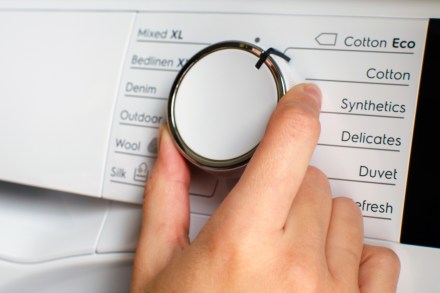
I did not expect to have to write this, but I can say publicly and without reservation that I absolutely love my tumble dryer. I love its stern prompts to empty the lint filter or the water reservoir. I love the bossy beeping sound it makes when it has finished a cycle, asking me to stop what I am doing to attend to the fruits of its labour. Most of all though, I love the smell that this faithful matron workhorse casts around the house: a smell of clean clothes and boiled Persil. In short, the smell of domestic order. Sniff closely enough and you will detect the curious whiff of my moral virtue.   Martin Lewis, doyen of personal finance, otherwise known as Mr Money Saving, has branded the tumble dryer a ‘demon appliance’ Sadly, this is a minority take.

Sober October and the hangover of wellness

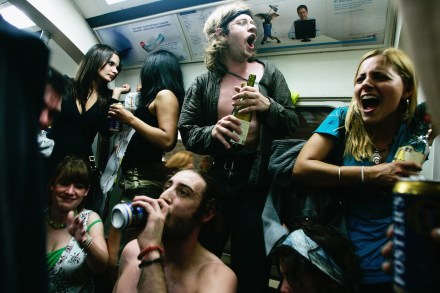
By now, you have probably given up on Sober October. I’ve never done it, mainly because I’ve been sober for 15 years. There’s two things, however, that I’m truly thankful for. The first is that I gave up drinking before Instagram stories became a widespread means of social documentary. The second is that I had been sober for four years by the time the absurd country-wide rehab that is Sober October was established as a charity initiative by Macmillan Cancer Research in 2014. But if I had still been drinking, I would never have thought it might apply to me. In fact, I would have relished the opportunity to loudly denigrate it, probably from a pub or while staggering around public places, as I often did. Such is the active alcoholic predicament. Dry January?

Nick Boles, James Ball, Andrew Rosenheim, Arabella Byrne & Rory Sutherland

27 min listen

On this week’s Spectator Out Loud: Nick Boles says that Ukraine must stand as a fortress of European freedom; James Ball reviews If Anyone Builds It, Everyone Dies: The Case Against Superintelligent AI, by Eliezer Yudowsky and Nate Sores; Andrew Rosenheim examines the treasure trove of John Le Carre’s papers at the Bodleian; Arabella Byrne provides her notes on skip-diving; and, in the battle of the sexes, Rory Sutherland says the thing to fear is not feminisation, but emasculation. Produced and presented by Patrick Gibbons.

Confessions of a skip-diver

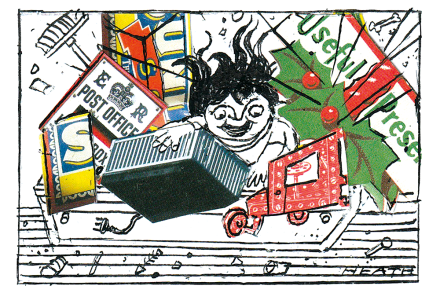
Call me disgusting, but I like rubbish, and I like it best from a skip. I am also in good company. In his 1967 poem, ‘The Bin Men Go on Strike’, Raymond Queneau riffs on the fantasy of bins stuffed with works of art, the ‘Mona Lisa’ lying askew by the spent toothpaste tube, or a Géricault smeared with pigeon shit, jettisoned by an ignorant philistine. This is an elaborate joke, bien sûr, designed to make us reconsider aesthetics in general, but its point holds: can we conjure art from the soiled and fragmented? Can we overturn economic values – and even meaning – as the ragpickers or, as Baudelaire had it, the chiffoniers of our time? I like to think so. Skip-diving, or the practice of helping oneself to objects from a skip, is on the rise.

Padel is a disgrace

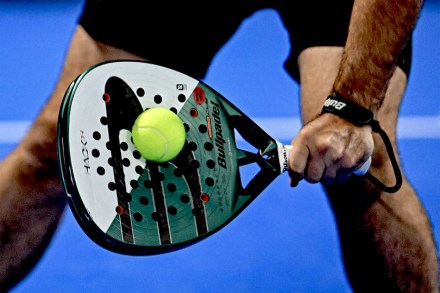
Why the hell not? I thought to myself as a friend invited me for a game of padel at her Oxfordshire members’ club, the grotesquely baroque Estelle Manor. As a self-confessed tennis head, I thought this might have the same feel of the restrained geometry and simmering tension of the tennis court that I have spent a lifetime admiring. I imagined a game close to squash but with the lightness of ping pong and the clipped etiquette of tennis. How wrong I was. Padel, I am sorry to say, is a disgrace. Not simply because it apes tennis in unfortunate ways, but because it is deeply uncivilised, like a dinner party with paper plates.

Leave Barbour alone

Please, make it stop. No sooner had I dug out my Barbour for the wet and windy winter months than I saw another of the brand’s distressing collaborations, this time with fashion designer Sir Paul Smith. Sir Paul, luvvie fashion grandee and founder of the eponymous line that began as a Nottingham-based shirt outfit in the 1970s, has teamed up with Barbour to distil ‘the wit and character’ of both brands. But I don’t need Sir Paul’s ‘signature stripe trims, colour pops and patchwork’ to be persuaded to wear a Barbour. And I’m pretty sure most people who live in the country would say the same. I like my 12-year-old Bedale Barbour as it is: pretty bashed up, in need of a re-wax, the pockets stuffed with bits of rope, chocolate buttons, dog poo bags and lighters.

Against abstinence-based approaches to sobriety

From our US edition

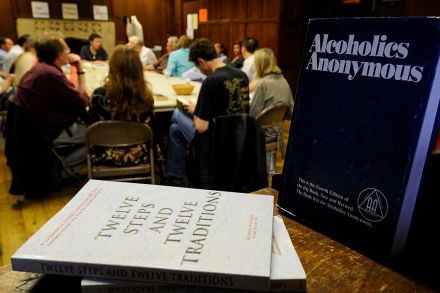
It would be impossible for me to review Katie Herzog’s Drink Your Way Sober without disclosing the central fact of my adult life: I have been sober and in Alcoholics Anonymous for more than 15 years. And while I am not an out-and-out evangelist for AA and its notorious Twelve Step method, it is, nonetheless, the movement that I credit with my survival. Not so for journalist – and addict – Katie Herzog. Herzog has all the serial-relapser energy you would expect from the addict who has forsworn AA Part memoir, part guidebook, Drink Your Way Sober is an impassioned – and at times, angry – argument that abstinence-based approaches to sobriety are doomed to fail.

Sober

Carrying Peter Mandelson’s coat

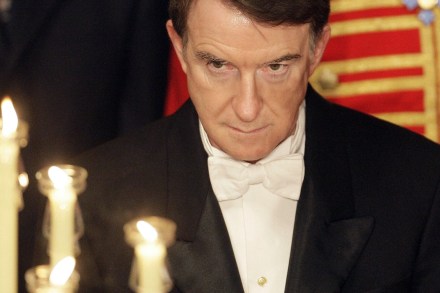
As coats go, it was very nice. A dark blue cashmere Loro Piana number that reeked of quiet luxury. But for a man who once identified as a communist, it was laughable. It was 2016 and I was standing in the atrium of the newly remodelled Design Museum on Kensington High Street. As assistant to the museum’s director, I was engaged in a normal day on the job: as Peter Mandelson’s coat bearer. Other humdrum days at the coalface involved talking to Terence Conran about his dogs, making sure Alexandra Shulman had a hard hat on and holding then culture secretary Matt Hancock’s champagne glass while he posed for pictures. Mandelson, soon to be announced as the chairman of the museum’s trustees, was in the museum for a state visit.

The rise of the godless godparent

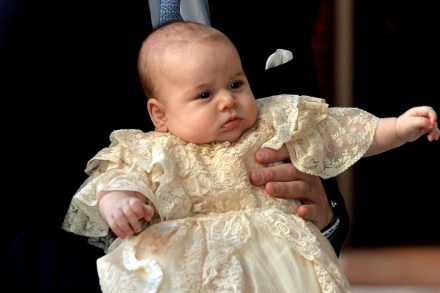
I realised that the whole thing had become absurd when I was squeezed in by a female vicar for photos around the font of an Anglican church. There we were, all six godparents grinning back at the camera as the baby was held aloft (screaming) by its proud parents. But out of the six godparents assembled, only two of us had been baptised and confirmed in the Christian faith, leaving four godparents out. Not really godparents at all, then. Witnesses or mentors perhaps, but not godparents. In our increasingly secular age, the distinction bears recognising. If you don’t believe in God, this isn’t going to work.

How nannies priced out the middle class

‘Always keep a-hold of nurse/ For fear of finding something worse,’ warned Hilaire Belloc in his poem ‘Jim’, about a little boy who ran away and got eaten by a lion. These days, Jim would be lucky to have a nanny at all given their exorbitant cost. Recent figures released by the nanny payroll provider Nannytax show that the average salary in London has risen to more than £50,000 as pushy parents demand ‘additional services’ such as training in autism, attention deficit hyperactivity disorder (ADHD) and special educational needs (SEN). A far cry from Sebastian Flyte’s Nanny Hawkins in Brideshead Revisited, the new breed of ‘hybrid nannies’ can command up to a 20 per cent salary premium by catering to the growing number of families who now require SEN expertise.

‘Mankeeping’ is the secret of a successful marriage

Don’t women have a bum deal? Not only do we have to bear children and make our way on the harsh plains where second-wave feminism and rampant neoliberal professionalism meet, but apparently now we must also perform ‘emotional labour’ for our husbands. Sorry: husbands and partners. This emotional labour has been christened ‘mankeeping’, the latest feminist buzzword. Dreamed up by Angelica Puzio Ferrara, a psychologist at Stanford, it describes the heavy lifting that women in heterosexual relationships do to keep ‘the family harmony alive’.  And it appears to have struck a chord. ‘Mankeeping: finally, a word to describe the emotional labour of my 38-year marriage,’ declared a recent Telegraph headline.

The rise of the private school ‘prepayers’

Best laid plans, eh? There have been a series of miscalculations when it comes Labour’s plans to charge VAT on private schools. First there was the pupil exodus from schools and the inability to recruit enough teachers to the state sector. Now private school accounts now reveal that parents have prepaid vast sums of money to avoid the VAT levy applied in January of this year.   What was meant to be a morally redistributive tax dreamt up by Labour has become a sham. The richest may not, in fact, pay any VAT Figures released in annual accounts reveal that the top 50 private schools held £515 million in advanced fee schemes, up from £121 million in 2023.

The competitive cult of the summer camp

‘Before you ask, Mummy, the answer is no.’ While this could be any number of conversations that I have with my seven-year-old daughter, this one has a particular tang. It is the thrice-annual bargaining round that I do in the run-up to any school holiday in which I try to get her to go to a kids’ camp. An executive at Goldman Sachs in equity sales does not work as hard as I do to seal the deal – but I fail every time.  For a brief, prelapsarian period when she was five and more biddable, I had some success. I managed to get her into all manner of summer holiday camps in Oxfordshire: activity camp, Shakespeare camp, tennis camp, even God camp. You name it, I signed her up. Sure, we had some argy-bargy at the moment of drop-off, but in she went.

English? Middle class? Welcome to the Costa del Boden

It was when I saw two other women wearing the same red-and-white-striped Boden swimming costume as me that I realised what I had become. Twenty years ago, I wouldn’t have been seen dead on a beach in Salcombe in a Boden swimming costume. I would have been topless on a riverbank in Provence, smoking a Gitane and reading Duras. These days, I don’t have time to care, and I summon G.K. Chesterton as my guide: ‘Don’t ever take a fence down until you know the reason why it was put up.’ I have children, a husband and dogs, and we have come – without really meaning to but by some centrifugal bourgeois force – to the Costa del Boden for our summer holiday. In short, we appear to be in favour of the fence. Where?

Glennon Doyle’s latest offering marks a change in direction

From our US edition

Glennon Doyle – wife, mother, lesbian, blogger, former Instagram phenomenon, political influencer –  says “we can do hard things.” This aphorism, taken from a poster in a classroom back when she was a third-grade teacher in Virginia, might just be one of the most successful dicta to emerge in recent American history – more successful, even, than Barack Obama’s “Yes we can!” When Joe Biden won the presidency in November 2020, his campaign manager swiftly tweeted “We can do hard things... and you just did!” Months later, in January 2021, Democrat Chuck Schumer, addressing Congress after the siege of the Capitol, declared: “In America, we do hard things.

Doyle

Why we worship the Wimbledon Wags

Strangely, it was the Sunday Telegraph, not the red tops, that in 2002 coined the acronym Wags after staff in a Dubai hotel used it to describe the wives and girlfriends of England football players. Little did they know that the term would have the traction that it still does nearly 25 years later. Of course, when most people summon core Wags to mind, they think of the glorious bitchiness of the football Wags in their 2006 Baden-Baden Euro glory – all fake tan, Ugg boots, hair and sunglasses like Barbies on speed. Sadly, they don’t make them like that anymore. These days, Wags don’t need the papers to pap them; they are Instagram celebrities before they have even got the GHD hair straighteners out – they’re not trying as hard. But I’m not here for the football Wags.

Do men really want more paternity leave?

How do you solve a problem like modern fatherhood? According to Jonathan Reynolds, Secretary of State for Business and Trade, paternity leave is how. As he launched his new review looking into maternity, paternity, shared parental leave and financial support offered to new parents this week, Reynolds stated that he wanted it to become as ‘culturally accepted’ for fathers to spend time at home after a baby is born as mothers. Must modern paternal love be predicated on a father singing ‘Wind the Bobbin Up’ at Monkey Music?   Reynolds, a father of four, must know that paternity leave take-up in this country is notoriously poor: only 59 per cent of fathers took paternity leave after the birth or adoption of a child, with many citing the low rate of statutory pay (£187.