Arabella Byrne

Arabella Byrne

Arabella Byrne is the co-author of In The Blood: On Mothers, Daughters and Addiction.

What your whippet says about you

‘Whippets are simply ducal,’ a grand friend pants at me in her drawing room when I ask her why she owns one. Certainly not a Regency duke, I mutter, looking at the fawn skeleton lying in wait on the brocade sofa. Because to me, whippets aren’t posh, just as Michael Heseltine isn’t fooling me all these years later. Rather, I find them sinister: the endless jutting ribs, the paper-thin coat, the incessant shaking. But I know I am not in good company. Whippets, the Ozempic-coded dog of our age, have been taken up by high society in their droves.

The rise of the pocket money app

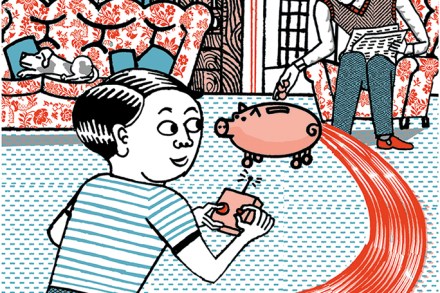
I am standing in the village Co-op with my eight-year-old daughter when she asks, inevitably, to be bought a magazine. As most parents will know, magazine is a generous term for this iteration: a collection of sorry pages whose sole purpose is a vehicle for plastic toys. I say no, but then she blindsides me. ‘Fine, I’ll pay for it with my pocket money,’ she declares, whipping out her pre-paid card like a good capitalist. As I slip the packet of fags I have bought for myself into my pocket, I realise that I am morally snookered. For is she not free to spend her pocket money as she likes? And am I not free to spend my money as I like? Libertarians, all. Most of us born before the advent of digital banking will have firm ideas about pocket money.

Woodcote House survived the Blitz, but it couldn’t survive Rachel Reeves

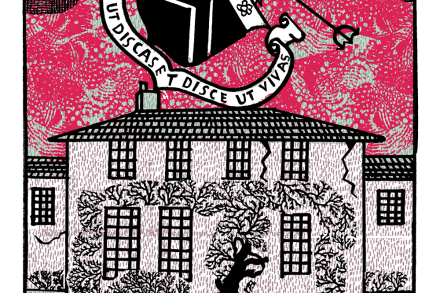
Woodcote House, an all-boys’ independent preparatory school of 76 pupils, closed its doors for the last time on 4 July last year. Asked by the editor to write an elegy for the school, I set about making enquiries. Many ran cold. The website had been shut down. Requests to friends who lived in Surrey fizzled out. Not a year after the closure of the 150-year-old institution, all that remained were digital embers: a sad Instagram post in which former parents and friends of the institution mourned its loss; an online Telegraph article detailing the headmaster’s final letter to parents in which he cited the ‘buffeting headwinds’ and a ‘drop in pupil numbers’ of the independent school sector in the aftermath of Labour’s VAT raid.

Britain’s guilty men, Labour’s reset & do people care about ICE more than Iran?

43 min listen

Who really runs Britain: the government, foreign courts or international lawyers? This question is at the heart of Michael Gove’s cover piece for the Spectator this week, analysing the role of those at the centre of Labour’s foreign policy. Attorney general Lord Hermer, national security adviser Jonathan Powell and internationally renowned barrister Philippe Sands may seek to uphold international law but is this approach outdated as we enter an era of hard power? For Gove, they are the three ‘guilty men’ who are undermining Britain’s national interest at the expense of a liberal international law that never really existed.

How we all got hooked on Calpol

At the present count, we have 14 syringes. Some are stuffed in kitchen drawers, but I have also found an alarming number under my eight-year-old daughter’s bed, suggesting heavy recreational use. But this isn’t a crack den. It’s simply your average British household with small children who take – need? – the family-favourite brand of paracetamol, Calpol. Formulated in 1959 and administered to children for nearly 70 years, Calpol is a part of British life. And this is set to continue: more than five tons of Calpol are sold every day and more than 12 million units each year. With more than 70 per cent of the market share, Calpol is the family narcotic of choice. Nothing conjures up childhood memories quite like that little brown bottle.

Class is melting on the ski slopes

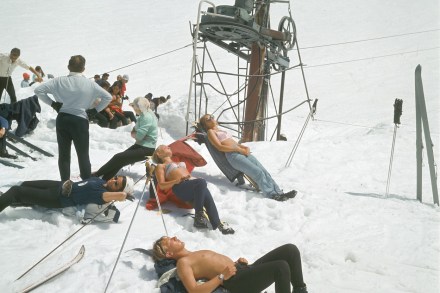
It’s that time of year again. No sooner have you recovered from Christmas than the posh start talking about their skiing jaunts planned for the February half-term. But let’s use the term posh advisedly, because – make no mistake – skiing is now anything but. Where once flinging yourself down the Cresta Run may have been a solid-gold toff signifier or ‘the Sloanest sport’, according to class anthropologist Peter York, now it simply means that you’re rich. No snow cannon pumping out snow on the low slopes can fool anyone. The fact that ski resorts are now melting before our eyes seems to be where this social morality tale ends. Skiing and British class have long been caught in a complicated embrace.

Long live the joint bank account!

My husband and I share a bank account, and I don’t care who knows it. This detail lumps us in with many Boomer couples who have typically shacked up together financially – for better or worse, richer or poorer – for the duration of their married life. As (geriatric) millennials, our joint bank account therefore renders us something of an anachronism, but we’re used to this by now. We are outdated and unfashionable in our approach to many things, including (but not limited to) childcare, housework and car management.

Children need nursery food

In news that will surprise no one, it emerges that vegan children are thinner, shorter and – dare we say it – sicklier than their counterparts. A recent study by the University of Florence details how children who follow a vegan or vegetarian diet are deficient in vitamins and minerals and consistently exhibit a lower BMI than their omnivorous peers. Although children who follow a vegetarian diet consume more fibre, iron, folate, vitamin C and magnesium than omnivores, the only way for plant-based children to grow healthily is with a carefully planned regimen of supplementation – think pills with your brekker every day until you leave home.

Country drivers are the real menace this Christmas

Driving home for Christmas? If you live in London you might well be a menace, according to research published by insurer NFU Mutual. Its survey of 2,000 motorists found that 38 per cent of those from the capital had been in a crash on a country road, compared with 23 per cent of the general population. Cocky Londoners are, according to the survey, the most likely to consider themselves ready to drive on country roads as soon as they gingerly reverse out of the DVLA test centre with their new licence – with some 75 per cent declaring that they were raring to go for a spin down some country lanes.  Since moving from London to the country, the most dangerous drivers I know are those that live here Really, they should know better.

How to cater for the dreaded Ozempic Christmas guest

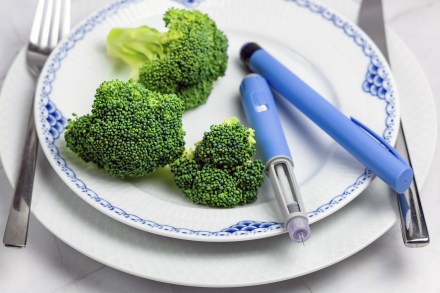
A close relation of mine is taking Ozempic. I shan’t name them or give anything else away other than to say this: they are set to ruin our Christmas lunch. They know it, and we know it. Welcome to British Yuletide 2025 – a country where more than 1.5 million people are estimated to be using GLP-1 agonists such as Ozempic, Mounjaro and Wegovy, with the vast majority (90 per cent) obtaining the drugs privately. NHS analysis of Ozempic hotspots reveals Leicester, Thurrock in Essex and the Wirral to be where users congregate. Clearly, they haven’t done an analysis of private users in Oxfordshire where I live.  This being so, we are locked in a curiously modern etiquette conundrum.

The agony of the village Christmas drinks party

Sometime in mid-October, my husband and I begin our annual deliberation: should we host a village Christmas drinks party? The conversation is almost invariably instigated by my charming husband who, mindful of all the invitations we have shamefully yet to reciprocate, feels that we ‘ought to do it this year, at least’. Almost invariably, I am the voice of dissent.  The arguments I give against are motivated by two competing – but not entirely dissimilar – emotions: vanity and concern. Vanity because I worry that my house is neither big enough nor grand enough for the sort of event I have in mind (think something along the lines of a reception at St James’s Palace, complete with hot and cold running staff and Old Masters jammed on to every wall).

The Sloane Ranger is in dire straits

Every few years, an obituary for the Sloane Ranger appears. In 2015, the Telegraph proclaimed their death. In 2022, Peter York himself, co-author of The Official Sloane Ranger Handbook, wrote a devastating piece in the Oldie on the ‘End of the Sloane Age’. In it, he cast existential doubt on the species altogether: ‘By 2021, there seemed to be every possible shade of Sloane around in London. But were they really Sloanes at all? It looked as if the only way for a Sloane to succeed was to UnSloane themselves.’  You might think that if York himself had called time, then the death knell must have well and truly sounded. But no.

How to live gracefully in a ‘granny annexe’

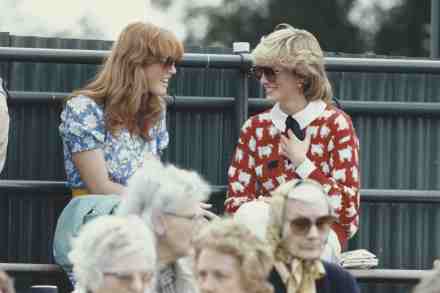
There comes a time in every Boomer Granny’s life when she must consider the ‘granny annexe’ as a viable demesne. For Sarah Ferguson, that time has come. Disgraced, broke and soon to be booted out of Royal Lodge, Fergie is reportedly considering her daughter Princess Beatrice’s Cotswold ‘cowshed’ as her next billet. And while this is not the monstrous wedding-cake mansion that is Royal Lodge, it is still apparently a des res, with neighbours in the unnamed Cotswold village claiming that the property has recently had a refurb. Fergie can no doubt expect an open-plan kitchenette in Edward Bulmer hues, a fair few Pooky lampshades and a Loaf bed in the lead-on bedroom.

The Mansion Tax trap

All I seem to do these days is stand in the school car park having anguished, if largely pointless chats: the Mansion Tax chat. But let’s call it the Mansion Tax Mumble, since none of us seem willing to disclose the actual sum we paid for our houses. Soon we may not have to, since if your house is worth more than £2 million it will become perfectly obvious: you may never move again. It may even become the ultimate status symbol. Anyone planning to sell a house at £2.1 or 2.2 million will have to forget it since no estate agent will bother; no viewings, no clicks, no calls. All you can expect is an apologetic, spivvy estate agent from Savills to tell you that the market is ‘sluggish’ before refusing to take your calls.

Labour’s eco-towns threaten our heritage

‘He leaped the fence, and saw that all nature was a garden’. So goes the famous Horace Walpole quote about William Kent, the 18th-century landscape designer who saw the garden and its surrounding views as single and unified. Were he alive today, Kent might very soon leap over the ha-ha he designed at the Grade I-listed Rousham House in Oxfordshire and tumble head-first into one of Labour’s new eco-town developments. His breeches rumpled, Kent might observe with some sadness that the coherence of his design is no more. Built in 1635 by Sir Robert Dormer, Rousham continues to be occupied by his descendants Charles and Angela Cottrell-Dormer.

Children should be banned from pubs

Before I begin, let me say this: I like children. To my amazement, I even have two of my own. But do I think they should be allowed in pubs? Absolutely not. Increasingly, this is the view taken by London’s publicans, some of whom have decided to introduce a ban on children in pubs after 7 p.m. Egil Johansen, owner of the Kenton pub in Hackney – which operates a 5 p.m. curfew on children – was quoted yesterday lambasting ‘entitled parents’ who ‘come in, sit down, drink and don’t care what their children are doing’. Other London pubs are reported to be considering banning children altogether. The William the Fourth pub in Leyton will now operate a 7 p.m. curfew for children, along with the Nags Head in Walthamstow.

Long live the yummy mummy

Yummy mummies everywhere, put your Veja trainers and frill-collar shirts away, because last week the Times issued a stinging broadside. Being labelled a ‘yummy mummy’ is apparently now so derogatory as to be an ‘almost cancellable offence’. The Yummy is dead, the headline declared, while my phone blew up like the fourth reactor at Chernobyl as Yummies far and wide forwarded me the article. ‘We are not dead!’ many fulminated, while others were more concise: ‘That’s just bollocks; I’ve never worn barrel jeans in my life.

The scourge of parcel theft sums up modern Britain

‘We’re sorry we missed you; your delivery is scheduled for tomorrow’ the email reads. Another day, another bungled parcel delivery from Evri, the 21st Century equivalent of the hapless postman. Except posties have a certain charm and Evri and its competitors – Yodel, DPD, DHL, FedEx et al. – most certainly do not. If you have ever received three text messages and two emails in the space of four hours to tell you when your parcel will be delivered only for them to come when you are out walking the dogs, you will, like me, long for simpler times.  Why, as a nation, have we fallen prey to daylight robbery?

Airlines are finally making an effort

Economy fliers everywhere, rejoice! After a long stint of what can only be described as tight-fisted meanness, British Airways and other short-haul carriers including Virgin Atlantic have started to compete on service again. The trolley-dolly is officially back. Now, once you are (semi) comfortably seated in economy and cruising at altitude, you will be offered tea or coffee and maybe even a biscuit. Airlines have long competed in a race to the bottom on price but are undergoing something of a volte face. This new customer service strategy is driven by competition from the state-subsidised airlines in Asia and the Gulf. This can only be good news for those of us who fly economy but believe that we belong in another part of the plane. I include myself in this number.