Anthony Horowitz

I always defended Michael Gove. Then I met him | 30 June 2016

From our UK edition

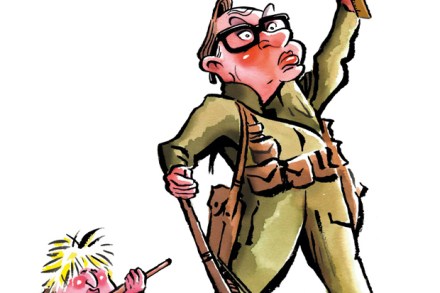
This piece first appeared in The Spectator on 15 March 2014.  A few weeks ago, I was a guest at a huge tea party for children’s authors, publishers and commentators at the South Bank, but the atmosphere, over the cupcakes and finger sandwiches, was decidedly frosty. There were three keynote speakers and their speeches all targeted a man so vile and destructive that the audience visibly recoiled every time his name was mentioned. He was, of course, Michael Gove — and I wasn’t sure I should tell anyone that I had always rather admired him and, moreover, was about to interview him for this magazine. It might be better to keep quiet in much the same way that Vidkun Quisling would have been well advised not to mention his wartime visits to Berlin.
Books will survive the age of the Kindle

From our UK edition

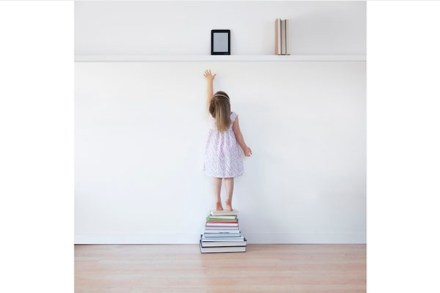
The Kindle doesn't seem to be doing too well. According to Waterstones, sales of the e-reader have virtually disappeared, while in America, the Nook is losing $70 million a year. I’m not sure whether this is something to mourn or to celebrate; a triumph of bibliophilia over the new technology or the loss of an opportunity to promote reading. My old Kindle is useful on planes, but the technology is actually quite clumsy: the pages sometimes refuse to swipe and I’ve never quite got used to finding my place at ‘location 15,597’ or wherever. Anyway, I’ve always believed that books have an aesthetic quality, that they are more than the sum of their contents.

London Notebook | 10 December 2015

From our UK edition

I’ve spent much of the autumn and winter shooting my new TV series for BBC1. New Blood looks at the so-called ‘Y’ generation and focuses on two 25-year-olds who fight crime but who spend as much time worrying about their university loans, finding somewhere to live, arguing with each other and trying to kick-start their careers. It’s been fun watching our two young stars — Mark Strepan and Ben Tavassoli, watch those names — grow into the parts and I’ve thrown everything at them. They’ve cycled and run miles, been shot at, drugged, kidnapped, drenched, tortured and blown up. They’ve jumped off the roof of a hotel, escaped from a burning car and fought naked in a Turkish hammam. To their credit, they’ve never once complained . . .

What’s behind the Boris Johnson show?

From our UK edition

Coming in from the pouring rain, I make my way to the office on the eighth floor of City Hall. With its curving windows, many books and bust of Pericles tucked away in a corner, it reminds me both of a classroom and the cockpit of a spacecraft. Its occupant is waiting for me, looking a little crumpled but less dishevelled than I had expected. He greets me very pleasantly but this is what I’m thinking. Here is the most famous person I have ever interviewed. In his own way, he is almost as iconic as the Queen or Churchill, the nodding dog in those insurance commercials. He is Boris, one of a tiny handful of politicians/celebrities instantly known by their first name.

Anthony Horowitz’s diary: Keeping James Bond’s secrets for the Smersh of publishing

From our UK edition

It was quite fun being named as the new writer of 007 — although actually I’d make a lousy spy. As my family knows, I’m hopeless at keeping secrets and I’ve found it almost impossible hanging on to this one for the past few months. Even now I’m forbidden to reveal the title, the story, the date it takes place or any of the characters… and I’ll probably get into trouble even for writing this. Believe me, Orion Books and their legal department are more sinister than Smersh. In fact I did quite well and only dropped one clue to someone who follows me on Twitter. He asked me what my big secret was and I told him the answer was oobvious. As I hoped, he thought it was a typing error.

Anthony Horowitz’s Diary: Dinner with Saddam, anyone?

From our UK edition

I have written a play, but a month after it was sent to half a dozen theatres, I have heard nothing. Either they’re being slow or they’re so shocked that they cannot bring themselves to respond. The play is called Dinner With Saddam and takes place in Baghdad on the evening of the Allied bombardment. It’s a comedy. Is it even possible, I wonder, for an English writer to portray an Arab family in a humorous way without laying himself open to charges of racism? And when all things are considered, was it good or bad timing to send the play out just one day before the Isis forces launched their first bloody attack? But I cannot see any way to write about the horror of Iraq except through comedy.

I always defended Michael Gove. Then I met him

From our UK edition

[audioplayer src="http://traffic.libsyn.com/spectator/TheViewFrom22_13_March_2014_v4.mp3" title="Toby Young and Fraser Nelson discuss Michael Gove's personality and the attacks from all sides"] Listen [/audioplayer]A few weeks ago, I was a guest at a huge tea party for children’s authors, publishers and commentators at the South Bank, but the atmosphere, over the cupcakes and finger sandwiches, was decidedly frosty. There were three keynote speakers and their speeches all targeted a man so vile and destructive that the audience visibly recoiled every time his name was mentioned. He was, of course, Michael Gove — and I wasn’t sure I should tell anyone that I had always rather admired him and, moreover, was about to interview him for this magazine.

Anthony Horowitz’s notebook: Have our schools lost all faith in culture?

From our UK edition

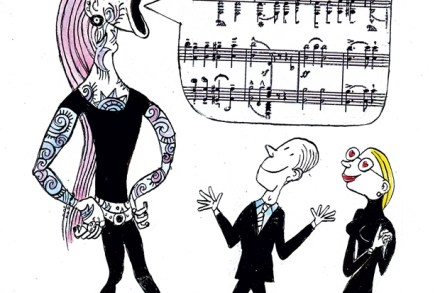
Sir Peter Maxwell Davies, the Master of the Queen’s Music, recently wrote about the almost total ignorance of young people when it comes to classical music, but I think he was wrong when he worried that Mozart and Beethoven were becoming ‘the preserve of the better off’. The truth is that if there’s a lack of interest in the classics, it crosses all classes and income brackets. Not so long ago, I had dinner with the sixth form of one of our leading public schools. I asked them if they could name one opera by Verdi. This was met by total silence. All right, I said, who can name any opera at all? Another long silence — until, at last, the head boy put up his hand. ‘How about Phantom of the Opera?

Anthony Horowitz’s diary: graffiti, Hiroshima and the next series of Foyle’s War

From our UK edition

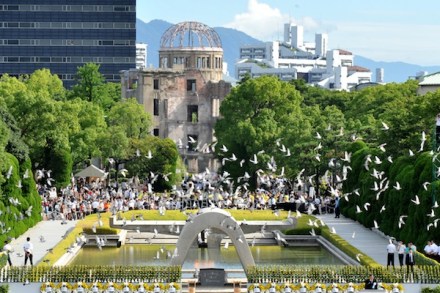
It was a perfect spring day in Hiroshima last week. I was there for my 25th wedding anniversary, which may sound odd, but my wife and I both work on Foyle’s War, which is now set in the atomic age, so it seemed appropriate. We strolled together around the A-Bomb Dome, the twisted, iconic ruin that is all that is left of the old city, then entered the Peace Memorial Museum, built in 1955, the year I was born. I found the whole experience incredibly moving: the child’s bike dug out of the ruins, the watch that had stopped at 8.15, the piece of wall that still carries the ‘ghost’ of the man who was sitting against it when the bomb fell.

…to the other

From our UK edition

Here’s the paradox. By any standards, Arthur Conan Doyle was an extraordinary man; a doctor, a politician, a keen sportsman (he once took the wicket of W.G. Grace and he was skiing almost before the word was invented), a social campaigner, a spiritualist and of course a very great writer, not just of detective stories but history, horror and even poetry. And yet the slate of his life was wiped almost entirely clean by his single, greatest creation, Sherlock Holmes. Doyle himself was aware of it. ‘I am in the middle of the last Holmes story,’ he wrote to his mother in 1892. ‘After which the gentleman vanishes, never, never to reappear. I am weary of his name.’ It didn’t work, of course.

Kindles for kids

From our UK edition

‘How do we get children reading?’ the minister asked me, just a week after Michael Gove had got them reciting poetry, more or less by making it illegal for them not to. This was his number two, Nick Gibb, who had invited me to the Ministry of Education for a 40-minute chat. I’m not sure how impressed he was with my thoughts as I’ve heard nothing since, so it seems fair enough to share them with Spectator readers. Who knows? Maybe Mr Gibb is one of them. Politicians have a way of paying lip service to the subject of illiteracy because it is one of those issues that couldn’t be simpler. We want children to read because it’s good for them… right?

The trail

From our UK edition

A Christmas short story by Anthony Horowitz Illustrated by Carolyn Gowdy They were spending their first Christmas together in Antigua, Simon and Jane Maxwell, enjoying not just a holiday but a honeymoon after a courtship that had taken them both by surprise. It was his second marriage, her first — and perhaps it was because she had waited so long that she had jumped into it so readily. Of course, she was a modern woman with a perfectly successful career… in publishing, as it happened. She might be single but she would never have described herself as ‘on the shelf’. It wasn’t as if she kept cats or anything dreadful like that.

Diary – 5 November 2011

From our UK edition

How nice to find myself at the front of The Spectator rather than the back, where I make occasional appearances, albeit under a pseudonym, next to the crossword. I love these quirky, waste-of-time competitions, which at £25 for 150 words must make the contributors pro rata among the highest paid in the magazine. It’s a shame, though, that the same four or five people seem to win all the time. What else do they do with their lives apart from construct haikus about literary figures or short stories without using the letter ‘e’? Who are Basil Ransome-Davis, Noel Petty and Bill Greenwell? I have a feeling I was reading their entries in Punch when I was about eight years old.