Anthony Browne

Anthony Browne is a former economics correspondent at the BBC, and former Conservative government minister

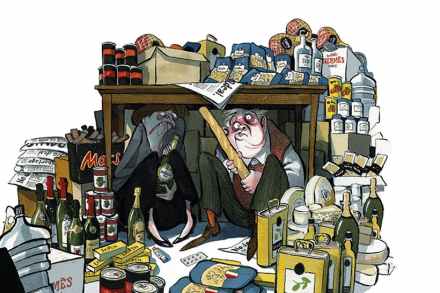
Coronavirus panic buyers should calm down

From our UK edition

It is a sign of our extraordinary times that the main trade association for shops – the British Retail Consortium – is sending out an urgent message to customers: “buy less”. More specifically, they have urged people not to buy more than they need. The national panic buying and stockpiling has emptied shelves in supermarkets across the country, and has brought out the worst in a few people. One relative said he saw a man clear a supermarket shelf of pasta into his shopping trolley, and an old lady asked if she could just have one packet to eat, and he said no. It makes the blood boil. It has brought out the best in others, with community groups across the country mobilising to help make sure vulnerable people can get food and supplies. They are the heroes.

Heidi Allen’s confusing political odyssey

From our UK edition

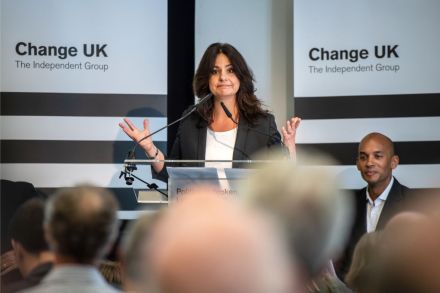
Update: Heidi Allen has announced that she will no longer stand at the next election. This weekend, Anthony Browne wrote about her confusing political odyssey: As I pound the streets of South Cambridgeshire where I am the Conservative candidate, the most common reaction I get from voters is “How did that happen?”. (That, at least, is an edited version to keep things family-friendly for Spectator readers). It is usually accompanied by a liberal dosage of decidedly unparliamentary language and the sort of words that if I repeated would lead to me being accused of inflaming passions in politics.

Would no-deal Brexit be a disaster? Probably not – and here’s why

From our UK edition

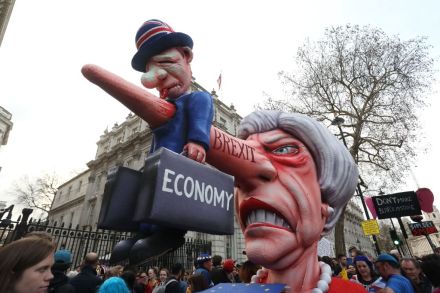
How bad would a no-deal Brexit really be? This is now perhaps the most important question in politics, and the one provoking greatest disagreement. The answer will help decide whether parliament allows Brexit to happen, and whether Tory MPs bring down their own government. If they think calamity would follow, patriotic rebels might risk a general election to stop the Tories. But what if it would not be so bad? And is there any way of finding out? Almost everyone accepts it will cause problems, but views range from manageable to ‘national suicide’. It is difficult to predict complex events without historic precedent, but there are other reasons for the divergent views. The first is that there is not a single ‘no deal’, but a whole spectrum.

Who’s afraid of no deal?

From our UK edition

How bad would a no-deal Brexit really be? This is now perhaps the most important question in politics, and the one provoking greatest disagreement. The answer will help decide whether parliament allows Brexit to happen, and whether Tory MPs bring down their own government. If they think calamity would follow, patriotic rebels might risk a general election to stop the Tories. But what if it would not be so bad? And is there any way of finding out? Almost everyone accepts it will cause problems, but views range from manageable to ‘national suicide’. It is difficult to predict complex events without historic precedent, but there are other reasons for the divergent views. The first is that there is not a single ‘no deal’, but a whole spectrum.

My night at the Mansion House climate protest

From our UK edition

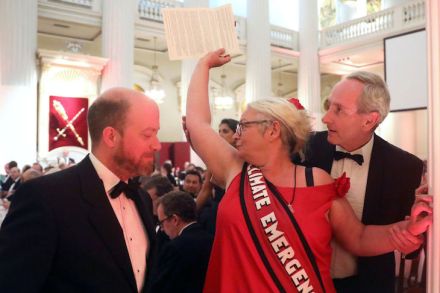
There we were in the gold embossed classical elegance of the Egyptian Room of Mansion House, all dressed up in black tie, politely listening to the Chancellor’s swan song – his last Mansion House speech – when the kerfuffle started at the back. Women in red dresses started pouring in from the rear doors with men in dinner jackets and bow ties trying unsuccessfully to block their path. The protestors’ shouts grew louder, and eventually drowned out the Chancellor, who sat down. There were no police that I could see, and the light touch Mansion House security were clearly overwhelmed by the numbers.

Brexit need not tear the Tories apart. Here’s why

From our UK edition

The political dysfunction in Parliament seems to be rubbing off on much of our commentariat. Many have concluded that the whole political system is about to undergo an earthquake as seismic and landscape-changing as anything that mere plate tectonics can conjure up. The main political parties will no longer be Labour and Tory, defined by being working class or middle class, big state or little state, socialist or free enterprise. Instead, goes the new thinking, there will be two main parties defined by being anti-Brexit and pro-Brexit (which may or may not be Labour and Conservative). Now it is easy to see why people might start to claim this. There is plenty of cause for concern right now. But it shows a fundamental misunderstanding of voter motivation.

The problem with backing out of Brexit

From our UK edition

Are we suffering a national humiliation? There has been a lot of commentary – not least from elements of the Remain-supporting press – about how the UK has become an international laughing stock. Papers in other countries have joined in the chuckling. Recent events have not been good for our reputation for stability and sanity. However, the one thing that the UK could do to destroy what international credibility it has left, is to change its mind on Brexit, and go back to the EU asking whether we can stay after all. Our national humiliation would be complete. We would be the employee who stormed out publicly, insisting to everyone that they could make it on their own, only to beg their employer to take them back.

Why Britain decided to leave the EU – but other countries haven’t

From our UK edition

Why us? Why is the UK the first – and only – country to decide to leave the EU? Greenland, Algeria (when it was part of the French empire) and the French Caribbean island of St Barthélemy have all been in the EU and are no more, but the UK is the first full member country to hold a referendum and decide ‘enough’. Why us, and not one of the many other members nursing doubts about the EU? There are many reasons, none of which are to do with us being more inward looking or racist. We are an island, but arguably the most outward looking EU nation. We do have issues with racism, but various studies have concluded we are among the least racist countries in Europe.

Why Britain decided to leave the EU – but other countries haven’t | 29 December 2018

From our UK edition

Why us? Why is the UK the first – and only – country to decide to leave the EU? Greenland, Algeria (when it was part of the French empire) and the French Caribbean island of St Barthélemy have all been in the EU and are no more, but the UK is the first full member country to hold a referendum and decide ‘enough’. Why us, and not one of the many other members nursing doubts about the EU? There are many reasons, none of which are to do with us being more inward looking or racist. We are an island, but arguably the most outward looking EU nation. We do have issues with racism, but various studies have concluded we are among the least racist countries in Europe.

A no deal Brexit would be the EU’s fault

From our UK edition

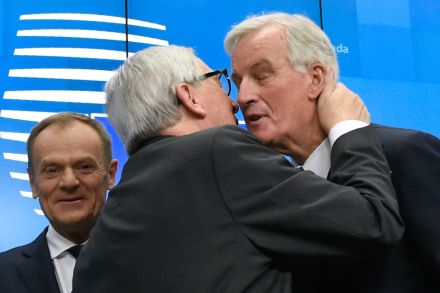
I stood next to Jean Claude-Juncker, then president of the European Council and prime minister of Luxembourg, when news flashed up on the TV screens of the astonishing rejection by French voters of the draft European Constitution in their 2005 referendum. He could have responded in so many ways, to try to understand why the voters in traditionally one of Europe’s most Europhile countries emphatically rejected further EU integration. But his immediate response, without drawing breath, was: “They will just have to vote again.” In fact, the French voters weren’t trusted to give the right answer second time around, and so the treaty was pushed through the French parliament instead.

Why Leave would win next time round

From our UK edition

Like everyone nowadays, I can predict everything except the future. But if MPs reject the government’s Withdrawal Agreement (whenever it ends up being put before the Commons), there is one outcome that many are campaigning for: a second referendum. It is particularly supported by Remainers, who see it as the only democratically legitimate way to overturn the result of the first referendum, and so provide an exit from Brexit. From former prime ministers down, the cries for a so-called 'People’s Vote' are becoming deafening. The arguments in favour can be persuasive: we now know (sort of) on what terms we will leave the EU, we know more about Brexit, the public mood is changing: give the people a final say.

Why the Norway model wouldn’t work for Britain

From our UK edition

In the corridors of Westminster and the salons of some remainers, there is a lot of excited chatter about the “Norway option”. This would involve being a member of the EEA and single market, but not of the EU. Depending on who is pushing, Norway is presented as either a temporary or permanent alternative to Theresa May's troubled deal. But there are problems with this quick fix. The well discussed issue that being in the EEA doesn’t end freedom of movement is one; another is the fact that the Norway option doesn't end EU budget contributions. But more fundamentally, few appreciate just how a regime that (sort of) suits Norway is completely unsuitable for the UK.

Breaking up is always hard to do and Brexit is no different

From our UK edition

It is difficult to read the daily deluge of headlines on our Brexit negotiations without a creeping sense of despair. We crave certainty but have confusion. We want unity of purpose but have division. The EU has proposed the United Kingdom becomes disunited. Some Remainers have been emboldened to campaign to stop Brexit. The calls for a second referendum to overturn the results of the first are getting daily louder. Britain is isolated in Europe, fearing humiliation — or worse. This is our darkest hour. But actually, we should not despair. Things are not unexpectedly difficult. There was no scenario where the Brexit negotiations would be straightforward. The UK and EU27 have been becoming progressively more integrated over the past four decades.

17 reasons to love Brexit

From our UK edition

‘But what are you going to do with the powers?’ the minister asked, while I negotiated devolution of powers to London when Boris was mayor. The government wouldn’t grant powers unless we explained how we would use them. And that is what is missing in the Brexit non-debate. We are ‘taking back control’ — but we haven’t really thought what we will do with that control once we have it. It is true there has been discussion of trade deals, transforming the Common Agricultural Policy and the colour of our passports. But if that was all we could do, even most Brexiteers wouldn’t have considered it worth it. So, what could we do once we Brexit? Well actually, given how extensive EU law is, an awful lot.

Plan overboard!

From our UK edition

The euro crisis has prompted national parliaments across the continent to dump their Euro-federalist baggage It was the political equivalent of Mother Teresa announcing that she had converted to agnosticism. Bart De Wever, the leader of Belgium’s largest political party, was such a Euro-federalist zealot that a year ago he declared he wanted his country to ‘evaporate’ into the beloved EU. But that was so 2010. A few weeks ago he shared a platform with the Czech president, Vaclav Klaus, Europe’s most Eurosceptic head of state, and declared: ‘I am a Eurorealist.’ To walk the walk, De Wever’s party, the N-VA, rejected a Brussels proposal for a new Euro-tax, an act as out of character for Belgian politicians as refusing a Trappist ale.

Britain needs US-style think tanks to counter the Left’s grip on universities

From our UK edition

It wasn’t the television studios, or the boss’s office the size of an Olympic swimming pool. It wasn’t the auditorium for 200 people, or the ten-storey-high purpose-built building with a two-storey atrium. It wasn’t the overseas offices in Oman and Beijing, the staff of 400, the oak-panelled corridors, or the oil paintings lining the walls numerous enough to set up an art gallery. It wasn’t the $300 million endowment, or the ability to raise $2.3 million from a single fundraising dinner (with tables going for $75,000 a time).

Politics | 8 September 2007

From our UK edition

It’s not hoodies. It’s not single mums. It’s not even jittery City whizz kids down to their last ten million. No, it’s lefties we should be furrowing our collective brow about. We shouldn’t worry about the threat they pose to society (even though successful countries can survive anything except civil war and socialism). It’s the fact that they appear to be suffering a crisis of faith. It is a crisis which disproves the claim that while the Right won the economic arguments, the Left has at least won the social ones. And it helps explain why our Labour Prime Minister demanded ‘British workers for British jobs.’ And why the question should be not, ‘Why is David Cameron lurching to the right?’, but, ‘Why is everybody?

As Livingstone reverts to type, the Tories look at London with justified ambition

From our UK edition

Say what you like about Ken Livingstone, you can’t accuse him of failing to spot a political opportunity. When the position of mayor of London was created in 2000, other possible contenders turned up their noses, saying its powers, finances and staff were so limited it was a ‘non-job’. But Livingstone — please don’t call him Ken, it turns him into a folk icon — realised it was just a starting point. He realised that if the London mayor — who has the largest directly electoral mandate of any politician in Britain — behaves himself, then it would be impossible for MPs in that English gothic palace a mile or so down the Thames from City Hall to resist giving him new powers. And on Tuesday night, his strategy bore fruit.

Invasion of the New Europeans

From our UK edition

Europe is one of the most divisive issues in British politics. But on one thing most Europhiles and Eurosceptics agree: that enlargement, letting those benighted former communist countries into the warm democracy-enhancing embrace of Brussels, was a good thing. Just about all respectable, right-thinking people feel that the UK should congratulate itself for opening its borders to Eastern European workers on 1 May 2004. And enlargement certainly has been a Good Thing for the affluent property-owning professionals, as Rod Liddle observed on these pages last week. Importing a servant class of nannies, plumbers and waiters means that people like me can enjoy the lifestyle of a Victorian gentleman that we so clearly deserve.

Brussels bites back

From our UK edition

Anthony Browne reports on the EU’s unabated lust for control of national policies, from law and order to universities, from biotechnology to tax Brussels It was perhaps inevitable that the crash in central London of Banana Republic Airlines Flight 101, which killed 453 people and created a swath of destruction across Islington, provoked Britain’s withdrawal from the EU. Few could understand how the judges in the European Court of Justice in Luxembourg had the power to overturn the secretary of state’s ban on the airline for its poor safety record, giving it the right to enter UK airspace.