Anne Chisholm

Jessica was the only Mitford worth taking seriously

From our UK edition

Can there really be any point in yet another fat book about one of the Mitford sisters? Their antics have been appearing in print since the late 1940s, when the eldest – clever, waspish Nancy – displayed their family eccentricities in her sparkling novel The Pursuit of Love. Since then, by a rough count, there
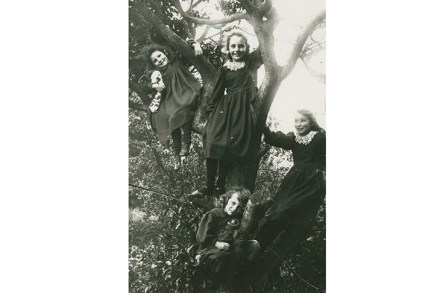
Born to be wild

From our UK edition

It was high time we had a proper look at the four beautiful, original Olivier sisters. Hitherto, with one exception, they have been seen in glimpses, playing marginal parts on the Bloomsbury stage after about 1910. The exception was the youngest, Noel, who all her life and since has been stuck with her invidious role

Mouldering hats and wedding veils

From our UK edition

In deciding to write a book about her forebears and herself, Juliet Nicolson follows in their footsteps. Given that her grandparents were Harold Nicolson and Vita Sackville-West, and her father was Nigel Nicolson, that they all wrote copiously about themselves, that Knole and Sissinghurst are stuffed with family records, and that she is herself a

Filling in the Bloomsbury puzzle

From our UK edition

In March 1923 a large birthday party was held in a studio in Bloomsbury. It is often assumed that the eponymous Group was habitually glum or intense; but there were a lot of parties. The artists were Vanessa Bell and Duncan Grant, and the birthday was David Garnett’s 31st. David (known as Bunny) was a

Germaine Greer’s mad, passionate quest to heal Australia

From our UK edition

Like an old woman in a fairy story, Germaine Greer, now in her late seventies, has taken to lurking in a forest. Always inclined to reinterpret the world through her own changing needs and perceptions, and to instruct the rest of us accordingly, she has now written a book of passionate didactic energy about her

An institution to love and cherish

From our UK edition

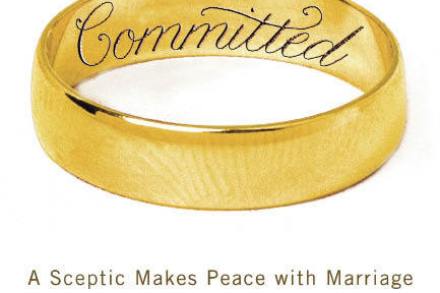
Books about marriage, like the battered old institution itself, come in and out of fashion with writers, readers and politicians, but never quite die away. These two, from the latest crop, are by women in early middle age, both experienced journalists with several books behind them; but Elizabeth Gilbert, a chirpy American describing herself as

Breakdowns, suicide attempts — and four great novels

From our UK edition

Among the clever young Australians who came over here in the 1960s to find themselves and make their mark, a number, as we all know, never went back. A few became household names — Germaine Greer, Barry Humphries, Clive James — and British cultural life owes them a great deal. Madeleine St John, the novelist

Almost English, by Charlotte Mendelson – review

From our UK edition

Novels about growing up have two great themes: loss of innocence and the forging of identity. With this sparky, sharp-eyed and  often painfully funny novel, her fourth,  Charlotte Mendelson (winner of the Somerset Maugham and John Llewellyn Rhys prizes and now on the Man Booker longlist) explores both through the story of a girl and

Truth and beauty

From our UK edition

Almost 20 years ago, Alice Munro, the Canadian genius of the short story, was interviewed by the Paris Review. She recalled a time when she was having trouble with her writing, and found herself looking round the ‘great literature’ on the shelves of the bookshop she was then running with her first husband as if

The serpent in the garden

From our UK edition

Loss of innocence happens to us all and is one of the great themes of literature. With The River, a novella first published in 1946 and now rightly republished by Virago, Rumer Godden gave us not only her best book (she wrote more than 60) but a small masterpiece, a near perfect account of how

What was it all for?

From our UK edition

What happens to a novelist who becomes the conscience of a nation? Nadine Gordimer, who is now 89 and whose writing career began in the 1940s, has represented the progressive white intelligentsia of South Africa through a large corpus of fiction and essays, exploring personal and political morality with passionate lucidity through the apartheid years

Irrepressible: The Life and Times of Jessica Mitford by Leslie Brody

From our UK edition

Has the Mitford saga delighted us long enough? Some 17 non-fiction books about the family, mostly by its own members, have now been published; the first, in 1960, was Jessica Mitford’s memoir Hons and Rebels,  and the latest is this biography. In between there have been four fat books of letters, five individual biographies (the

What did you do in the war, Mummy?

From our UK edition

By tradition, ‘What did you do in the war?’ is a question children address to Daddy, not to Mummy. By tradition, ‘What did you do in the war?’ is a question children address to Daddy, not to Mummy. In this ambitious, humane and absorbing book Virginia Nicholson moves Mummy firmly to the centre of the

A grief ago

From our UK edition

The cautionary slogan ‘less is more’ has never been the American writer Joyce Carol Oates’ watchword. The cautionary slogan ‘less is more’ has never been the American writer Joyce Carol Oates’ watchword. Over the last 40 years she has written a torrent of books — 115 at last count. Her prose is torrential too, and

Lessons for life

From our UK edition

All modern biographies, one could say, are books of secrets; certainly all biographers during the past four decades have felt entitled to ferret around in their subject’s private as well as public lives. All modern biographies, one could say, are books of secrets; certainly all biographers during the past four decades have felt entitled to

No love lost | 31 July 2010

From our UK edition

There is chick lit, or witless, ill-written, juvenile popular fiction, and then there is superior chick lit, which is smart and amusing and written for grown ups. Both these novels fall into the latter category, both are second books by well-regarded journalists and both are worth taking into the garden or on the plane this

Her own best invention

From our UK edition

Lesley Blanch, who died in 2007 aged almost 103, did not want this book written. Having spent her whole life spinning a web of romantic tales around herself, the last thing she needed was a patient, dogged writer checking up on her, unpicking the fibs and the fantasies and unlocking the skeletons from their cupboards.

Jim’s especial foibles

From our UK edition

As a young man in the 1970s Michael Bloch was the architectural historian and diarist James Lees- Milne’s last (if, we are assured, platonic) attachment, and later became his literary executor. As a young man in the 1970s Michael Bloch was the architectural historian and diarist James Lees- Milne’s last (if, we are assured, platonic)

Raising the last glass

From our UK edition

My Father’s Tears, by John Updike Although an air of valediction inevitably hovers over this collection of short stories, the last of John Updike’s more than 60 books and published in the wake of his death, it is in no way a depressing read. On the contrary: there is something exhilarating about finding him maintaining

The benefit of the doubt

From our UK edition

With her brilliant new book, Hilary Mantel has not just written a rich, absorbingly readable historical novel; she has made a significant shift in the way any of her readers interested in English history will henceforward think about Thomas Cromwell, the man at the heart of what the historian Geoffrey Elton, who first put him