Andro Linklater

Patience v. panache

From our UK edition

The square jaw and steely gaze are deceptive. In reality, next to a prima donna on the slide, no one is more vain and temperamental than a general on the climb. So much at least is clear from Peter Caddick-Adams’s intriguing study of generals Bernard Montgomery and Erwin Rommel. Each was assiduous in the celebrity skills of image-making and audience massage, and none more adept at stabbing rivals in the ribs and ascribing good luck to talent. Yet for all the froth, both succeeded in a trade whose yardstick of success, crushing an opponent to death or submission, cannot be faked.
‘I told them’

From our UK edition

No messenger bearing bad news can expect to be popular. But to be dis- believed as well adds a particularly bitter twist, since the messenger’s character can only be vindicated by proving the truth of his horrific message. That was Jan Karski’s fate. He was the Polish resistance fighter sent to London in 1942 to tell the world that the Jews in Poland were being exterminated. Not in their hundreds, not in their thousands, but in their millions.There would be none left, Karski reported, unless the Allies publicly promised a retaliation sufficiently terrible to halt the Nazis in their tracks.

Alone on a wide, wide sea

From our UK edition

It must be heaven to wake up inside the imagination of a mapmaker. No magic carpet could take you to such exotic places. Open an eye amidst the neural connections of the maker of the 14th-century Mappa Mundi, and you find yourself sharing a Jerusalem-centred earth with prowling hippogriffs and ravening anthropophagi. Stare sleepily from the frontal lobe of the compiler of Norton’s Star Atlas and you are teleported to the craters of the moon. Judith Schalansky has chosen to incubate the minds of people who map islands. Curled up behind their eyeballs, she has let herself be carried around the globe from Lonely island in the Arctic to Deception in the Antarctic. Although she travels like Jules Verne, she describes each lonely deceptive landfall like Jorge Luis Borges.

. . . and they did to us

From our UK edition

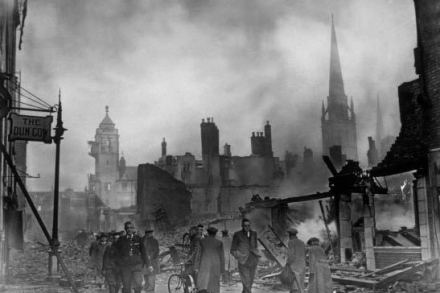
The craters are all filled in, the ruins replaced, and the last memories retold only in the whispery voices of the old. Apart from celebrating the resilience of our parents and grandparents 70 years ago, why remember the Blitz? It was triggered by the desire to retaliate, either Churchill’s to the random dropping of bombs on London in the summer of 1940 (heightened by the prior example of Nazi bombing of Guernica and Warsaw) or Hitler’s to the subsequent raid on Berlin. ‘This is a game at which two can play,’ he ranted on 4 September. ‘When they declare they will attack our cities in great measure, we will eradicate their cities.

Tried and tested

From our UK edition

In June 1964, when Nelson Mandela was sentenced to life imprisonment for acts of sabotage against the apartheid government of South Africa, he was, as photographs reveal, a burly, blackhaired man, with a handsome, pugnacious grin. By the time he was released in 1990, his hair was grey and his features gaunt. But his first speech as a free man described the same ideal of a democratic, multiracial South Africa that he had presented in his final address before being sentenced — ‘an ideal I hope to live for, but if needs be, an ideal for which I am prepared to die’.

Charming, cold and unreliable

From our UK edition

When you consider what a bloody mess the Houses of Lancaster and York made of the business, it is easy to see why, since the death of Edward the Confessor, the English have preferred to be ruled by foreigners. Normans, Angevins, Tudors, Stuarts, Hanoverians, anything to avoid having their own kind in charge. Arguably that great Welsh king, Henry VIII, was the last monarch to have personally directed the affairs of the nation, but Allan Massie has set out to show that Henry’s Scots successors, reigning over the larger realm of Britain, had a more pervasive influence. Descended from the high stewards of Scotland, the first Stewart (it was Mary Queen of Scots who Frenchified the spelling) to take the throne was Robert II, a grandson of Robert the Bruce, in 1371.

Triumph of the will

From our UK edition

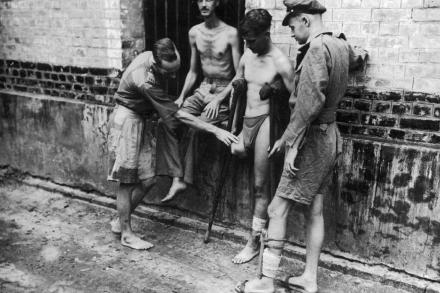
Alistair Urquhart describes himself as ‘a lucky man as well as an angry man’. Alistair Urquhart describes himself as ‘a lucky man as well as an angry man’. No one who reads his remarkable autobiography will doubt either the phenomenal extent of his good fortune or the extraordinary justification for his anger. Yet his story will be remembered for qualities that are universal rather than personal. At the age of 20, with a job as a warehouseman in Aberdeen, he was called up in 1939 for service in the Gordon Highlanders, and sent to Singapore.

The greatest rogue in Europe

From our UK edition

On 11 November 1743, the most sensational trial of the 18th century opened in the Four Courts in Dublin. The plaintiff, James Annesley, claimed that his uncle, Richard Annesley, the sixth earl of Anglesey, had robbed him of immense estates in England and Ireland worth £10,000 a year. The scale of the theft and the rank of the alleged thief would by themselves have made the case exceptional. According to Viscount Perceval who was present, it was ‘of greater importance than any tryall ever known in this or any other kingdom.’ But what really attracted attention was James Annesley’s allegation that in 1727, the year he became heir to the earldom, his uncle had had him kidnapped and shipped to America as an indentured servant, and thereby stolen the title.

When words were scarce

From our UK edition

Most of us are brought up not badly, but wrongly. Trained to the tenets of Mrs DoAsYou-WouldBeDoneBy, we are easily trampled underfoot by students of the Master DoItMyWay-OrBeDoneOver school. Consider the career of Field Marshal Bernard Montgomery as an example of the second method of upbringing. Mercilessly whipped and humiliated as a child, he grew up self-obsessed, wilful, arrogant, and it would seem without any redeeming personal qualities. Yet it was largely Monty’s egotistic drive that made him the most effective British general of the second world war, while more sympathetic commanders like Wavell and Alexander were relegated to the sidelines.

Lessons from the past

From our UK edition

Oh the relief of quantitative easing! Who could fail to welcome a fiscal laxative guaranteed to loosen the bankers’ constipated hold on credit? But before much more of the mixture is gulped down, it may be salutary to glance at the effect of the purgatives administered to ease economic bowels in the late 17th century. The credit crunch that afflicted the country in the 1690s produced results with which we are familiar. In the words of Lord Macaulay, ‘the great instrument of exchange became thoroughly deranged, all trade, all industry were smitten as with a palsy’.

Darkness at dawn

From our UK edition

D-Day: The Battle for Normandy, by Anthony Beevor The Forgotten Voices of D-Day, by Roderick Bailey, in association with the Imperial War Museum Sixty-five years ago the largest seaborne assault force in history was put ashore on the beaches of Normandy. Memory of the day is now confined to a diminishing number of great-grandfathers, but the sheer scale of the landing, its drama, and its pivotal importance in the war guarantee its enduring grip on people’s imaginations. Two generations have grown up with their own versions of what happened. The first learned about it, either directly from participants or through a cascade of memoirs from ageing commanders who portrayed it as the highpoint of a triumphal progression from El Alamein to the Rhine.

The Natures of Maps

From our UK edition

Is this map of birds’ migratory routes informative or deceptive? Does it create the impression that nature is flourishing when it is really in decay? In today’s golden age of cartography, when technology has lifted mapmaking to an unprecedented level of sophistication, The Natures of Maps wants to be a party-pooper. Maps, it declares, pretend to be objective when their information is really political and selective. It seems a rather obvious message. The prejudices of mapmakers have been apparent at least since the 14th century when the monkish creators of the Mappa Mundi placed Jerusalem at the centre of the world. This book is, however, aimed at geography students, and assumes a degree of gullibility not to be found among Spectator readers.

Freedom and houghmagandie

From our UK edition

The Bard: Robert Burns, A Biography, by Robert Crawford Robert Burns: A Biography, by Patrick Scott Hogg How to account for the phenomenon of Robert Burns? Not the man or his poetry, but the national icon, a Caledonian amalgam of Alexander Pushkin and Bob Marley? The process of idolisation began with the instant acclaim that greeted the publication of Burns’ first collection, Poems, Chiefly in the Scottish Dialect, in 1786. That it continues today in this the 250th anniversary of his birth is demonstrated by the publication of two new biographies. But to explain why is harder than it might seem. Logically Scotland and Burns should have been incompatible.

The devil’s work

From our UK edition

Timing is all. In 1969 Margaret Atwood’s An Edible Woman was published, and its iconic portrayal of women moulded into objects for male consumption caught the crest of the feminist wave and surfed into the shelves of required reading. Almost four decades on, Payback, her meditation on the nature of debt, appears just as the world is freefalling into an economic trough. Has she given voice to the zeitgeist again? If so, we are entering a world of stern reciprocity — as you sow so shall you reap — in place of the pickpocket exuberance of free-market economics. The debt on Atwood’s mind is always double-headed.

Nine-year wonder

From our UK edition

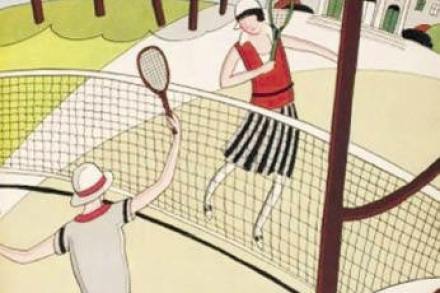
The Chicagoan: A Lost Magazine of the Jazz Age, edited by Neil Harris Think quiz. ‘A crescent-shaped town, 26 miles by 15, along a great lake. An unchallenged murder record — a splendid university — hobo capital to the country — and the finest of grand opera. Altogether the most zestful spectacle on this earth.’ Where are we? In case of doubt, the city’s short-lived house magazine spelled out the answer in 48 point type, ‘Chi - CA - go.’ Actually the emphasis should have been on the Chic, because as demonstrated by this elegant collection of covers, illustrations and stories from The Chicagoan, in its heyday Chicago was the most stylish, exciting and quintessentially American of all the cities that encircle the United States landmass.

Money? It’s only human

From our UK edition

The Ascent of Money, by Niall Fergusson New from Niall Ferguson: the book of the film, or rather, of the series. At any moment now his financial history of the world will take to the small screen and emerge on Channel Four. Programmers and publishers have learned to synchronise these things. It will be a brave effort, all the same, because finance is not exactly popular just now and has always been unresponsive to film. When Bank Rate comes down, television news producers fall back on a stock picture of the Bank of England, looking like a cheese-mould with a graph imposed on it. Ferguson helps them out by setting scenes.

Perhaps the greatest?

From our UK edition

Alasdair Gray: A Secretary’s Biography, by Rodge Glass It would be easier to write a biography of Alasdair Gray if he were Chinese. There would be no need to divide image from word, myth-making from realism, truth from ideology. He would be reverentially portrayed as a master of pictography conveying the struggle for harmony between the inner and outer essences of man and society. And the great artist himself would live decorously on a large government pension befitting a social treasure.

A little goes a long way

From our UK edition

No book can be entirely bad that tells you a zebra is basically black with up to 250 white stripes, that Princess Diana’s colonic irrigation treatment required ten gallons of water or that the height of the Eiffel Tower grows seven inches during a normal summer (although in this one it has probably shrunk). So many of life’s minor pleasures are contained in the ivvy words — frivolity, privies, rivers, trivets, vivacity, privilege, to name an immediate few — it is no surprise to find an entire book devoted to triviality. A shelf might seem about right for such a subject.

Inspirational individuals

From our UK edition

My 85-year-old neighbour bows to passing magpies, casts spells, and gleefully claims to be ‘a mad old bat’. Eccentric you might say. But she also speaks Mandarin Chinese and sports on her desk a photograph of herself in 1945 carrying a rifle on a hillside above Kunming in southern China where she helped SOE run one of the most successful blackmarket operations of the second world war. So it would be truer to say that she has never cared much for being one of the crowd. Egregious is really the word. Reading this oral history of the Special Operations Executive, it is clear that being egregious was the one quality that everyone who served in SOE had to possess. Almost all other forms of warfare involved merging individuality into the unit.

Princes, patriots and party-givers

From our UK edition

In the midst of a passage devoted to the transcendent qualities of Henry V — ‘a true hero [with] a strong claim to be rated the greatest of all English monarchs’ — Paul Johnson abruptly drops in an aside that begins: Once when I was giving a history lesson to the late Princess Diana, we discussed the predicament of a person born to be king. She said she had found [her husband] utterly selfish and self-centred because he had been spoiled from the cradle on. I pointed out that this was the common fate of heirs apparent. Having blithely swung an axe-blow to the character of the Prince of Wales, the institution of royalty, and his own pretensions to modesty, he lurches back to an extravagant encomium of Henry’s kingly virtues.