Andrew Watts

A second home in Cornwall is nothing to be proud of

From our UK edition

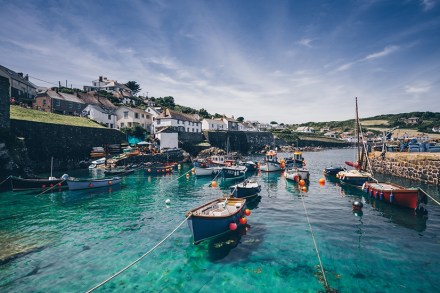
Last week there was a public toilet for sale on the coast of Cornwall. The Kent-based auctioneer called it ‘an exciting and rare opportunity’, although its video tour of the property did not even undo the padlock on the security door. It was on the market for £20,000, which was a bargain — the last exciting and rare toilet block to be auctioned in Cornwall went for five times its asking price, even though it didn’t have as nice a view. It did, however, have windows. It’s undeniable that the property market in Cornwall is overheating. The backlash to the toilet auction was such that it was withdrawn from sale, but house prices in parts of the county are increasing at double the national average.

The Covid trap: will society ever open up again?

From our UK edition

44 min listen

Governments around the world have adopted extraordinary powers to deal with coronavirus – but could they end up doing more damage than good? (01:00) Next, is the best way to deal with the threat of Scottish secession to negotiate a hypothetical Scottish exit deal? (16:04) And finally, are Britain's graveyards suffering a spate of indecent behaviour? (31:38) The Spectator's deputy political editor Katy Balls is joined by historian Johan Norberg and the Wall Street Journal's Gerard Baker; The Spectator's political editor James Forsyth and Scotland editor Alex Massie; and journalist Andrew Watts alongside the Revd Fergus Butler-Gallie. Produced by Gus Carter, Max Jeffery and Sam Russell.

Why people have sex in graveyards

From our UK edition

The oldest churchyard in Torquay is being used by people openly having sex and sunbathing nude in broad daylight. This was how it was reported in the local newspaper, of course — ‘broad daylight’ is a phrase that is only ever used by subeditors trying to make things sound more depraved. (Who sunbathes except in broad daylight?) It was not the first such report since the pandemic began: in June, a couple were witnessed coupling in Brandwood Cemetery in Kings Heath, Birmingham; police were called amid concerns over public indecency, and fears that they may not even have been from the same household. A few weeks earlier, another pairing was witnessed in the churchyard of St Mary Magdalene, Sutton-in-Ashfield.

Audio Reads: Douglas Murray, Paul Dolan, and Andrew Watts

From our UK edition

19 min listen

On this week's Audio Reads, Douglas Murray advises Labour to get a new attack line, now that the Conservatives have become the party of the NHS. Professor Paul Dolan, a behavioural scientist at the LSE, ponders what would have happened had the pandemic started in Sweden, rather than China. And Andrew Watts says - if Brexit talks are scuppered because of fish, shouldn't Brits at least eat more of it?

Back to Brexit: will the transition be extended?

From our UK edition

36 min listen

Brexit is back on the agenda, but this time, talks are even more difficult than the last phase (00:45). Plus, what do we understand about immunity, and how should that inform the lockdown policy (16:45)? And for a nation that bangs on about fish, do we eat enough of it (28:00)?

Britain’s strange aversion to seafood

From our UK edition

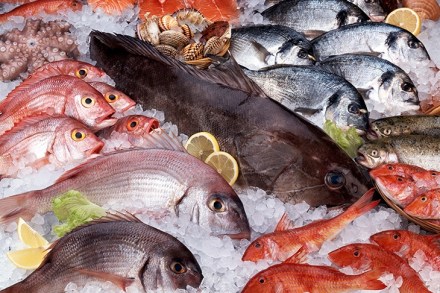
Last week’s Brexit negotiations, conducted by video conference, failed to come to an agreement on fisheries. Michel Barnier, the EU negotiator (and former French fisheries minister), insisted that continued European access to British territorial waters was a prerequisite of any deal, and David Frost, his British counterpart, replied that this was ‘incompatible with our status as an independent coastal state’. If there is going to be no deal as a result of fishing, as seems increasingly probable, we are going to have a lot more fish to eat, but we’re also going to have to eat a lot more fish. For an island surrounded by fish, Britain has never really been keen on seafood.

Will Brexit make Valentine’s Day flowers less expensive?

From our UK edition

Any florist will recognise the look of furtive shame, the shifty hangdog look which announces that an Englishman is about to buy flowers. Some of them try to make it easier for you. I used to go to a splendid florist in Ealing who talked to me about rugby for no less than five minutes each visit. But most florists are more interested in flowers than people, and let it show. For some reason, you’re never allowed to write the card yourself. You have to dictate it, endearments and private jokes and all, while a couple of women who remind you of your mother lurk in the background. My colleague Rory Sutherland believes that this is the point, that buying flowers is something men don’t like doing, so it is a mild human sacrifice which signals intent, a commitment device.

Is Monopoly feminist?

From our UK edition

I’ve been playing a lot of Monopoly recently. My son got his first grown-up set for Christmas and, even after time has increased the entropy of his Lego sets and Scalextric, this is the present he still pulls out. I have no objection — why wouldn’t I break off from completing my tax return to watch someone else squirm at income tax? — but his mother is doubtful about the game’s message. She has already forbidden the card game Old Maid on feminist grounds (‘You shouldn’t be stigmatised for not being in a couple!’); should we really be teaching him the fun side of capitalism? One of Fidel Castro’s first actions on seizing power was to ban the game and have all sets in Cuba destroyed.

It’s possible to talk to children about politics without leading them in one direction

From our UK edition

My six-year-old son announced, from the back of the car, that he was backing Boris Johnson. My wife, who’s voting Lib Dem, was horrified, accusing me of indoctrinating the boy; I resisted the temptation to film a video and post it on Twitter, to be retweeted by Tories and hate-tweeted by others accusing me of brain-washing, even child abuse. But when we questioned our son it soon emerged that he had heard — whether from a news report, or from his parents talking — that Boris Johnson was in favour of cake and in favour of eating it, and this was very much a policy he could get behind. It’s easy to assume that any political opinion expressed by a child must be the result of indoctrination, but it’s not true.

Learning the ropes

From our UK edition

My school owned a boat.  And not some dinghy or fibreglass pleasure craft either:  Jolie Brise — the name was always, of course, pronounced ‘Jolly Breeze’ — is one of the best-known tall ships in the world, three times winner of the Fastnet race, a pilot cutter so famous that she has a pub named after her. (A Wetherspoons, admittedly, but that counts.) It was only after I left that I realised that this was unusual: especially for a former direct grant grammar school in Wiltshire, about as far away from the sea as you can get in England.

Have I got talent?

From our UK edition

The contestants for the 13th series of Britain’s Got Talent, the variety show which starts on Saturday, certainly showed variety: next to me in the queue underneath the London Palladium are small children, a singer boasting about knowing Robbie Williams’s dad, and a Chelsea Pensioner in full Scarlets. A young researcher tries to put us at ease: ‘Have you come far?’ The Pensioner stares at her. ‘From Chelsea,’ he barks. Britain’s Got Talent is event television, the sort of show audiences still watch live and talk about, on Twitter or even while sitting together at home — it’s like Question Time for ITV on Saturday nights.

Michael Gove might not know much about mid-50s swingers, but I do

From our UK edition

At this week's cabinet meeting, Michael Gove said that MPs hoping for a better deal from Brussels were like “mid-50s swingers” waiting for Scarlett Johansson to turn up to one of their parties. Amber Rudd, the work and pensions secretary, added “Or Pierce Brosnan”. But while the casting choices were up for debate – David Gauke added that they were expecting Johansson to make her cameo on a unicorn – no one at the cabinet meeting asked what Gove, 51, knew about mid-50s swingers parties. Now I do know about mid-50s swingers parties. I went to one.

The problem with Edinburgh

From our UK edition

Edinburgh. Why do comics do it? We almost invariably lose money. Even if you don’t pay for your venue, the cost of accommodation is astronomical — I’ve met Edinburgh natives who pay their annual mortgage with the rent for August. You could conceptualise it as a loss-leader; but there are 1,333 comedy shows this year, and a loss-leader that can’t lead to anything is just a loss. Yet comics still go up. Partly because, for three weeks, there’s the thrill of having a real job: instead of travelling for gigs, you’re at the same place at the same time every day.

Cull the lawyers – there are too many for democracy to work

From our UK edition

Last week the Daily Telegraph’s front page showed the 15 Tory MPs who had voted against the government under the headline ‘The Brexit Mutineers’. One of the first things pointed out was that two thirds of the group were lawyers. (In fact, only nine of the 15 are barristers or solicitors; a tenth is the son of a High Court judge, but in the hereditary meritocracy in which we live, that counts as the same thing.) This seemed to be taken as a point in their favour — who wouldn’t want our politicians to be sensible lawyers? Certainly, it contrasted with the disdain shown for journalist-politicians, like Michael Gove or Boris Johnson. Would we really rather our MPs were lawyers than hacks?

Legal challenge

From our UK edition

Last week the Daily Telegraph’s front page showed the 15 Tory MPs who had voted against the government under the headline ‘The Brexit Mutineers’. One of the first things pointed out was that two thirds of the group were lawyers. (In fact, only nine of the 15 are barristers or solicitors; a tenth is the son of a High Court judge, but in the hereditary meritocracy in which we live, that counts as the same thing.) This seemed to be taken as a point in their favour — who wouldn’t want our politicians to be sensible lawyers? Certainly, it contrasted with the disdain shown for journalist-politicians, like Michael Gove or Boris Johnson. Would we really rather our MPs were lawyers than hacks?

Duchy original

From our UK edition

The Cornish nationalist party Mebyon Kernow (‘sons of Cornwall’) is not contesting any seats in the general election. Its leader of 20 years, Dick Cole, said its members were ‘exhausted’ after their local election campaign — it retained four councillors at ‘County Hall’ (Cornish nationalists always put County Hall in inverted commas, to avoid the inference that the Duchy is a mere county), and were only six votes shy of getting as many seats as Labour. It did not have the resources to fight an election so soon after 2015, when all its candidates lost their deposits. You might find it less surprising to learn that Mebyon Kernow is not standing than that Cornwall has its own party at all.

In praise of pink Lego

From our UK edition

There aren’t many toy companies that could make headlines in the business press merely by expanding their London offices — ‘Lego blocks out Brexit concerns’ — but Lego is not like other toy companies. Last week it was named the world’s most powerful brand by the consultancy Brand Finance; this week the second Lego movie is opening in cinemas; the University of Cambridge will shortly be appointing its first Lego professor of play. For a company that, a decade ago, was losing $1 million a day, this is a remarkable reconstruction.

Murder and politics

From our UK edition

Six months ago an old friend of mine was murdered on his doorstep. This week his killer was sentenced to life imprisonment. In both cases, the first I heard of it was when someone I follow on Twitter posted a joke with a link to a news story. Both jokes were whimsical rather than callous — both were, in fact, musing on which Sunday evening television detective would most likely solve the crime — but whimsy in these circumstances feels like callousness. The tweets made me very angry. I read the reports of the trial. The murderer had made a spreadsheet of his potential victims, for robbery or kidnap, with their names in one column, planned modus in another and ‘reason’ in a third.

Was my friend murdered for being a Tory?

From our UK edition

Six months ago an old friend of mine was murdered on his doorstep. This week his killer was sentenced to life imprisonment. In both cases, the first I heard of it was when someone I follow on Twitter posted a joke with a link to a news story. Both jokes were whimsical rather than callous — both were, in fact, musing on which Sunday evening television detective would most likely solve the crime — but whimsy in these circumstances feels like callousness. The tweets made me very angry. I read the reports of the trial. The murderer had made a spreadsheet of his potential victims, for robbery or kidnap, with their names in one column, planned modus in another and ‘reason’ in a third.

Too, too shy-making

From our UK edition

You might have thought that the last thing shy people need is a book about shyness: a large part of what makes us shy is our self-preoccupation and awareness of our own shyness. No social situation is more embarrassing — too, too shy-making — than someone pointing out we are shy: as if we didn’t know, as if that would help, as if, somehow, an increased consciousness of our self-consciousness would make us less self-conscious. Moreover, being away from home, I had to read this book in public — I removed the dust cover, of course, so no one could see what I was reading or be tempted to ask a question — in a succession of coffee shops. (I had to leave the first one when a stranger sat at an adjacent seat at the same table.