Andrew Watts

A river-side chat with Paul Whitehouse

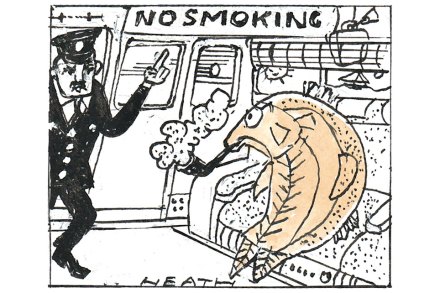
The words ‘immersive experience’ have always suggested, to me, a rather strained hour or two smiling patiently at unemployed actors pretending to be ghosts or personages from the olden days or, if I’m really lucky, chocolatiers who are not called Willy Wonka for legal reasons. In fact, all the publicity for the ‘Fish and Feast with Paul Whitehouse’ seemed designed to raise my blood pressure: it was not just ‘with’ the comedian and actor, but ‘expertly curated’ by him and included a session with a ‘wild cooking expert’. Animals, plants, and the man of Borneo can reasonably be called wild; cooking is in the other column with swimming and camping.

How serious is Cornish nationalism?

The Office for National Statistics has been publishing interesting insights from the last census – perhaps to counter the bad press that censuses get at this time of year, forcing pregnant Jewish women to travel to municipalities in the West Bank – and its latest release shows that 18.1 per cent of people in Cornwall identify as ‘Cornish’.  Whether as their national identity, ethnic group or, in a tiny fraction of cases, their main language, this is an increase from 13.8 per cent in the last census, in 2011. All of these were write-in responses – despite a campaign by councillors and local MPs in Cornwall, there was no Cornish tick-box – and I suspect the percentage would be much higher if it was.

Identity crisis

28 min listen

On the podcast: In his cover piece for the mag this week, political scientist, Yascha Mounk has written about why identity politics has polarised our understanding of race. And why the left has come to divide groups into oversimplified categories of ‘the oppressors’ and ‘the oppressed’.  Also this week:  Can we trust photographs to paint a true picture of a story? The Israel-Palestine conflict has been one of the most documented wars to date. But with AI manipulation and staged imagery, is there a way of differentiating between real and fake news? Bryan Appleyard CBE and Eliot Higgins from Bellingcat discuss.

The comfort of hating Britain

I occasionally get sent articles from the ‘London Correspondent of the Papua New Guinea Courier’ – less often, now that most people have realised that it is a satirical blog, not an actual newspaper. The articles are a droll extension of the gag – and it’s a good gag – of describing British politics using the language of foreign correspondents, like referring to ‘UK strongman Rishi Sunak’ or ‘feared interior minister Suella Braverman’. When I gently pointed out that it was all made up, the only person who admitted she had originally taken one of them for a real article insisted it said something true about the government. The fact that so many people on her Facebook page believed it, she said, told you something.

A beginner’s guide to witchcraft

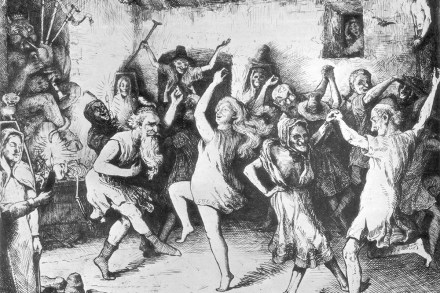
Next year, Exeter University will offer an MA in Magic and Occult Science: the first of its kind in a British university. The new course has led to newspaper headlines about a ‘real-life Hogwarts’ and questions as to whether magic is as worth studying as say, economics. The course director, Professor Emily Selove, refused my request for an interview – with polite apologies, although one could hardly expect the convenor of Exeter’s Centre for Magic and Esotericism to be anything but esoteric. A similar tension, it turns out, is at the heart of the debate about the degree. For all the media snideness, the most serious objections come from Britain’s growing magical community.

What could be more Shakespearean than a ghost?

In the final series of the Netflix programme The Crown, Princess Diana will appear as a ghost. We are told that her apparitions will be ‘thoughtful and sensitive’ – which is rather disappointing for anyone hoping for her to have a recurring role, like Marty Hopkirk in Randall and Hopkirk (Deceased), perhaps wearing that white dress she wore to the British Fashion Awards. Yet this has not stopped the ‘friends of the King’ from saying that the programme has lost all the credibility it had in its earlier years. It is true that, in the first series, The Crown was more like Shakespeare than soap opera, with actors trained at the RSC delivering grand speeches about the nature of monarchy. But what could be more Shakespearean than a ghost?

I never thought I’d be a wild camper

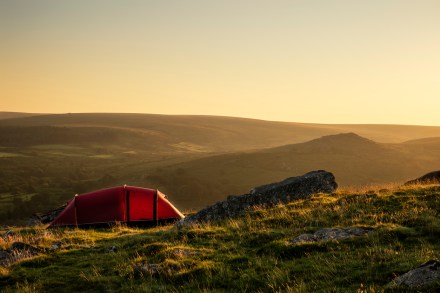
Wild camping is ‘a modish phrase meaning camping overnight in a place which is not a dedicated campsite’, according to Lord Justice Underhill in a Court of Appeal judgment in July – and isn’t it wonderful that there are still judges carrying on the fine judicial tradition of handling the colloquial as if were radioactive waste? The point at issue was whether wild camping came within the definition of ‘open-air recreation’ – which is legally protected on Dartmoor, even without the landowner’s permission, under the Dartmoor Commons Act 1985 – or not.

Trump’s second act: why he can still win, in spite of everything

47 min listen

This week: Having been found guilty of sexual assault, is Donald Trump still in the running for the White House? In his cover piece, Niall Ferguson says he could still defy gravity. He joins the podcast alongside Jacob Heilbrunn, editor of The National Interest. (01:00)  Also this week: Journalist Andrew Watts interviews the Reverend Canon Dr Jason Bray, the Bishop of St Asaph’s ‘deliverance minister’, or the Anglican priest charged with exorcising evil spirits. They both join the podcast. (17:50).  And finally: Author and journalist Sophia Money-Coutts writes about the British women opting for Danish sperm donors to conceive. She joins us on the show, along with Annemette Arndal Lauritzen, CEO of the European Sperm Bank.  (34:07).

The Anglican priests charged with exorcising evil spirits

Last month, a trailer for the new Exorcist film – the scariest trailer ever, apparently – was released. The Exorcist: Believer isn’t out until Friday 13 October – just in time for Halloween – but Hollywood movies about demons are legion. This one follows The Pope’s Exorcist (released on Good Friday), in which Russell Crowe is a maverick exorcist who doesn’t play by the book, but gets results – despite the pen-pushers at (Vatican) City Hall. The Reverend Canon Dr Jason Bray, the Bishop of St Asaph’s ‘deliverance minister’, will not be watching either film.

There’s nothing romantic about mistletoe

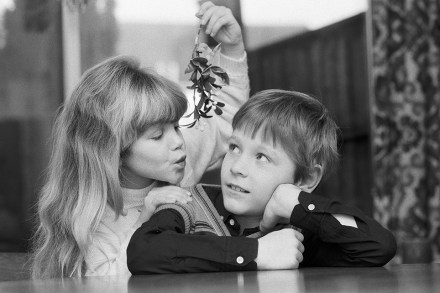
The line of trees beside the road into Tenbury Wells are bare of leaves at the beginning of December. But on their spindly branches are huge clumps of mistletoe, weighing them down like muffs on the skinny arms of dowagers. Most of the country’s mistletoe grows in a small area of England – Worcestershire, Herefordshire, Gloucestershire, the counties around the Malvern Hills – but no one is quite sure why; it may be the number of orchards (mistletoe grows well on apple trees) or the climate of cold winters and warm summers.

We do love to be beside the seaside

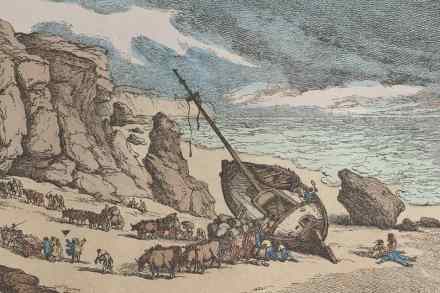
In the garden of my house in Cornwall there is a smooth granite stone about the size and shape of a goodly pumpkin. In the middle, where the stalk would be, there is a hole filled with rusting iron. The day I moved in, a neighbour told me that the hole was drilled and filled with molten iron to attach a hook, long since rusted away, to make a ‘sinking stone’. Smuggled cargo could be submerged just off shore if there were any danger of meeting King George’s men, to be harvested when the coast was clear.

I took my son to Drag Queen Story Hour

The nice young man in the library had told us he was worried about protests when I booked tickets for Drag Queen Story Hour. We only began to hear the chants halfway through the show; they drifted up from the courtyard in front of St John’s Hall, the council building that houses Penzance library, through the window behind where my son and I were sitting. They got louder and louder – the children started looking round, puzzled, and the drag queen gesticulated at me to close the window. It took me a few moments to realise what the gestures meant – I had assumed that it was what they call ‘vogueing’ – but I eventually pushed the sash closed. But not before I heard what they were chanting: ‘Drag! Is! For! Everyone!

Theatre of war

34 min listen

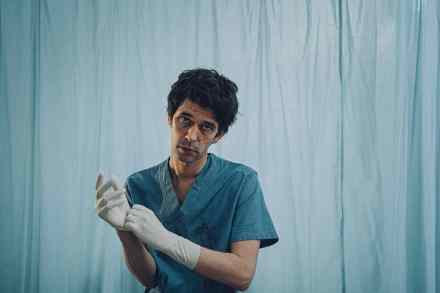
In this week’s episode: What is the next act in Putin’s theatre of war?For this week’s cover story, James Forsyth writes about Putin’s dangerous dramatics on the Russian-Ukrainian border and where they might lead. James joins the podcast along with Paul Wood, who writes in this week’s magazine that Putin’s bluff may be backfiring. (00:49)Also this week: How important is gallows humour?The BBC’s new comedy-drama, This Is Going To Hurt, based on the best-selling book of the same title by trainee doctor turned comedian Adam Kay depicts some truly gut-wrenching scenes with a touch of gallows humour.

Sick jokes: why medics need gallows humour

Most jobs have their own joke books. If you’re outside the job, you don’t get the joke — and if you do get the joke, you’re on the inside; which is what the jokes are for. (It’s the same with all comedy: some, if not most, of the appeal of Stewart Lee is in being the sort of person who finds Stewart Lee funny.) But some jobs have joke books which, from the outside, are not just unfunny but actually offensive. Usually the most stressful jobs, those that involve the rawest emotions, have a gallows humour that is thought to relieve that stress. If you didn’t laugh, you’d cry. Or have to go to therapy. It’s been a mixed week for this sort of gallows humour.

My year-long battle with the parking profiteers

I had been cross enough about having to go to Sennen Cove. Aside from the fact that I don’t care for the place — what is the point of a Cornish beach if the sand is too coarse-grained for sandcastles? — I resented the fact that I would not even be able to park near the place I hated. The car park on the beach is full from nine in the morning; I would have to drive up to the town — which is so far away that some of the houses aren’t even second homes — and walk. Furiously I bought a ticket, chucked it in the car and marched down the cliff to the beach. When I returned to find a parking fine on the windscreen, I was, I admit, not in the holiday spirit. I assumed that sending a scan of the ticket to Armtrac, the parking company, would resolve matters.

Wolfgang Munchau, Andrew Watts, Hannah Tomes

19 min listen

On this week's episode, we’ll hear from Wolfgang Munchau on the political situation in Germany. (00:49)Next, Andrew Watts on his year long battle against a parking ticket. (11:01)And finally, Hannah Tomes on her love of Baileys. (15:33)Produced and presented by Sam HolmesSubscribe to The Spectator today and get a £20 Amazon gift voucher:spectator.

What will become of Jamaica’s Maroons?

Jamaican police entered farms in the village of Accompong in August to destroy ganja crops. The village chief, carrying a rifle, drove them away. ‘This is a gross disrespect and violation of Maroon territorial jurisdiction,’ said the chief, on his Instagram. Richard Currie talks a lot about sovereignty: he was elected colonel, or chief, on a platform of taking back control. A breathless profile in the Jamaica Gleaner refers to him as being like a cross between the hero and villain in Marvel’s Black Panther, but Accompong, with its 788 inhabitants, is no Wakanda. For nearly 300 years it has been more like Asterix’s village in Gaul, holding out against a hostile Empire. Some history. The year is 1739. Jamaica is entirely occupied by the British.

Our fascination with treehouses has deep roots

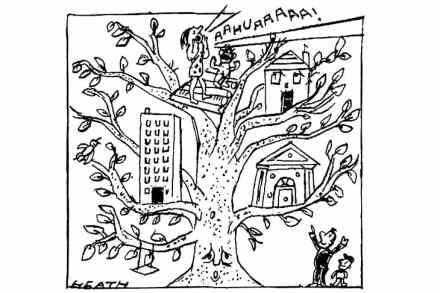
You can’t (and probably shouldn’t) design a treehouse. Treehouses should grow organically, in every sense: they must be made of wood, obviously — one definition of a treehouse is that it is a tree holding its dead friend — and the footings for the platform must be the knots or branches that are footholds when climbing the tree. Besides, it is only when you are halfway through building that you can work out where you need to fit round branches and add noggins — unless you build it between the trunks of two separate trees, or use some sort of 3D mapping software, both of which sound very much like cheating. So there wasn’t any masterplan behind my son’s treehouse.

The problem with the Pride flag

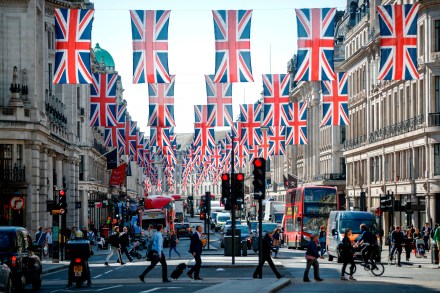
Last month, the Pride flag was updated by the Intersex Equality Rights UK campaign group — the simple rainbow was not considered inclusive enough for intersex people. Other pressure groups had already added stripes for black people, brown people, trans people and people with Aids. The Gay Pride flag first flew 43 years ago this week. It was sewn by the American gay activist Gilbert Baker, who performed under the drag name of ‘Busty Ross’, claiming kinship (of a sort) with the 18th-century Quaker upholsterer Betsy Ross, who sewed the first American flag. Baker had been asked by Harvey Milk, the most famous openly gay politician in America, to design a flag for the San Francisco Gay Freedom Day Parade.

Max Pemberton, Andrew Watts, Ysenda Maxtone Graham

20 min listen

On this week's episode, Dr Max Pemberton explains that while just as many people are seeing their GP as before the pandemic, something has changed. (00:55) After, Andrew Watts argues that you shouldn't buy a second home in Cornwall. (09:15) Ysenda Maxtone Graham finishes the episode, lamenting the loss of indoor singing.