Andrew M Brown

Investment trusts – the way the City saves

From our UK edition

After years in the doldrums, investment trusts — those venerable pooled funds with names like Foreign and Colonial and City of London — are in danger of becoming fashionable. There are good reasons why they should be better known. They offer the possibility of high returns at low cost, as well as access to exotic asset classes that would otherwise be out of reach. They can be a way of spreading risk, if you do not have the time or the inclination to pick individual stocks for yourself.

Psychedelic revival

From our UK edition

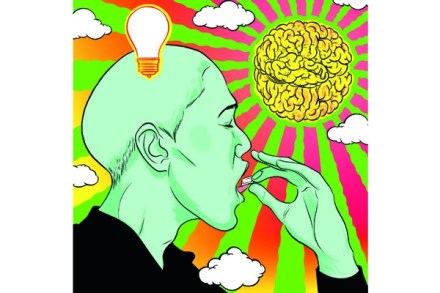
Acid is back. For the first time since the 1960s there are signs of a rekindling of serious interest in psychedelic drugs — conferences, clinical tests, and a full-blown study is planned, with human subjects. LSD belonged to history — to grizzly-haired hippies and travellers, the ‘counter culture’. Now, an informal alliance of psychiatrists, therapists and psychopharmacologists are seeking to shine a fresh light on to psychedelics, the group which includes LSD and psilocybin (magic mushrooms). MDMA (ecstasy) is also in this category. There are two main areas of interest: what psychedelics reveal about how the brain works; and their potential as medicines.

Written in the scars

From our UK edition

What do you do if you want to upset your parents these days? Properly rebel, I mean. You certainly don’t get a tattoo. Tattoos won’t bother anybody — they’ve become a fashion accessory, adopted as widely as bangles and bracelets. Shrewd money is investing in the sector, because it’s going through a growth spurt: tattoo parlours are up 5.6 per cent since 2008. But this isn’t merely a fad: it reflects a deep underlying secular obsession with living for ever and, especially, staying permanently young. Young women are driving the boom in fashionable tattooing. My friend Alice, for instance, is 23, super-cool, and works in high fashion. She has several tattoos, including a shooting star on the delicate underside of her wrist.

Eating disorder

From our UK edition

The class system, with its fixed mealtimes, stopped us all from getting fat, says Andrew M. Brown. Today we are a nation of all-day munchers — and it shows Imagine if, at breakfast, a mother were to offer her family, instead of cornflakes or boiled eggs, slices from a gigantic cake smothered in icing. Would that seem odd? Well, yes, it would: but that’s exactly what a lot of us do — eat cake for breakfast. A muffin is a cake by another name. And on our way to work plenty of us snap up a white chocolate and strawberry muffin, say, from Starbucks, at 583 calories, and wash it down with 300 calories’ worth of warm coffee-flavoured milk.