Andrew Lycett

That’s entertainment | 6 April 2017

From our UK edition

The name Maud Russell creeps almost apologetically into a few 20th-century diaries such as those of her friend Violet Bonham Carter. Generally, she keeps her head below the parapet — not a bad place for a diarist, since it allows her to observe without being noticed. She is certainly worth knowing about. The wife of a banker, Gilbert Russell, a scion of the great Whig family, whose cousin was Duke of Bedford, and daughter of Paul Nelke, a seriously rich stockbroker of German Jewish origin, she was from the mid-1930s chatelaine of Mottisfont Abbey, a beautiful 2,000-acre estate in Hampshire, now owned by the National Trust. There, in her mid-forties, she surrounded herself with top-notch artists, writers, politicians and aristocrats.

Light in the East | 9 March 2017

From our UK edition

Christopher de Bellaigue, a journalist who has spent much of his working life in the Middle East, has grown tired of people throwing up their hands in horror at Isis, Erdogan and Islamic terror, and declaring that the region is backward and in need of a thorough western-style reformation. As he argues in this timely book, the Islamic world has been coming to terms with modernity in its own often turbulent way for more than two centuries. And we’d better understand it, because it’s an interesting story, and often a positive one — the way vast crowds streamed onto the streets of Cairo, Istanbul and Tehran in demonstrations against authoritarian rule over the past decade, for example. Western-style participatory democracy remains the dream of the man and woman in the souk.

Light in the East

From our UK edition

Christopher de Bellaigue, a journalist who has spent much of his working life in the Middle East, has grown tired of people throwing up their hands in horror at Isis, Erdogan and Islamic terror, and declaring that the region is backward and in need of a thorough western-style reformation. As he argues in this timely book, the Islamic world has been coming to terms with modernity in its own often turbulent way for more than two centuries. And we’d better understand it, because it’s an interesting story, and often a positive one — the way vast crowds streamed onto the streets of Cairo, Istanbul and Tehran in demonstrations against authoritarian rule over the past decade, for example. Western-style participatory democracy remains the dream of the man and woman in the souk.

Meet the man who created the Middle East

From our UK edition

When turbaned warriors from Daesh (or Isis) advanced on Raqqa in Syria two years ago, they whooped wildly about having ‘broken the Sykes-Picot Agreement’. They were celebrating the destruction of national frontiers which had stood for nearly a century, since the fall of the Ottoman empire in 1918. They were also venting their spleen against the two villains (as they saw it) of the piece — one British, Sir Mark Sykes, and the other French, François Georges-Picot, who, after months of diplomatic haggling, had drawn metaphorical lines in the desert sand to reach their secret 1916 agreement apportioning Ottoman lands and creating the modern Middle East. In doing so, Sykes and Picot set aside promises of an Arab homeland made to Sharif Hussein of Mecca.

A fateful squiggle on the map

From our UK edition

When turbaned warriors from Daesh (or Isis) advanced on Raqqa in Syria two years ago, they whooped wildly about having ‘broken the Sykes-Picot Agreement’. They were celebrating athe destruction of national frontiers which had stood for nearly a century, since the fall of the Ottoman empire in 1918. They were also venting their spleen against the two villains (as they saw it) of the piece — one British, Sir Mark Sykes, and the other French, François Georges-Picot, who, after months of diplomatic haggling, had drawn metaphorical lines in the desert sand to reach their secret 1916 agreement apportioning Ottoman lands and creating the modern Middle East. In doing so, Sykes and Picot set aside promises of an Arab homeland made to Sharif Hussein of Mecca.

Lives of gay abandon

From our UK edition

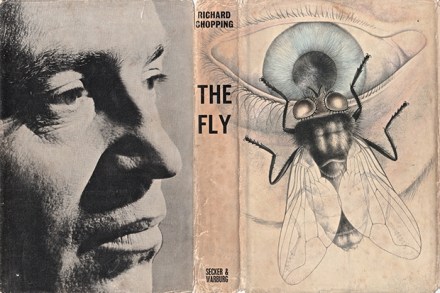
Somewhere I have a couple of neat letters from the artist Richard Chopping, politely declining my requests to interview him about Ian Fleming. ‘Dicky’ is best known for the trompe l’oeil dust jackets he painted for nine of Fleming’s James Bond novels. Because of this patronage, an accomplished second-division artist gained wider prominence, becoming at one stage, according to the New Yorker, the world’s highest paid book designer. It didn’t make him happy. He was involved in a long, bickering relationship with his fellow artist Denis Wirth-Miller, who was wilder and more experimental, but whose reputation, despite a close working association with Francis Bacon, has not endured so well.

The dog it was that died

From our UK edition

Appropriately for the dog days of British politics, there’s plenty of canine activity in this neatly groomed account of the bizarre circumstances behind the murder plot which cost the Liberal party leader Jeremy Thorpe his job and his debonair reputation in the 1970s. First yelps from the kennel came from the Honourable Brecht Van de Vater’s five springer spaniels. Ostensibly they added a veneer of respectability to their owner’s comfortable Cotswolds existence. But like many of the characters involved, appearances were illusory. His real name was Norman Vater, the son of a Welsh miner and an undisclosed bankrupt.

A good editor and a good man

From our UK edition

Before embarking on this book, Jeremy Lewis was told by his friend Diana Athill that his subject, the newspaper editor and philanthropist David Astor, was too ‘saintly’ for a lively biography. As a publisher, she had worked on an earlier authorised tome, and thought she knew. Lewis, and Astor, proved more resilient. There are always column inches in a well-connected plutocratic clan such as the Astors. And Astor’s mother, Virginia-born Nancy, was the gold-plated battle-axe who made Cliveden, the family house in Buckinghamshire, the centre of 1930s appeasement. The story is really how Astor (born in 1912) took on his Christian Scientist mother, threw off the trappings of privilege, and became the owner and editor of the Observer during its mid-20th-century heyday.

‘Crazy mixed-up Yid’

From our UK edition

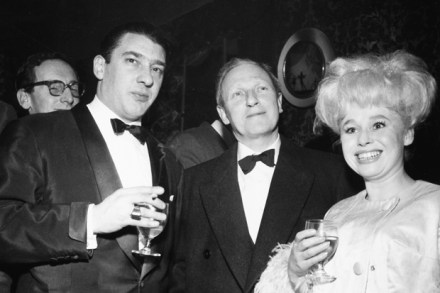
Even David Litvinoff’s surname was a concoction. It was really Levy. Wanting something ‘more romantic’, he appropriated that of his mother’s first husband. So his elder half-brother, the respected writer Emanuel Litvinoff, informed Keiron Pim, adding that David was ‘an unfortunate character altogether’, prone to ‘inventing roles for himself that didn’t have any reality’. Yet this fantasist is the elusive figure whom Pim has endeavoured to capture in an ambitious book which seeks to resurrect an era as much as an individual.

Age cannot wither her

From our UK edition

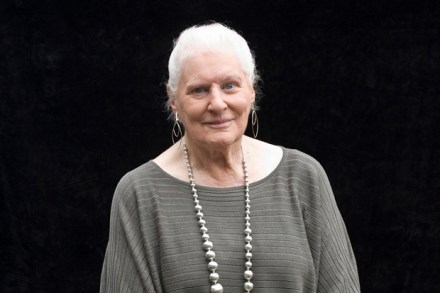
There’s something reassuring about 98-year-old Diana Athill. She’s stately and well-ordered, like the gardens at Ditchingham Hall in Norfolk, her grandparents’ Georgian house where she spent long periods of her childhood. Yes, she really is of that class, though she doesn’t trumpet it (she was presented at court in the brief reign of King Edward VIII) and, as is well known, she is of more than a certain age — born in 1917, towards the end of the first world war but, in social terms, a throwback to the Edwardian era, and half a decade before the publication of Ulysses and The Waste Land signalled the arrival of Modernism. One of the ten essays in this delightful collection is about her attitude to clothes.

Through the Looking Glass

From our UK edition

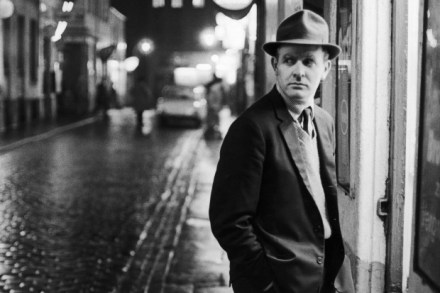
‘Have you got over your father yet?’ the 26-year-old David Cornwell was asked by MI5’s head of personnel when he joined the agency in the spring of 1958. And the answer, more than half a century later, has to be ‘no’. We knew of his conman father Ronnie’s cartoonish presence in Cornwell’s life, but never the extent to which he has dominated his very being. After leaving Lincoln College, Oxford, Cornwell taught for a couple of years at Eton, where he disliked the ‘Herrenvolk doctrine’ expounded in what he called the ‘spiritual home of the English upper classes’. So he sought a return to the secret world that he had glimpsed as a gap-year student in Bern, after leaving Sherborne and before going up to Oxford.