Andrew J.

General rule

From our UK edition

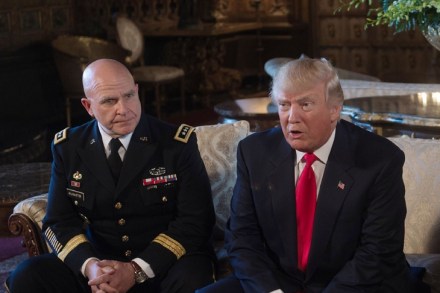
Dwight Eisenhower was right to warn Americans in 1961 of the ‘military industrial complex’, but perhaps it is now the only thing that stands between the US and chaos. The new White House chief of staff, General John F. Kelly, is the third general Donald Trump has appointed to his cabinet. Kelly is already getting a good press for introducing military discipline and order to the Trump White House. His first move was to fire the attention-grabbing billionaire Anthony Scaramucci as head of communications, and he’s said to have told even members of Trump’s family that they must book ‘face time’ with the President through him.

Kaiser Donald

From our UK edition

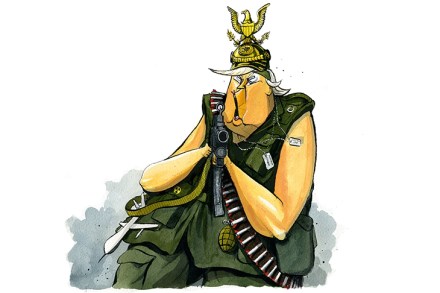
 Massachusetts All politicians wear masks. Donald Trump’s favourite is that of Maximum Leader. It was on display during this past week. ‘If China is not going to solve North Korea, we will,’ he said at the weekend, ahead of his meeting with Xi Jinping — a throwaway comment that could end up causing mayhem in the Far East. Next, his reaction to news of a chemical bombing in Syria. Trump blamed the atrocity on his predecessor’s ‘weakness and irresolution’, suggesting that he is keen to show the world what strength and resolve look like. The President, it seems, is not too dissimilar to the nightmare his political enemies warned us about: a nuclear-armed hothead itching to show the world how tough he is.

The McMaster plan

From our UK edition

When Lt Gen H.R. McMaster was appointed by Donald Trump to the post of national security adviser, newspaper reports hailed him as a military strategist. It’s not fully clear what the phrase means: not, presumably, that he originated a big idea akin to Alfred Thayer Mahan’s theory of seapower or Billy Mitchell’s conception of strategic bombing. More likely it is supposed to mean ‘a soldier who thinks’. Or more crudely, ‘not a knuckle-dragger’. Or ‘preferable to the cretin who Trump just fired’. Of course, the responsibilities of the position to which McMaster now ascends extend well beyond mere military matters. The national security adviser operates (or should operate) in the realm of ‘grand strategy’.

Get ready for a wild ride

From our UK edition

Every American president since Harry Truman has arrived in the White House committed to globalism — a belief that America must lead always and everywhere — as the central organising principle of US foreign policy. In recent years, we have seen Barack Obama’s faith in globalism waver. The prospect of President Donald Trump abandoning globalism altogether is real. For US allies as varied as Britain, Japan, Saudi Arabia and Israel, American globalism has been the gift that has never stopped giving. Nations enjoying a ‘special relationship’ with Washington have relied on American power to shield them from danger and, to some extent, from bearing the consequences of their own folly, past and present. Listen to Andrew J.

The pretend war: bombing Isil won’t solve the problem

From our UK edition

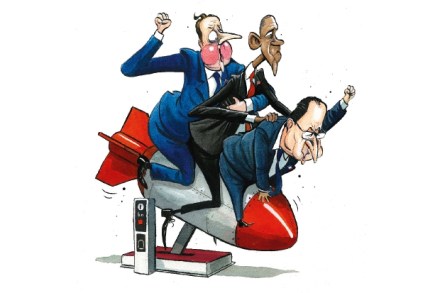
[audioplayer src="http://rss.acast.com/viewfrom22/thegreatfakewar/media.mp3" title="Andrew J. Bacevich and Con Coughlin discuss the West's war with Isis" startat=35] Listen [/audioplayer]Not so long ago, David Cameron declared that he was not some ‘naive neocon who thinks you can drop democracy out of an aeroplane at 40,000 feet’. Just a few weeks after making that speech, Cameron authorised UK forces to join in the bombing of Libya — where the outcome reaffirmed this essential lesson. Soon Cameron will ask parliament to share his ‘firm conviction’ that bombing Raqqa, the Syrian headquarters of the Islamic State, has become ‘imperative’. At first glance, the case for doing so appears compelling.

The will to fight

From our UK edition

[audioplayer src="http://rss.acast.com/viewfrom22/defeatingisis/media.mp3" title="Andrew Bacevich and Douglas Murray discuss how ISIS can be crushed" startat=39] Listen [/audioplayer]War is a contest of wills. Although determination alone does not guarantee final victory, its absence makes defeat all but inevitable. Way back in the 1770s, Britain lost most of its north American colonies because rebellious Americans cared more about gaining their independence than George III and his ministers cared about preserving their empire. Today, if Isis fighters care more about creating their caliphate than Iraqis do about preserving their country, then Iraq may be doomed.

Barack Obama: anatomy of a failure

From our UK edition

President George W. Bush’s place in history is already guaranteed, fixed by a series of monumental blunders that no amount of revisionism will ever be able to whitewash. By comparison, historians are likely to have a hard time drawing a bead on Barack Obama. How could such an obviously gifted President, swept into office on a wave of immense expectations, have managed to accomplish so little in his attempted management of global affairs? Over the past six years ‘Yes, we can!’ has become ‘No, he hasn’t.’ What went wrong? Several answers to this question present themselves. The first and most important is that the expectations to which Obama--mania gave rise were from the outset utterly unrealistic. But consider this irony: the people who George W.

The US military should be winning wars, not fighting Ebola

From our UK edition

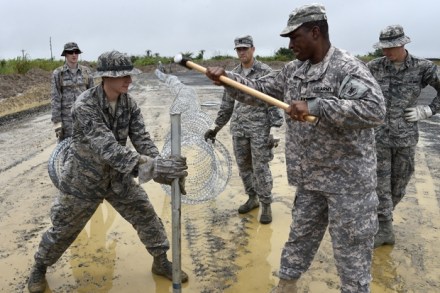
As a general rule, soldiers should be employed in the business of soldiering — preparing to fight or actually fighting (preferably infrequent) wars. In response to the Ebola outbreak afflicting West Africa, the Obama administration has decided to waive that rule. His decision to do so has received widespread support. Yet the effect of his decision is to divert attention from questions of considerable urgency. Drawing on the increasingly elastic authority exercised by the US commander-in-chief, President Obama has directed the deployment of up to 4,000 troops to Liberia, ground zero of the epidemic. These are not war fighters but support troops, mostly construction engineers and medical personnel.

The West isn’t the solution in Iraq. It’s the problem

From our UK edition

[audioplayer src="http://traffic.libsyn.com/spectator/TheViewFrom22_14_August_2014_v4.mp3" title="Peter Hitchens and Douglas Murray discuss Iraq and Isis" startat=52] Listen [/audioplayer]To hawkish right-wingers, but also to many militant liberals, the antidote to the problem of Isis is clear: the application of military power to defeat the jihadists and lay the foundation for a humane and stable political order, beginning in Iraq but eventually extending across the Islamic world. There are several problems with this analysis. For starters, it glosses over the fact that military power in the form of the 2003 Anglo-American invasion created the opening for the jihadists in the first place. Where there had been stability, US and British forces sowed the seeds of anarchy.

If we have to let generals run Egypt, must we pay for them, too?

From our UK edition

The polls have closed, and the result was never in doubt. With a whopping majority, Egyptians have chosen Field Marshal Abdel Fattah al-Sisi to be their next president. Much like his several predecessors going back to 1952 when army officers overthrew King Farouk, the new president brings to office ambitious plans to whip his countrymen into shape. What Egyptians need, Sisi believes, is discipline. He has volunteered for the role of drill sergeant-in-chief. ‘Will you bear it if I make you walk on your own feet? When I wake you up at five in the morning every day? Will you bear cutting back on food, cutting back on air-conditioners?

The Iran deal just shows how badly Obama has failed

From our UK edition

‘Yes, we can heal this nation. Yes, we can repair this world. Yes, we can!’ With these exuberant assurances, the young candidate, buoyed by an unexpectedly strong showing in the Iowa caucuses, vowed to carry on his crusade. One year later, in January 2009, the candidate became president and set out to make good on his promises. That Barack Obama possessed the ability to heal the nation and repair the world seemed in many quarters all but self-evident. As he donned the mantle of the ‘most powerful man in the world’, the expectations that had lifted him into the Oval Office qualified as nothing short of messianic. A dark and depressing interval of American history, symbolised by place names such as Guantánamo and Abu Ghraib, was ending.

America’s strategic stupidity

From our UK edition

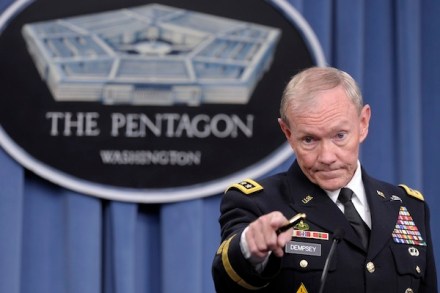
Every few months, America’s four-star admirals and generals gather at a military base not far from Washington to participate in what General Martin E. Dempsey, Joint Chiefs of Staff chairman, calls his ‘strategic seminar’. The aim is to foresee the future, anticipating security challenges that the United States will face in the coming years, thereby enabling the Pentagon to prepare itself accordingly. With that end in mind, Dempsey and his colleagues engage in what the New York Times has styled ‘a lethally earnest game of Risk’, participants striding across ‘a giant map of the world, larger than a basketball court’ as they posit various crises and speculate on the response each might entail. The enterprise invites derision.