Andrew Bacevich

Why the post-Cold War era is far from over

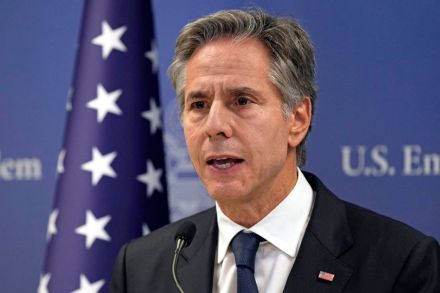
In various speeches this year, secretary of state Antony Blinken has declared that “the post-Cold War era is over.” The announcement passes all but unnoticed, eclipsed as it is by crises, such as war in Ukraine and the Middle East, that make Blinken’s point in a starker way. Not so long ago, it was taken for granted that the fall of the Berlin Wall in 1989 had inaugurated a new age. Now, if Blinken is correct, the lifespan of that age hardly exceeds the duration of Tom Brady’s career as a star quarterback. By 1989, the United States had ascended to the status of sole remaining superpower. No challenges to its global primacy — political, military, economic or cultural — were visible anywhere on the horizon.
post-Cold War era

The Ukraine invasion is nothing compared to Iraq

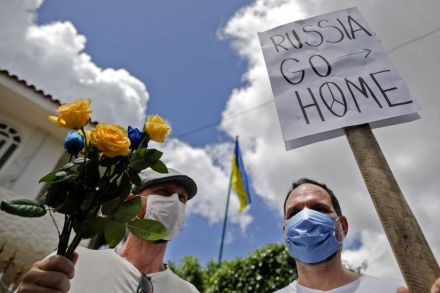
Of the war in Ukraine, New York Times columnist Thomas Friedman writes, “Our world is not going to be the same again because this war has no historical parallel.” In the very next sentence, he describes the Russian invasion of Ukraine as “a raw, eighteenth-century-style land grab by a superpower,” thereby acknowledging that the episode actually has innumerable historical parallels — just not ones that Friedman cares to acknowledge as legitimate. Friedman figures prominently among those claiming to have divined the essential character of the present age. His key finding: tech-driven globalization has rendered old-fashioned power politics obsolete. The rules of the game have changed irrevocably. Practically speaking, nations have no choice but to submit.

invasion iraq

Who is to blame for America’s failure in Afghanistan?

From our UK edition

25 min listen

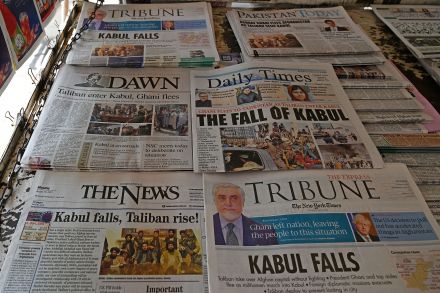
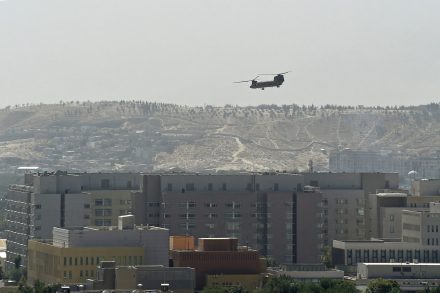
With Kabul now taken back by the Taliban and the Americans in full retreat after two decades of war, what will the USA learn from this catastrophe, if anything? Freddy Gray talks to author of After the Apocalypse: America’s Role in a World Transformed, Andrew Bacevich about the goals not met, allies abandoned and lives lost.

Autopsy of a failed war

‘Your country just betrayed us.’ So Haji Sakhi, a resident of Kabul, recently remarked to a New York Times reporter. ‘Look at what they brought on us,’ the 68-year-old Afghan continued. ‘They lost the war and just fled the country.’ His they refers to us — the United States of America. Haji Sakhi’s unsparing judgment deserves sober consideration. Kabul is about to fall to the Taliban, faster than even the most gloomy experts predicted. Our nation’s ‘longest war’ is now ending in abject failure. How are Americans — at least those few of us who attend to such matters — to apportion responsibility for the outcome? Who or what is to blame for ‘losing’ Afghanistan? Was it ever ours to lose in the first place?

war

Afghanistan — the long defeat

In announcing his decision to withdraw all remaining US troops from Afghanistan, President Joe Biden declared that 'it’s time to end America’s longest war.' The wording of the President’s announcement left little room for backtracking so his decision appears to be definitive. It’s also necessary and long overdue, if not without risk. But it will not actually 'end' the war that began just weeks after the 9/11 terrorist attacks when US special operations forces and CIA paramilitary units entered Afghanistan. The conflict that Americans are accustomed to calling the Afghanistan War will continue, albeit without any overt US military involvement.

afghanistan iraq military

What ‘America is back’ really means

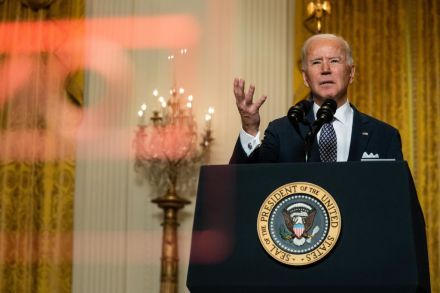
‘America is back.’ Speaking to the 57th annual Munich Security Conference, Joe Biden made that point for the umpteenth time in his short presidency. His crisp declarative sentence requires decoding, of course. To his audience of European elites, he was offering this assurance: ‘Trump is gone and won’t be returning anytime soon: trust me.’ In expanding on this basic thesis, Biden’s presentation covered a totally predictable range of topics and reached totally predictable conclusions. While repeatedly insisting that history had reached ‘an inflection point’, he simultaneously reiterated the claim made by every US president since Harry Truman (Trump excepted) that ‘the partnership between Europe and the United States’ will determine the fate of humankind.

munich

Biden, Blinken and the Blob

Regarding America’s role in the world, Joe Biden’s ascent to the presidency offers this bit of prospective good news: the random flailing about of the Trump era will end. No more diplomacy conducted via Twitter. A modicum of consistency and predictability might once more become emblems of American statecraft. Some version of normalcy will be restored. While all this will be welcome, it prompts a fundamental question: will a return to pre-Trump normalcy suffice as a response to the challenges that Biden is about to inherit? After all, the post-Cold War version of normalcy — the policies as pursued by presidents Bill Clinton, George W. Bush and Barack Obama — created the conditions that gave rise to Donald Trump in the first place.

biden blinken blob war syria iran ukraine hamas

The integrity of the Constitution must be protected

As I write this, the outcome of the US presidential election remains undecided. To judge by media reports, it may take days to determine who the winner is. A few quick observations: The pollsters got it wrong again. Forty-eight hours ago, the chatter was all about a Democratic landslide. Observers were confidently speculating about who would land the top jobs in a Biden administration. I don’t pretend to understand the science of polling. But I know a bankrupt enterprise when I see one. Many observers worried about a close election with no clear outcome leading to a constitutional crisis of some sort. The wilder and more irresponsible speculation imagined US troops being summoned to intervene and sort matters out. It grieves me to say that such scenarios remain possible.

integrity

Biden is not the president America needs

In a 2008 essay in the American Conservative, I encouraged my fellow conservatives to vote for Sen. Barack Obama in the upcoming presidential election rather than his Republican opponent, Senator John McCain. I have zero regrets about writing that essay. The editor of this magazine wonders if I would venture a similar endorsement of Joe Biden, certain to become the Democratic nominee in this year’s race. The answer is no. Whether I end up casting a grudging vote for Biden remains to be seen. Certainly nothing could persuade me to vote for Donald Trump. Yet, as was the case in 2016, the ballot will offer other choices. And there is always the option of staying home. By any conceivable measure, Trump deserves to lose his bid for reelection.

joe biden

End of empire

The end of World War Two inaugurated the era of American dominion, with the United States politically, economically and militarily the most powerful nation on the planet. Yet throughout the subsequent period of American global ascendency, the American people endured a seemingly endless sequence of domestic crises, upheavals and disasters. Primacy abroad did not insulate them, convinced of their unique place in human history, from the trials and tribulations routinely befalling other, more ‘ordinary’ nations. Yet neither did trials at home undermine the deep-seated belief that history had summoned the United States — and no one else — to lead the world.

empire

Trump’s America needs the conservative tradition

The modern American conservative tradition – roughly dating from the dawn of the 20th century — emerged in reaction to modernity itself. Modernity meant machines, speed, and radical change — taboos lifted, bonds loosened and, according to Max Weber, ‘the disenchantment of the world.’ It induced, and perhaps required, centralization. States accrued power. Bureaucracies thickened. Banks, corporations, rail systems and industrial enterprises grew to mammoth proportions. War became more destructive.Modernity promised liberation and for many did improve the quality of everyday life. Yet it also subjected individuals to immense and only dimly comprehended forces.  In exchange for choice, it demanded conformity.

donald trump conservative

Still, the Global War on Terrorism goes on

I can think of only a single positive thing to say about World War One: it ended. Yet in addition to precluding any further waste of lives, the Armistice of November 1918 and the ensuing Paris Peace Conference did something else. It allowed historians and other writers to begin taking stock of this ghastly episode, which had caused death and destruction on an unprecedented scale. Making sense of the so-called Great War exceeded the limits of human capacity. Yet however imperfectly, at least it might be understood. Why had the war happened? Why had it lasted so long? What had motivated the belligerents? What did this horrendous cataclysm signify, both politically and morally? Finally, how could the recurrence of such a debacle be averted?

global war on terror

How to end endless wars

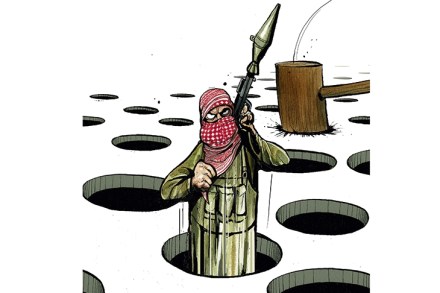
This article is in The Spectator’s January 2020 US edition. Subscribe here. ‘Great nations do not fight endless wars,’ President Donald Trump declared in his 2019 State of the Union address. Simultaneously benign and radically subversive, this simple statement may well qualify as an important moment in the Trump era. Here was a notably dishonest president calling attention to a truth that the political establishment appears intent on ignoring. Any objective look at the record of US military actions since 9/11 would reach similar conclusions. The politicians ordaining our wars have been reckless and incompetent. The soldiers sent to fight are brave but badly misused. And the people in whose name these wars are waged are oblivious to what has occurred.

endless

Does Trump have a better idea than endless wars?

This article is in The Spectator’s November 2019 US edition. Subscribe here. ‘WE WILL FIGHT WHERE IT IS TO OUR BENEFIT, AND ONLY FIGHT TO WIN.’ Thus did America’s Commander-in-Chief at long last enunciate a Trump doctrine, his use of all caps suggesting that this time he really means it. Trump had run out of patience. ‘I held off this fight for almost 3 years,’ he tweeted on October 7, ‘but it is time for us to get out of these ridiculous Endless Wars… and bring our soldiers home.’ Withdrawing US troops from Syria, a decision he first announced last December but then allowed to lapse, marked a first substantive step toward fulfilling one of the central promises of his 2016 presidential campaign.

endless wars

Diplomacy by deference

From our UK edition

Iran’s seizure of a British-owned oil tanker transiting the Persian Gulf has let loose a fresh round of media war chatter. Yet should another Persian Gulf War actually occur, who would benefit? Not America, that’s for sure. The central theme of present-day US policy regarding Iran is deference. Nominally, US policy is made in Washington. Substantively, it is framed in Riyadh and Jerusalem, with the interests of the United States figuring only minimally in determining the result. I am not suggesting that President Donald Trump supinely complies with secret marching orders from Saudi Crown Prince Mohammad bin Salman and Israeli Prime Minister Benjamin Netanyahu.

Trump lays bare America’s smelly little orthodoxies

As far as the prestige media in the United States are concerned, Donald Trump is irredeemable. Within the ranks of our journalistic elite, the 45th president of the United States represents a secular version of the antichrist. Apart from permanently retiring to Mar-a-Lago forthwith, there is nothing that Trump can do that will find favor with the New York Times, the Washington Post, and likeminded journalistic enterprises both large and small. On the one hand, I’m OK with that. Trump is an incompetent buffoon. The sooner he’s gone from American public life, the better.

orthodoxies donald trump

The troika of absurdity

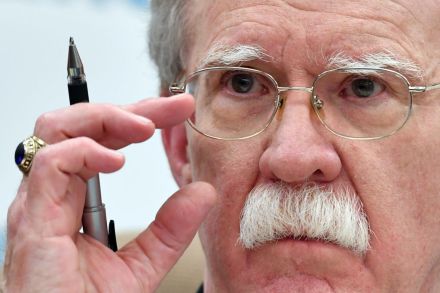
In a speech richly deserving adaption as a Saturday Night Live skit, US national security adviser John Bolton has unveiled the latest extension of America’s enemies list. Eclipsing the post-9/11 ‘Axis of Evil’ we now have a ‘Troika of Tyranny,’ consisting of those powerhouse troublemakers Cuba, Venezuela, and Nicaragua. According to Bolton, ‘this triangle of terror stretching from Havana to Caracas to Managua is the cause of immense human suffering, the impetus of enormous regional instability, and the genesis of a sordid cradle of communism in the Western Hemisphere.’ But fear not. Under the leadership of President Trump, the United States is now ‘taking direct action against all three regimes to defend the rule of law, liberty, and basic human decency in our region.

john bolton venezuela

Seeing red: where did all the deficit-cutting Republicans go?

An acquaintance recently told me that I have become a ‘Red Tory.’ The description probably fits. Indeed, I rather like it. As I get older, when it comes to matters related to social justice I find myself reaching conclusions of the sort commonly heard from Senators Bernie Sanders of Vermont or Elizabeth Warren from Massachusetts. I’ve long since outgrown any social Darwinian inclinations that I might have entertained as a young man. Use public resources to help the downtrodden and distressed and to ensure equal opportunity for all? You bet: I’m as Left as they come. Similarly, on issues related to war and peace, I’ve become a thoroughgoing dove. My idea of ‘supporting the troops’ is to keep them out of harm’s way, except when genuinely vital interests are at stake.

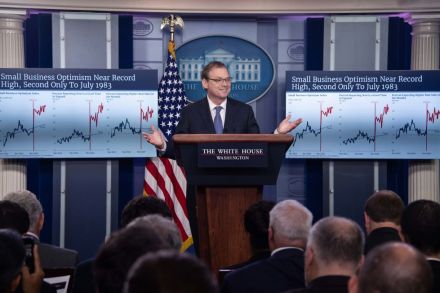
kevin hassett graphs deficit-cutting

America goes rogue

From our UK edition

For the past year or so, in speaking to groups, I’ve ventured to suggest that Donald Trump will ultimately rank among the least consequential presidents in U.S. history. I did not intend that to be a laugh line. Trump, I argued, was likely to end up being to the 21st century what James Buchanan was to the 19th and Warren G. Harding to the 20th – someone who, after occupying the White House for a time, departed and left nary a trace. In the end, Trump’s defining traits -- vulgarity, meanness, self-absorption, and apparently compulsive dishonesty -- would count for little in the scales of history. So I believed. Let me confess that I have now begun to entertain second thoughts.