A.N. Wilson

A.N. Wilson is an author and former literary editor of The Spectator.

Perchance to dream

From our UK edition

This book reads like an interesting after- dinner conversation between intelligent friends. That said, it is a rambling conversation, and although it is extremely entertaining, it does not add up to much. Its ostensible subjects are two instances of scientific intelligence being brought to bear on the possibility of defying, or surviving, death. In the first case, John Gray investigates those, such as Freddie Myers and Henry Sidgwick, who formed the Society for Psychical Research. In the second instance, Gray tells again the bizarre story of the cult of Lenin, and Leonid Krasin’s belief that, if Lenin’s body could be kept in a state of cryonic suspension, there might dawn a glad day in which Comrade Lenin could return to life.
Family favourites | 11 September 2010

From our UK edition

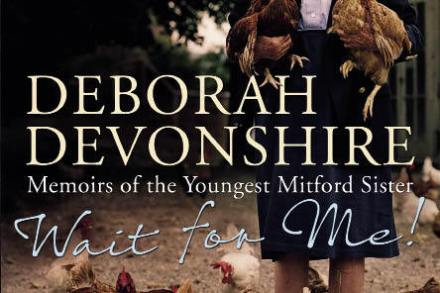
Because Deborah Devonshire’s journalism has nearly always made me laugh, and because she seems like one of the jollier aunts in P. G. Wodehouse — an Aunt Dahlia, not an Aunt Agatha — I had expected her memoirs to provide chuckles on every page. Because Deborah Devonshire’s journalism has nearly always made me laugh, and because she seems like one of the jollier aunts in P. G. Wodehouse — an Aunt Dahlia, not an Aunt Agatha — I had expected her memoirs to provide chuckles on every page. In fact it is a sad book, taken all in all. Two of the more poignant passages, which will linger in my memory for a very long time, are about her dead babies, and about the alcoholism of her magnificent husband, the 11th Duke of Devonshire.

Sun Myung Moon among the stars

From our UK edition

Where would the popes, presidents and princesses of the world be without Paul Johnson, the former editor of the New Statesman, and much loved columnist in this and other periodicals? As his latest book shows, he is an all but indispensable asset, a social equivalent of the Admirable Crichton. Take Kenneth Kaunda, for example, President of what was Northern Rhodesia. Paul writes: ‘I came across [him] at Salisbury Airport, where he was in difficulties with the authorities. I managed to extricate him and we flew to Lusaka together’. Phew! Stephen Spender was distressed by some remarks made about him in an American publication: I wrote a piece in The Spectator, expressing the book’s faults, and as a result the plan for an English edition was dropped.

Mystery of the empty tomb

From our UK edition

John Henry Newman was an electrifying personality who has attracted numerous biographers and commentators. John Cornwell, in his excellent guided tour around this well-ploughed field, recalls the young woman in Oxford in the 1830s who ‘wept with emotion’ at Newman’s very appearance. W. G. Ward recalls the awe which fell upon him and his undergraduate friends if Newman so much as passed them in the street. And figures such as Mark Pattison, James Anthony Froude and Matthew Arnold, none of them followers of the Newman cult in grown-up life, recollected similar feelings in their youth. When the mature George Eliot read Newman’s spiritual autobiography, she said it ‘breathed much life into me’.

Diary – 5 June 2004

From our UK edition

I was once naive enough to ask the late Duke of Devonshire why he liked Eastbourne, and he replied with a self-deprecating shrug that one of the things he liked was that he owned it. The same was true of Heywood Hill, the Bookshop for the Quality. He owned that too, and was generous enough to endow a special prize, presented each year during a jolly garden party at Chatsworth, to a writer not just for one book but for a lifetime’s achievement. This year the prize goes to Dame Beryl Bainbridge. Beryl’s achievements are so many that she really deserves ten prizes, but this will do very nicely to be going on with. Like almost all really good prose writers in our language, she is primarily a comic creator.

The greatest puzzle of all

From our UK edition

Philip Pullman’s trilogy, His Dark Materials, is one the best works written in English in my lifetime. Philip Pullman’s trilogy, His Dark Materials, is one the best works written in English in my lifetime. He is a truly great storyteller, and the details of his myth, as well as the rich gallery of characters, live forever in the reader’s memory. It upset many religious readers, especially in America, because of the fact that the central villainy of the Gobblers, child-stealers controlled by the Magisterium, are a Blake-inspired vision of Church Christians. (And rather a prophetic picture of what is now revealed on a daily basis in the papers about the activities of the Roman Catholic clergy).

Before she was a novelist

From our UK edition

‘It’s hard in letters quite to hit the mean between being earnest and sounding damn silly’ — as Iris Murdoch admits on page 205 of this book. ‘It’s hard in letters quite to hit the mean between being earnest and sounding damn silly’ — as Iris Murdoch admits on page 205 of this book. It is extraordinary to read these journals and letters written by Murdoch in her very early twenties. Her tone of voice, and the preoccupations, and the turns of phrase are exactly as they were when I, a shy teenager, first met her in her late forties. Even her handwriting — reproduced in the end papers — is the same as it was then.

The strange experience of England

From our UK edition

The Wessex novels of John Cowper Powys — Wolf Solent (1929), A Glastonbury Romance (1933), Jobber Skald (also published as Weymouth Sands, 1935) and Maiden Castle (1937) — must rank as four of the greatest ever to be written in our language. Even those who do not feel ready for the 1,000-page novel based on Arthurian Britain, Porius (1951) which some consider to be the master work, it should be clear that here we have a truly major figure. Every now and again there is an attempt at a revival. A brave publisher will reissue one of the novels and print on the jacket the plaudits which Powys has received: ‘The only novels produced by an English writer that can fairly be compared with the fictions of Tolstoy and Dostoevsky’, wrote George Steiner.

Unhappy in her own way

From our UK edition

It is a cruel fact, but unhappy marriages, unless they are your own, are always comic. Hence the popularity of Boccaccio’s Decameron. Hence the universal applicability of the Victorian joke about the Carlyle marriage: that it showed the kindness of God — making two people unhappy instead of four. The marriage of Tolstoy and Sofia Behrs, neither of whom had an ounce of humour in their bodies, certainly partakes of this grand old slapstick tradition. Sofia’s diary entry for 26 August 1882 runs: It was 20 years ago, when I was young and happy, that I started writing the story of my love for Lyovochka in these diaries: there is virtually nothing but love in them in fact. Twenty years later, here I am sitting up all night on my own reading and mourning its loss.

Remembering Hugh Massingberd

From our UK edition

A. N. Wilson commemorates the life of the great journalist Hugh Massingberd  The following is the address given at his funeral at Kensal Green Crematorium on 2 January We were all so lucky to bask in Hugh’s generous friendship. He included in this friendship his family, his children, Harriet and Luke, Gareth, the father of Hugh’s grandson Jack, whose arrival on this planet caused him such immense joy, Christine and of course Ripples, his wife, friend for life and ministering angel, as well as dozens of happy men and women, boys and girls, all of them cheered up by his mere appearance, or by one of his frequent, semi-legible post-cards written in thick felt-tip pen. In his own phrase — ‘Nothing better!’ There was nothing better than his friendship.

Risen from the ashes

From our UK edition

Many of us Europeans have visited the Smithsonian Insti- tution in Washington DC, and most of us have not the foggiest idea how it got its name. If quizzed, we should probably hazard a guess that Smithson was some rich old American codger, earlier in vintage than Frick or Pierpont Morgan, who had endowed one of the great museums of the world in the way that Americans do. But if we thought that, we should be wrong. James Smithson, who for 35 of his 66 years was known as Macie, was an Englishman who had never been to America in his life. He was the son of the first Duke of Northumberland, but illegitimate, and as far as is known he never met his father.

Escape into happiness

From our UK edition

The central and the longest part of this all too brief memoir concerns a boarding school in Scotland, the Benedictine Abbey of Fort Augustus. The day-to-day atmosphere of the school was philistine, though the Abbey was not ... Most of the boys were Scottish thugs or colonial expatriates, and some of the masters seemed to me certifiably mad ... I became a crippling snob in self-defence, and this caused a regrettable narrowing of sympathies which only London eventually erased. I learnt one new thing there — hate ... I am often struck by the blandness of other people, with their vacant, trusting countenances. They were not tormented by ‘Dolly’ MacKenzie and his fellow prefects.

Values and fluctuations

From our UK edition

Every now and then there are surveys in which groups or individuals are asked to name books which have changed their lives. In my life, the publication of John Gross’s The Rise and Fall of the Man of Letters, published by Weidenfeld and Nicolson when I was a bookish teenager, undoubtedly determined for me the direction I wanted my life to take. There are two particular quotations in it which stayed forever in my mind. One was from Andrew Lang, when he said: Marryat never made us wish to run away to sea. That did not seem to be one’s vocation. But the story of Pen [that is, Thackeray’s Pendennis] made one wish to run away to literature; to the Temple, to the streets where Brown, the famous reviewer, might be seen walking with his wife and his umbrella.

The man who loved one island

From our UK edition

The poet and storyteller George Mackay Brown was the son of the postman at Stromness, Orkney. His father John had also been an apprentice tailor before becoming the postman. George, in one of his poems, speaks of how ‘not wisdom or wealth can redeem/The green coat, childhood’. In his knowledge of every cranny of the Orkneys, but in particular in his feel for the town of Stromness, George retained some of the postman’s instinctual topographical grasp for the one dear perpetual place in which his genius was rooted. In the exactitude of his meta- phors, the flair of his tragic impulse, there is something of Carlyle’s Sartor Resartus, the pessimistic tailor ever struggling to say an Eternal Yes to life.

The enemy of liberal cant

From our UK edition

When the Twin Towers collapsed, I read nothing sane upon the subject in any newspaper until Michael Wharton, as Peter Simple, filed the following to the Telegraph: ‘Only a stony-hearted fanatic could have been unmoved by the massacre in America. Yet for us feudal landlords and clerical reactionaries, cranks, conspiracy theorists and Luddite peasants, the downfall of the Twin Towers that symbolised the worldwide empire of imaginary money is not in itself a cause of grief. Ever since the atrocity, dense clouds of hysterical rhetoric have been drifting about the world. America is at war, says President Bush. Britain is at war, says Tony Blair, dutifully echoing his master. The whole world is at war, say the “media”. But what enemy is the world at war against? Terrorism!

A good man up against it

From our UK edition

Basil Hume, when a young Benedictine monk from Ample- forth in Yorkshire, was sent to study in Switzerland at the Catholic university of Fribourg. While he was there, two young men, staying at the same college, went mountaineering and got lost. The priest in charge of the seminary told the students that two young Englishmen had gone missing and that there was nothing to do but pray. Basil Hume prayed for a bit. Then the situation became too much for him. He went out, got hold of a car, drove to Gruyère and took charge of the search. Eventually, one man was brought back dead, the other alive. Hume helped to arrange the funeral of the man who had died. The other man went on to become a professor of philosophy at Cambridge.

Holy sage

From our UK edition

There is an old Jewish proverb that if God came to earth, people would start smashing His windows. After an initial period of loving Rowan Williams, the press and the Church are beginning to have their doubts. The man who was hailed as the complicated Welsh poet and the much longed-for Intellectual in Public Life is now a Welsh Windbag who can control neither the openly gay bishops in America nor the conservative evangelicals at home. He has dismayed his former liberal friends by supporting, a little oddly, it must be said, a measure in the Synod (heavily defeated in the event) which would have brought back heresy trials to the Church.

The elusive face of God

From our UK edition

The biographical note on the jacket of this magisterial book tells us that Professor Geza Vermes was born in Hungary in 1924 and that from 1957 to 1991 he taught at the universities of Newcastle and Oxford. It also tells us that ‘his pioneering work on the Dead Sea Scrolls and the historical figure of Jesus led to his appointment as the first Professor of Jewish Studies at Oxford’. His moving autobiography Providential Accidents, which is not mentioned in this short blurb, tells us how he was caught up at the most painful imaginable level in the central drama of 20th-century history in Europe, namely in the culmination of centuries of Christian anti-Semitism.

The fatal Dogberry tendency

From our UK edition

In June 1959, A. L. Rowse was sitting on a train in the United States, writing up his journal. He was in the middle of describing an enjoyable encounter with Elizabeth Bowen in New York. Unfortunately, he was interrupted by a young woman asking if the seat beside him was vacant. Rowse indicated with his pencil that 'There is a vacant seat, across the gangway.' 'But I want the one by the window.' 'I am sitting by the window,' I replied, still not looking up. 'Oh, I see', she said, and moved on. A trivial incident, and you might have wondered why the great Elizabethan historian, autobiographer and Cornish poet chose to record it in his diary.

Overdone and undercooked

From our UK edition

This is a hopeless mishmash of a book. It is over 600 pages (736 with the notes), and it only covers a mere 24 years of its subject's life. Some reviewers would say that it was badly written, but the trouble is, it isn't really written at all. It is hurled together, without any apparent distinction between what might or might not interest the reader. Episodes of supreme importance in the subject's life are given less space than such things as the film reviews he dashed off (with increasing distaste for the task) for the Evening Standard. One does not mean to be unkind about the author, who has devoted more than 25 years to writing Betjman's life.