Ameer Kotecha

Ameer Kotecha is CEO of the Centre for Government Reform. He was formerly a senior diplomat, serving as the head of the British consulate in Russia 2023-25. He is the author of Queen Elizabeth II’s official Platinum Jubilee Cookbook (Bloomsbury).

The enduring wisdom of Robert Baden-Powell

I do not yet have any children of my own, but a large extended family means plenty of young nieces and nephews to buy presents for come birthdays and Christmas. Those moments provide an opportunity to indulge in some pedagogic guidance: I’ll be damned if you're getting the latest Fifa game for the PlayStation 5 – you can have a real football to kick around outside. Ditto the inevitable requests for Nintendo virtual reality headsets and Frozen merchandise. Happily, I’ve got at least one Christmas present this year sorted already – and I’m quietly confident my nephew is going to enjoy reading it as much as I just have. Lord Robert Baden-Powell’s life-guide book Rovering to Success is a century old this year.

A diplomatic sweetener: the power of marmalade

It took Paddington Bear to solve the age-old mystery of what the Queen keeps in her handbag. When Her Majesty pulled out a marmalade sandwich during the pair’s sketch at the Platinum Jubilee concert this summer, it did more than just tickle the audience. It also served to remind us of our national love affair with marmalade. Long before Paddington developed a taste for it, the preserve had been a stalwart of British popular culture, from Jane Austen (where Lady Middleton applies marmalade as balm for her daughter’s scratch) to Evelyn Waugh (where, in Brideshead Revisited, Charles Ryder eats ‘scrambled eggs and bitter marmalade with the zest which in youth follows a restless night’) – not to mention Samuel Pepys, Agatha Christie and Ian Fleming.

Why Italy’s Emilia-Romagna beats Tuscany

The guidebooks will tell you that Emilia-Romagna is Tuscany without the crowds. It’s generally true, though at the moment – in the peak summer season and when all the world seems to be descending on Italy after years of Covid-imposed separation from la dolce vita – there’s really tourists everywhere in Italy. But yes, with a savvy itinerary, Emilia-Romagna does offer the prospect of lesser crowds than Tuscany or the Amalfi Coast while still getting all the sun, sea, sightseeing and sensationally good food that Italy is all about. Bologna Bologna - a Mecca for foodies Italy’s culinary capital, Bologna is a city in which you can eat exceedingly well.

The bliss of second-hand shopping

I know of few greater pleasures than a Saturday morning spent moseying around one of my local second-hand shops in Pimlico. These charity and vintage stores attract a varied crowd. Old-timers, but youngsters too, for whom vintage shopping is hip: not just for its ethical and sustainable credentials but thanks to the current clothing fashion trend for oversized and baggy. Preloved clothing is most definitely having a moment; this year's Love Islanders are even dressing in second hand outfits. Indeed, second-hand shops are perhaps one of the few places that attract both geriatrics and Gen Z. What’s more, vintage shopping is not just for the hard-pressed and hipsters, but for traditionalists too. They are often a refuge of quality British-made products and heritage brands.

The renaissance of Indian cuisine

For anyone with any interest in the story of Mumbai, or the modern history of Indian food in the UK, Britannia & Co. is a worthy lunch destination when on the subcontinent. An institution in the city, it is one of a clutch of surviving Irani cafes that once filled Bombay. Their fame has peaked in recent years, in no small part because they were the inspiration behind one of London’s biggest restaurant successes of the last decade –Dishoom. These Irani cafes were places where sweaty taxiwallahs mingled with suited and booted business execs, while eating eggs akuri or lamb keema, under wooden fans whirling overhead. The proprietor of Britannia & Co, Mr Kohinoor, tells me the restaurant was before him run by his grandfather and then his father until the age of 95.

The art of the State Banquet

The French epicure Jean-Anthelm Brillat-Savarin, writing in the early decades of the nineteenth century, remarked, 'Read the historians, from Herodotus down to our own day, and you will see that there has never been a great event, not even excepting conspiracies, which was not conceived, worked out, and organized over a meal.' And indeed it is true that State Banquets are amongst the most important opportunities for discussion and diplomacy. Her Majesty The Queen has over the past 70 years received well over 100 inward State Visits. She has undertaken over 260 official visits overseas including nearly 100 outward State Visits, making her the most travelled monarch in history.

The secret to making sumptuous scones

I love scones. I would go so far as to say they are my favourite morsel of all in the traditional afternoon tea spread. Yes the finger sandwiches are nice, and the mini tarts, eclairs and macarons often an impressive display of the pâtisser’s skill and finesse. But if the afternoon tea doesn’t have a scone, in my book it is not an afternoon tea at all. The appeal of the scone is partly in its simplicity. I can find the opera cake with multiple different types of ganache and the various mini tartlets that feature in hotel afternoon teas sometimes all a bit much.

The art of edible flowers

There are many slightly pretentious ways to make an ordinary plate of food look beautiful. Powders, foams, and gels are all much favoured by Michelin chefs – though they generally don’t improve anything and make it look as if someone has spilt something on your dinner. But edible flowers are one cheffy trick that I do employ when I want to make something look special. Choose carefully and they provide not just a feast for the eyes but flavour and texture too. In the spring and summer months they bring a welcome floral elegance. And if you’re hosting a dinner party and don’t want to rely purely on the silkiness of your homemade pasta or the rise of your soufflé to wow your guests, a few edible flowers will leave them suitably impressed.

In praise of British strawberries

Ask a foreigner to name the fruit that above all others epitomises their image of Britain, and it will surely be the strawberry. It is less a fruit than an icon. Redolent of royalty: not just for its role jam sandwiching together a Victoria Sponge but for its colour too, as patriotically red as the tunics of The Queen’s Guards. To eat bowls of strawberries and cream at Wimbledon. To partake of a punnet on a park picnic. These things are as quintessentially British as tea and queuing. What is it that is so evocative about strawberries? They are of course synonymous with summer, and they have about them something of the match tea, of outdoor eating and of holidays. There is nostalgia too: growing up without strawberry jam sandwiches was surely no childhood at all.

How to make the most of asparagus

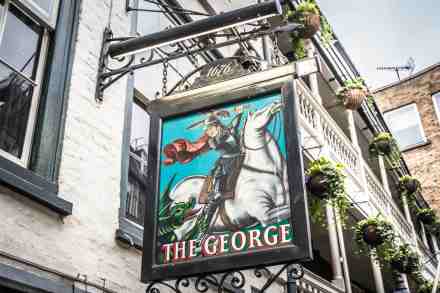
It is hard to think of a vegetable which is as eagerly anticipated as that of home-grown asparagus. Partly it is because the season is so short: St George’s Day traditionally marks the start of the season which typically lasts for just eight weeks. Absence makes the heart grow fonder and, so long as we resist the temptations of year-round flown-in asparagus from foreign climes, the arrival of the first spears of this vegetable grown on home soil is as exciting a moment as any in the culinary calendar. There are occasional disruptions to nature’s rhythm: last year frosts ruined large parts of the British crop forcing supermarkets to stock asparagus from abroad.

With Ameer Kotecha

20 min listen

Ameer Kotecha is a British diplomat, pop-up chef and food writer. His first cookbook the Platinum Jubilee Cookbook, in which he chronicles 70 recipes related to the Royals, Diplomacy and the Commonwealth comes out on April 28th. He has also launched alongside Fortnum & Mason's the Platinum Pudding competition, which hopes to discover the next best British dessert. On the podcast, Ameer talks to Lara and Liv about how his childhood was the perfect blend of British food with Indian influences, how he ran a school-wide campaign for seconds and how in all of his years as a diplomat, he has never been offered a Ferrero Rocher. For more recipes and recommendations, sign up to The Spectator’s free monthly food and drink email, The Take Away, at spectator.

In praise of British beef

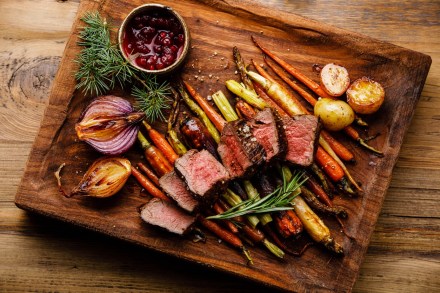
Beef is one of our proudest national exports. Though showcasing British beef to the world has at times had its challenges, one story raises a smile: as a result of BSE, British beef was banned in France during Lord Jay’s tenure as our ambassador in Paris. He and his wife Sylvia made a principle of serving only British ingredients at ambassadorial functions wherever possible – and, as a result, they felt they could not serve beef at all. As I recount in my forthcoming book, they did, however, have one triumph. Lord Jay recalled: 'Just as the ban was beginning to be lifted the French said that British beef could be imported to the great agricultural show at SIAL, provided that when the show was over the British beef was either burned or taken to the British Embassy.

How to roast Easter lamb

Easter is almost upon us and with it comes the mouth-watering prospect of roast lamb. It has become increasingly fashionable in recent years to eschew the leg and do a slow-cooked, meltingly tender shoulder of lamb for a Sunday roast. Rightly so, for the shoulder meat is rich and delicious, but when it comes to Easter there is something suitably grand and evocative of the new season about a whole leg brought to the table, pink in the middle and surrounded by spring veg. Rubbing it all over with olive oil, sea salt, garlic and rosemary is a classic preparation – adding some lemon zest too gives a welcome freshness.

How to eat well for less

Inflation is (if you’ll excuse the pun) biting. So how can you keep down the cost of the weekly shop and get maximum bang for your buck in the kitchen without compromising? I have always shopped by the yellow sticker and the discount aisle. When I first started getting creative in the kitchen as an early teen, I wanted to try searing scallops and practice filleting Dover sole, French-trim a rack of lamb, and prepare artichoke hearts – and none of that comes cheap. So, I went to the supermarket an hour before closing and bought from the man in the hairnet who I knew and who I liked to think knew me: I took home whatever was most reduced from the fresh counter and then tried to work out how to cook it.

How the Michelin Guide went green

Michelin, alone within the hospitality industry, possesses the ability to provoke elation or tears in professional chefs. If you thought the victims on the receiving end of an expletive-laden tirade from Gordon Ramsay were a sorry sight, just imagine the faces of the poor broken chefs who lose one of their coveted Michelin stars. Some may claim that they are an outdated measure of excellence and that they do not give a jot about them — the enfant terrible of the British restaurant scene, Marco Pierre White, even famously returned his, citing the crippling pressure they brought— but Michelin retains the power to reduce grown men to sobbing infants with one sprinkling of their stardust.

How to cook with wild garlic

In British cooking we have traditionally had a complicated relationship with garlic. Let the french use it to their hearts’ content: fine in a Toulouse but no thank you in a Cumberland. Suggestive of this wariness is wild garlic’s many names – ‘devil's garlic’, ‘gypsy's onions’ and ‘stinking Jenny’ amongst others. But in recent years British cooks have taken to wild garlic with unabashed relish (and indeed it makes rather a good one, as seen here). Food always tastes better having foraged or hunted for it yourself and so it is with wild garlic. The leaves appear in March and you will find them throughout spring but they are best picked early in the season.

How to spruce up your spice rack

They sparked the Crusades, built Venice, and spurred European colonialism. In many ways, spices and the spice routes along which they were traded, made the modern world. And how many other ingredients can make that claim? Not avocadoes, not goji berries, not truffle, no matter how fashionable. No, when it comes to historical importance, spices are in a league of their own. In medieval times black pepper was so valuable it was used as a currency, and worth its weight in gold. As an excitable Rick Stein explained on his journey around India in 2013, unscrupulous merchants in days gone by would cunningly cut the valuable pepper with mustard husks and even chimney sweepings to increase their takings.

The unstoppable rise of ‘bowl food’

Poke House last week opened four new restaurant sites in London. It is just the start of a fishy influx with the Californian-inspired poke bowl chain planning to open 15 London sites and 65 UK sites over the next year. It is little surprise; where West Coast America goes London soon follows. But the huge popularity of poke bowls has been entrenched for several years. In 2015 the LAist publication was already writing that 'The Poke Bowl Craze Is Getting Out Of Hand'. Six years on, poke’s staying power seems beyond doubt. Poke, for the uninitiated, means 'to slice or cut' in Hawaiian and consists of pieces of raw, marinated fish – usually tuna – that is tossed over rice and topped with vegetables and various vaguely-Asian sauces.

The secret to great bagels

Everyone should have a catering trick to easily host a large party. As Jeffrey Archer once told me, while pointing out Oxford landmarks as if it were his university rather than mine, he was famous for his legendary Shepherd’s pie and Krug champagne Christmas soirées. I have my own party formula: ‘Bagels and Booze’. I am passionate about East London bagels. So is everyone these days. It is perhaps the result of influence from across the Pond, bringing New York cool to our doughy daily sustenance. As a family we’ve been frequenting Brick Lane Beigel Bake for over 25 years. I was too young to comprehend much of London’s geography in those early visits. But I remember that whenever we came anywhere near East London the clamour for bagels would start.

The joy of Chicken Tikka Masala Pie

At this time of year, nothing beats a cosy tavern with steamed up windows, a roaring fire and hearty food. ‘Gastropubs’ have come under some justified criticism over the years: trying too hard to be restaurants and with prices to match, pricing out their former loyal clientele. Too many regular pubs meanwhile are happy to serve microwaved food or, as is the fashion nowadays, mediocre Thai cuisine. Pub or gastropub, the most successful food offerings at a good watering hole are often the pies. With any luck there will be options: picnic pies with hot water crust pastry (Crystelle from Bake Off recently produced a good-looking curried chicken and potato terrine pie) and the likes of shepherd’s pie topped with buttery mash.