Alexander Larman

Alexander Larman is an author and the US books editor of The Spectator.

Why is British espionage drama so in vogue?

If you’re a Paramount+ or Showtime subscriber, there’s a decent chance that you spent at least some of the Thanksgiving break watching the first two episodes of The Agency, the Michael Fassbender-fronted espionage drama that the company has invested a huge amount of money in. Based on the cult French series The Bureau, starring Matthieu Kassovitz, it’s a grim and self-consciously serious piece of drama, low on explosive shootouts and one-liners and high on tortured scenes of introspection, as Fassbender’s deep-cover operative, codename Martian, is brought in from the cold by his CIA superiors to their London outpost, only to realize that he has not been entirely honest as to a tortured romantic liaison that he went through in Africa.

espionage

Shutting Smithfield shows a reckless disregard for London’s history

From our UK edition

Virtually every aspect of London has changed beyond recognition in the past nine hundred years, but there has been one certainty: Smithfield Market, the city’s most famous and longest established meat market. Now even this great feature of London life looks set to be no more. The City of London Corporation has voted to withdraw support for Smithfield and Billingsgate fish market, meaning that the two markets will close permanently from 2028. The decision shows a reckless disregard for London's history. Now even this great feature of London life looks set to be no more A market was first reported existing at Smithfield in 1133, and it gradually expanded in reputation, size and noise over the next seven hundred years.

What will Elton John learn from Tammy Faye’s flop on Broadway?

Amid much hype and excitement last year, Sir Elton John, that most consistently busy of rock ’n’ roll stars, announced that he was going to retire from touring so that he could spend more time with his young children. Yet John has been nothing if not productive — and his definition of “retirement” has been more elastic than most seventy-seven-year-olds. In the last year alone, since he played his final full concert in Stockholm on July 8, 2023, he has participated in a major documentary, Elton John: Never Too Late, for which he has written a new song, performed at a high-profile international business event at St. Paul’s Cathedral in London last month and now has seen his latest musical, Tammy Faye, transfer to Broadway.

Is Cormac McCarthy finished?

During his lifetime, author Cormac McCarthy was renowned for being one of literature’s most retiring, even reclusive figures. Although his books and original screenplays were adapted into high-profile films by the likes of the Coen brothers and Ridley Scott, he barely gave interviews and preferred to lead a quiet and low-key existence in his own home own Santa Fe. Most believed that his solitude simply came about because of his desire to be left alone, but now an explosive new Vanity Fair feature has put a metaphorical rocket under McCarthy’s posthumous reputation. The article, written by Vincenzo Barney, reveals that, when McCarthy was forty-two years old, he fell in love with a sixteen-year-old girl, Augusta Britt, who he met by a motel pool.

cormac McCarthy

Reassessing Jerzy Kosinski

At the conclusion of Hal Ashby’s remarkable Being There, which celebrates its forty-fifth anniversary this month, comes a scene that has only acquired greater resonance and relevance since it first appeared. At the funeral of the plutocrat Ben Rand (Melvyn Douglas), the US president (Jack Warden) is delivering a heartfelt but somehow trite eulogy. As the pallbearers march away with Rand’s casket, which will be buried in the family mausoleum, talk turns to who should replace the president; the film has already suggested that he is suffering from erectile dysfunction and, wickedly, equates this with his falling popularity ratings.

kosinski

What on earth is Jaguar thinking?

From our UK edition

Along with Aston Martin and Rolls Royce, Jaguar is, for most people, one of the great British blue chip motoring brands. When Inspector Morse drove around the not-so-mean streets of Oxford in his burgundy Jaguar Mark II, the implicit association between the terribly English detective and the quintessentially stylish car was one that lingered on in viewers’ minds far beyond the show. Jaguar has always been that rare company that has conveyed an innate sense of style and class throughout its century-long existence. So why, exactly, have they decided to torpedo their hard-won reputation in such a perplexingly unforced fashion?

A century of Hollywood’s spectacular flops

From our UK edition

Gore Vidal once sighed that ‘every time a friend succeeds, I die a little’, and there is inevitably a sense that when some idiotic blockbuster makes $1 billion worldwide, our collective intelligence loses a couple of IQ points. It’s a relief, then, when the worst examples of their kind, made at enormous cost to negligible artistic impact, flop hideously: proof that audiences will not fork out for any arrant piece of trash. The most recent high-profile failure of this kind was Todd Phillips’s bewilderingly poor Joker sequel, Folie à Deux, which insulted its audience and thus precipitated its commercial failure.

Does Dune: Prophecy have what it takes to be a hit?

Denis Villeneuve’s Dune films represent two of the more remarkable turnarounds in recent Hollywood history. After the failure of David Lynch’s ambitious but deeply, deeply flawed Eighties attempt at filming Frank Herbert’s sprawling sci-fi epic, the project was seen as all but impossible, being both vastly expensive and presumed to be of interest mainly to the kind of young men who prefer to watch films in their parents’ basements rather than at their local theater. It also didn’t help that the first film was released day-and-date with the HBO Max streaming service; the fact that it made more than $400 million at the box office was, under the circumstances, something of a miracle.

dune prophecy

Can Conan O’Brien save the Oscars?

It is hard to think of the last time that the Academy Awards had a great host. Jimmy Kimmel did a competent job in 2023 and earlier this year, and was fortunate to sit out the notorious ceremony in 2022 in which Will Smith marched on stage to slap Chris Rock. Yet it’s impossible to remember anything really entertaining that Kimmel did or said — unlike his first time hosting in 2017, when the event fell apart in Curb Your Enthusiasm-esque chaos when La La Land was wrongly announced to have won Best Picture when in fact Moonlight had — and it’s no wonder that he didn’t want to return for a fifth go for next year’s ceremony. Many estimable comedians and chat show hosts have tried, and failed, to make their mark at the Oscars.

conan o'brien

Can a TV show survive the loss of its star? 

When Kevin Costner announced that he would not be returning to Yellowstone, the contemporary Western series that revitalized his career, the news was greeted with consternation. Costner had been the pivotal figure in the show’s previous four and a half seasons — and it was expected that he would return as the patriarch John Dutton III for the final installment, even though he was busy filming his own epic pictures, Horizon. However, amid well-documented spats between him and the show’s creator Taylor Sheridan, Costner announced that he would not, in fact, return for Yellowstone’s final episodes.   Rather than leaving the door open for a final, face-saving cameo, Sheridan dealt with Costner in brutal fashion.

star kevin costner yellowstone

The Royal Family must be careful with Kate

From our UK edition

If this year’s Remembrance Sunday was unusually affecting, it was in large part due to the presence of both the King and the Princess of Wales at the service. After one of the hardest years for the monarchy in living memory, surpassing even the so-called 'annus horribilis' of 1992, there is hope that, as 2024 draws to a close, business as usual has been resumed – as far as it can be. The King has been dutifully pursuing his obligations for some time now – including a high-profile recent visit to Australia – but it was Catherine’s appearance that most people have been eagerly anticipating.

It’s hard not to feel sorry for Prince William

From our UK edition

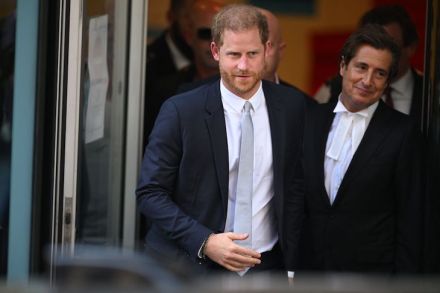
For all his wealth and privilege, it is hard to imagine wanting to be Prince William. Not only was he irrevocably changed by his mother’s tragic death when he was aged 15, but the past year alone has seen his wife and father diagnosed with cancer. His ongoing estrangement from his embarrassing younger brother continues despite the two of them having been in the same room together on at least one occasion. Added to this, an invasive and embarrassing journalistic investigation into his and his father’s landholdings over the weekend has contributed to a sense that the royals exist on an entirely separate plain to the rest of us.

The late Quincy Jones, a man of many talents

The death of Quincy Jones, at the considerable age of ninety-one, represents not just the passing of a great American musical icon, but the departure of a truly remarkable man from the stage. The winner of an astounding twenty-eight Grammy awards, he excelled in so many different areas of music — from record production and film soundtrack composition to big band jazz and multi-instrumental playing — that it would not have been particularly surprising to discover that he had written operas or symphonies on his days off.

quincy jones

Is King Charles’s honeymoon over?

From our UK edition

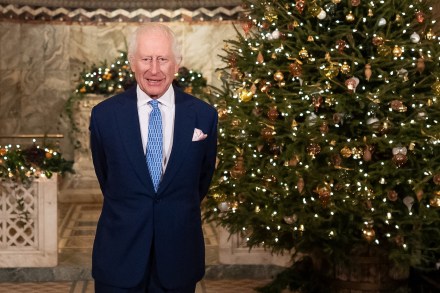
Since King Charles became monarch in September 2022, after the death of Elizabeth II, he has received reasonably warm treatment from the press. It is easy to forget that, for much of the 1990s and 2000s, he was seen as an unpopular figure, lambasted by the Diana-supporting tabloids for being an adulterer (never mind his former wife’s behaviour; he, apparently should have known better) and criticised in the broadsheets for excessive intervention in the work of the government. The notorious ‘black spider’ memos revealed the-then Prince of Wales as an interventionist figure, keen (perhaps overly so) to have his opinions and thoughts taken very seriously at the highest level, despite his being an unelected king-in-waiting.

History has been cruel to Wallis Simpson

From our UK edition

If there is one thing that Paul French’s forthcoming book Her Lotus Year should put right about Wallis Simpson, the Duchess of Windsor, it is that her so-called 'lotus year' in China in the 1920s was not the sexual bacchanal that it has been painted as by the prurient and the envious. Instead it was a formative – if exotic – experience that helped shape her into the woman she became. Yet rumours of Wallis’s outré behaviour have been common currency for the past century. Even French’s finely researched publication is unlikely to dispel our fascination with the so-called 'China dossier', an apocryphal account of all the wrongdoings that the Duchess got up to, years before she met the future Edward VIII.

Is Rivals the most outrageous show on television?

By now, television viewers should be inured to watching scenes of sexual congress on their screens. With any number of explicit programs airing over the past few years — given that mainstream cinema has more or less abandoned the sex scene, it is little wonder that it has snuck into the privacy of our homes — watching graphically depicted coupling should be nothing especially remarkable. But even so, the sheer amount of intercourse that is depicted in Hulu’s new adaptation of Jilly Cooper’s hugely successful novel, Rivals, comes as a surprise.

rivals

King Charles’s carefully worded reparations speech

From our UK edition

For his first formal address as head of the Commonwealth, King Charles would probably have preferred to veer away from controversy. Unfortunately, delivering an anodyne and people pleasing speech was not on the agenda.  Ever since it was announced that Samoa would be hosting a gathering of the 56 Commonwealth countries, it was inevitable that the hot-button issues of imperialism and western complicity in the slave trade would be high on the agenda, and the vexed issue of potential reparations has, inevitably, dominated proceedings so far.

Disclaimer is the best show on TV — and the most underrated

When the Oscar-winning filmmaker Alfonso Cuarón announced that his next project would be a seven-part adaptation of Renée Knight’s novel Disclaimer, it was met with a mixture of excitement and surprise. Excitement, because anything that Cuarón involves himself with tends to be an event; surprise, because after a series of high-profile recent projects that have included everything from a near-experimental sci-fi blockbuster (Gravity) to a black-and-white Mexican drama he shot himself (Roma), it seemed almost mundane, rather as if Stanley Kubrick, at the peak of his success, had decided to make a movie out of a Harold Robbins potboiler.

disclaimer

Keir Starmer’s concerning decision to ditch Shakespeare’s portrait

From our UK edition

Politicians are said to campaign in poetry and govern in prose. In the case of Keir Starmer, he campaigned in the most uninspiring, plodding prose imaginable, and has now chosen to govern in what might politely be compared to a child’s first attempt at poetry. It is all word-vomit and incomprehensible mumbo-jumbo.  The country needed a leader who could make a passionate and convincing case for the importance of literature. What we got instead was an Arsenal obsessive Still, this befits the character of a man who, according to reports, has overseen a steady exodus of portraits of key British figures from the walls of No. 10. First came down Margaret Thatcher, then Elizabeth I, and now, perhaps most egregiously of all, William Shakespeare.

Bordeaux

There’s more to Bordeaux than fine wine

In the seminal Casablanca, there is a classic moment when the Humphrey Bogart character is asked how he ended up there. Bogie, doing laconic and world-weary as only he could, replies, “My health. I came to Casablanca for the waters.” When Claude Rains’s iconic Captain Renault purrs, “Waters? What waters? We’re in the desert!” Bogart’s response is simple. “I was misinformed.” This exchange occurred to me when I recently visited Bordeaux, a city with awe-inspiringly beautiful architecture, some of France’s most stylish places to shop and eat, situated teasingly close to the beaches of the Atlantic coast. Yet if you attempted to tell anyone that you’d come to Bordeaux for history, couture or coastline, you’d get the Bordeaux version of “What waters?