Alex Massie

Alex Massie

Europe’s defence budgets may not be noble, but they are at least rational

From our UK edition

Gideon Rachmann is unhappy that european defence budgets are still falling: Since 2008, in response to the economic downturn, most big European countries have cut defence spending by 10-15 per cent. The longer-term trends are even more striking. Britain’s Royal Air Force now has just a quarter of the number of combat aircraft it had in the 1970s. The Royal Navy has 19 destroyers and frigates, compared with 69 in 1977. The British army is scheduled to shrink to 82,000 soldiers, its smallest size since the Napoleonic wars. In 1990 Britain had 27 submarines (excluding those that carry ballistic missiles) and France had 17. The two countries now have seven and six respectively.

The Myth of the Immigrant Benefit-Moocher, Part Two

From our UK edition

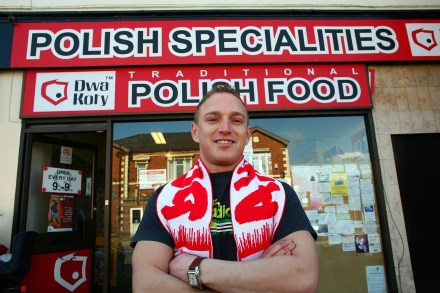
I am afraid, dear reader, that I have misled you. Yesterday's post on immigrants and benefit-claimants contained an inaccuracy. I repeated a claim I'd seen in the Telegraph that there are almost 14,000 Polish-born people claiming unemployment benefit in Britain. This is not the case. The true picture of Polish benefit-dependency is very different. There are, in fact, fewer than 7,000 Poles claiming the Job Seekers' Allowance. Indeed, there are fewer than 13,000 JSA claimants from the "Accession Eight" countries (Poland, Czech Republic, Hungary, Slovakia, Lithuania, Latvia, Estonia and Slovenia). Whatever else these eastern europeans have been doing in Britain, they've not been mooching off the benefits system. And it is a lie - dirty and simple - to suggest they are.

Lessons from Ronnie and Maggie

From our UK edition

Ramesh Ponnuru has written a splendid op-ed for today's New York Times. Splendid, not because it is new or especially original, but because, alas, it's central message needs repeating until, eventually, even the more dunderheaded class of Republican Congressman hears the message. And it is a simple message. Namely, that asking 'What would Ronald Reagan do?' is almost about as useful as mining Martin van Buren, George II or Charlemagne for policy advice that will help solve today's problems. I exaggerate of course, but only for effect. We are not now as we were then. Or, as Mr Ponnuru puts it: Republicans are very good at tending the fire of Ronald Reagan’s memory but not nearly as good at learning from his successes.

The Myth of the Immigrant Benefit-Scrounger

From our UK edition

The Sunday Express is at it again. It is outraged that Britain's prisons contain some inmates who were not born in this country. Of course, everyone is hopping aboard the immigrant-bashing bandwagon these days. Immigration, it sometimes seems, is something to be feared, not valued. I understand the political calculation behind all this. The restrictionists have carried the day and there are few votes in seeming "soft" on immigration these days. Which is a shame. But there you have it. Nevertheless, the immigration brouhaha increasingly bears more than a passing resemblance to a moral panic. As tends to be the case, such fears are not utterly groundless but they are hyped and exaggerated to a point at which they become irrational and, even, nonsensical.

Mr Micawber Goes to the Treasury

From our UK edition

John Rentoul draws attention to a new ComRes poll that goes some way towards explaining George Osborne's predicament when it comes to managing government finances. Put simply, the public is not interested in public spending cuts. On the contrary, British voters want to see public spending increase. Sure, they might agree that, all things being equal and in the broader scheme of matters, it might be a good idea if the government balanced the books but all things are rarely equal and as soon as you get into the narrow, particular view of these matters it becomes clear that, actually, the only departmental budget voters want to decimate is that small portion of government spending devoted to foreign aid.

Are the Tories united on Europe? Pull the other one.

From our UK edition

Party unity is one of those things you can measure by the frequency with which the idea is mentioned. The more often it is talked about, the less it exists. When a political party is actually united there's no need to mention party unity. As Isabel notes, Sir John Major has long, wearying, experience of this. The speech he gave yesterday is full of sound advice. Like many other leading politicians, Sir John seems more impressive - and commands more respect - as the years roll on and the memory of his own time in office fades. At Conservative Home Harry Phibbs responds to Major's speech with a piece that notes, in its headline, this "strange outbreak of Tory unity on Europe".

The Iraq War’s Real Victims? Laurie Penny and the Narcissistic Left

From our UK edition

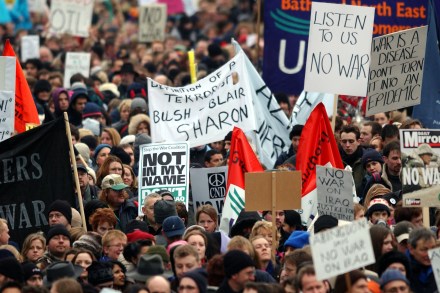
Don't take my word for it. Ask the redoubtable Ms Penny herself. Contemplating the "lesson" of the anti-war protests a decade ago, she writes: Tony Blair’s decision to take Britain into the Americans’ war in Iraq was an immediate, material calamity for millions of people in the Middle East. I’m writing here, though, about the effect of that decision on the generation in the west who were children then and are adults now. For us, the sense of betrayal was life-changing. We had thought that millions of people making their voices heard would be enough and we were wrong. Poor lambs. Of course there were millions of people around the world - including many in Britain - who would have been disappointed if Saddam Hussein had been permitted to remain in power.

David Cameron’s Immigration Reverse Ferret

From our UK edition

If you seek cheap entertainment, the sight of government ministers defending their immigration policies to the foreign press is always worth a sardonic chuckle or two. And, lo, it came to pass that David Cameron assured Indian TV that, actually and despite the impression his coalition may have given, Her Britannic Majesty's government is jolly keen on bright young Indians coming to the United Kingdom. Which is just as well. If, as the Prime Minister is keen on suggesting, Britain is but one entrant in a keenly competitive "global race" then it makes no sense at all to restrict our selection policy to those born on these sodden islands. The global gene pool is deeper and better than ours. Fortunately, Britain remains an attractive place to study, work and live.

No, Barack Obama has not declared an end to the War on Terror – Spectator Blogs

From our UK edition

I see that Con Coughlin is at it again. Apparently, you see, Barack Obama has "taken leave of reality". How so? By declaring that al-Qaeda is but "a shadow of its former self". That seems a reasonable statement to me. Moreover, the sensible response to that declaration is surely I should bloody well hope so. Otherwise what have we - that is, chiefly, the US Armed Forces - been doing these past dozen years? According to Con, however, the President is, at best, hopelessly naive and, more probably, abdicating from his responsibilities. You see: Is he forgetting that it is only five months since Chris Stevens, the US ambassador to Libya, died following an attack on the American Consulate in Benghazi by al-Qaeda militants?

The SNP’s Vision for Tartan Neoliberalism – Spectator Blogs

From our UK edition

The SNP's rise to power at Holyrood was predicated upon two useful qualities. First, the party has successfully contrived to appeal to different audiences without the contradictions in their doing so becoming either too blatantly apparent or too crippling. The SNP have targetted erstwhile Labour supporters in western Scotland at the same time as they have consolidated their power-base in distinctly non-socialist Aberdeenshire and Perthshire. This has been a good trick, played well. Secondly, of course, they were not the Scottish Labour party. Some 90% of SNP supporters profess themselves happy with Alex Salmond's leadership. In one sense this is unsurprising. He has led them to within sight of the promised land.

Obituary of the Week: Jungleyes Love – Spectator Blogs

From our UK edition

I've been on Jura on a Wedding Planning Immersion Course* these past few days so, apart from noting that the Pope is retiring (upon which I have no opinion), I've not been paying little attention to the outside world. Some things have crept through, however. Among them this splendid obituary in today's Telegraph. The intro is arresting and in the best tradition of Telegraph obituaries: Jungleyes Love, who has died aged 56, was an Old Harrovian hippie who traded in runic jewellery, dinosaur eggs and fossilised animal excrement, which he sold from his shop on the tourist trail to Kew Gardens in south-west London. Well, you want to know more, don't you? It may not surprise you to discover that Mr Love died unmarried. *Which, I'll have you know, I survived more or less intact.

David Ward and the Ruthless Suppression of Anti-Israel Criticism – Spectator Blogs

From our UK edition

David Ward, Liberal Democrat MP for Bradford East, is unhappy that his recent comments about The Jews attracted such widespread criticism. You see: "There is a huge operation out there, a machine almost, which is designed to protect the state of Israel from criticism. And that comes into play very, very quickly and focuses intensely on anyone who's seen to criticise the state of Israel. And so I end up looking at what happened to me, whether I should use this word, whether I should use that word – and that is winning, for them. Because what I want to talk about is the fundamental question of how can they do this, and how can they be allowed to do this." As machines go, this one seems a pretty Heath Robinson contraption, idiosyncratically constructed and wildly inefficient.

Whisper it, but the British economy may in better shape than you think… – Spectator Blogs

From our UK edition

Doom and gloom is all around. This is another winter, if not of discontent, then certainly of persistent grumbling. Optimism is as rare as a Scottish victory at Twickenham and, frankly, just as fanciful a thought. That, at any rate, is today's conventional wisdom. Fleet Street looks to a Triple Dip recession and ponders what side dishes will best complement the Chancellor's broiled reputation. And yet, and yet, I wonder - hesitantly, I grant you - if all this is quite accurate. Fleet Street, like Westminster, is often fighting the last war. Worse still, it tends to presume that what has happened will continue to happen and that present trends will last forever and a day and so on. No wonder the press is always surprised when this proves to be not the case. It is almost touching.

Cameron’s Gay Marriage Victory Showed Him As A Real Leader – Spectator Blogs

From our UK edition

And lo, the battle for British Gay Marriage was in fact a rout. True, half the parliamentary Conservative party voted against the measure. True too, this is now being considered further evidence that David Cameron's leadership skills - or, rather, since they are not the same thing - his party management skills are less than they might be. But, for once, I think focusing on Tory divisions misses the rather bigger, simpler story. Nearly half the Conservative parliamentary party endorsed gay marriage in the House of Commons. And they did it on a free vote. That is quite a thing.

Borgen and Scotland: A Love Affair Founded on Self-Congratulation

From our UK edition

Borgen - the title refers to the Danish equivalent of Holyrood or Westminster - has been terrifically popular amongst those people interested in sub-titled political dramas from Denmark. I fancy that viewers in England have simply enjoyed the programme for what it is: a well-made but impossibly smug piece of "progressive" political propaganda. In Scotland, however, it has been seen as something different: a glimpse of the future. Or, at any rate, one future. In one sense this is reasonable. Even if it is only a TV show, one can see why Scots - and nationalists especially - should be thrilled by a drama showing how the ineffably right-on leader of a small northern European nation can make a mark upon the world. No wonder Nicola Sturgeon is on record expressing her admiration for Borgen.

Lockerbie Novel: It Was Iran, Not Libya – Spectator Blogs

From our UK edition

From a very entertaining New York Times profile of Gerard de Villiers, the French novelist who, though little known in this country, is seemingly better connected in the spy world than any mere hack novelist has any right to be: Why do all these people divulge so much to a pulp novelist? I put the question to de Villiers the last time we met, in the cavernous living room of his Paris apartment on a cold winter evening. He was leaving on a reporting trip to Tunisia the next day, and on the coffee table in front of me, next to a cluster of expensive scotches and liqueurs, was a black military-made ammunition belt. “They always have a motive,” he said, absently stroking one of his two longhaired cats like a Bond villain at leisure. “They want the information to go out.

Irish food safety chief now appointed Irish horse chief – Spectator Blogs

From our UK edition

Some jokes just write themselves. Hurrah for Ireland: The former head of the Food Safety Authority of Ireland has been appointed chairman of Horse Sport Ireland. Prof Patrick Wall, who was the first chief executive of the Food Safety Authority of Ireland and has been a prolific commentator on the recent horsemeat in burgers scandal, takes up his position on the board of equine body today. [...]  "The thoroughbred guys have a saying, Brazil for the coffee, France for the wine and Ireland for the horses," he said, and public reaction to the horse meat scandal was evidence that "horses have a special place in Ireland". Indeed.

Half of the British Army’s officer corps is privately educated. Does that matter? – Spectator Blogs

From our UK edition

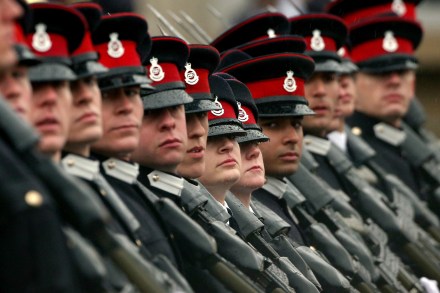
An interesting spot, courtesy of the good chaps at Think Defence. From Hansard: Diana Johnson (Kingston upon Hull North, Labour) To ask the Secretary of State for Defence what proportion of new recruits to the Army at (a) soldier and (b) officer level previously attended state school. Andrew Robathan (South Leicestershire, Conservative) The proportion of soldier recruits that had previously attended a state school is not held centrally and could be provided only at disproportionate cost. Including the most recent intake of officer cadets to the Royal Military Academy Sandhurst, in January 2013, 53.5% of the UK educated intake over the last 12 months came from state schools.

Is the press biased against the SNP? Probably. But we are all nationalists now. – Spectator Blogs

From our UK edition

So we have a question and it is a simple one. Should Scotland be an independent country? There, that wasn't so difficult was it? It is, after all, the nub of the matter. Granted, one might agree that Scotland should be an independent country but still conclude that being so is a different matter. That might be a metaphysical matter beyond the Electoral Commission's ken. Nevertheless, it is not an unreasonable question. Some reports seemed keen to spin this as some kind of 'setback' for Alex Salmond. Apparently dropping the preamble 'Do you agree' - included in the SNP's favoured wording - is yet another indication the nationalists are on the ropes. This is unpersuasive guff.