Alex Massie

Alex Massie

The Chilcot Inquiry is a pointless endeavour. Tony Blair’s critics will never be satisfied.

From our UK edition

I never really saw the point of the Chilcot Inquiry and nothing that has happened in the years since it first sat has persuaded me I was wrong to think it liable to prove a waste of time, effort and money. Dear old Peter Oborne pops up in today's Telegraph to confirm the good sense of these suspicions. Chilcot, you see, is most unlikely to satisfy Tony Blair's critics, far less provide the "smoking gun" proving that the Iraq War was a stitched-up, born-again conspiracy promoted by George W Bush and eagerly, even slavishly, supported by Anthony Charles Lynton Blair. This is not an argument about truth. If Chilcot fails to deliver a report confirming the existence of this kind of plot then this will be taken as proof that plot really existed.
Free Caledonia: a land of opportunity (and corporate welfare) for Big Business?

From our UK edition

It is not unusual to hear dark warnings of what might happen if Scotland votes for independence. Big Business is flighty. It is rather more unusual to hear leading business figures suggest they might leave Scotland if the country does not vote for independence. But that's what Jim McColl, the chief executive of Clyde Blowers Capital, has done. Scotland, he suggests, is held back by the fact that UK economic policy is dictated by the needs of the City of London and the south-east of England. I fancy there are plenty of folk in the north of England, Wales and Northern Ireland who might agree with that diagnosis. Independence is actually, I think, McColl's second-choice preference.

You’re going to lose. It is only you against many.

From our UK edition

If, in the aftermath of an act of would-be terror, the people refuse to be terrorised does it still remain a terrorist act? Perhaps but there's a sense, I think, in which we should not grant yesterday's guilty men the title "terrorist". Murderers, surely, will suffice? There is no need to grant them the war they so plainly desire. This murder in Woolwich was an uncommon act of barbarity; the product too of a kind of mental illness. That does not excuse the act, far from it, and there's no need to be sparing in our condemnation. But, appalled as we may be, it seems important to recognise and remember just how unusual these acts remain. There will, quite properly, be consideration of whether the security service could have done more.

The Sweet Sorrow of following Somerset Cricket

From our UK edition

Marcus Trescothick. Nick Compton. Alviro Petersen. James Hildreth. Craig Kieswetter. Jos Buttler. When all troops are fit and available Somerset enjoy a batting line-up one might compare favourably to this summer's visiting New Zealanders. Today they were dismissed by Sussex for 76. At Horsham. Granted, Compton and Kieswetter were absent but, even so, this was a dismal showing.  Somerset, damn it, won the toss and chose (rightly!) to bat. At the time of typing Sussex are 241/7. The best that may be said of it is that this year the Wurzels are not teasing their supporters. A season that began with hopes that - at last! - the Cider Men might become Champions of All England is already doomed.

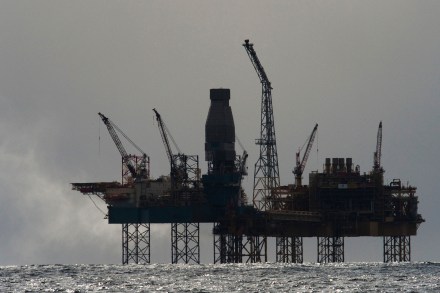
Scottish independence: it’s still (almost) all about oil.

From our UK edition

The Scottish government published a paper on the national economy today that, according to Alex Salmond and Nicola Sturgeon, makes the case for independence. You can read the pamphlet here or the BBC's summary of it here. Most of it was relatively uncontroversial. As Salmond himself said "even" Unionists agree Scotland could survive and perhaps even prosper as an independent nation state. It would be depressing if this were not the case after 300 years of Union.

Will Nigel Farage and UKIP help ditch Alex Salmond?

From our UK edition

Yesterday's Survation poll reported that UKIP (22%) are, for the moment, just two points behind the Tories (24%) and therefore and given the margin of error in these things possibly tied or even ahead of the senior governing party. Blimey!  It is understandable, therefore, that the idea we are on the brink of a Great Realignment in British (or rather English) politics is popular today. See Iain Martin's Telegraph column for an excellent example of this. He says it feels as though the right has split irrevocably. He may be right! British politics has been extraordinarily stable since the Labour party supplanted the Liberals. Nothing, really, has changed. At least, nothing of real importance and at least not in England. That can't continue forever.

UKIP, Pierre Poujade and a political class that’s seen to be “out-of-touch”.

From our UK edition

Parliament is a "brothel". The state is an enterprise of "thieves" engaged in a conspiracy against "the good little people" and the "humble housewife". Time, then, for a party that will stand up for "the little man, the downtrodden, the trashed, the ripped off, the humiliated". Not, as you might suspect, the most recent UKIP manifesto but, rather, the sentiments expressed by Pierre Poujade during the run-in to the 1954 elections to the French National Assembly. Poujade's party, the Union to Defend Shopkeepers and Artisans,  shocked France's political elite by winning 2.5 million votes and sending 55 deputies to Paris.

The swivel-eyed loons in the Conservative party are revolting. And they are right to revolt.

From our UK edition

Clearly it is not a good idea for the Prime Minister's chums to call members of the Conservative party "swivel-eyed loons". No, not even at a "private dinner party". I suspect that the identity of the "senior Conservative" who is "socially close" to David Cameron will be out by close of play Sunday and that he - it seems most unlikely it is a she - will, as James says, be removed from whatever position of responsibility he currently enjoys. I also suspect most voters will have no idea who this man is even once his name is revealed. That doesn't matter. Adrian Hilton wrote a good piece at ConservativeHome last year detailing his experiences with falling Tory membership in Beaconsfield.

Nigel Farage Comes to the Brave New Scotland

From our UK edition

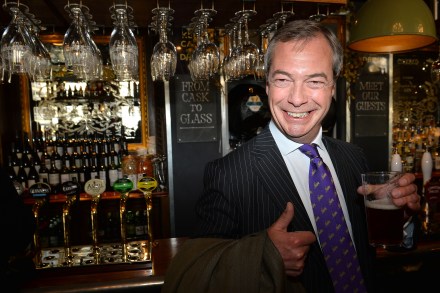
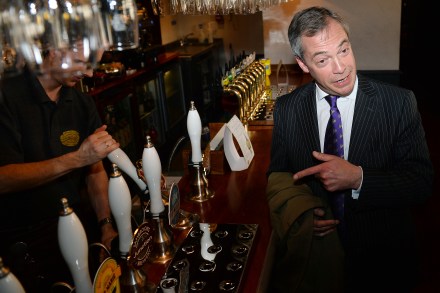
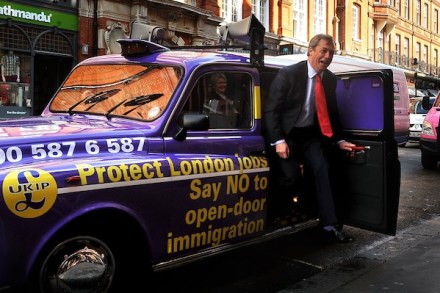
I am not quite sure I understand why Nigel Farage opted to launch UKIP's Aberdeen by-election campaign in Edinburgh. Then again, UKIP are a puzzling party. In any event, it all went rather well. Not just because forcing Nigel Farage to "flee" and take "sanctuary" in a pub is the kind of hardship up with which the UKIP leader can fondly put, but rather because the sight of Mr Farage being jostled and shouted down by left-wing "radicals" is one of the few things liable to provoke some measure of sympathy for UKIP north of the border. UKIP thrives on farce and chaos. The goons from something calling itself the "Campaign for Radical Independence" ensured that a visit that would otherwise passed almost un-noticed received plenty of coverage. Heckuva job, lads.

Hitched

From our UK edition

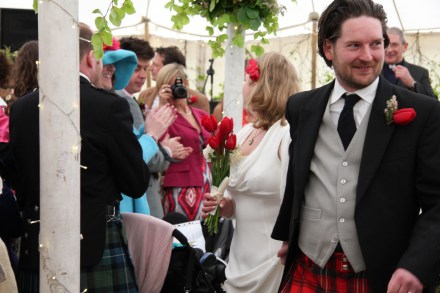
Well, the deed is done. Many thanks to those of you who sent your best wishes here or on Twitter or wherever. Very kind of you and much appreciated. It's all still sinking in, frankly. Time passes agreeably slowly on the Hebrides and it scarcely seems only a week since we last spoke here. Time stretches without newspapers, television or the internet. Given the state of the world this may be no bad thing. Anyway, back now and normal service will resume from today.  What larks.

Who is allowed to speak for, and to, Scotland?

From our UK edition

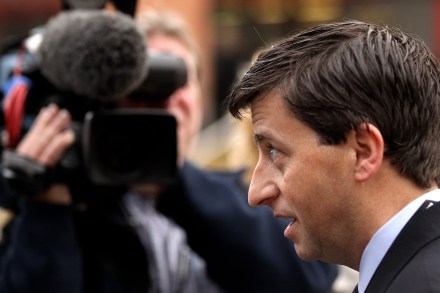
I shall be on hiatus for the next week as I'm getting married on Saturday and I have an inkling that this is no time to be concerned that people are wrong on the internet. I leave you with my latest  Think Scotland column in which I consider some of the topics raised by Douglas Alexander in the Judith Hart Memorial Lecture he delivered last week. Douglas Alexander, probably the most thoughtful Scottish Labour MP (though I accept you may consider that only a minor accomplishment), delivered a typically interesting lecture last week. In it he suggested Scotland needs “a politics of opponents. Not enemies. We need a discourse of political difference, not a politics that descends into personal destruction.” Indeed.

The Tory Tumbrils Begin to Roll for David Cameron

From our UK edition

As I type this, pundits in London are stiffening themselves for the tough task of over-interpreting local election results and projecting wildly unrealistic forecasts for the next general election on the back of a mid-term election in which the electorate is of an entirely different type to that which will vote in 2015. It's a grim job but someone has to do it and it's better that it be done with enthusiasm than with any sense of proportion. Mercifully, my friend and former boss Iain Martin is not one of those types. Be that as it may, however, he has written a column for Friday's Telegraph that is both typically acute and evidence of how the Tory winds no longer blow in David Cameron's favour.

A Tory party that is spooked by UKIP is a Tory party that will lose the next election

From our UK edition

UKIP are buoyant and, all of a sudden, everyone's favourite protest-group. In a curious way, the confirmation that many of their candidates really are boggle-minded, eyes-popped extremists of one stamp or another almost helps UKIP. It confirms that they're not like the other political parties and encourages people to adopt them as the Sod it, I'm just mad as hell and I'm not going to take it any more party. (These people tend not to be attracted to libertarian parties; just as well UKIP is not a libertarian party.) But UKIP should enjoy this moment while they can. They will remain a presence on the political scene and they will fare splendidly at the next elections to the european parliament. Nevertheless, Farage-Mania seems likely to have a pretty short half-life.

This Britain: Maria Miller confuses economics with pleasure and beauty.

From our UK edition

Is it possible for a government minister to give a speech that is not a "keynote address"? That was my first thought upon reading Maria Miller's speech at the British Museum last week. My second thought was remembering the old saw that any time a government minister talks about "culture" it is sensible to reach for your Browning.  Thirdly, I recalled that Maria Miller is the kind of Commissar whose officials think it sensible to threaten journalists. So I suppose that I was predisposed to think poorly of her speech on the economic importance of the arts. Well, it was still a rotten speech that lived-down to these low expectations.

The Miracle of Globalisation: Most of the World has Never Had It So Good

From our UK edition

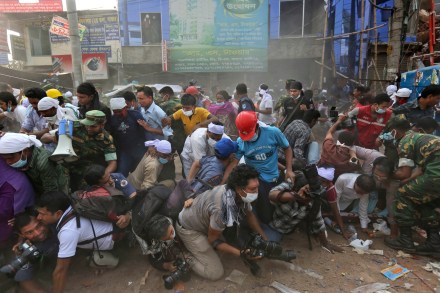
Could life in Bangladesh be better? Of course it could. Is life in Bangladesh getting better? Of course it is. The horrific death toll after a factory building collapsed in Dhaka last week encourages us to forget this second point. But we should still try and remember it. Sensible advocates for reform and improvement know that globalisation has made an enormous difference to Bangladesh just as it has in many other poor countries. That more could be done to provide safer working conditions is scarcely in doubt. Similarly, you can be in favour of globalisation and still think Bangladeshi textile workers should be able to organise themselves in Trade Unions.

In Praise of Sweatshops

From our UK edition

In today's Telegraph David Blair has a strong and angry piece arguing that we - that is, western consumers - are complicit in or partially responsible for the deaths of nearly 300 Bangladeshis killed when the building in which they worked collapsed. Many will agree with him. This, they will say, is the true price of our addiction to (or, rather, preference for) cheap clothes manufactured in often appalling conditions. If you shop at Primark today you have blood on your hands. In the aftermath of an appalling accident such as this it is no surprise that people are calling for more to be done.

The Rehabilitation of George W Bush: A Sisyphean Task

From our UK edition

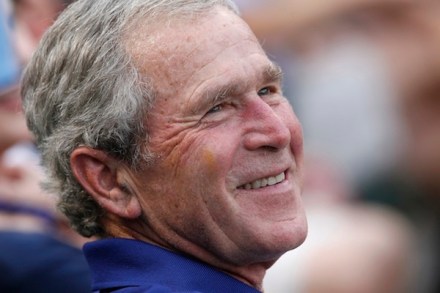
Freddy Gray is quite correct: the drive to rehabilitate George W Bush is suspicious. It is also a dog that won't hunt. It is true that recent opinion polls have reported that Dubya is more popular than when he left office but this is surely chiefly a consequence of the public forgetfulness. Returning to the spotlight can only be bad news for Bush's reputation. It will remind people why they were so pleased to be rid of him in the first place. Because, in the end, an administration bookended by the worst terrorist attack in American history and the gravest financial crisis since the Great Depression can't be spun as much of a success. It just can't. True, presidential reputations change over time.

Do the Americans want Britain to renew Trident?

From our UK edition

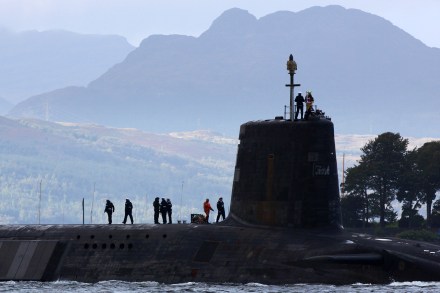
What is the point of Britain's nuclear deterrent? If it is an insurance policy it is a remarkably expensive one that might not, in any case, ever be honoured. I suspect that, more importantly, retaining an independent [sic] nuclear capability is a psychological crutch for politicians who fear that leaving the nuclear club would somehow make it harder for Britain to remain a member of the Top Nation club. And perhaps it would. This is not necessarily a trivial thing. It would change the way we think of ourselves and might, in some sense, be considered an admission of defeat or as some kind of retreat. No Prime Minister wants to be the guy remembered as that guy and this, plus other institutional pressures helps make the case for replacing Trident. But at what cost?

Why oh why oh why can’t Barack Obama be more like Lyndon Johnson?

From our UK edition

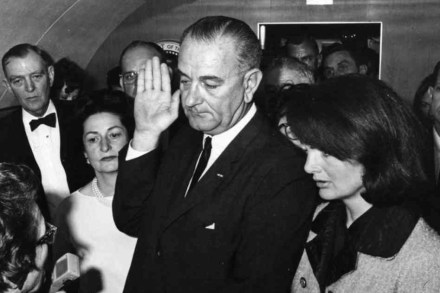
So, is Barack Obama a wimp or just another lame-duck second-term President? Maureen Dowd, in her typically sophomoric fashion, appears to believe that the failure to pass gun control legislation shows that the President has not been paying enough attention to Aaron Sorkin movies. Tim Stanley, who at least knows something of how Washington works, suggests this failure reveals Obama as a lame-duck. Today's New York Times piles on with an article asking, essentially, why oh why BHO can't be more like LBJ. As is so often the case, a presidential setback must be attributed to an absence of Presidential willpower. The Cult of the Presidency is an eternal flame that can never, ever, be extinguished.

Are the SNP’s plans for a currency union a) Expedient, b) Sensible, c) Dangerous or d) All of the Above

From our UK edition

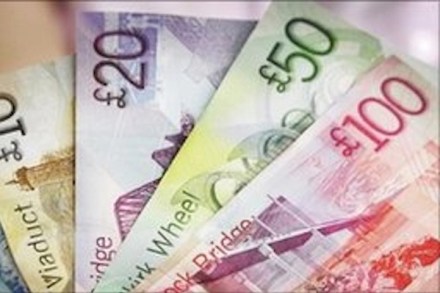
Even if George Osborne is right about the problems of a currency union between an independent Scotland and the rest of the UK he possesses the uncanny knack of being right in such a disagreeable fashion that one's loath to give him any credit at all. Still, as an attack dog he has his uses and he has picked an interesting day - St George's - to come to Scotland to noise up the Jocks. I don't know if the SNP will mind this too much. The nationalist view, I think, is that people will concentrate more on Osborne's manner than on the substance of what he is saying. This may be correct but it is also the case that it does remain possible for something to be said by George Osborne and still have some measure of truth. Even so, the bank note question is a red herring.