Alex Massie

Alex Massie

Ed Miliband adopts a rope-a-dope strategy on Europe

From our UK edition

Hopi Sen is not alone. There are many people in this country supremely indifferent to the whole and vexatious question of whether or not there should be a referendum on Britain's continued membership of the European Union. Yes, yes, they will tell pollsters that if they must they suppose they might fancy having a referendum some day. But they don't really care. They mumble about a referendum because that seems the done thing to do and because when a pollster asks you if you'd like to have a say on something it sounds better to say Yes than No thanks, I really can't be bothered. And sure, if pressed, they might grumble and chunter about the European Union too and say that it seems to be an unnecessarily invasive institution - or set of institutions, treaties and agreements.
The British constitution has never made sense or been fair. Why expect it to do so now?

From our UK edition

Well, yes, Hamish Macdonell is correct. A coherent devo-max option could win the referendum for Unionists. Some of us, ahem, have been arguing that for years. There were, of course, good reasons for insisting that the referendum vote be a simple Yes/No affair. A single question cuts to the heart of the issue and, notionally, should produce a clear outcome. Nevertheless it also greatly increased the risk - or prospect, if you prefer - of a Yes vote. A multi-option referendum would have killed a Yes vote. But if Hamish is correct I am not, alas, so sure the same can be said of Comrades Forsyth and Nelson. James writes that: The lesson of devolution is that we tamper with the constitutional framework of the United Kingdom at our peril.

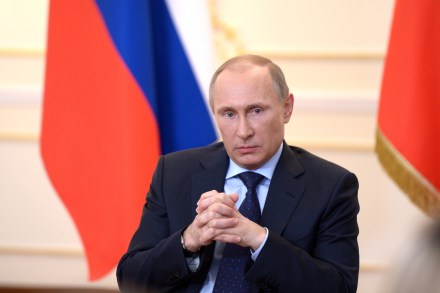
The clock is ticking for Vladimir Putin in Ukraine. He has missed his best chance of victory.

From our UK edition

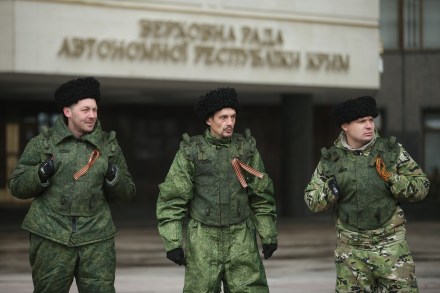
Tick tock. Tick tock. Time is running out in the Ukraine. Time passes and cements the "facts on the ground". Russia controls the Crimea and, one way or another, we should probably expect the province's referendum to endorse a return to Moscow Centre. Whether Crimea's plebiscite can or will be conducted honestly is a different matter but that, in the end, is not the most important issue. Indeed the fate and future of Crimea is, if hardly an irrelevance, a question of secondary importance. It is not the major front in this struggle. Russia's actions in the Crimea are plainly illegal and unjustified but they were supposed to be the catalyst for action elsewhere.

Vladimir Putin is losing the battle for Ukraine

From our UK edition

[audioplayer src="http://traffic.libsyn.com/spectator/Untitled_2_AAC_audio.mp3" title="Anne Applebaum and Matthew Parris debate how far we should let Russia push" startat=81] Listen [/audioplayer]It is always tempting, in the field of foreign affairs, to suppose we are led by dupes and fools while our opponents enjoy - or endure -  leaders of boundless cunning. We are over-matched; they are playing three-dimensional chess. We are weak, they are strong. We are easily distracted, they are single-minded. We compromise, they are implacable. It is easy to over-estimate the opposition while under-estimating our own capabilities. Sometimes this has unfortunate consequences. Saddam Hussein, for instance, had to be hiding something.

Alex Salmond’s taxing realism: Scotland cannot afford socialist dreams

From our UK edition

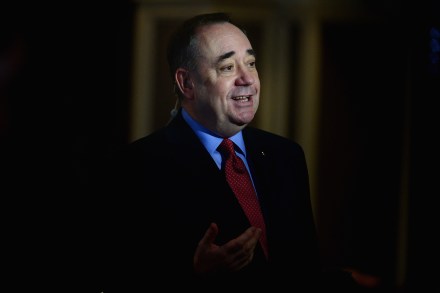
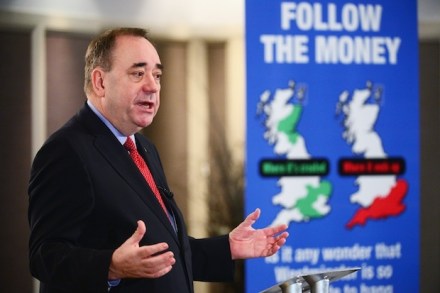
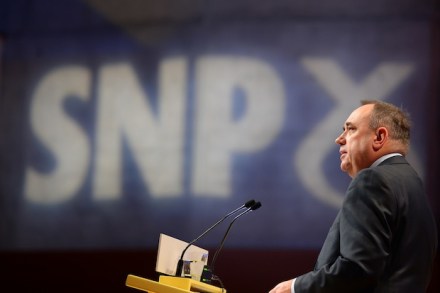
Alex Salmond ventured south last night to lecture inform the citizens of what he termed Britain's 'Dark Star' of his latest plans. You can read his New Statesman lecture here. The most telling moment of the evening came, however, when George Eaton asked if Salmond favoured raising taxes on the wealthiest Scots. Specifically, did he find the notion of raising the top rate of income tax to 50 per cent attractive? No. Or as the First Minister put it: 'We don't have proposals for changing taxation. We certainly are not going to put ourselves at a tax disadvantage with the rest of the UK.' It's not quite read my lips, no new taxes but it's not far from it. This should not surprise long-term readers.

Say it loud, say it proud: UKIP are a party for reactionary xenophobes

From our UK edition

Sometimes what doesn't occasion interest or drama or controversy is more interesting - or at least more telling - than what does. So perhaps it is a tribute to the extent to which Nigel Farage and UKIP are now entrenched in the body politic that Farage's speech to the party's latest conference appears, as best I can tell, to have been treated as just another routine appearance by just another politician. Move along now, not a lot to see here. Not much news, not many dead. That is, the reaction has been There he goes again. We know Farage's thing these days and it no longer shocks or even, I fancy, entertains. So when the mask slips no-one is surprised any more. Because the mask is no disguise at all. It is just the same as the face behind it.

Standard Life becomes the latest firm to bully Scotland. But is it bluffing?

From our UK edition

No-one should be surprised that Standard Life has warned it might leave Scotland should the country vote for independence later this year. It is not exactly a secret that Edinburgh's financial services industry is concerned by the possible - indeed plausible - implications of independence. The suggestion - sorry, the threat - that it might leave Scotland is already being characterised by nationalists as yet more bullying, this time of the corporate rather than political kind. No doubt this is a blustering bluff too.  But what if it isn't? The sorry truth is that Edinburgh's financial sector is not quite what once it was. The Bank of Scotland is a small part of the Lloyd's group. So is Scottish Widows.

Whatever happened to Scotland’s timid posh folk?

From our UK edition

Whatever happened to Scotland's upper-middle class? That's one of the questions asked by Hugo Rifkind in his characteristically interesting column this week. Why, more to the point, are they so reluctant to play a part in the independence stushie? When did they become so bashful? It is time, Hugo says, for the timid posh folk to speak out. Perhaps. But the alumni of Scotland's private schools are hugely unrepresentative of Scottish life and, in many cases, far removed from the Scottish mainstream. Privately-educated Scotland is a tiny place. Everyone knows everyone (though the saddest people in Scotland are those who know only privately-schooled people). Even in Edinburgh.

The Etonian, the SNP and the Black, Black Oil

From our UK edition

You will recall that, according to the greatest account of England's history, every time the English thought they had solved the Irish Question, the Irish changed the Question.  Something similar afflicts David Cameron's grapplings with the Scottish Question. The poor man is damned if he does and equally damned if he doesn't. The other week he was lambasted for his effrontery in giving a speech about Scotland in, of all places, London. Today he is lambasted for bringing his cabinet to Aberdeen. How dare he lecture us from afar; how dare he venture north like some touring proconsul! The optics, as the pros say, are not very good for the Prime Minister. The cabinet very rarely comes to Scotland. Drawing attention to that fact may not help Mr Cameron's cause.

Tory Europhobia cripples Britain’s attitude to the Ukrainian crisis

From our UK edition

Colin Freeman, the Telegraph's fine chief foreign correspondent, made a remarkable claim the other day that merits wider attention. What, he asked, was Britain's view on the crisis in Ukraine? The answer was revealing for many reasons, not the least of which being the extent to which eurosceptic myopia has, according to Freeman, caused Britain to misjudge the dramatic events unfolding in Kiev and elsewhere. According to Freeman: The depth of Euro-scepticism in Britain meant it cared little either way when Ukraine was gearing up last year to sign an EU trade agreement that would have brought it out of the Russian orbit. In Downing Street, the view was that Europe’s outer borders were already quite extended enough.

Who are the real bullies in the Scottish independence debate?

From our UK edition

Stewart Hosie, the SNP's finance spokesman at Westminster, said something unwittingly revealing last night. Taking part in the latest of BBC Scotland's referendum debates (you can catch it here), he observed that: There is a plan from the Scottish government and the Yes side… What we don't have is a plan a from the No people about what happens in the event of a No vote. So I want them to explain to you today when are they going to cut £4bn from Scotland's budget? [...] There is precisely nothing from the No camp to explain what they're going to do to Scotland in the event of a no vote. Give Hosie marks for honesty. You don't often get it as clear as this. I don't think Hosie mis-spoke here. Not when he's inventing a phantom threat to the Scottish block grant.

Revealed: the Salmond-Osborne Tapes

From our UK edition

A recording of a conversation between Alex Salmond and George Osborne has been leaked* to The Spectator. An edited extract follows: Alex Salmond: Scotland and England are different countries. So different, in fact, that we should no longer live together. Our interests have diverged and so must our futures. George Osborne: I do not think that is the case. Nor, by the way, do I hope it is. Alex Salmond: But it is! George Osborne: [wearily] Perhaps you are right. Very well; if our interests and futures diverge then perhaps, as you suggest, present arrangements will no longer prove as satisfactory as once we thought they were. Alex Salmond: I knew you would see the light.

Osborne nixes currency union; Salmond hops around claiming it’s only a flesh wound

From our UK edition

An interesting day, then. As I suggested yesterday, George Osborne has ventured across the border on a punitive raid. Nothing like a spot of rough wooing to get you through the winter. The reaction from Scottish nationalists has been interesting, to say the least. Some seem most affronted. Who the hell does George Osborne think he is, anyway? He'll no be telling us what currency we may use. Perhaps not but he - or Ed Balls - is certainly entitled to set out his view of what may be in the best interests of the rest of the United Kingdom. And if that view differs from the Scottish view then tough. Be that as it may, it never ceases to amaze me that nationalists, having declared war upon the British state, are so shocked or appalled when the British state fights back.

George Osborne gives Alex Salmond a lesson in power politics

From our UK edition

Politics is about power. It is surprising how often this is forgotten. Power and the application of power. Sure, there's policy too and noble aspiration and all that happy-clappy stuff but, in the end, politics is a question of who gets to wield the big stick. Lyndon Johnson knew this; so does George Osborne. In the long and sometimes unhappy history of these islands that has more often than not meant power has resided with the English. As Osborne is reminding us, it still does. Osborne, who has little to lose in the popularity stakes north of the border, is being quite brutal. The idea, much insisted upon by Alex Salmond, that an independent Scotland could enter a currency union with the remaining parts of the United Kingdom is fanciful. Poppycock. Daft. Not happening.

With friends like these the Union has no need for enemies

From our UK edition

[audioplayer src='http://traffic.libsyn.com/spectator/TheViewFrom22_6_February_2014_v4.mp3' title='Alex Massie and Matthew Parris discuss why the Union is in peril' startat=55] Listen[/audioplayer]In the cover story for this week's edition of the magazine (subscribe, by the way!) I write that "The battle for Britain is being conducted on a wavelength which unionist politicians in London struggle to pick up." As if to prove my point, consider this story from today's Financial Times in which it is revealed that government ministers in London have been pressuring defence companies to "highlight potential job losses and disruption if Scotland splits from the UK".

Alex Salmond is within striking distance of victory. Why hasn’t England noticed?

From our UK edition

 Edinburgh [audioplayer src='http://traffic.libsyn.com/spectator/TheViewFrom22_6_February_2014_v4.mp3' title='Alex Massie and Matthew Parris discuss why the Union is in peril' startat=55] Listen [/audioplayer]A century ago, with Britain in peril, Lord Kitchener’s stern countenance demanded that every stout-hearted Briton do their bit for King and Country. ‘Your country needs you’ rallied hundreds of thousands to khaki and the Kaiser’s War. Today, with Britain in peril again, you could be forgiven for asking where Kitchener’s successor is. A new recruiting poster might cry: ‘Britons: Wake up! Pay attention! Your country really is at risk!’ The threat, of course, is domestic rather than foreign (for now, at least).

Relax, you can safely ignore BP’s “warnings” about the impact of Scottish independence

From our UK edition

Why, a Tory grandee asked me recently, won't more businesses come out against Scottish independence? It was, in his view, axiomatic that independence would be bad for businesses north and south of the border. So why the silence? Perhaps, or at least in part perhaps, because when businesses do raise their concerns they often contrive to present themselves as hopeless chumps. I am sure Bob Dudley, chief of BP, is personally committed to Britain but the idea, as expressed in an interview with the BBC, that Scottish independence creates "big uncertainties" for his business is poppycock. Well, a kind of poppycock anyway. It would require BP to operate in another country and I can see why the petroleum giant would be happy to stick with the familiar status quo.

Enjoy the Winter Olympics but remember – and listen to – Pussy Riot as well.

From our UK edition

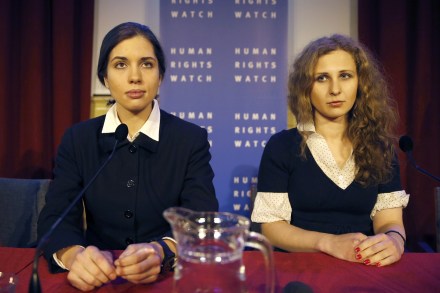
And so to the winter Olympic Games which should not be hosted by Vladimir Putin's Russia. Sure, Putin's Russia is not nearly as horrific as Stalin's Russia but when that's the yardstick for decency you know you've bankrupted yourself. Was anyone taken in by Putin's decision to release a handful of political prisoners recently? Shame on them if they were gulled by such an obvious play. Again, it is better that the likes of Mikhail Khodorkhovsky and Pussy Riot's Maria Alyokhina and Nadezhda Tolokonnikova freed but they should never have been in prison in the first place. The upside, as so often in Russia, is heavily qualified.

Imagine the uproar if a Tory minister proposed a “do-it-yourself” NHS?

From our UK edition

Consider these two stories. In the first the government approves new proposals to overhaul hospital outpatient care. For once there isn't even much of a pretence that this will improve healthcare. It's simply a question of saving money. Assuming the new proposals are implemented, many outpatients who had hitherto enjoyed (or endured) hospital appointments will be told to stay at home. Indeed they will be advised to "treat themselves". What contact they have with a consultant will be of the "virtual" kind. Perhaps a quick telephone call if they are lucky. More likely, they will be told to download an app to their phone which will tell them how to manage their condition or affliction. In other words, a DIY NHS. Or, if you prefer, some real privatisation.

The Battle for Threadneedle Street

From our UK edition

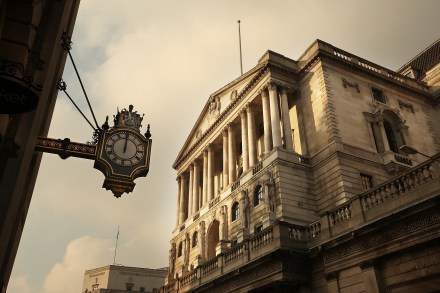
I thought it obvious that Mark Carney's trip to Scotland yesterday was a bad day for Alex Salmond and the Scottish nationalists. Sure, the governor of the Bank of England said, a currency union between Scotland the the rump UK could happen and be made to work but it would be fraught with difficulty and sacrifice too. Do you really want to do that? How lucky do you feel? Carney, being a Canadian and therefore a man crippled by politeness, did not add "punk". In response the SNP were reduced to pushing a meaningless poll which found 70% of Britons favouring a currency union after independence. That is, 70% of the 97% of people who have not thought much about this or who know nothing about it favour the status quo. Perhaps that sounds harsh or insulting; it isn't meant to be.