Alex Massie

Alex Massie

Douglas Ross is right: Boris Johnson must go

From our UK edition

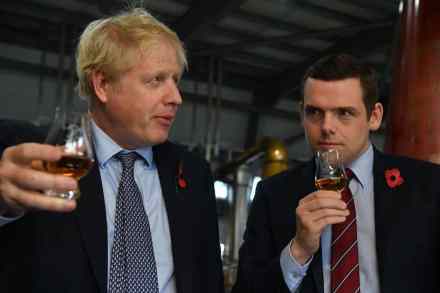
In May 2020 Douglas Ross resigned from Boris Johnson’s government. Though only a junior minister in the Scotland Office – Ross was not at that time a member of the Holyrood parliament or leader of the Scottish Conservative and Unionist party – Ross was still the most senior figure to resign in protest at how the government handled the Dominic Cummings affair. Ross was clear: Cummings had plainly broken the government’s own Covid rules and, this being so, decency demanded he clear his desk. No-one, not even the great Cummings, could be thought indispensable. As it happens, the Cummings story broke just a couple of days after the Prime Minister and his then fiancee attended a BYOB post-work piss-up in Downing Street.
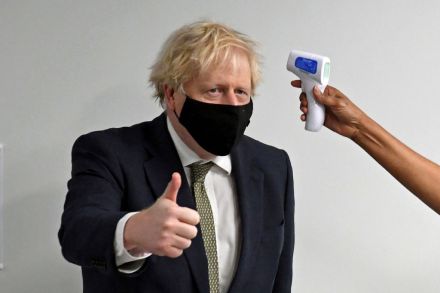
The unfathomable inadequacy of Boris Johnson

From our UK edition

There is no room for wriggling here and not just because multiple witnesses put Boris Johnson and his wife at the scene of the stupidity. If Boris Johnson had not been aware that 100 people who work in the same building as him had been invited to a post-work BYOB shindig, even he might have noticed a crowd of 30 to 40 gathering in his garden. And he might then have popped a prime ministerial head out of the window and asked what the bloody hell the partygoers thought they were doing. But of course nothing like that happened because the Prime Minister must surely have known about it all along. The invitation, after all, came from his principal private secretary, not some rogue Downing Street employee.

The joy of Boris’s bungled by-election

From our UK edition

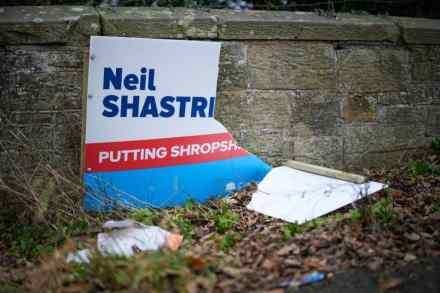
By any reasonable standard the result in the North Shropshire by-election must be reckoned the funniest in years. Perhaps even decades. All governments need checking from time to time and desserts are always served justly. So this is a welcome result and not just because it is, viewed objectively, hilarious. Nevertheless, it is quite an achievement to lose a seat held by the Conservatives, in one shape of another, for 120 years. To do so just two years after winning more than 60 per cent of the vote and a majority of almost 23,000 votes is quite something. To do so to the Liberal Democrats, who took just ten per cent of the vote in 2019, is really quite something.

Boris Johnson is eating reality

From our UK edition

It is neither fair nor correct to say it was obvious from the moment Boris Johnson became Prime Minister that he was not fit for the job for this was a truth obvious long before Johnson entered Downing Street. Nothing in his career suggested a man capable of making a success of one of the country’s most demanding jobs. What was foreseeable was in fact foreseen. Voters may be excused for accepting Johnson’s promise to ‘Get Brexit Done’ and for preferring him to the grisly prospect of Prime Minister Corbyn — but those Tory MPs who put that choice in front of them have no such excuse. They knew the calibre and character of the man they chose and they cannot claim to be surprised by what has happened since.

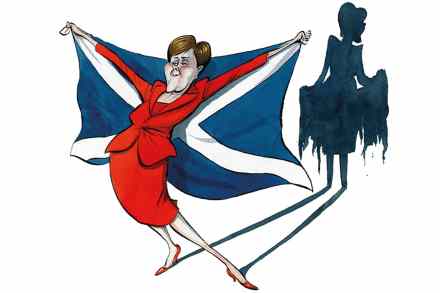
Is this the beginning of the end for Nicola Sturgeon?

From our UK edition

The SNP are holding their annual conference this weekend and, the times being what they are, it is a virtual affair. Speeches have been recorded in advance and I understand at least one cabinet minister was informed his first effort failed to meet the required standard and needed to be recorded again. Perhaps it was insufficiently boosterish. As is by now a matter of time-honoured tradition, no SNP gathering — whether in person or via video — can take place without the announcement of a fresh push for a second independence referendum. These are launched every spring and then launched again every autumn. That none of them ever produce anything of substance must now be considered part of their charm. A sham performance for a party willing to believe in anything except reality.

Boris’s rail betrayal is no surprise

From our UK edition

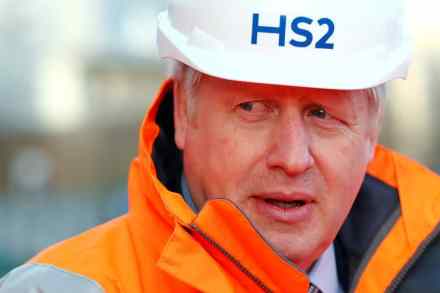
A promise made is merely a promise waiting to be broken. If events complicate life for all governments it is nevertheless apparent some governments are more likely to abandon their promises than others. And by now no-one should be surprised that a government led by Boris Johnson finds it easier to jettison its pledges than to honour them. It is the nature of the creature. Today it happens to be High Speed Rail, but yesterday it was something else and tomorrow it will be another thing altogether. The Prime Minister’s inconstancy is his constancy.

Owen Paterson’s defenders are treating voters with contempt

From our UK edition

Nothing more surely demonstrates the Conservative party’s grip on power than its apparent determination that Tory MPs should be able to breach long-agreed, long-respected, House of Commons standards on what constitutes fit and proper behaviour for an MP. The parliamentary party’s decision to save Owen Paterson from the consequences of his own behaviour is itself remarkable. That such efforts are now be supported by the government is something close to breath-taking. They do it because they calculate they can get away with it. And they are, miserably, probably correct to conclude as much. If you wished a demonstration of Tory supremacy and Labour impotence you could hardly ask for better than this.

Labour’s Scottish problem isn’t going away

From our UK edition

Certain questions are eternal and many of them are correspondingly dreary too. ‘How should Labour deal with the SNP?’ and ‘What can Labour offer the nationalists?’ are two of them. Since Labour requires a swing of heroic – or 1997 – proportions to win even a bare majority at the next election, you can understand why these questions will not disappear. Equally, if Labour cannot win a majority, it must dance with the parliament likely to be returned, not the parliament of its dreams. There is a problem here. What appears to make abundant sense viewed from London makes little sense viewed from Scotland. And vice versa.

Humza Yousaf has revealed a dark truth about the SNP

From our UK edition

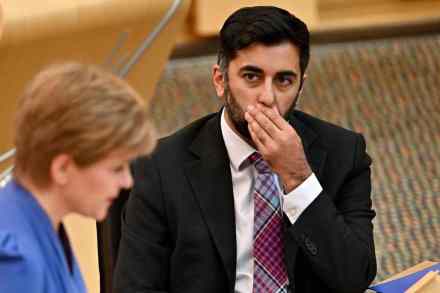
American journalist Michael Kinsley once observed that in Washington DC a 'gaffe' should be understood as a moment in which a politician or public official inadvertently blurts out a truth it would have been better, and certainly wiser, to leave unsaid. By that standard Humza Yousaf, currently serving as health secretary in the Scottish government, is a mighty friend to journalists. Pondering the meaning and significance of what has become known as the Alex Salmond affair, Yousaf told the comedian Matt Forde that the conflict between Salmond and Nicola Sturgeon was 'really upsetting because it could have done our cause a hell of a lot of damage – it still might do our cause a hell of a lot of damage'. Sometimes it is better not to say the quiet bit out loud.

Has Nicola Sturgeon run out of ideas for Scotland?

From our UK edition

On Tuesday, another 4,323 cases of Covid-19 were confirmed in Scotland. A reminder, if it were needed, that the pandemic continues even though 80 per cent of the adult population are now fully vaccinated. The schools are back and the start of the new university year next month suggests more new cases are all but certain. The worst of this iteration of the pandemic may be in the past but it isn’t over. Indeed, it is so far from being over that the First Minister felt it necessary to warn that a fresh round of restrictions may be necessary should case numbers continue to rise. Even if that proves unnecessary and even if you are minded to think Sturgeon’s caution excessive, it is obvious that Covid will be a part of life for the foreseeable future.

Is Boris brave enough to confront the truth about the NHS?

From our UK edition

If a government does not wish to break a manifesto promise it should punt fewer such 'promises' into its manifesto. The modern mania for throwing everything possible into a manifesto – the better to proof it against interference from the House of Lords – renders manifestoes nothing more than a job lot of largely spurious pledges. The vision thing is notable for its absence and the vision thing is more important – and more revealing – than a grocery list of promises. Still, if you must break a promise it is no bad thing to start with a large and stupid one.

The callousness of the Conservative foreign aid cut

From our UK edition

A billionaire who reduces his or her charity is a billionaire asking to be judged and found wanting. When they do so, not on the basis that their charity is squandered but because they fancy keeping more of their wealth for their own purposes, they demand to be judged and found wanting all over again. This morning, the United Kingdom and its government is that billionaire. The government has won its campaign to reduce Britain’s foreign aid contributions. As so often, a much-vaunted Tory rebellion delivered rather less than it promised. As a consequence, money will be withheld from some of the world’s poorest peoples and kept instead by some of its wealthiest. Of course voters — from across the political spectrum — hate foreign aid. But what of it?

Scots, not Boris Johnson, are blocking IndyRef2

From our UK edition

So what does it all mean? The first thing to bear in mind is that more than one thing may be true at the same time. This is, then, both a historic and thumping victory for Nicola Sturgeon and a mild disappointment. Historic because, after 14 years in power, Scottish voters have handed the SNP a fourth consecutive term in office; a modest disappointment because the SNP made little progress on their 2016 performance. Five years ago, Sturgeon lost the majority - albeit this was an accidental majority - she inherited from Alex Salmond and she failed to regain it this week. Doing so would have required everything to fall into place for the nationalists. They would have needed to pick up seats such as Dumbarton, Edinburgh Southern, and Aberdeenshire West to have a real crack at a majority.

Scottish nationalism is no better than any other kind

From our UK edition

Even the Americans are noticing Nicola Sturgeon now and if you are – like many nationalists – the kind of Scottish nationalist forever on the lookout for external validation, lengthy articles featuring the first minister in The New Yorker and The Atlantic is the kind of thing to make you proud. There has always been a strong streak of what I like to think of as Sally Field nationalism – 'And I can’t deny the fact that you like me! Right now, you like me!' However happy it might be, it cannot quite escape being cringeworthy. But there we have it; nationalism is essentially myopic and all nationalisms are alike in that respect.

Does anyone doubt Boris’s leaked ‘bodies’ comment?

From our UK edition

Of course Boris Johnson raged, King Lear-like, that he was prepared to 'let the bodies pile high in their thousands' if the alternative was subjecting the country to a third lockdown more dispiriting than either of its dreary, even grim, predecessors. I say ‘of course he said it’ not just because at least three different sources have confirmed to at least three different reporters that the Prime Minister did say it but also, and significantly, because it would be so wholly in character for the Prime Minister to have said it. If it sounds like the sort of thing he would say, that is largely because it is the sort of thing he would say. Nor have his denials been convincing.

The nationalists’ vaccine fallacy

From our UK edition

The trouble with nationalism of any and every sort is that, in the end, it eats your brain. As evidence of this we may simply note Nicola Sturgeon’s assertions this week that the success of Britain’s vaccination programme should in no way encourage the thought an independent Scotland might have struggled to match this happy development. According to Sturgeon, there is 'absolutely no evidential basis to say Scotland would not have vaccinated as many people as we’ve vaccinated right now' if it were an independent state. This is, to use the technical term, bollocks on a tartan pogo-stick.

Alex Salmond is a gift to the Unionist cause

From our UK edition

If Alex Salmond and his new Alba party did not exist, pro-Union parties would find it necessary to invent them. Perhaps, of course, that is what has happened. Be that as it may, Salmond’s emergence from the swampy waters of his own disgrace is the best thing to have happened for Unionism in a long, long time. Salmond may be an innocent man in the eyes of the law, but he is not a good one in the eyes of the public. Remarkably, he is less popular in Scotland than Boris Johnson. That reflects, doubtless, the manner in which Nicola Sturgeon’s friends and agents have turned against him and the sad lack of charity still bestowed upon him by his longstanding Unionist opponents. Even so, it is quite an achievement.

Salmond’s comeback is a pitiful sight

From our UK edition

When Alex Salmond lost his seat at the 2017 general election, he finished his concession speech with a quotation from Sir Walter Scott’s poem, 'Bonnie Dundee':  'And tremble false Whigs, in the midst of your glee/You have not seen the last of my bonnet and me.'  Well, it is true that we have heard far too much from Alex Salmond in the years since but all roads, I suppose, led to the wholly unsurprising announcement this afternoon that Salmond is getting back into the game. Hell hath no fury like an ego ignored. The Alba party – Salmond’s new venture – will contest seats on the list portion of May’s Holyrood election.

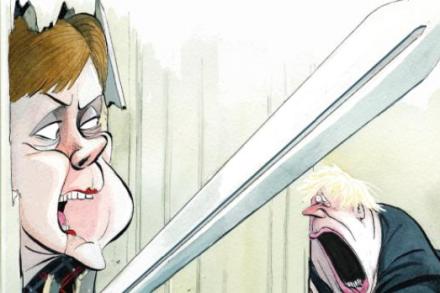
Sturgeon’s future now hangs in the balance

From our UK edition

At First Minister’s Questions this afternoon Nicola Sturgeon accused Ruth Davidson of peddling baseless conspiracy theories, dredged up from 'the bottom of the barrel'. For all that Davidson, like the rest of Sturgeon’s political opponents, might profess that their interest in the Salmond-Sturgeon affair rests on nothing more than ‘just the facts, ma’am’, the First Minister was clear their concern is primarily opportunistic and political. If they wished to pal around with Alex Salmond and his cronies in some kind of 'old boys club' that was their prerogative, but the people of Scotland will deliver their verdict in May’s elections. And there is, of course, some truth in that charge.

David Davis’s bombshell leak spells trouble for Nicola Sturgeon

From our UK edition

The first thing to be said about David Davis’s dramatic intervention in the Salmond-Sturgeon affair is that it is a masterful piece of concern-trolling. The second thing to be said is that this does not matter. Davis, speaking armoured by parliamentary privilege, revealed information passed to him by a 'whistleblower' that has hitherto been kept secret. On the face of it, there are very good reasons explaining why the SNP and the Scottish government would wish to keep it that way. Ostensibly, Davis’s intervention is motivated by concern that the Scottish parliament and its members lack the ability to pursue the truth wherever it may lead. He came, he said, to strengthen the Scottish parliament, not to bury it.