Alex Clark

Courage and humour in the face of unimaginable grief

From our UK edition

In the face of unendurable pain that must be endured and unimaginable loss that must be imagined, jokes should not be resisted or turned away. Miriam Toews, describing the day that her father ended his life, remembers him assessing the outfit – torn jeans and a green hoodie – that she had been wearing for a fortnight. ‘Did you have much trouble deciding what to wear?’ he asked as he left his ham sandwich uneaten at a family lunch. Afterwards, he made his way to the railway tracks. A dozen years later, Miriam’s older sister Marjorie died by suicide in the same manner the day before her 52nd birthday. Toews wrote about her father’s life in the non-fictional Swing Low, and about her sister in the astounding novel All My Puny Sorrows.

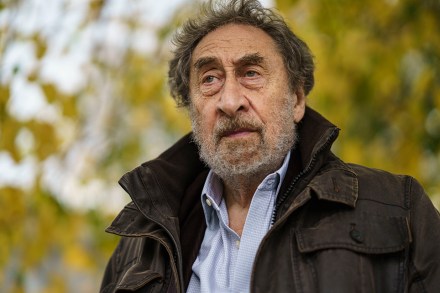
Extremes of passion: What Will Survive of Us, by Howard Jacobson, reviewed

From our UK edition

There is not going gently into that good night, and then there is teetering into it on spiked-heel boots while strapped into a leather corset in search of clandestine kicks among like-minded fetishists. If it sounds an exhausting and chilly way to spend an evening, well, it is. At least, that’s how it feels to Sam Quaid, the middle-aged playwright who is beset by misgivings – he himself is dressed in ‘the more chicken-hearted guise of a fallen Quaker who had never seen the sun’ – but gamely determined to accompany his lover, Lily. Where is Sam’s obeisance going to lead him, or Lily?

Three men in exile: My Friends, by Hisham Matar, reviewed

From our UK edition

Hisham Matar’s third novel is, among its many other virtues, a paean to reading widely; to imagining literature as not, in the narrator Khaled’s words, ‘a field of demarcations’, but as a great river that connects and animates ‘the entire human event’. Reading is how Khaled – exiled from Libya when his part in the anti-Gaddafi demonstration at the country’s embassy in St James’s Square in April 1984 made a return to Benghazi impossible – lays the foundations beneath his precarious life in London. Carrying with him his father’s copy of Abual Ala al Ma’arri’s The Epistle of Forgiveness, an 11th-century  precursor to Dante’s Divine Comedy, he ponders the links between Stendhal and Mahfouz, Borges and Conrad.

A cherry orchard, three sisters and a summer romance: Tom Lake, by Ann Patchett, reviewed

From our UK edition

Two plays guide the reader through Tom Lake, Ann Patchett’s ninth novel: Thornton Wilder’s Our Town, the story of ordinary lives in a small New Hampshire community in the early years of the 20th century, which, with its radically stripped-back staging, sets time and place in the context of all time and place, and enjoins its audience to ponder what is truly valuable in human life; and Anton Chekhov’s The Cherry Orchard, the story of the battle for an estate that throbs with conflict, violence and, ultimately, destruction. Patchett’s mind is on the twin forces of preservation and entropy: our desperate attempts to cling to the local and the familiar as the wider world threatens and besieges us; our need to both depart and return, to embrace and exclude.

In memory of Martin Amis

From our UK edition

37 min listen

In this week’s Book Club podcast, we celebrate the life and weigh the literary reputation of Martin Amis, who died at the end of last week. I’m joined by the critic Alex Clark, the novelist John Niven, and our chief reviewer Philip Hensher – all of whom bring decades of close engagement with Amis’s work to the discussion.

Bad boy on the run: Shy, by Max Porter, reviewed

From our UK edition

Shy concludes Max Porter’s informal trilogy of short, poetic novels powered by pain and polyphony. First, in 2015, came Grief is the Thing with Feathers, in which a widowed Ted Hughes scholar is both shocked and comforted by the arrival of a croaking, crouching crow. Then, four years later, Lanny, which followed a young boy through village life, with appearances by the ancient spirit of Dead Papa Toothwort, and explored issues of alienation and isolation. Both were works of multiple voices, not always human; and both introduced Porter as a writer meticulously interested in rhythm, compression and the profoundly generative process of conveying the intersection between individual consciousness and collective identity.

Mad men plotting: The Unfolding, by A.M. Homes, reviewed

From our UK edition

Fifteen years ago, A.M. Homes published The Mistress’s Daughter, an explosive, painful account of how she met her birth mother, Ellen, who had placed her for adoption as a baby when, as a very young woman, she became pregnant in the course of an affair with an older, married man. Perhaps the most memorable scene depicts her mother, who had instigated the contact between them when Homes was in her early thirties, appearing without warning at a reading Homes was giving in a bookshop. The writer’s panic and discomfort at this unexpected ambush, and her sense of what it might foreshadow, were palpable (and she was not wrong.

A playful version of the universe: Pure Colour, by Sheila Heti, reviewed

From our UK edition

Readers familiar with Sheila Heti’s work, most notably How Should a Person Be? and Motherhood, in which she examines both the possibility and implications of choosing one’s life and dealing with the consequences, will be familiar with her apparent capriciousness. Her prose — freewheeling, elliptical, a tangle of jokiness and jeopardy — seems to capture the puzzle of proportionality: how seriously should we take this one life we have, and how can we hope to balance our opposing urges towards levity and gravity?

A cursed place: Small Things Like These, by Claire Keegan, reviewed

From our UK edition

Claire Keegan’s tiny, cataclysmic novel takes us into the heart of small-town Ireland a few decades ago, creating a world that feels in certain respects dead and buried but whose legacy the country is still processing. This is Ireland before the boom and bust of the Celtic Tiger; before the insidious, everyday power of the Catholic church began to be eroded by the exposure of multiple abuse scandals; before its population voted overwhelmingly in favour of marriage equality and access to abortion. Yet in other respects the life it describes is familiar, and the Wexford town of New Ross, dominated by the River Barrow and governed by the rhythms of work and family, is representative of life as it is still lived outside the country’s major population centres.

An impossible guest: Second Place, by Rachel Cusk, reviewed

From our UK edition

A great writer must be prepared to risk ridiculousness — not ridicule, although that may follow, but the possibility that the work will collapse into some or other version of nonsense. If it doesn’t, though, it is precisely the elements that flirt with disaster that will likely make it both superficially distinctive and artistically substantial. For the novelist and memoirist Rachel Cusk, whose most recent creation, the ‘Outline’ trilogy, attempted a savage blending of the two forms, risk comes frequently in the form of sailing dangerously — and, for her admirers, thrillingly — close to the parodic.

Even Anne Tyler can’t make a solitary Baltimore janitor sound interesting

From our UK edition

Micah Mortimer, the strikingly unproactive protagonist of Anne Tyler’s 23rd novel, is a man of such unswerving routine that his rare moments of whimsy — slipping into a foreign accent on Mondays when the week turns to floor-cleaning and ‘zee dreaded moppink’ — come to seem like unfathomable caprice. Indulging a sudden hankering for a takeaway barbecue is as wild to him as one of Hunter S. Thompson’s most lurid binges. The reasons for his cautious mundanity are unclear: he emerged from a chaotic family, but so did his convivial, cheerful sisters; he’s no stranger to romantic disappointment, but then who is?

Dreams of oblivion

The new novel by the author of the 2016 Booker shortlisted Eileen is at once a jumble of influences — Oblomov by way of Tama Janowitz and Elizabeth Wurtzl, Bartleby with a touch of Bright Lights, Big City, a lunatic psychiatrist who melds Ayn Rand and William Burroughs — and unnervingly original. It takes guts, after all, to spin a yarn out of a rich Upper East Side orphan who decides to put herself to sleep for a year in an attempt at rebirth. Beyond the evident — the death of her parents, an obnoxious man in her life — precisely why our narrator wishes to shed her skin remains unclear to us; but her tenacity in pursuing oblivion is unshakeable.

The priest’s tale

From our UK edition

Samantha Harvey is much rated by critics and those readers who have discovered her books, but deserving of a far wider audience than she has hitherto gained — so much so that just before Gaby Wood’s appointment as literary director of the Booker Prize Foundation, the critic wrote a lengthy exploration of Harvey’s prodigious qualities, describing her as ‘this generation’s Virginia Woolf’. The reasons for her relative neglect are not complex: her work is deeply serious, her novels rarely mining the same seam; she has featured on numerous long- and shortlists but failed to scoop any major awards; and we don’t see her on the telly or at the head of newspaper columns.

Write to the end

From our UK edition

Always go to a storyteller if you want a sparky answer to a question. What does Jeffrey Archer, bestselling author, member of the House of Lords, one-time candidate for Mayor of London and prison diarist, think will happen to American politics next? Comes the reply: Angelina Jolie. Or perhaps George Clooney. Or maybe even Tom Hanks. One of these, argues Archer, will run for president next time. ‘And why wouldn’t they win?’ He expands. ‘I’ve given in now. The days of spending your life in politics, learning politics, getting ready for high office, are gone. You can have it tomorrow. Macron got it in one minute.’ The words might seem rueful but the tone they’re delivered in is anything but.

On the waterfront | 12 October 2017

From our UK edition

Much has been made of the American novelist Jennifer Egan’s mutation, in her latest novel, from purveyor of metafiction and fragmentary, experimental narratives to creator of a solid piece of traditional realism. Manhattan Beach tells the story of a father and daughter in New York in the years in and around the second world war: Eddie is a mobster’s bagman, who disappears without apparent trace early on; Anna is left distraught, but is also a resilient striver, growing up to become the only female diver in Brooklyn’s Navy Yard. Betwixt and between them stands Dexter Styles, a nightclub owner and instrument of the mafia, swishing between cold malfeasance and a yearning for a life less compromised.

The man who disappeared

From our UK edition

Walking out of one’s own life — unpredictably, perhaps even without premeditation and certainly without anything approaching a plan — is a common staple of fantasy, and therefore fiction. But why, when we spend so much of the rest of the time fretting about losing what we have and hatching plans to safeguard it? In this short, powerful novel, the Swiss writer Peter Stamm, suggests some oblique but compelling possibilities. Thomas and Astrid have returned from a holiday with their two children and begun the ordinary business of resettling: unpacking, laundry, a last glass of wine in the garden. As Astrid tends to the house, Thomas walks down the path and, after only a momentary hesitation, through the gate.

Mother Medea

From our UK edition

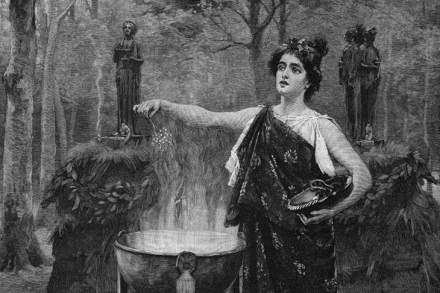
Medea’s continuing hold over spinners of tall tales from Euripides to Chaucer to Pasolini needs little explanation; she’s an archetype with everything going for her. As a fratricide and murderer of her own children, among assorted other acts of blood lust, her acts of brutality are so transgressive and symbolic that they offer themselves up to psychoanalytic deconstruction; as a woman abandoned and betrayed by Jason, for whom she has arguably risked everything, she presents herself neatly as a sacrifice thrown to the god of male ambition, arrogance and insecurity.

When less is more

From our UK edition

It’s 2008 in Manhattan, and there’s still a brief window for the Goldman bankers to swill their ’82 Petrus before the crash, for the masters of the universe and social X-rays first sighted in Tom Wolfe’s Bonfire of the Vanities to launch another hostile takeover or push a lettuce leaf around a $25,000-a-table benefit dinner-plate. For Russell Calloway, encountered here for the third time, following previous outings in the novels Brightness Falls and The Good Life, such decadence is both revolting and alluring: as a struggling independent publisher, he is committed to the survival of bohemianism and the life of the mind; as a bon viveur, oenophile and gourmand, he’s made his peace with sniffing round the rich men’s tables.

Mournful and meticulous

From our UK edition

After a curtain-twitching cul-de-sac, a Preston shopping precinct, and the Church of the Latter-Day Saints brought to Lancashire, Jenn Ashworth ups sticks for the seaside in her fourth novel. Set in the determinedly genteel resort of Grange-over-Sands, just across the bay from Morecambe on the Cumbrian coast, Fell is a disturbing, precisely rendered tale of charisma, misplaced faith and transgenerational trauma, with a touch — not too heavy-handed, fortunately — of the supernatural.

A host of unquiet spirits

From our UK edition

As its title suggests, Julie Myerson’s tenth novel is about stoppage: the kind that happens when one suffers a loss so absolute and cataclysmic that there seems no possible way forward; when the future seems not merely unthinkably disrupted but also irrelevant. For the majority of people lucky enough to live out their days beyond war zones, barbaric regimes and disaster areas, such events usually come no closer than a news item; but even — perhaps especially — when the calamity is near at hand, we so often find ourselves at once desperate to empathise and yet incapable of imagining. Mary, whom we gradually discover has lost both her young daughters, understands that people can’t understand; often, she can barely understand herself.