Aidan Hartley

Aidan Hartley

Aidan Hartley is the Spectator's Wild Life columnist.

The joyful mayhem of meteorite hunting in Africa

Nairobi Eastleigh, the Somali quarter in Nairobi, was a scene from Blade Runner but in African Islamic dress. Muezzin calls to prayer bounced off canyons of rickety concrete towers. My friends led me through the bazaar of smuggled electronics, perfumes, truck tyres, gold dealers and money changers. In this monsoon version of Harrods, I imagined you could buy whatever came to mind: Tehran’s uranium, a live Quagga, Ovid’s lost work Medea or an intact Spitfire. That great Arabist Tim Mackintosh-Smith, writing about the souks in Yemen, observed that he probably saw his old school blazers in among the piles of secondhand clothes there – and it was like that. One just has to ask in Eastleigh, the biggest market in Sub-Saharan Africa.

The cattle rustlers have returned

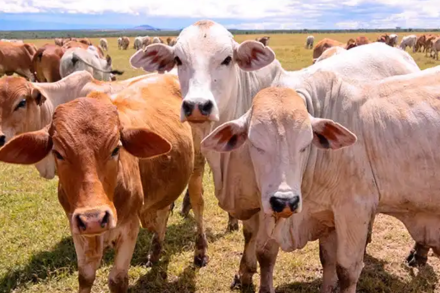
Kenya When a mob of Somali cattle I bought in Kenya’s far north arrived on the farm in February, we quarantined them in a remote corner. To protect them against lions they slept in a boma with high drystone walls topped with treacherous thorns, guarded by a fierce police-licenced guard named Joseph. The Somalis are great stockmen, though these beautiful beasts, known as Awai, are more long-legged and rangy than our traditional ranch Borans. My lorryload of cattle had survived a two-year drought on rocks and dust and they could walk hundreds of miles to water, yet they were randy and highly fertile. These are ancient cattle, of the sort that you see in petroglyphs and ochre painted on rock faces across Africa. I have fallen in love with them.

Ladies love an eye patch

Kenya While we were loading two stud bulls and eight hoggets onto a lorry in my ranch’s yard in the African dawn this morning, the farmer buying them saw my bandaged right hand and asked with great concern: ‘Ooh my brother! Did you injure yourself handling your cattle?’ Kenyans are by nature warm and kind. ‘Don’t worry,’ I said standing in an honest expanse of cow shit. ‘It was no accident. Just an operation to straighten out my fingers.’ ‘Do you find it tiresome to drive?’ asked a ranching neighbour at an ebullient lunch overlooking the wilderness towards Mount Kenya this afternoon. ‘No, but it’s tricky if I try to shoot in the general direction of a monkey raiding the garden.

Smashing South Africa’s last relationship taboo

Cape Town As a young FT stringer in Dar es Salaam in the 1980s, I used to hang out with South African guerrillas from rival factions who, instead of waging war against apartheid, spent their energies fighting each other over stolen cars and quaalude-smuggling, or party-ing hard. In our late-night drinking sessions, these Marxist cadres happily taught me, a white son of colonialism, a chant that went: ‘One Settler! One Bullet! SETTLER, SETTLER! BULLET, BULLET!’ It was so hot on those evenings in Dar that we used to take turns climbing into our flat’s chest freezer to cool off for a few minutes. It was quite a thing to see a Zulu bursting out of it like a jack-in-the-box, singing revolutionary anthems.

How to befriend Sudan’s guerilla commanders 

Juba, South Sudan After the 43°C heat of the day in Juba, sundown brings a merciful reprieve. My dearest friend Ken pours me a dram of Glen Deveron, without ice or water, and I realise it’s going to be a long evening with the man from Midlothian. In Juba, it turns out, one can find the finest single malt whiskies, thanks to intrepid Eritreans who run the local grog shops. After a couple of glasses, our conversation goes back to the time we were together in the same burning heat some years back, in the border town of Bentiu, planning our logistics for a journey north into the Nuba mountains. I had hired Ken as a fixer on the TV film I was making with a producer named Danny.

Nothing gets rid of friends like the breakdown of a marriage

Kenya An unexpected subplot in the ending of my marriage has been the loss of dear old friends. It came as no surprise that a hot flush of middle-aged women took sides, ensuring that certain west London postcodes felt like enemy territory. The end of a comradeship that had survived wars and the deaths of colleagues across 34 years, however, was a terrible blow. A friend of 30 years who decided to circulate secretly photographed images of me with my girlfriend enjoying sundowners at a bar came as a surprise. With another, a terminal chain reaction that began with a tiff over a cattle trough reminded me of Gogol’s story about the two friends called Ivan who have a lifelong falling out after one Ivan calls the other Ivan a goose.

Somali charity scams have come at a high price

Kenya Here’s why house-hunting in Nairobi, where I can’t afford to buy even a bedsit these days, gives me flashbacks of a famine in Somalia long ago. It’s dawn in 1992 and I’m on a Red Cross lorry touring the camps of Baidoa, collecting the 400 corpses of those who died overnight. The body truck tours Baidoa every dawn. I take notes and hope my Reuters dispatches will stir people to help end this catastrophe in a faraway African war. Months later, I accompany a food convoy out of Baidoa, escorted by US Marines in armoured vehicles. After the Americans and TV cameras depart with this feel-good story, Somali militias appear and steal all the food from the famine survivors. And that’s the way it always was.

Somali nomads are living the good life

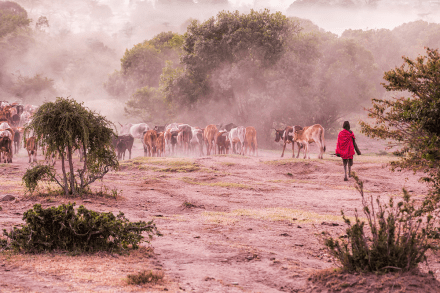
Northeastern Kenya We were in beautiful bush country up towards Somalia, in pastures that shone like spun gold in the sunset as herds of Boran cattle came into the bomas to suckle their calves. My hosts, Ogadeni clan stockmen who had invited me to travel here to look at their herds, showed me their favourite animals and then went off to pray, as hundreds of cows lay down to chew the cud. After prayers came a supper in jugs of frothing warm milk. In return, the herders accepted the bundles of qat leaves I had brought as a present for us all to chew. We became a little stoned on the qat and conversation flowed, entirely about livestock. I passed around photos of my famous Boran heifer, who had won Reserve Champion at the recent breeders’ show in Laik-ipia.

James Heale, William Atkinson, David Shipley, Angus Colwell and Aidan Hartley

25 min listen

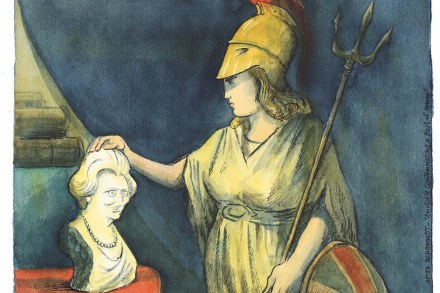
On this week’s Spectator Out Loud: James Heale says that, for Labour, party conference was a ‘holiday from reality’; William Atkinson argues that the ‘cult of Thatcher’ needs to die; David Shipley examines the luxury of French prisons; Angus Colwell provides his notes on swan eating; and, Aidan Hartley takes listeners on a paleoanthropological tour from the Cradle of Mankind.  Produced and presented by Patrick Gibbons.
The search for a Kenyan Stonehenge

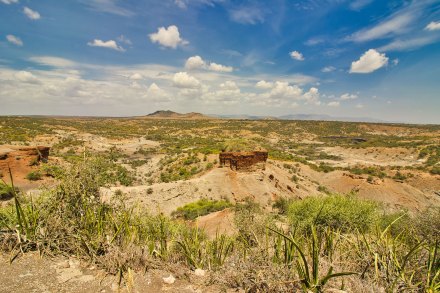
Cradle of Mankind Paleoanthropologists tried to kill me a few days ago. Luckily I was saved by Max Mutkin, a young Londoner who had come along with me to track down a Neolithic monument in Kenya’s searing-hot northern deserts. Our guide was B—, a local man I’d been assured ‘knows everything there is to know’. We were aiming for the shores of Lake Turkana, known as the Jade Sea, and in that vicinity I’d heard there was a site where people had erected a little Stonehenge 5,000 years ago. En route Max regaled me with stories of what it was like to be at university during Covid, and life ahead in his barrister’s pupillage.

Welcome to the Republic of Dyslexia

Kenya It used to be that the black sheep from prominent British families were sent out to Kenya and told that so long as they stayed away in Africa, they’d be paid an allowance. These ‘remittance men’ established modern agriculture on the equator, they built railways and businesses, even while being regarded as intellectually dim. Nowadays, we know such fellows were seen as stupid simply because they were dyslexics – who of course can become great entrepreneurs – and it seems to have been handed down through the generations. The self-deprecating anthem of the Kenya Cowboys – ‘Kenya born, Kenya bred, strong in the arm, thick in the head’ – gives an ironically false impression of the innovative and adventurous descendants of those early pioneers.

My clandestine night at the theatre 

Kenya The poster for the Edinburgh University Shakespeare Company’s production of Much Ado About Nothing had a hippie design, with flowers and psychedelic colours. ‘In a false quarrel there is no true valour,’ announced one flyer. Quite pointedly, I had not been invited to see the play, but I decided I should go and so when the Pleiades was low in the sky and an old lion was roaring in the valley, I set off from my farm in Kenya. First light rose over the Aberdares as bright-faced children hefting satchels ran alongside the road to school. In the Rift Valley I joined the suicidal game of driving in Africa, dodging matatu taxis and Congo-bound juggernauts, reaching the joyous mayhem of Nairobi hours later.

Sophia Falkner, Roger Lewis, Olivia Potts, Aidan Hartley and Toby Young

27 min listen

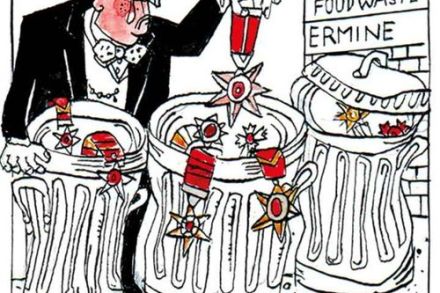
This week: Sophia Falkner profiles some of the eccentric personalities we stand to lose when Keir Starmer purges the hereditary peers; Roger Lewis’s piece on the slow delight of an OAP coach tour is read by the actor Robert Bathurst; Olivia Potts reviews two books in the magazine that use food as a prism through which to discuss Ukrainian heritage and resistance; Aidan Hartley reads his Wild Life column; and Toby Young reflects on the novel experience of being sober at The Spectator summer party. Hosted and produced by Oscar Edmondson.

Are my cattle ready to compete?

Kenya My cattle sensei Mark revealed that my Boran bulls aren’t gaining enough masculine growth after weaning because they’re only just surviving on the droughted, brittle pastures of my farm at 6,000ft in Laikipia. They’re also starved half the time, since the perennial threat of armed cattle rustlers mean they must overnight in a stone and thornbush zeriba – and this year we’ve had one bitch of a lioness constantly harassing the livestock, even jumping into the stockade at night to kill or injure animals. I’ve put all my bulls on to a protein and bran supplement, but sadly I have selected only three very young beasts to enter the Boran Cattle Breeders’ show this September.

In praise of camels

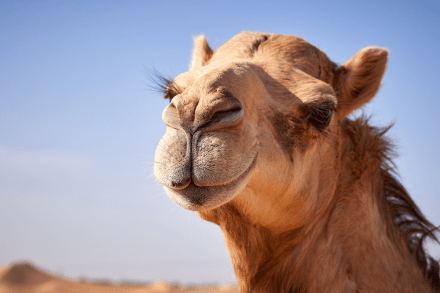
Laikipia, Kenya For decades now I have kept only cattle, goats and sheep on the farm, but for the first time this week, we have a herd of dromedaries browsing in the valley. To see these beautiful creatures moving through the acacia woodland is a pleasure – and I reckon a shrewd move on my part. Camels nibble back the thick bush, which allows the pasture to sprout in the sunshine, which is good for my cows. Camels bellow yet smell sweet. They have rabbit lips with which they lovingly nibble your collar, big giraffe eyes and long, tarty eyelashes. Camels let down their milk long after cattle udders have shrivelled up in a drought. Goats are hardy but nibble bushes to the stump, whereas sheep tear grass out by the root and seek any excuse to die.

Remembering the horror of Rwanda’s genocide 

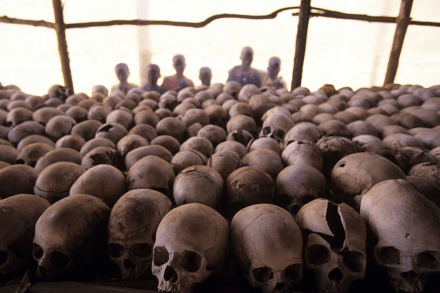
Rwanda It had been more than 30 years, yet I recognised the church and its surroundings instantly. Superimposed on the tidy green sward of today, I recalled the rags, shoes and corpses I saw here in May 1994. There are gaps in my memories of Rwanda. But the parts I do recall are explosively vivid, as if branded on my retina, like those people outside the church. They’d lost heads and limbs and every-body was dead, but the scene was alive. I could see and hear their last moments. A woman lay in my path, on her back with her gingham skirt hitched up around her thighs. Not much flesh left on her skeleton, her hair sloughing off, her face and frame frozen at the end of her rape, when her attacker shot her in the heart.

Paul Wood, Katy Balls, Olivia Potts, Benedict Allen, Cosmo Landesman and Aidan Hartley

40 min listen

On this week’s Spectator Out Loud: Would Trump really bomb Iran, asks Paul Wood (1:38); Katy Balls interviews Health Secretary Wes Streeting on NHS reform, Blairism and Game of Thrones (8:38); Olivia Potts examines the history – and decline – of the Easter staple, roast lamb (18:25); the explorer Benedict Allen says Erling Kagge and Neil Shubin were both dicing with death, as he reviews both their books on exploration to earth’s poles (22:13); Cosmo Landesman reflects on what turning 70 has meant for his sex life (28:46); and, Aidan Hartley takes us on an anthropomorphic journey across Africa (33:55).  Produced and presented by Patrick Gibbons.
I’m losing the will to hunt

Laikipia, Kenya When I was eight I used to go fishing in the Indian Ocean beyond Vasco da Gama’s pillar with Mohamed. Once we pulled out a fish with a domed forehead and a sailfin – a filusi. In Spanish it’s known as the dorado, referring to its iridescent golden flanks. As we watched the fish suffocate in the tropical air, its pigment, sheathed with a patina of stippled green, was transfigured for a brief instant like a beam of sunshine on a church mosaic. Then the dorado’s brilliance faded, and by the time Mohamed picked up his knife and sliced open her belly, removed the guts and tossed the body to the bottom of the canoe, it had turned to tarnished lead. As a boy, my hunter’s remorse was as strong as my urge to kill.

The farms that I’ve loved and lost

Laikipia, Kenya I am grateful to David, a reader of this column, who kindly sent me a packet of old Kenya maps his father used when the family lived in Nairobi in the 1960s. David’s envelope took about six months to reach my postbox, which is good going, since I’ve received other letters posted several years before. I adore maps and own lots, rolled up in tubes, hanging on walls, with piles of them folded in drawers, dog-eared, rain-stained and scribbled on. I immediately took two of David’s maps to the framers since they cover the place I like best in the world: Laikipia.

Hugh Schofield, Igor Toronyi-Lalic & Michael Simmons, Lisa Haseldine, Alice Loxton and Aidan Hartley

37 min listen

On this week’s Spectator Out Loud: Hugh Schofield asks why there is no campaign to free the novelist Boualem Sansal (1:26); The Spectator’s arts editor, Igor Toronyi-Lalic, reacts to the magazine’s campaign against frivolous funding and, continuing the campaign, Michael Simmons wonders if Britain is funding organisations that wish us harm (8:00); Lisa Haseldine reflects on whether the AfD’s rise could mean ‘Weimar 2.0’ for Germany (17:08); reviewing Thou Savage Woman: Female Killers in Early Modern Britain, by Blessin Adams, Alice Loxton explores the gruesome ways in which women killed (25:05); and, from Kenya, Aidan Hartley reflects on how a secret half-brother impacted his relationship with his father (35:13).  Produced and presented by Patrick Gibbons.