Aidan Hartley

Aidan Hartley

Aidan Hartley is the Spectator's Wild Life columnist.

How to befriend Sudan’s guerilla commanders 

From our UK edition

Juba, South Sudan After the 43°C heat of the day in Juba, sundown brings a merciful reprieve. My dearest friend Ken pours me a dram of Glen Deveron, without ice or water, and I realise it’s going to be a long evening with the man from Midlothian. In Juba, it turns out, one can find

Nothing gets rid of friends like the breakdown of a marriage

From our UK edition

Kenya An unexpected subplot in the ending of my marriage has been the loss of dear old friends. It came as no surprise that a hot flush of middle-aged women took sides, ensuring that certain west London postcodes felt like enemy territory. The end of a comradeship that had survived wars and the deaths of

Somali charity scams have come at a high price

From our UK edition

Kenya Here’s why house-hunting in Nairobi, where I can’t afford to buy even a bedsit these days, gives me flashbacks of a famine in Somalia long ago. It’s dawn in 1992 and I’m on a Red Cross lorry touring the camps of Baidoa, collecting the 400 corpses of those who died overnight. The body truck

Somali nomads are living the good life

From our UK edition

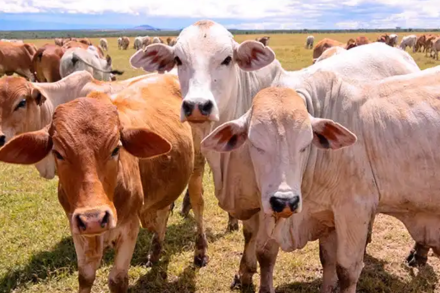
Northeastern Kenya We were in beautiful bush country up towards Somalia, in pastures that shone like spun gold in the sunset as herds of Boran cattle came into the bomas to suckle their calves. My hosts, Ogadeni clan stockmen who had invited me to travel here to look at their herds, showed me their favourite

James Heale, William Atkinson, David Shipley, Angus Colwell and Aidan Hartley

From our UK edition

25 min listen

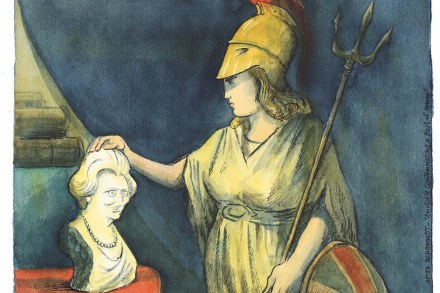
On this week’s Spectator Out Loud: James Heale says that, for Labour, party conference was a ‘holiday from reality’; William Atkinson argues that the ‘cult of Thatcher’ needs to die; David Shipley examines the luxury of French prisons; Angus Colwell provides his notes on swan eating; and, Aidan Hartley takes listeners on a paleoanthropological tour

The search for a Kenyan Stonehenge

From our UK edition

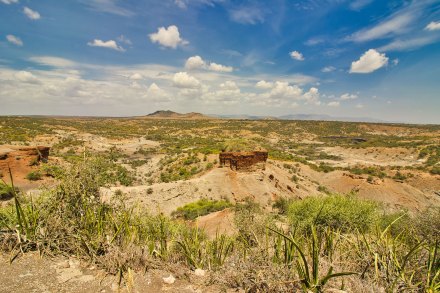
Cradle of Mankind Paleoanthropologists tried to kill me a few days ago. Luckily I was saved by Max Mutkin, a young Londoner who had come along with me to track down a Neolithic monument in Kenya’s searing-hot northern deserts. Our guide was B—, a local man I’d been assured ‘knows everything there is to know’.

Welcome to the Republic of Dyslexia

From our UK edition

Kenya It used to be that the black sheep from prominent British families were sent out to Kenya and told that so long as they stayed away in Africa, they’d be paid an allowance. These ‘remittance men’ established modern agriculture on the equator, they built railways and businesses, even while being regarded as intellectually dim.

My clandestine night at the theatre 

From our UK edition

Kenya The poster for the Edinburgh University Shakespeare Company’s production of Much Ado About Nothing had a hippie design, with flowers and psychedelic colours. ‘In a false quarrel there is no true valour,’ announced one flyer. Quite pointedly, I had not been invited to see the play, but I decided I should go and so

Are my cattle ready to compete?

From our UK edition

Kenya My cattle sensei Mark revealed that my Boran bulls aren’t gaining enough masculine growth after weaning because they’re only just surviving on the droughted, brittle pastures of my farm at 6,000ft in Laikipia. They’re also starved half the time, since the perennial threat of armed cattle rustlers mean they must overnight in a stone

In praise of camels

From our UK edition

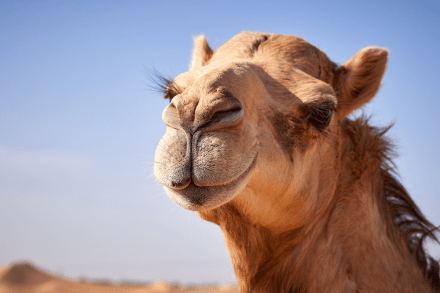
Laikipia, Kenya For decades now I have kept only cattle, goats and sheep on the farm, but for the first time this week, we have a herd of dromedaries browsing in the valley. To see these beautiful creatures moving through the acacia woodland is a pleasure – and I reckon a shrewd move on my

Remembering the horror of Rwanda’s genocide 

From our UK edition

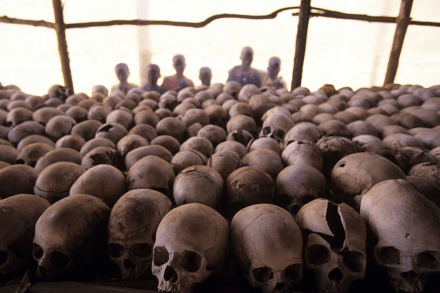
Rwanda It had been more than 30 years, yet I recognised the church and its surroundings instantly. Superimposed on the tidy green sward of today, I recalled the rags, shoes and corpses I saw here in May 1994. There are gaps in my memories of Rwanda. But the parts I do recall are explosively vivid,

I’m losing the will to hunt

From our UK edition

Laikipia, Kenya When I was eight I used to go fishing in the Indian Ocean beyond Vasco da Gama’s pillar with Mohamed. Once we pulled out a fish with a domed forehead and a sailfin – a filusi. In Spanish it’s known as the dorado, referring to its iridescent golden flanks. As we watched the

The farms that I’ve loved and lost

From our UK edition

Laikipia, Kenya I am grateful to David, a reader of this column, who kindly sent me a packet of old Kenya maps his father used when the family lived in Nairobi in the 1960s. David’s envelope took about six months to reach my postbox, which is good going, since I’ve received other letters posted several

Hugh Schofield, Igor Toronyi-Lalic & Michael Simmons, Lisa Haseldine, Alice Loxton and Aidan Hartley

From our UK edition

37 min listen

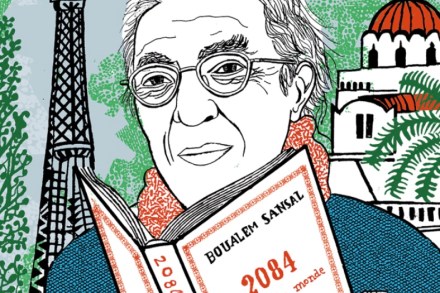
On this week’s Spectator Out Loud: Hugh Schofield asks why there is no campaign to free the novelist Boualem Sansal (1:26); The Spectator’s arts editor, Igor Toronyi-Lalic, reacts to the magazine’s campaign against frivolous funding and, continuing the campaign, Michael Simmons wonders if Britain is funding organisations that wish us harm (8:00); Lisa Haseldine reflects on

How I found my way to my half-brother

From our UK edition

Kenya In my dream my father is sitting next to me in the car as we drive around our hometown of Malindi, in Kenya. I realise it must be odd for him, because so much has changed in the decades since he died. He keeps shaking his head in disbelief at the thronging crowds of

Like my father before me, I’ve found comfort in yoga

From our UK edition

Malindi, Kenya In 1967, Tanzania’s socialist rulers seized all my parents’ property – their ranchland, their home and their cattle – and overnight my father saw the fruits of all his labour taken from him. He had no time to dwell on his misfortune, since he had a wife and four children to support, so

Retracing the steps of slaves in Benin

From our UK edition

Ouidah, Benin On a free afternoon in Benin, I decide to walk the slave route in Ouidah, the port from which perhaps a million Africans were transported on the Middle Passage to the Americas. Near the old slave market or Place Chacha, named in memory of the slaver Francisco Félix de Souza, about whom Bruce